
Prevent Swirl Marks with Random Orbital Sanding
Saturday morning, low sun at the window, the first coat of finish flashes across the panel you’ve been nursing all week. The figure in the oak wakes up, but so do faint halos you didn’t see under shop lights. Swirl marks. You tilt the board, squint, and realize you were moments from locking those defects under a film for good. It’s a gut-punch that most woodworkers and finish carpenters eventually feel. The culprit is rarely the tool itself; it’s the stack of process decisions that lead to one outcome or the other. The relief is that processes are controllable, and with random orbital sanding done deliberately, swirls are optional.
Swirl prevention starts well before the sander touches wood. Substrate flatness, resin content, seasonal moisture, and the way abrasives load each conspire to cut cleanly—or plow micro-troughs that telegraph as arcs after you apply dye, stain, or film. Variables compound: pad hardness, orbit diameter, rpm, interface pads, extraction CFM, grit jumps, dwell time, and pressure. The upside is equally compound: when you tune them, random orbital sanding can generate indistinguishable scratch patterns that melt under finish, yielding crisp, uniform reflectivity.
If you’re new to dialing this in, consider that swirl control is a chain of custody problem. Every link matters: flatten with the right tool (plane/drum/wide-belt) to minimize what the ROS must erase; select abrasives by mineral, backing, and coat weight; match pad and orbit to the job; enforce a disciplined grit progression; and inspect aggressively with raking light and solvent wipes. Treat the ROS like a finishing instrument, not a hogger, and it will repay you with defect-free surfaces, repeatably.
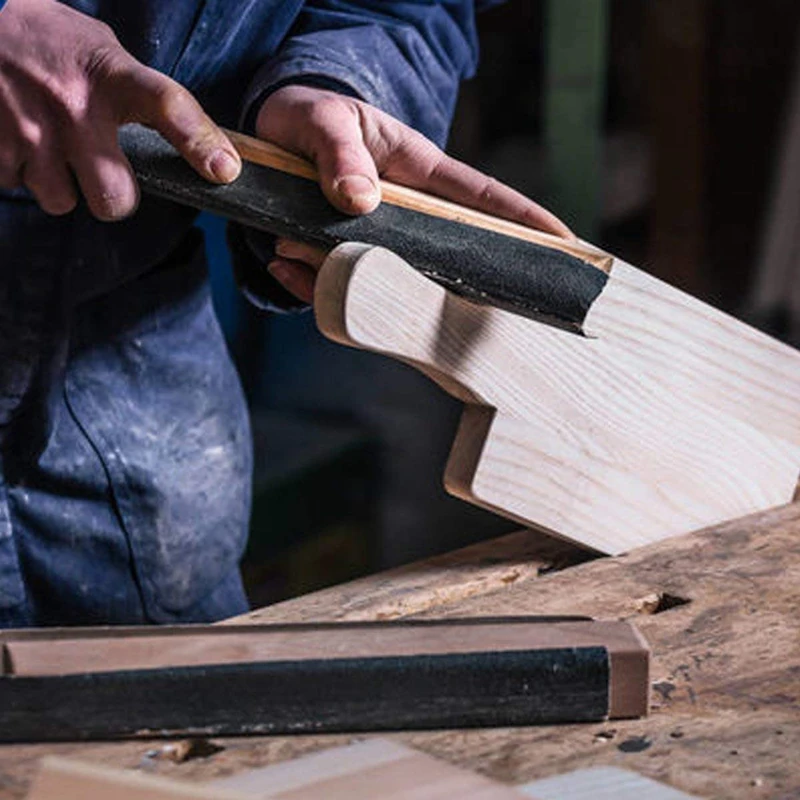
Quick Summary: Swirl-free results come from disciplined surface prep, compatible abrasives, tuned machine variables, dust extraction, consistent grit progression, and rigorous inspection.
Reading the surface, not just the sander
Preventing swirl marks begins with understanding the material, not the machine. Woods with high earlywood/latewood contrast (e.g., southern yellow pine) resist uniform scratch blending; diffuse-porous hardwoods (e.g., maple) highlight any orbital inconsistencies under dye; ring-porous species (e.g., oak) mask some scratches in open pores but reveal them across rays. Engineered substrates add their own traps: thin face veneers on plywood burn through easily; MDF telegraphs pad-edge pressure; veneered panels require conservative pad hardness and orbit size.
Start by establishing flatness with the least destructive tool available: a sharp hand plane with a very light cut, a drum/wide-belt sander with fresh belts, or a straightedge and card scraper. The flatter your starting surface, the less pressure and dwell the random orbital must apply—reducing heat, loading, and the swirl risk that follows. Pencil a light grid on the surface to visualize coverage. When the grid disappears uniformly at a given grit, you’re ready to move on; if islands remain, focus on those areas with the same grit until the entire panel is consistent.
Lighting is non-negotiable. Use low-angle raking light from a portable LED bar; it exaggerates scratch pattern directionality and reveals cross-grain bruising you won’t catch overhead. Keep an alcohol or naphtha wipe nearby; a quick wipe makes shallow swirl marks pop as if under finish. Note where resin nodes or knots live—these zones load abrasives faster and generate heat that softens pad hooks and burns stearate, both of which worsen swirl risk. Flag them mentally for shorter dwell and more frequent disc changes.
Finally, consider the finishing system backward. Waterborne topcoats raise grain; pre-raise with a damp cloth and sand back one grit coarser than your final. Oils amplify compression marks; minimize pressure and avoid soft interface pads on edges where rounding can create highlight-bending “smiles.” This front-loaded reading of the surface sets the stage for a controlled ROS process rather than a rescue mission later.
Dialing in random orbital sanding variables
“Random” in random orbital sanding describes the scratch distribution, not the process. You still control orbit diameter, pad hardness, speed (OPM), pressure, and stroke discipline—each a lever to reduce swirl visibility.
Orbit diameter: Small orbits (2.5–3.0 mm) excel at finish sanding and reducing visible arcs; larger orbits (5–8 mm) remove stock faster but risk more pronounced scratches if you jump grits too aggressively. For pre-finish refinement on hardwood panels, a 3–5 mm orbit is a safe zone.
Pad hardness: Hard pads maintain flatness and are ideal for leveling film finishes between coats; medium pads are generalists; soft pads conform to curves but can round edges and imprint arcs if you lean or pause. Match pad to the task and avoid soft pads on flat, high-visibility surfaces unless paired with very fine grits and feather-light pressure.
Speed and pressure: Keep the tool spinning, but let the abrasive cut. Excess pressure collapses the pad, slows rotation, and creates stacked scratches aligned to the orbit. A practical baseline is to press just enough to keep the pad fully engaged—roughly the weight of the sander plus ~1–1.5 kg of hand load—then back off if rotation audibly drops. Run OPM mid-range for dust control, increasing slightly with finer grits to maintain cutting speed as scratches shallow.
Stroke discipline: Use a slow, deliberate feed—about 25–30 mm per second—with 70% overlap per pass. Maintain continuous motion before the pad touches the surface and after it leaves; starting/stopping in place writes crescents you’ll chase later. Edge approach matters: keep the pad fully supported, never tipping off the edge; if your work is small, secure it and hang the sander off the edge with a sacrificial support underneath.
H3: Baseline settings matrix
- Leveling panels (120–150 grit): 5 mm orbit, medium pad, mid OPM, light-to-moderate pressure, vacuum at moderate suction.
- Pre-finish smoothing (180–220 grit): 3–5 mm orbit, medium pad, mid-high OPM, light pressure, high suction with multi-hole discs.
- Film-leveling between coats (320–400 grit): 3 mm orbit, hard pad, high OPM, feather pressure, very high suction.
Consistency beats speed here. When you standardize variables, swirls lose the variability they need to hide.
Abrasive selection and disc performance
Abrasives are your cutting tools; their mineral, coating, and backing determine scratch geometry and heat. Aluminum oxide is the workhorse: tough, self-fracturing enough for wood, and economical. Ceramic alumina and ceramic blends cut cooler and maintain sharpness longer in coarse grits—useful when leveling dense hardwoods or stripping finishes. Silicon carbide cuts fast and leaves a very fine scratch but fractures quickly; it shines in higher grits for sealer/finish leveling or between coats.
Coat weight matters. Open-coat discs leave space between grains to reduce loading in resinous woods and softwoods. Closed-coat delivers a more uniform scratch in dense hardwoods where loading is less of a problem. A stearate (anti-loading) top coat helps delay clogging and reduces heat; once heat bakes stearate, though, discs smear instead of cut, producing hazy arcs that read as swirls under finish. If you smell resin or feel drag, change the disc early; it’s cheaper than repairing defects after a coat.
Backing and hole pattern influence extraction and scratch consistency. Film-backed discs stay flatter, resist edge tear-out, and hold tighter tolerances in fine grits—ideal for final passes. Paper backings are cost-effective and fine for coarser work but telegraph pad inconsistencies as they fray. Multi-hole patterns (e.g., 49- to 121-hole universals) improve dust evacuation across the pad, reducing scratch contamination from fines trapped under the disc. Pair multi-hole discs with a matching pad protector or conversion pad to maintain alignment and airflow.
Evaluate disc life by scratch quality, not calendar time. Under magnification or raking light, a spent disc leaves hazy, torn fibers rather than crisp, uniform lines. If you need to linger to clear pencil marks, your disc is done. According to a article, uniform, fresh abrasives plus disciplined progression are foundational to eliminating swirl marks; that aligns with field experience across wood species and finish systems.
Finally, don’t mix brands or series mid-progression unless you’ve tested scratch compatibility. Different minerals and stearates leave slightly different scratch morphologies; a 220 from one line may not erase a 180 from another as predictably. Build a progression within one abrasive family to simplify outcomes.
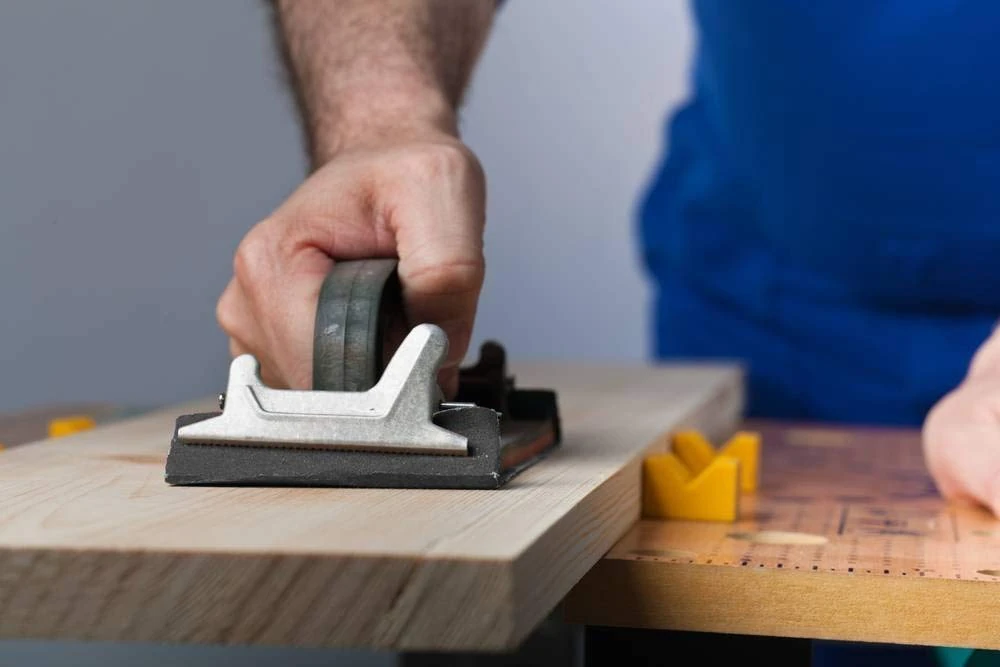
Dust control, vacuum sync, and pad health
Dust is both a byproduct and an abrasive contaminant. When fines accumulate under the disc, they skid and smear, burnish earlywood, and score latewood—all precursors to visible swirl. Active extraction is the antidote, but it must be tuned.
Airflow: Prioritize high air volume at the pad. A vacuum with strong sustained CFM and adequate static pressure, paired with a 27–36 mm hose, evacuates fines before they clump. Small hoses choke flow and allow fines to pool. Keep the hose short where possible, and clear kinks. If your extractor offers variable suction, reduce it with soft pads to avoid pad stall, and increase it with hard pads and fine grits to keep the scratch clean.
Interface and pad perforations: Match disc hole patterns to pad and pad protector. Misalignment sacrifices airflow and creates “dust donuts” that imprint as localized haze. Interface pads are powerful on profiles but introduce compliance; use the thinnest interface that controls the shape to reduce rounding and edge swirls. On flat panels, go without an interface when possible, or use a minimal-thickness film protector.
Pad health: Hook-and-loop pads wear. Melted hooks from heat or clogged fibers from resin reduce disc grip, causing micro-slip that makes the orbit more predictable—and therefore more visible—under finish. Inspect pads regularly; if discs spin off-axis, or the pad face feels glossy and patched, replace the pad. Keep pads clean with a rubber stick or quick blast of compressed air (gentle, from a distance to protect hooks).
Heat management: Heat is the silent swirl maker. Reduce heat by changing discs early, decreasing pressure, and increasing OPM slightly at higher grits to maintain cut while lowering dwell. Take breaks on resinous zones and knots. If a disc feels tacky on removal, you’re running too hot.
H3: Vacuum sync workflow
- Fit a multi-hole pad and disc combo; seat the hose firmly.
- Start the extractor a second before the sander contacts the work; keep the pad moving.
- Periodically lift the pad off the surface slightly while moving to clear fines (without stopping rotation).
- After each grit, vacuum the work and the disc face; inspect under raking light before advancing.
Clean cutting edges, clean pads, and clean air equal clean scratch patterns—and fewer swirls.
Workflow: grit progression and cross-hatching
A disciplined progression erases the previous grit’s scratches completely, leaving only uniformly shallow, randomly distributed marks that disappear under finish. The two levers you control are grit jumps and path geometry.
Grit jumps: As a rule-of-thumb, step by factors of 1.5–2.0 in grit size for wood. Common sequences: 80→120→150→180→220 on hardwoods; 100→150→180→220 for pre-surfaced stock; 120→180→220 for veneer. Skipping from 120 to 220 often leaves 120’s deeper scratches partially embedded, which then read as swirls. If time is tight, never skip the step that erases the deepest scratch you created.
Cross-hatching: Move the sander in slow, overlapping passes with a slight angle (10–15 degrees) to the board’s length, then on the next pass set, angle the opposite way. This subtle crosshatch blends micro-directionality while keeping most movement aligned to the grain. Finish each grit with one light pass oriented with the grain to reduce highlight catch.
Coverage control: Pencil the surface lightly for each grit; erase the marks uniformly before moving on. If you still see marks after a reasonable dwell, your disc is spent or your pressure is inconsistent. Never “spot-finish” at a higher grit to save time; go back to the grit that can fully erase the defect, then restart your progression in that area.
Five field-proven tips for swirl-free results
- Use a guide coat: Lightly mist a dry sanding guide coat or pencil grid before each grit; it reveals incomplete scratch removal instantly.
- Set a dwell budget: 60–90 seconds per square meter per grit for pre-finished stock; exceeding that by much means change discs or re-evaluate grit choice.
- Align the hose: Route the vacuum hose over your shoulder; a dragging hose changes pad angle and writes crescents.
- Edge protocol: Keep at least two-thirds of the pad on the work; approach edges from the field toward the edge, then lift off while still moving.
- Lock the last pass: After 220, lightly mist with water (for waterborne systems) to raise grain; re-sand at 220 with one feather pass to lock the surface.
By treating grit steps as contracts you must fulfill, not suggestions, you convert “good enough” scratch patterns into finish-ready surfaces.
Inspection, finishing runs, and defect repair
Inspection closes the loop. Under raking light, the surface should present an even matte with no directional bias. Drag a gloved fingertip across; roughness variance often correlates with incomplete scratch replacement. Wipe with denatured alcohol or naphtha to preview how a finish will amplify the surface. If swirls appear, map them: are they localized near edges (tipping), across resinous fields (loading/heat), or randomly scattered (spent discs or dust contamination)?
Defect repair is surgical. Don’t leap to finer grits. Identify the deepest visible scratch in the area and drop back to the grit that can erase it efficiently—often two steps coarser than your last pass (e.g., if at 220, return to 150). Re-establish the crosshatch, clear the pencil grid, and step back through the progression. Replace the disc before the final pass to ensure sharp, consistent cutting edges, and reduce pressure to feather the blend line.
For final pre-finish passes on flat panels, consider a hard pad at 220 with a 3–5 mm orbit and a very light, single-grain-direction pass. This tightens reflectivity and reduces the chance that any residual randomness in the scratch pattern will telegraph under film. On film finishes between coats, switch to film-backed 320–400 with a hard pad, high OPM, and maximum extraction for dust-free leveling.
H3: Edge and profile control
- Use a thin interface pad only when the shape requires it; keep motion continuous and pressure feathered at transitions.
- Hand-sand break edges very lightly in the final grit with a cork or rubber block to control highlight lines; then blend with a single ROS pass in the same grit.
- For inside corners or narrow rails, stop the ROS shy of the boundary and finish by hand in the progression’s final grit to avoid pad edge imprint.
Document what worked. Note species, abrasive line, orbit/pad settings, and progression. Building a shop-specific playbook dramatically shrinks the distance between raw stock and swirl-free finish.
20 Random Orbital — Video Guide
A helpful companion to this guide is a beginner-friendly video that shares twenty practical techniques for random orbital sander control. It walks through foundational habits—disc selection, speed control, dust extraction, and body positioning—that prevent common swirl-inducing mistakes.
Video source: 20 Random Orbital Sander TIPS for Beginners
800 Grit Sandpaper Sheets (50-pack) — 9x11 in Silicon Carbide Abrasive for Wet or Dry Use — Smooth-polish abrasive for refining gloss layers on clear coat, resin, or composite surfaces before final buffing. (Professional Grade).
Frequently Asked Questions (FAQ)
Q: Why do swirls appear only after I apply finish?
A: Finishes increase contrast by filling and highlighting scratch valleys. Under bare wood, shallow scratches scatter light diffusely and may look uniform; after finish, directional or deeper scratches become visible as arcs. A solvent wipe before finishing previews this effect.
Q: What grit should I stop at before staining hardwood?
A: For most hardwoods, stop at 180 or 220 depending on stain type. Oil-based wiping stains often benefit from 180 for better uptake; gel stains and dyes can go to 220. Always test on offcuts to balance color depth against scratch visibility.
Q: How much pressure is appropriate on a ROS?
A: Use just enough to keep the pad fully engaged without slowing rotation—roughly the sander’s weight plus about 1–1.5 kg of hand load. If the pad’s rotation audibly drops or the tool feels sticky, you’re pushing too hard.
Q: Are interface pads safe on flat panels?
A: They’re safe if thin and used with light pressure, but they increase compliance and edge rounding risk. For flat, high-visibility surfaces, prefer a medium or hard pad without an interface; reserve interfaces for profiles and curves.
Q: Can I skip from 120 to 220 if I’m short on time?
A: Skipping usually leaves partially erased 120 scratches that telegraph as swirls. If time is tight, choose 120→180→220 and honor coverage at each step. It’s faster than repairing defects after finishing.