
Dustless Sanding Setup with HEPA Dust Extractors
On a quiet Saturday morning, you roll your sanding cart to the center of the room. The cabinets are masked, the floor is taped, and the sander’s pad lies face-up like a promise. The house is occupied—kids already drawing at the kitchen table—so emitting a fine fog of particulate is not an option. This is where dustless sanding becomes more than a phrase; it’s a standard of care. Switch on the extractor; it hums to life with a steady pitch, a different sound than a shop vac—lower, tighter, purposeful. The sander’s brush skirt seals to the workpiece, and the paper’s multi-hole pattern lines up with the pad like a gasket. Your first pass is a whisper of rotation and consistent cut. No haze in the light shafts, no grit on your tongue, no need to pause when someone walks by. The job feels clean in a way that’s as much about process control as it is about comfort.
A good HEPA setup transforms surface prep. You can stay in the cut longer because you’re not smearing resin and fines back into the scratch pattern. The abrasive works cooler, the profile is more predictable, and you spend less time wiping and re-wiping. Whether you’re leveling a filler seam on MDF doors or dialing in a pre-finish on a maple top, source-captured dust control adds precision. It’s measurable—lower airborne particle counts, cleaner swarf management—and it’s palpable: less post-pass cleanup, more true assessment of the surface in situ. You sand with the confidence that your last grit is the profile the coating will actually see, not a profile partially buried under contaminants. The difference isn’t just clean lungs and tidy floors; it’s higher throughput with fewer reworks.
Quick Summary: Configure a sealed HEPA extractor, right-size hoses and ports, align abrasive hole patterns, and tune airflow to achieve true dustless sanding without sacrificing cut speed.
HEPA Extraction Fundamentals
HEPA is a performance threshold, not a marketing adjective. In practice, you want a certified HEPA filter capable of 99.97% efficiency at 0.3 microns (or H13 at 99.95% MPPS in EN terms), paired with a sealed system—every gasket, seam, and bag interface must prevent bypass. A “HEPA-rated filter” installed on a leaky canister is not a HEPA system. The extraction chain begins at the pad: capture happens at the interface where dust is generated, not downstream at the bin.
Airflow parameters drive capture and transport. Random-orbit sanders typically need 100–140 CFM with at least 80–100 inches of water lift to maintain entrainment through 27–36 mm hoses. Capture effectiveness relies on both volumetric flow and velocity; fine dust requires transport velocities above roughly 3,500 feet per minute to avoid settling in the hose. Smaller hoses increase air velocity for a given CFM but impose more static pressure loss. The goal is to match hose diameter and length to the extractor’s fan curve so you remain in a high-efficiency operating point.
Auto-start (tool-triggered) extraction stabilizes workflow and protects filters by ensuring suction is present during spin-up and run-down, where the largest plume is produced. Antistatic hoses are essential; without them, charged fines cling to the inner wall, accumulate, and create blockages—plus you and the tool will literally shock each other. Use fleece or self-cleaning filter bags to capture bulk and protect the HEPA cartridge; never run bagless for sanding fines, as it will load the filter prematurely and collapse airflow mid-task.
Finally, confirm the sander-pad-to-paper-to-hose path is intentional: a well-shrouded pad, a correctly vented backing plate, and a disc whose perforations align with the pad’s holes. The tightest extractor in the world can’t compensate for a misaligned abrasive starved of airflow.
Designing a dustless sanding system
Start by scoping your workload. For cabinetry, millwork, and MDF prep, 3–5 mm orbit sanders coupled to compact HEPA extractors provide sufficient pull and mobility. For drywall or floor sanding, you’ll need higher CFM, larger diameter hoses, and tools designed for distributed capture. Select an extractor with: true HEPA certification; sealed housings; antistatic plumbing; and a filter-cleaning strategy (automatic pulse or manual blast) appropriate for your dust load.
Build the connection stack carefully. Choose a hose that matches the tool’s port: 27 mm (1-1/16 in) gives higher velocity for fine dust; 32–36 mm (1-1/4 to 1-3/8 in) is better for heavy loading and longer runs. Keep adapters minimal and tight; every step-up or step-down introduces turbulence and loss. If your sander offers pad options, pick the backing plate that optimizes airflow for your abrasives—a multi-jetstream or 15-hole plate can make a measurable difference in capture efficiency with perforated discs, while mesh abrasives benefit from under-pad venting and a compliant interface pad.
Select bags and filters as a system. Self-cleaning fleece bags periodically collapse and re-inflate to shed fines, maintaining airflow during continuous sanding. Pre-filters (fleece sleeves, cyclonic pre-separators) are helpful when generating lots of coarse material, but for fine sanding dust, too much upstream separation can reduce velocity and let particles fall out. Monitor bag fill visually or by rise in static pressure (audible pitch change, reduced pad stick). Replace before suction drops below your transport threshold.
Finally, define the sanding workflow around capture. Always connect extraction before any abrasive touches the surface. Align discs to pad holes; for mesh, ensure the mesh spans fully and the pad protector is clean and flat. With the tool running and extraction on, seat the pad, then engage movement—never start stationary on the surface, which produces a concentrated plume. Dustless sanding is a choreography of airflow, motion, and abrasive geometry.
Hose, Port, and Airflow Optimization
Air moves where resistance is lowest; your job is to reduce losses without sacrificing velocity at the pad. Hoses cause most of the pressure drop: longer lengths, smaller diameters, and tight coils add drag. If you need reach, prefer a short main hose with a lightweight whip at the tool rather than one long length. Keep bends gentle. Replace damaged cuffs; micro-leaks at cuffs and adapters are stealthy airflow killers.
Match the extractor’s fan curve to your hose-tool combination. If your unit has variable suction, set it high enough to maintain capture yet low enough to avoid pad stick or swirls from over-vacuuming. Excess suction on soft substrates can “print” the pad hole pattern into the surface or increase heat, glazing the abrasive. For a quantitative approach, a small differential manometer across a flow restrictor (or a dedicated flow gauge at the cuff) lets you repeatably hit the sweet spot for each tool-substrate pair.
Static control matters beyond comfort. Antistatic hoses and grounded extractors prevent charge buildup that otherwise cements fines to the hose wall and pads. In dry climates, a grounded coupler between hose and tool can reduce cling dramatically, restoring transport velocity and reducing filter loading.
Actionable setup tips:
- Keep total hose length under 5–7 m when possible; beyond that, step up one size in diameter to recover CFM, then add a 27 mm whip for the last meter to preserve pad velocity.
- If pad “suction lock” occurs, reduce extractor power slightly or use a higher-flow backing plate with additional vent channels.
- Use a mesh disc with a 3–5 mm interface pad on soft substrates; it conforms better, maintains airflow through the mesh, and prevents edge loading.
- Inspect cuffs and adapters with a bright light while running extraction; any visible dust stream or audible hiss is a leak to seal or replace.
- Standardize on one hole pattern across your discs and pads to eliminate misalignment errors; keep a simple jig to center discs quickly on-site.
According to a article.
Abrasives and Surface Prep Synergy
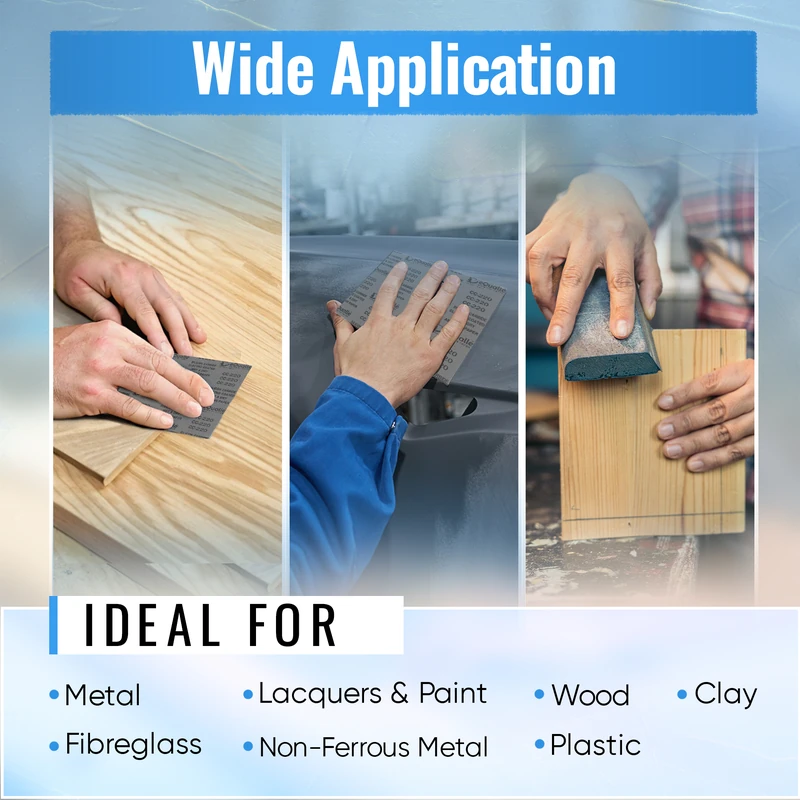
Abrasive choice impacts not just cut rate and scratch uniformity, but also how effectively dust is evacuated at the point of contact. Open-coat papers and stearated (load-resistant) coatings reduce clogging in resinous woods and paints, keeping the cutting edges exposed and minimizing heat that can reflow contaminants. Multi-hole perforated discs align with vented pads to create distributed suction across the face; this lowers the boundary layer of dust and clears swarf before it can smear into the scratch pattern.
Mesh abrasives present near-total coverage perforation. They excel in dust evacuation, particularly on fine grits where particle sizes approach what conventional hole patterns struggle to capture. However, mesh can feel slightly slower in pure stock removal compared to aggressive ceramic grains on paper backings; mitigate by selecting a sharper grain (ceramic, ceramic-alumina blends) in the same grit rating or stepping one grit coarser when initial leveling is the priority. Use an interface pad with mesh on contoured or painted substrates to avoid printing and to maintain airflow through the mesh’s weave.
Surface preparation dictates abrasive sequencing. For MDF seams filled with a hard filler, a short orbit (3 mm) with P120–P150 to knock down high spots, followed by P180–P220 for refinement, keeps debris manageable and extraction effective. On hardwoods heading to clear finish, a longer orbit (5 mm) with P120–P150 for leveling, then P180–P220–P240, yields a flatter panel with lower risk of dish-out—while the extractor prevents fines from packing pores. Critically, evaluate between grits under raking light; a dustless pass reveals the true surface so you’re not misled by loose dust dulling high spots.
The synergy is simple: better dust removal cools the cut, cooler cuts reduce loading, and clean abrasives cut more consistently. That loop makes coatings lay down smoother because the true scratch profile is preserved—no micro-nibs of embedded dust waiting to telegraph through primer or topcoat.
Field Setup, Testing, and Maintenance
Before the first pass, treat your extractor like a pressure vessel. Fit a new fleece bag, seat the HEPA filter with intact gasket, and close the lid firmly. Verify auto-start with your sander; a one-second delay at spin-up still captures the plume if the hose is already at the work. Check the pad: clean hook-and-loop, no embedded debris, and the backing plate selected for your abrasive type. For mesh, add a pad protector to prevent hook wear and maintain even suction.
Perform a quick functional test. With extraction running, block the hose cuff with your palm: you should feel strong pull and hear a steady rise in pitch; weak pull indicates leaks or a full bag. At the pad, place a small sheet of lightweight paper against the disc—the extractor should hold it flat without the sander running. If not, inspect the path: pad holes, interface pad alignment, disc holes, and hose integrity. A handheld particle counter, if available, provides objective feedback; baseline ambient levels, then compare during sanding—effective setups show negligible rise in PM2.5 at head height.
Maintenance is a throughput issue, not just a cleanliness chore. Replace bags at 70–80% fill; beyond this, airflow dives and fines will bypass to the filter. Don’t bang HEPA cartridges; use the extractor’s self-clean pulse or a gentle vacuum on the clean side. Inspect hoses for internal buildup; a narrow bore of caked fines near the cuffs can halve your effective diameter and destroy transport velocity. Periodically check antistatic continuity from tool to extractor; high resistance indicates a broken path and invites clogging.
Finally, instrument your process. Keep a small log of tools, hose lengths, extractor settings, abrasives, and observed cut/cleanliness. Reproducibility is the mark of a professional dustless workflow. When a result is excellent, replicate that exact stack. When it isn’t, change one variable at a time—start with airflow, then abrasive, then pad/interface.
How to sand — Video Guide
This short demonstration focuses on sanding two MDF doors during the second prep stage—leveling a carpenter’s filler at the seams and refining the surface. The operator runs a Festool random-orbit with compatible extraction, showing how proper pad choice, disc alignment, and controlled passes keep seams flat without telegraphing edges.
Video source: How to sand doors with Festool.
180 Grit Sandpaper Sheets (25-pack) — 9x11 in Silicon Carbide Abrasive for Wet or Dry Use — Reliable grit for producing a uniform texture on wood, metal, or filler layers—often used before varnishing or applying topcoats. (Professional Grade).
Frequently Asked Questions (FAQ)
Q: Is a shop vac with a “HEPA filter” enough for sanding?
A: Usually not. You need a sealed HEPA system with verified efficiency and controlled airflow. Many shop vacuums lack sealed housings, antistatic plumbing, and the static pressure necessary to maintain transport velocity through small-diameter hoses used at the sander.
Q: What hose size is best for random-orbit sanders?
A: For fine sanding, 27 mm hoses offer higher velocity and better capture at the pad. If runs exceed 5–7 m or dust load is heavy, step up to 32–36 mm for the main line and use a 27 mm whip at the tool to maintain velocity where it matters.
Q: Do mesh abrasives always outperform perforated discs for dust control?
A: Mesh excels in dust evacuation and scratch clarity, especially at fine grits, but can feel slower in stock removal. Pair mesh with a sharp grain and an interface pad, or use perforated ceramic discs for faster initial leveling, then switch to mesh for refinement.
Q: How can I tell if my extractor bag is too full?
A: Watch for a noticeable drop in pad hold, increased dust escape, or a pitch change in the motor under load. Visually inspect the bag and replace at roughly 70–80% capacity to avoid rapid filter loading and airflow collapse.
Q: Should I lower extractor power to prevent swirl marks?
A: If suction locks the pad or drives the tool too hard into the surface, reduce power slightly or use a higher-flow backing plate. Maintain enough airflow to capture dust while allowing the sander to float and cut on its orbit, not drag on vacuum force.