
Structured Abrasives and Microfinishing Film Guide
A few evenings ago I watched a machinist finish a crank journal by feel alone. The shop lights were warm, the radio low, and the final passes looked almost ceremonial—long, even strokes of a film-backed abrasive over an oil-wet rotating shaft. He paused, wiped the journal with a clean rag, and held a portable surface meter to the steel. The digital readout settled: within spec on the first try. That level of control doesn’t happen by accident; it’s a marriage of technique, process discipline, and the right abrasive architecture. In my experience, when you want a predictable cut and repeatable finish, structured abrasives and microfinishing film give you that control in a way conventional coated papers rarely can.
If you’ve ever tried to hit a tight Ra on hardened steel or save a marginal ceramic edge without burning, you know the pain of variability—fresh sheets cut too aggressively for a few seconds, worn sheets glaze unpredictably, and hand pressure swings the results. The physics of material removal don’t forgive inconsistency. The reason structured abrasives and film-backed microfinishing products have become go-to tools in precision shops is simple: they stabilize variables. The substrate stays flat, the mineral exposure remains uniform, and the cut rate decays in a known curve instead of dropping off a cliff.
In this review, I’ll step through the material science behind structured abrasives, how to choose microfinishing film for your specific job, what process variables matter most, and how to verify your results with simple measurements you can trust. Think of this as a field engineer’s notebook—focused on testable decisions, not marketing. Whether you’re finishing hardened tool steel, dialing in a bearing race, or polishing composites before bonding, the aim is the same: predictable cut, predictable finish.
Quick Summary: Structured abrasive geometries and film-backed microfinishing products reduce variability by delivering uniform grain exposure, stable backing, and controllable process parameters, enabling repeatable cut and finish.
Why structured abrasives matter
“Structured abrasive” refers to engineered micro-geometry on the abrasive surface—most commonly replicated pyramids or equally spaced nodules loaded with abrasive mineral in a resin matrix. Each structure fractures in a controlled way, continuously exposing fresh, sharp mineral as you work. Compared to conventional coated abrasives, which rely on random grain distribution and binder breakdown, the wear of structured products is more linear and predictable. That’s the central value proposition: a steadier cut curve and less dependence on operator “feel.”
From a materials standpoint, three components drive performance:
- Mineral: aluminum oxide for toughness and general metals, silicon carbide for friability and hard/brittle materials, ceramic alumina for aggressive yet cool cutting, and diamond or CBN for superhard substrates.
- Binder: modern resins are tuned for controlled micro-fracture; the resin must be tough enough to hold structure yet brittle enough to renew the cutting edges under load.
- Substrate: film backings (typically polyester) provide low-stretch, high-flatness support so the structures contact the work uniformly. Paper and cloth can flex and telegraph underlying irregularities.
When you load a structured abrasive against a workpiece, the local pressure concentrates at the structure tips. As the tips dull or break, they reveal new sharp mineral with minimal change in contact area. You get fewer “hot seconds” of early aggression and smoother decay over life. That translates to better process windows in applications like crankshaft finishing, cam lobes, surgical instruments, and composite layup prep.
In practice, structured abrasives also tolerate lighter axial force for the same removal rate compared to flat-coated sheets. That’s useful in hand processes where inconsistent pressure can skew outcomes. With a low-stretch backing and deterministic structure geometry, your pressure-to-cut ratio is more stable, which is exactly what you need when targeting micrometers of stock removal and narrow Ra bands.
Choosing microfinishing film for consistency
Microfinishing film is a family of abrasive products on a dimensionally stable polyester backing, with tightly graded mineral and bond systems optimized for fine stock removal and finishing. If structured abrasives are about engineered topography, microfinishing film is about uniformity—consistent particle size, layer thickness, and backing flatness—so every square millimeter contributes similarly to the cut.
Start with mineral and grade. Common microfinishing film grades range from roughly 125 µm down to 1 µm. For steels and general metals, aluminum oxide is a sensible baseline, offering durability without excessive heat. For carbide, glass, or ceramics, silicon carbide or diamond grades control micro-chipping while maintaining edge integrity. Matching mineral hardness to the substrate’s hardness ensures the film cuts instead of burnishing.
Next, consider the backing and attachment. Polyester film thickness affects compliance: 3–5 mil film remains flexible yet flat; 7–10 mil supports flatter interfaces and reduces edge roll-over on chamfers. Hook-and-loop is convenient for tool-less changes but adds compliance that can blur fine geometry; PSA-backed discs or wraps keep the stack rigid for tighter tolerances. On mandrel-based systems, ensure concentricity and smooth joint transitions—any thickness step at the splice will print into your surface.
Grading accuracy matters. Film abrasives are often graded to narrow distributions (e.g., FEPA P, ANSI, or micron rating). A properly graded 15 µm film will present a consistent asperity envelope, which translates into an Ra that converges quickly as the film “settles.” In contrast, broader grain distributions can scratch beyond your target finish, requiring extra steps to remove outliers.
Finally, think about coolant and loading. Microfinishing film typically benefits from light oil or water-based coolants that reduce swarf packing between grains and manage heat at the interface. Oil-based coolants extend life on ferrous alloys; water with surfactant is often sufficient for composites and plastics. Your choice affects both the thermal profile and debris evacuation, which in turn influences the predictability of the cut over the consumable’s life.
Test results: predictable cut metrics
When I evaluate predictability, I care about two things: how tightly the removal rate clusters over time and how the surface finish converges with minimal outliers. In a controlled bench test, you can approximate production conditions without expensive rigs. Here’s a simple, repeatable setup:
- Drive: a variable-speed drum or rotating fixture with accurate RPM control.
- Force: a spring arm or weighted lever measured with an inline scale or force gauge; a handheld luggage scale works well for calibrating downforce to a known pound or kilogram value, then convert to psi at the contact patch.
- Metrology: a surface profilometer for Ra/Rz and a micrometer or dial indicator to track removal per pass; scale mass loss is also valid for coupons.
- Lubrication: a consistent drip rate or flood to keep the interface stable.
Run each abrasive condition for fixed time steps (e.g., 30 seconds), logging removal and Ra after each interval. Plot removal rate vs. time and Ra vs. time. Structured abrasives and well-graded microfinishing film should produce smoother curves and lower standard deviation between repeated runs than conventional coated sheets on paper.
According to a article, replicated microstructures maintain fresh cutting surfaces as they wear, which is consistent with the flatter removal rate curves I see in shop trials. You can spot this behavior in the early life region: instead of a sharp drop from “too aggressive” to “not enough,” the slope decays gradually, making it easier to hit a target dimension without overshooting.
On finish metrics, watch for scratch outliers. A telltale of uneven grain size is occasional deep scratches that persist several steps later. High-quality microfinishing film limits these outliers, so Ra converges quickly and Rz tracks predictably. When changing grades (say from 30 µm to 15 µm), you want the new grade to remove the previous texture uniformly by 80–90% within the first minute at standard pressure. If you need longer, double-check pressure, coolant, or whether the film is glazing prematurely. Repeat three runs per condition; predictability is about variance as much as averages.
Process variables you can control
Even the best abrasive can’t overcome sloppy process control. The variables that matter most—pressure, speed, contact geometry, lubrication, and dwell—are all controllable with simple tools.
Pressure: For fine finishing on steel with film-backed abrasives, 3–7 psi at the contact patch is a good starting range; delicate edges or heat-sensitive alloys may prefer 1–3 psi. Calibrate using known weights or a force gauge. Excess pressure can collapse structures or load the film; too little and the film burnishes rather than cuts.
Speed: Expressed as surface speed (m/s or SFPM). Film abrasives typically like moderate speeds that evacuate swarf without overheating—think 8–15 m/s for metals with oil, lower for plastics and composites. If you see streaking or smeared resin, slow down or improve coolant.
Contact geometry: A compliant pad increases conformity and reduces scratch depth but can inflate Ra if too soft. Rigid mandrels keep geometry tight but concentrate load; pair with light pressure and adequate coolant. For cylindrical finishing, a slight wrap angle increases contact area, reducing pressure per unit area and stabilizing the cut.
Lubrication and cleanliness: A steady, clean lubricant stream stabilizes interface temperature and flushes debris. Stray grit from coarser steps is the most common cause of persistent scratches—wipe the surface and change gloves between steps if you’re chasing very low Ra.
Dwell and passes: Short, consistent dwell times prevent local overheating and geometry drift. When transitioning grades, aim for timed passes rather than “until it looks right.” If available, time your passes and count rotations; predictability improves when you remove operator guesswork.
Document your recipe: grade, mineral, backing thickness, pressure, speed, lubricant, pass count, and target Ra/stock removal. Good abrasives make consistency possible; written processes make it repeatable across operators and days. The payoff is fewer reworks and tighter confidence intervals around your finish metrics.
Practical tips for shop and lab use
These are the actionable techniques I rely on to make structured abrasives and microfinishing film deliver predictable results day in and day out:
Gauge your force, don’t guess: Use a handheld luggage scale or inline force gauge to set and verify downforce before you start. Translate to psi using the actual contact width to keep trials comparable. This reduces between-operator variation dramatically.
Step down in logical increments: Move from 60–45–30–15–9–3 µm (or comparable) rather than skipping grades. Each step should remove roughly 80% of the previous texture within your standard dwell. If it doesn’t, don’t increase pressure; extend dwell slightly or verify speed and coolant.
Choose backing stiffness for the geometry: For flat work, use thicker film (7–10 mil) and rigid pads to prevent edge rounding. For contours, thinner film (3–5 mil) with a slightly compliant pad preserves contact while avoiding facetting.
Keep the interface clean: Between grades, wipe the workpiece and the mandrel/pad with lint-free cloth and solvent compatible with your coolant. One stray coarse grain can carve a scratch that wastes two grades of effort.
Index and rotate consumables: On wraps and belts, mark the start point and rotate index positions between runs to distribute wear evenly. Uneven wear changes local pressure and introduces variability you’ll see on the profilometer.
Pre-condition, don’t overrun: Some films and structured surfaces benefit from a brief “break-in” pass to knock down initial asperity peaks. A 10–20 second, low-pressure pre-pass stabilizes the first data point without prematurely dulling the surface.
Confirm with the right metric: For sealing surfaces, Ra might be enough; for bearing surfaces, also watch Rz and skewness (Rsk). Predictability isn’t just average roughness—controlling deep valleys prevents lubrication issues later.
Store intelligently: Keep films flat in sealed sleeves away from heat. Rolled films can develop a cast that fights alignment, and dust contamination becomes the invisible root cause of scratches months later.
These practices take minutes to implement and pay back in saved rework, longer consumable life, and—most importantly—results you can hit every time without heroics.
懷園開箱 20200724 3M — Video Guide
A short, hands-on video walks through the unboxing and first impressions of a 3M micro finishing film roll commonly used for precision wraps. You see the film’s backing stiffness, splice quality, and how it mounts on a simple mandrel, with a few close-ups of the abrasive layer that help explain why roll uniformity matters for predictable results.
Video source: 懷園開箱 20200724 3M 80137 Micro Finishing Film Roll 372L
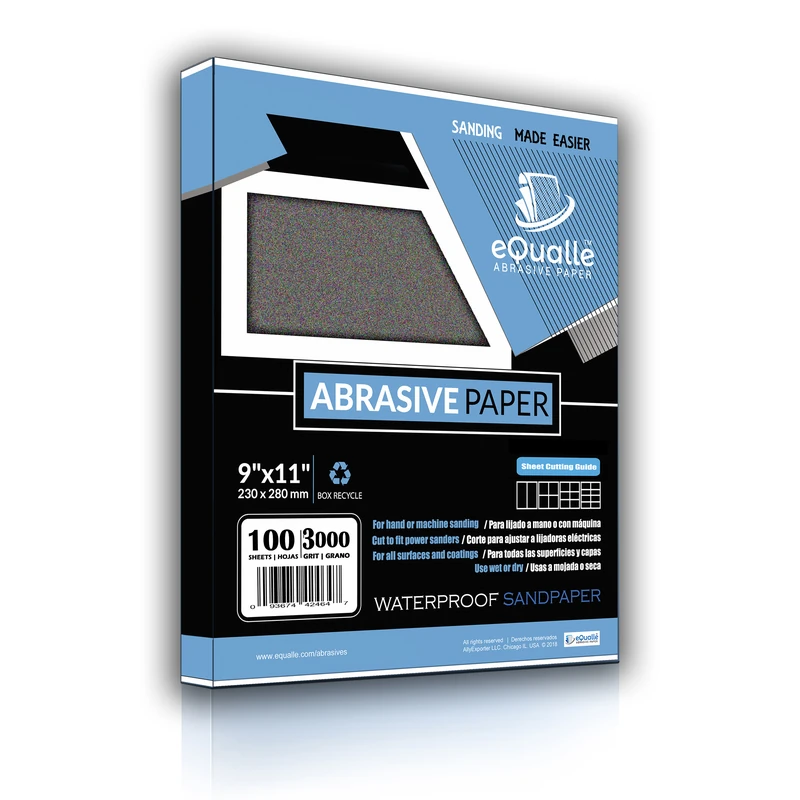
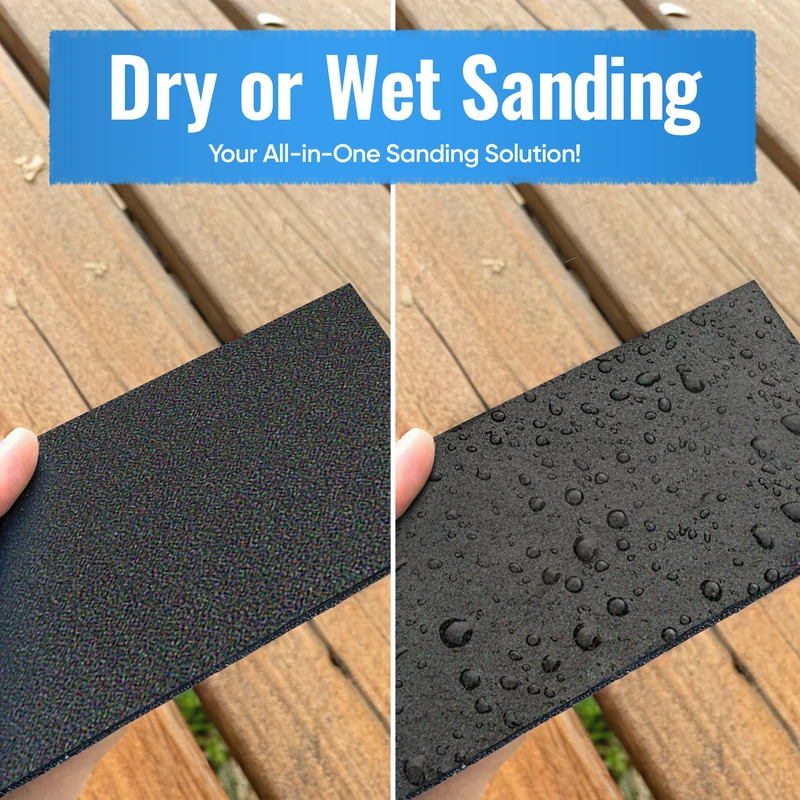
800 Grit Sandpaper Sheets (100-pack) — 9x11 in Silicon Carbide Abrasive for Wet or Dry Use — Ultra-fine grit for pre-polish refinement on paint, clear coats, or resin. Smooths imperfections without damaging the base layer. Provides optimal control when used wet or dry before 1000 or 1200 grits. (Professional Grade).
Frequently Asked Questions (FAQ)
Q: What’s the difference between structured abrasives and microfinishing film?
A: Structured abrasives use engineered surface geometries (e.g., pyramids) to renew cutting edges predictably as they wear, while microfinishing film focuses on ultra-uniform grain size and a flat polyester backing for consistent fine finishing. Many microfinishing films can also be structured; the concepts overlap but target different aspects of control.
Q: How do I pick the right microfinishing film grade for my target Ra?
A: Start from material and geometry. For hardened steel aiming near Ra 0.2–0.4 µm, a typical path is 30 → 15 → 9 → 3 µm with oil. For softer metals or plastics, use smaller pressure and potentially skip the coarsest step. Validate with a profilometer and adjust one grade at a time.
Q: Why does my finish vary even with the same film and process?
A: Common causes are inconsistent pressure, speed fluctuation under load, contaminated surfaces, or uneven pad compliance. Calibrate force (psi), verify RPM under load, clean between steps, and match backing stiffness to the part geometry to minimize variation.
Q: Can I use water instead of oil with film abrasives?
A: Yes, many films run well with water-based coolants, especially on composites and plastics. On ferrous metals, a light oil usually improves life and finish consistency by reducing heat and loading. Always check compatibility with your film’s bond system.
Q: How long should one piece of film last?
A: Life depends on pressure, speed, material, coolant, and grade. Instead of a time rule, watch for declining removal rate, rising interface temperature, and finish drift. When the cut stabilizes at an unacceptably low rate or finish degrades despite proper technique, change the film to protect consistency.