
Glass sanding for clean, safe edges: diamond vs SiC
The moment you lift a freshly cut pane, you feel it: the edge that looks fine from arm’s length but carries invisible threats—micro-chips, stress risers, and the slight granular drag under a fingertip that says the finish is not ready for handling. Anyone who has ever fit a glass shelf, framed a museum-grade print, or repurposed a bottle knows that the edge is where projects succeed or fail. That’s where glass sanding earns its keep. Thoughtful abrasive selection and disciplined technique turn a risky raw cut into a safe, optically clean edge that won’t shed fragments, haze, or propagate cracks under load. Whether you’re tuning a small arris for furniture-grade touch or chasing an optical polish on a laminated panel, the goal is the same: remove damage quickly, control heat, and leave a tight subsurface that won’t surprise you months later.
The choice between diamond and silicon carbide (SiC) is not a matter of brand loyalty; it’s materials science. Glass is hard yet brittle, with low fracture toughness and a tendency to chip out when the abrasive penetrates too deep or loads up. Diamond excels at maintaining consistent geometry under pressure and time; SiC wins at conformability and cost for short, delicate sequences. If you understand where each shines—and where they create secondary problems like subsurface damage (SSD) or glazing—you can build a repeatable process that fits your risk, budget, and finish spec.
In the sections that follow, I’ll walk through the physics of edge chipping, the performance envelope of diamond and SiC media, and a practical, stepwise workflow from raw cut to pencil polish. I’ll call out specific grit sizes, coolant practices, downforce windows, and metrology checkpoints so you can tune your own glass sanding line—handheld, benchtop, or on a small edge grinder—without relying on vague rules of thumb.
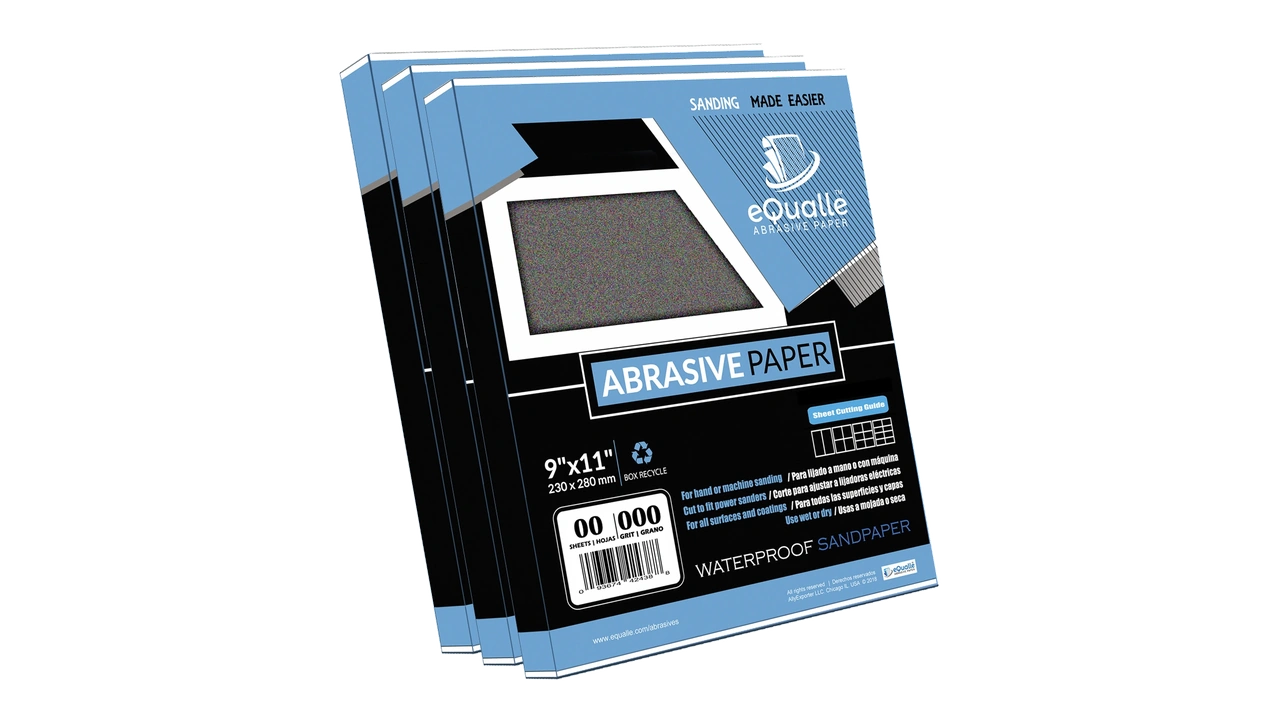
Quick Summary: Diamond delivers speed, life, and geometry control for glass edges; SiC offers flexibility and low-cost finishing—use grit sequences, coolant, and light pressure to minimize chips and SSD, then polish to spec.
Why glass edges chip and haze
Glass behaves beautifully in compression and unpredictably in tension, and edge finishing is mostly about avoiding tensile stress concentrators. Every cut leaves a network of micro-cracks and crushed zones known as subsurface damage (SSD). If your sanding step leaves SSD deeper than the final polish removes, you’re storing failure in the edge. That’s why “looks smooth” and “is safe” are not synonyms.
Abrasive action on glass is micro-fracture-dominated, not ductile cutting. The abrasive particle penetrates; stress fields form; radial and lateral cracks propagate. If the particle is too large, too dull, or pressed too hard, those lateral cracks reach the free surface and produce chips you can see. If the particle is sharp and the load is controlled, you generate shallower median cracks that stay subsurface and can be removed by subsequent finer grits. The aim is to keep the SSD depth shrinking step-by-step without allowing a coarser step’s damage to survive into the final finish.
Particle material and geometry matter. Diamond (Knoop hardness ~7000) stays sharp in most bonds; SiC (~2500–3000) is friable—fracturing to expose fresh edges as it wears. Bonds matter, too: resin bonds run cooler and forgive more pressure; metal and vitrified bonds hold form and cut aggressively but demand steady coolant and controlled feed. Glass itself varies: soda-lime window stock chips differently than borosilicate or aluminosilicate; tempered glass is especially edge-sensitive because the surface compression layer is thin and easily compromised by deep SSD.
Thermal effects are the silent spoiler. Dry grinding raises local temperature, which can relax surface compression and induce micro-cracks through thermal shock, especially near a sharp corner. A steady coolant film (water with a non-ionic surfactant and biocide) lowers friction, flushes swarf, and stabilizes temperature, reducing SSD and improving scratch uniformity. Finally, geometry: a tiny 0.2–0.5 mm arris (C2–C5 in furniture terms) removes the sharp tensile ridge that initiates chips while preserving dimensional accuracy.
Diamond media for precise glass sanding
Diamond is the default when you need speed, edge form control, and consistent removal rate over long runs. Its superior hardness with appropriate bond structures ensures that individual grains do not blunt quickly, maintaining a tight distribution of penetration depths. That consistency is crucial for controlling SSD and minimizing random chip-out at the edge.
For edges, resin-bond diamond belts, pads, or wheels are a practical starting point. Resin runs cooler, embeds grit securely, and is less prone to inducing brittle fracture at a given contact pressure. Metal-bond diamond wheels excel in rigidity and life, making them ideal for truing edge geometry on an edger before refining. Vitrified bonds split the difference, cutting freely with good porosity to carry coolant and swarf.
Grit selection and sequences:
- Fast stock removal or truing: D151–D91 (approx. 100–150 mesh)
- Scratch refinement: D46–D30 (325–500 mesh)
- Pre-polish: D15–D9 (800–1200 mesh)
- Optional ceria polish thereafter
Operating windows:
- Contact pressure: 0.05–0.20 MPa for hand-guided pads; 0.15–0.40 MPa for rigid wheels on edge grinders
- Surface speed: 8–18 m/s for wheels; 6–10 m/s belt linear speed; slower for hand pads
- Coolant: flooded, 0.05–0.1% surfactant; maintain laminar flow across the contact patch
Bond conditioning: Dress resin-bond with a silicon carbide stick or soft alumina; true metal/vitrified bonds with a diamond dresser. Break in new tools lightly on a sacrificial piece to stabilize initial aggressiveness.
Expect diamond to excel on:
- Long lites and repeated parts where tool life and consistency matter
- Tight dimensional tolerance edges or bevels requiring form accuracy
- Dense glass types (borosilicate, aluminosilicate) that glaze SiC quickly
Limitations include cost, the need to manage heat to avoid corner spalls, and the risk of over-aggressive cuts if operators chase speed with high downforce. Keep feeds steady, avoid bouncing at the entry/exit of the edge, and always remove enough material with subsequent steps to consume the previous step’s SSD.
Practical diamond sequences
- Seamed safety edge, fast shop work:
- D91 → D30, then Scotch-Brite-type nonwoven to deburr
- Furniture-grade satin edge:
- D91 → D46 → D15, optional short ceria pad pass
- Pencil polish (with beveled geometry):
- Metal-bond D91 wheel to set radius → Resin D46 → D20 → D9 → Ceria polish
When silicon carbide outperforms diamond
Silicon carbide remains the most cost-effective, forgiving abrasive for many edge-finishing tasks, particularly on short runs, fragile shapes, and hand workflows. Its friability is an asset: SiC particles fracture under load, continuously revealing new cutting edges, which helps maintain a sharp, cool cutting action without complex dressing routines. This self-sharpening behavior reduces the tendency to “plow” and produce broad, deep lateral cracks when pressure creeps up.
SiC shines in these scenarios:
- Hand smoothing and arrising small pieces where tactile control matters
- Thin, delicate glass where minimal contact force is critical
- Conforming to complex profiles using flexible waterproof paper or films
- Final blending before cerium oxide polish, especially on soda-lime glass
Use waterproof SiC papers or PSA-backed films on a flat, compliant block, not directly by hand; the block keeps your edge straight and spreads pressure. Wet-sand with a slow but steady water drip to keep the surface clean and cool. Replace sheets frequently—loading is deceptive on glass; a sheet that looks clean may have rounded grains that are burnishing rather than cutting, leading to haze and SSD that won’t polish out.
Typical SiC grit progression for edges:
- Rapid knockdown and arris: P240–P320 (FEPA), used with a light touch
- Scratch refinement: P600 → P800, keeping dwell equal across the edge
- Pre-polish base: P1200–P2500 before switching to ceria
If you’re transitioning from diamond to SiC in a hybrid process, keep the grit equivalence aligned. For example, switching from D30 diamond to P800 SiC is reasonable; switching from D46 to P2500 will leave deep SSD unaddressed. Maintain a 2–3× step reduction in median abrasive size at each stage.
Economically, SiC wins while your time-on-part is low and surface area is modest. Once you need throughput or you’re maintaining a radius, bevel, or consistent 90-degree edge over many parts, diamond’s longevity and geometry control usually offset its higher purchase cost. In terms of finish quality, both can achieve a polish if your sequence is disciplined; the difference is in how predictably they reach it.
Workflow: from arris to optical polish
The most robust edge-finishing process is a controlled reduction of SSD through managed grit steps, coolant, and geometry preservation. Below is a baseline workflow that scales from benchtop to small edge grinder.
- Prepare the blank
- Scribe-and-break cleanly, minimizing chips; leave 0.5–1.0 mm stock for finishing.
- Debulk any large chips with a single pass of coarse diamond (D91–D60) or SiC P240, dry, just to reduce future snags. Do not dwell; this is a shaping pass.
- Establish the arris
- Create a small 0.2–0.5 mm bevel on both faces with your chosen coarse grade (diamond resin D91 or SiC P320).
- Keep the tool angle steady (typically 45° to the edge) and pressure low. Flood water if using diamond; a wet sponge feed is sufficient with hand SiC.
- Refine and equalize
- Progress through two to three intermediate steps, reducing grit size by 2–3× each time:
- Example (diamond): D91 → D46 → D20
- Example (SiC): P320 → P600 → P800 → P1200
- Clean thoroughly between steps. Any stray coarse grain from a previous step can seed new scratches deeper than your current SSD.
- Pre-polish
- Using D9–D6 diamond resin or SiC P2500–P3000, unify the scratch field until it appears satin with no stray lines. Maintain coolant flow and minimal pressure to avoid corner spalling.
- Polish
- Switch to cerium oxide on a felt or urethane pad. Keep the slurry thin and mobile; work until the edge transitions from satin to clear, checking at glancing light angles.
Metrology checkpoints:
- After the first two steps, inspect under a bright raking light and 10× loupe for lateral chip formation at the edge—if present, reduce pressure and slow feed.
- Before polish, use a polariscope to check for stress patterns near the edge; excessive heating shows as colored fringes.
- After polish, check transparency and repeatability: uniform brightness along the edge indicates even SSD removal.
According to a article, well-trued diamond wheels maintain sharp cutting points and form accuracy, which reduces random chip initiation and helps keep SSD shallow—especially critical during the first, most aggressive passes.
Actionable tips:
- Keep it wet, not drowned: Flow 0.5–1.0 L/min across a 25 mm contact width; too much coolant can hydroplane the pad and reduce cutting.
- Float the corners: Ease pressure as you enter and exit the edge to prevent corner spalls—count “one-two” through each transition to stay consistent.
- Reset the scratch: If you see a rogue scratch after stepping down grit, back up one grit size rather than trying to polish it out; deep lines often hide deep SSD.
- Segregate tools: Dedicate pads and towels per grit; one coarse particle in your polish stage can scrap hours of work.
- Timebox dwell: For hand work, cap each grit’s dwell to 60–120 seconds per 300 mm edge before inspecting; lingering with a loaded sheet causes haze.
Troubleshooting chips, haze, and swarf loading
Chips at the edge, milky haze, and tools that suddenly stop cutting all trace back to a small set of causes: pressure, heat, contamination, and grit mismatch. Systematically diagnose with the following checks.
Edge chips or spalls:
- Likely causes: Excess pressure, too coarse a grit for the geometry, or entering/exiting the edge abruptly. On tempered glass, deep SSD can breach the compression layer.
- Fix: Reduce downforce, add a finer intermediate step, and “feather” the start/stop. On grinders, increase wheel speed slightly while reducing feed to lower chip load per grain. Verify coolant flow at the contact zone, not just into the pan.
Milky haze after polish:
- Likely causes: Residual SSD from skipping a grit, glazing of the abrasive leading to burnishing, or contaminated polish slurry with coarse particles.
- Fix: Step back to the last uniform scratch stage (e.g., D15 or P1200), re-establish a consistent pattern, then repolish with fresh ceria and a rinsed pad. Check your water hardness; high mineral content can precipitate in slurry and scratch—use deionized water for polish stages.
Long, stray scratches appearing late:
- Likely causes: Tramp grit from earlier stages, contaminated workbench, or embedded particles in a dressing stick.
- Fix: Implement a “wet-only” zone for fine stages; rinse the work thoroughly and replace towels and trays. Use fresh dressing media for fine diamond bonds.
Swarf loading and tool glazing:
- Likely causes: Coolant flow too low, resin-bond porosity clogged, or pressure too light to fracture SiC grains.
- Fix: For diamond resin, dress with a SiC stick lightly while running coolant to open pores; for SiC sheets, simply replace frequently. Increase coolant to the mid-range and restore the recommended pressure window.
Heat-related stress patterns:
- Likely causes: Dry contact, excessive dwell, or polished-to-rough transitions done too quickly.
- Fix: Keep a constant wet film; break long edges into zones and alternate sides to distribute heat. Use a thermal break—pause 10–20 seconds between repeated passes over the same 100 mm segment.
Document parameters when you solve an issue: grit, pressure, speed, coolant rate, and dwell time. Repeatable results in glass sanding come from turning troubleshooting into a controlled recipe, not just intuition.
Safety and quality control essentials
Glass dust is less chemically hazardous than crystalline silica, but respirable particles can still irritate lungs and eyes. Moreover, many shops process other siliceous materials; treat the environment as if silica is present. Wet methods are your primary engineering control. A few non-negotiables:
PPE and handling:
- Wear cut-resistant gloves with high dexterity (ANSI A3–A5) for handling; switch to nitrile during polish to avoid contaminating the pad.
- Use wraparound eye protection; a face shield is prudent for powered edge work.
- For any dry step (only limited debulking), use a P100 respirator and local capture at the source.
Coolant and hygiene:
- Maintain coolant cleanliness with a simple inline filter; biological growth creates odor and can alter surface tension, changing cut behavior. Dose a biocide per manufacturer recommendations.
- Keep polish slurries in capped containers and label by grit and date; discard when contamination is suspected.
Ergonomics and fixturing:
- Support long lites on a flat deck with soft rollers or felt strips; edge deflection under load is a hidden source of chips.
- Use stops and guides to maintain consistent angles and feed paths, reducing operator fatigue and variability.
Quality checks:
- Inspect edges with a 10× loupe and raking light after each stage; log any recurring defect patterns.
- Use a simple strain viewer (polariscope) to visualize residual stress, especially after aggressive stock removal or if coolant flow was interrupted.
- For optical work, measure Ra/Rz on a flat witness coupon processed alongside edges; the coupon reveals whether your sequence is truly converging to polish-ready.
Finally, disposal: settle tanks or simple flocculants can capture glass fines from coolant before disposal, keeping plumbing clear and complying with local regulations.
How To Sand — Video Guide
If you’re exploring hand techniques, a recent step-by-step bottle-edge demonstration shows the reality of time-on-part and the value of disciplined progression. The presenter tackles a glass bottle by hand, emphasizing the patience required to evolve from rough cuts to a safe, polished rim.
Video source: How To Sand And Polish A Glass Bottle
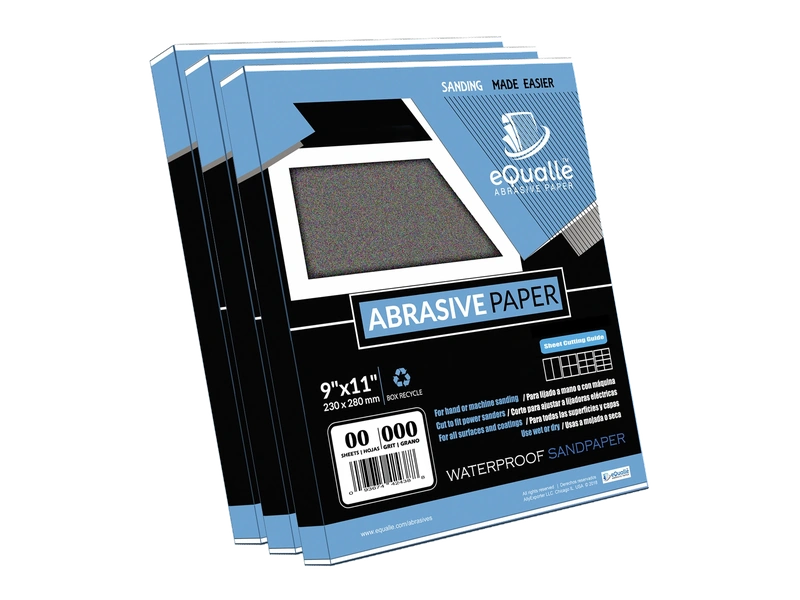
280 Grit Sandpaper Sheets (100-pack) — 9x11 in Silicon Carbide Abrasive for Wet or Dry Use — Fine finishing grit for delicate work—ideal for flattening varnish layers and creating a pre-polish smoothness on wood or resin. (Professional Grade).
Frequently Asked Questions (FAQ)
Q: Should I choose diamond or SiC for most glass edges?
A: Use diamond when you need consistent geometry, long tool life, and fast removal—especially for repeated parts or hard glass types. Choose SiC for short runs, delicate pieces, or hand work where conformability and low cost matter. Many workflows combine both: diamond for shaping and SiC for fine blending before ceria polish.
Q: What grit sequence minimizes subsurface damage?
A: Reduce median abrasive size by roughly 2–3× at each step. Example diamond path: D91 → D46 → D20 → D9 → ceria. Example SiC path: P320 → P600 → P800/1000 → P1200/1500 → P2500 → ceria. Always clean thoroughly between steps to prevent tramp grit scratches.
Q: How much pressure should I use during sanding?
A: For hand pads, keep contact pressure around 0.05–0.20 MPa—think firm but not forcing deflection. On edge grinders, 0.15–0.40 MPa is typical. If you see lateral chips, reduce pressure and increase coolant; if removal stalls with no haze, your tool may be glazed.
Q: Can I dry-sand glass if I’m careful?
A: Limit any dry contact to brief debulking passes, and capture dust at the source. Dry steps raise temperature and increase chipping risk, especially at corners. Wet sanding is strongly preferred; it cools, lubricates, and flushes swarf, reducing SSD.
Q: Why does my polished edge still look cloudy?
A: Cloudiness often traces to residual SSD from skipping a grit, a loaded abrasive that burnished rather than cut, or contaminated polish slurry. Drop back one or two grits to re-establish a uniform scratch field, refresh tools and slurry, and repolish with controlled, light pressure.