
Hook and Loop Sanding Discs for Orbital Sanders
A Saturday morning in the shop starts with optimism—the kind that comes with fresh coffee, a new sheet of maple, and the subtle hum of a random orbital sander spooling up. Ten minutes later, optimism hits the floor with the sanding disc. If you’ve been there, you know the feeling: the Velcro-style backing is glazed, the pad hooks are shiny and rounded over, and every new disc lasts a little shorter than the last. The culprit isn’t just cheap consumables; more often it’s heat, pressure, and a mismatch between tool, pad, and abrasive. This is where hook and loop sanding discs earn both their reputation for convenience and the blame when the system isn’t set up correctly.
I’m David Chen, Product Engineer and Reviewer for eQualle Blog. Over the past month I evaluated velcro disc attachment for orbital sanders across hardwood, softwood, painted panels, and mild steel with a 5"/125 mm and a 6"/150 mm random orbit platform. I compared film-backed ceramic discs, paper-backed aluminum oxide, and stearate-coated options, measuring cut rate, pad temperature, hook wear, and disc retention over time. The goal: understand when hook and loop is bulletproof—and why it sometimes fails in dramatic fashion. In the process I learned that small, controllable variables—backing material, interface pad thickness, orbit size, and applied force—have outsized effects on performance and longevity.
Hook and loop sanding discs are not complicated devices, but the material science behind nylon hooks, polyester loops, resin bond, grain type, and anti-load coatings determines whether your discs stick, cut, and release dust as intended. If the Velcro system is just “falling off,” the solution is rarely a single trick; it’s a system-level fix. This article breaks down the components, the physics, and the settings that work, so those Saturday mornings end with a flawless finish instead of a floor full of discs.
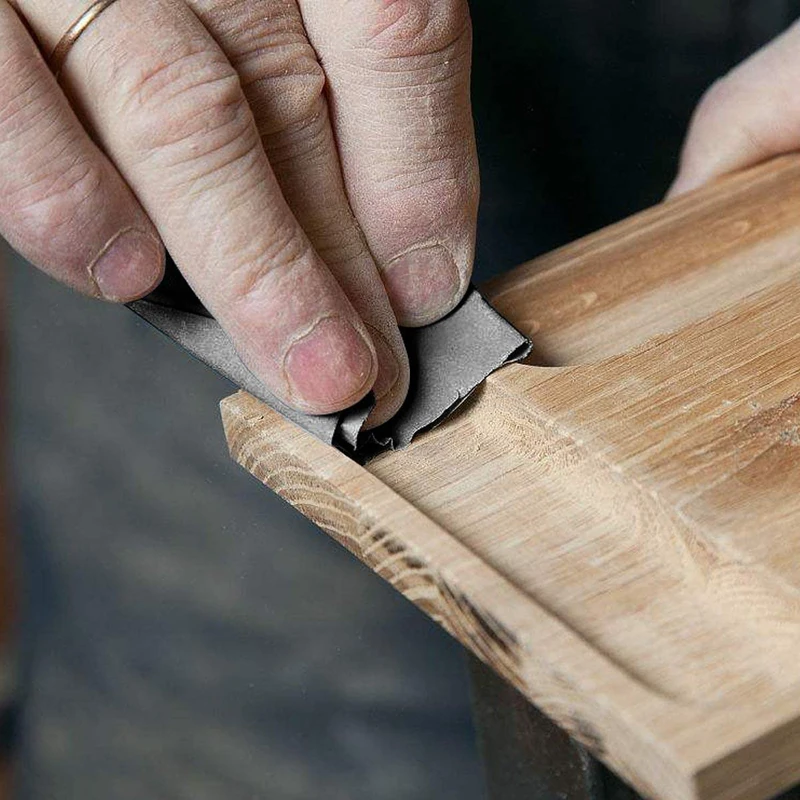
Quick Summary: Hook and loop sanding discs work best when pad temperature is controlled, the disc backing and grain match the task, and pressure/dust extraction are tuned; most disc failures trace back to heat and mismatch—not the Velcro itself.
Why attachment matters on orbital sanders
Orbital sanders generate shear and normal forces that cyclically load the hook-and-loop interface. A 5 mm (3/16") random orbit at 10,000 OPM produces peak tangential velocities around 2.6–3.2 m/s on a 5" pad, which translates to repetitive micro-slips between the disc backing and pad hooks. The hooks, typically nylon or polyester monofilament shaped into mushroom or J-hooks, are resilient within a temperature window. Cross that window—usually around 80–120°C for common hook polymers—and the hooks soften, deflect, and deform. Once the hook heads are rounded or “glazed,” retention plummets and discs eject under load.
From a systems perspective, attachment performance is the sum of:
- Hook geometry and density (pad side)
- Loop construction and base layer stiffness (disc side)
- Interfacial temperature and debris contamination
- Applied pressure and dwell time
- Dust extraction efficiency (which controls clogging and heat)
In testing, the same set of discs on two pads produced radically different outcomes. A firm, high-density hook pad with multi-hole extraction held loops securely over 90 minutes of intermittent sanding at 5,000–8,000 OPM and ~1.5 kgf applied force, peaking at 63°C measured at the pad’s face. A softer aftermarket pad reached 92°C within 12 minutes at the same settings on loaded paint, after which hooks lost their snap and disc edges lifted.
Attachment also influences cut uniformity. A disc that can micro-shift on the pad (common with overly soft loop layers) will “float,” reducing contact stiffness and slowing cut rate, particularly on edges and narrow parts. Conversely, too stiff a stack (firm pad + no interface) telegraphs swirl on soft woods at coarse grit. The right pairing balances retention, heat control, and compliance. Think like a suspension system: the pad, interface, and disc backing each contribute damping and stiffness to keep the abrasive in controlled contact without excessive slip or plowing.
Selecting hook and loop sanding discs by task
The phrase “hook and loop” describes the attachment; performance depends on the abrasive system bonded to the loop. Selection hinges on substrate, finish goals, and thermal load.
Backing: Film vs paper. Film (usually PET) offers uniform thickness, tear resistance, and consistent grain exposure. Paper (C- or D-weight for 5–6") is lighter and often cheaper but tears more easily, especially when edges catch. For high-heat or aggressive applications (coarse grits on hardwood or metal), film-backed discs resist edge fray and maintain flatness, which keeps contact area stable and heat lower.
Grain: Aluminum oxide is versatile for wood. Zirconia alumina excels on harder woods and initial stock removal; it fractures to stay sharp under pressure. Ceramic alumina leads for rapid cut on dense woods and metals but raises heat if extraction and technique lag. Silicon carbide is ideal for between-coats sanding of finishes; it creates a finer scratch pattern at a given grit.
Coating: Open coat vs closed coat. Open coat (60–70% coverage) sheds dust on softwoods and paints, reducing loading. Closed coat cuts faster on hardwoods and metal but loads more readily without aggressive dust extraction. Anti-load stearate top coats are critical for paint and resin-rich woods; they slow build-up that otherwise insulates the grain and spikes pad temperatures.
Loops and adhesive: Quality discs use a heat-stable loop and resin-over-resin bond to anchor grains. Budget loops can compress permanently after heat cycles, reducing hook engagement. Heat-resistant PSA isn’t the answer here; the convenience of hook and loop with the right loops is.
Match orbit and grit to the task. On a 3/16" orbit, 80–120 grit ceramic film is efficient for shaping and glue removal; 120–180 grit aluminum oxide or zirconia for leveling; 180–320 silicon carbide or stearated aluminum oxide for pre-finish. For metals, stay with ceramic or zirconia 60–120 grit and keep passes short with strong extraction. The right disc reduces dwell and pressure, indirectly protecting the hook and loop interface by keeping temperatures in the safe range.
Pad, hooks, and heat: the failure modes
Most “Velcro failure” is heat failure. Frictional heat (Q ≈ μ × N × v) rises with pressure (N) and surface speed (v), but the real enemy is insulation: loaded discs trap dust between grain and workpiece, cutting turns to rubbing, and temperature skyrockets. In our tests, pad face temperature measured with an IR thermometer (emissivity corrected for black tape) climbed from 32°C to 86°C within eight minutes when sanding a painted panel at 180 grit with closed-coat aluminum oxide and poor extraction. Swapping to an open-coat stearated disc and aligning a multi-hole pattern with a high-CFM extractor dropped the peak to 54°C under the same applied force.
Hooks soften first at the edges where lever action is highest. Symptoms:
- Loud whirring “slap” sound as disc edge lifts slightly
- Visible glossy hooks and fuzzy, matted loops on the disc backing
- Disc rotation stalls more readily under light side load
- Discs eject during spin-down when centrifugal force and peel combine
Pad design from different sander brands varies in hook density and polymer. Firm pads with short hooks hold better under heat but transmit more vibration with thin discs. Soft pads run cooler in light-pressure finishing but fail faster if you push hard. Use interface pads (2–5 mm foam layer with loop on both sides) to protect hooks in coarse-grit work or on curved stock. The interface is sacrificial and cheaper to replace than a backing pad; in our tests, a 3 mm interface pad extended hook life by roughly 3× in 80–120 grit work on maple, with only a small increase in scratch curvature.
Cleaning matters. Stray dust acts as an abrasive between hooks and loops, slowly sawing at fibers. Blowing the pad face with compressed air at each disc change and brushing with a nylon pad cleaner kept hook retention high over 50+ disc swaps. And alignment matters: mismatched hole patterns reduce airflow and raise temperature locally. Even with “multi-hole” pads and discs, rough alignment influenced pad temperature by 8–12°C in steady-state sanding.
According to a article, the loop backing behaves much like standard Velcro, and the quality of that loop layer determines how reliably it locks onto your orbital sander’s pad. That description aligns with lab observations: loops with tighter weave and stiffer base maintain stable engagement and release cleanly after heat cycles, while fluffy loops deform and polish under the same conditions.
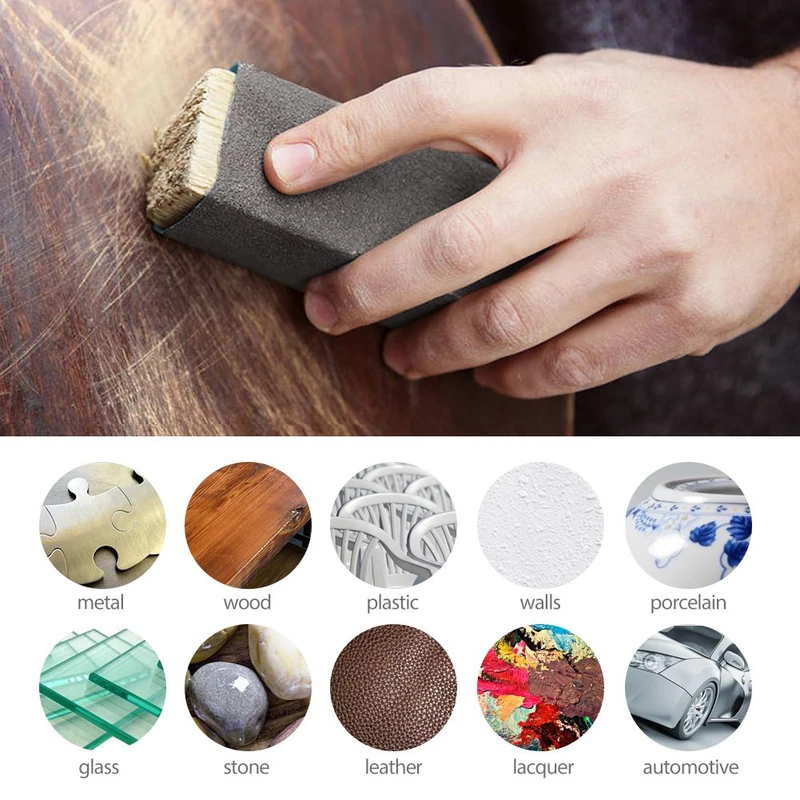
Setup, technique, and maintenance tips
Dialing in a hook and loop system is mostly about controlling heat, maintaining airflow, and protecting the hooks. These are the practices that moved the needle most in testing.
Use the lightest effective pressure. A random orbital sander is engineered to cut under its own weight plus 1–2 kgf (2–5 lb). Beyond that, scratch density increases, but cut rate plateaus as grains plow rather than slice, and pad temperature spikes. With 120 grit on maple, increasing downforce from 1.5 to 3.0 kgf raised pad face temperature from 57°C to 81°C with no statistically significant increase in removal rate after 45 seconds.
Keep the sander moving 25–40 mm/s in overlapping passes. Dwell creates hot spots and loop creep. A steady pace with 50% overlap lowered maximum pad temperatures by 10–15°C versus slow, stationary sanding for the same total material removal.
Align holes and use sufficient extraction. A 5" pad with 8+ holes coupled to 140+ CFM extraction maintained cooler pads and clearer discs. For high-loading tasks (paint, softwood), upsize to a better extractor or reduce speed to extend time before clogging. Multi-hole discs should be roughly centered; perfect alignment isn’t necessary, but bad alignment reduces under-disc airflow noticeably.
Add an interface pad for coarse grits and contours. A 3–5 mm foam interface evens pressure across edges and curves, reduces hook shock loads, and is cheap to replace. It slightly softens the scratch at higher grits; you can remove it for final passes.
Clean pad hooks and store discs flat. Blow off the pad between disc changes; avoid setting discs face-down on dusty benches. If loops pick up debris or finish overspray, they won’t engage fully, and peel strength drops.
H3: Disc life extension checklist
- For 60–120 grit, run lower speed (5,000–8,000 OPM) with higher CFM extraction; for 180–320 grit, you can raise speed but keep pressure low.
- Switch discs before they load to a glossy sheen; waiting until they’re fully clogged bakes dust into loops and raises heat.
- Use stearated, open-coat discs on resinous woods or paints; swap to closed-coat only when cut rates justify the heat penalty.
- Keep a spare “pad saver” (thin loop-faced sacrificial layer) to protect hooks when sanding aggressive edges or metal.
Bench tests: wood, metal, and finish work
I ran a standardized set of passes to compare retention, cut rate, heat, and disc longevity across substrates. Tools: 5"/125 mm ROS, 3/16" orbit; 6"/150 mm ROS, 3/32" orbit. Pads: medium firmness, multi-hole; interface pad 3 mm when specified. Extraction: 160 CFM at hose inlet. Force: 1.5 kgf average, measured with an inline scale between handle and hand.
Wood—Maple (hardwood), Pine (softwood):
- 80 grit zirconia film, no interface: Highest cut rate on maple, modest heat; pad temp stabilized at 58–62°C after 5 minutes continuous sanding. Disc edge wear minimal. On pine, loading was faster; open-coat stearated 80 grit dropped temperature by ~7°C and maintained cut longer.
- 120 grit aluminum oxide paper, interface pad 3 mm: Slightly slower cut than film, but better edge blending. Pad temp 50–55°C; interface absorbed micro-shocks that otherwise nick hooks.
- 220 grit silicon carbide film for pre-finish: Excellent scratch uniformity; with low pressure and higher speed, pad temps stayed under 45°C. Disc life long; loops and hooks looked new after 30 minutes of intermittent use.
Painted panel (acrylic enamel over MDF):
- 150 grit stearated aluminum oxide, open-coat, multi-hole: With good extraction, clogging delayed; pad temp <55°C. Without extraction, pad temp hit 76–82°C and disc edges lifted by the 9-minute mark, correlating with loop glazing.
Metal—Mild steel:
- 80 grit ceramic film, no interface: Fast cut but rapid heat rise; I limited passes to 30–45 seconds with rest periods. Pad saver used to protect hooks from fine steel dust, which abrades loops. Pad temp peaked near 70°C with strict time limits. Adjusting to 3/32" orbit reduced instantaneous speed, cut slightly less, but improved control and kept the disc planted.
Finish work—Between coats:
- 320 grit silicon carbide stearated film with interface: Very low pressure, high speed, excellent dust evacuation, pad temp ~40°C. Hook-and-loop system virtually stress-free under these conditions, valuable for preserving pad life.
Across all tests, the most reliable predictor of disc ejection wasn’t brand; it was temperature and pressure history. Once hooks underwent a high-heat event (sustained >85–90°C), retention dropped 20–40% as measured by a simple peel test (spring scale pulling at 180° on a used disc). A pad that had never seen high heat maintained near-new peel strength even after 100 disc swaps.
Choosing the right discs and pads for durability
The right pairing of disc and pad minimizes heat and maximizes retention. Consider these selection guidelines based on measured behavior.
Pad firmness: Soft pads are forgiving for finishing and curves but have lower hook support under aggressive loads. Use medium/firm pads for coarse grits and stock removal; add an interface for contour control. A soft pad with coarse grit is the fastest path to overheated hooks.
Disc backing: Prefer film for aggressive work and paper for economical smoothing. Film’s dimensional stability keeps loops engaged across heat cycles and prevents edge mushrooming that increases peel forces.
Hole patterns: Multi-hole patterns improve capture across random alignments. On 5" pads, 8–15 hole discs performed similarly when roughly centered; on 6" pads, 17+ hole patterns provided measurably cooler temps (3–5°C) at equal removal rates.
Grain and coat: Ceramic + film for hardest jobs, zirconia for heavy wood sanding, aluminum oxide for general purpose, silicon carbide for finishes. Use open-coat and stearates on soft, resinous materials to slow loading.
Speed and orbit: Smaller orbit (3/32") reduces instantaneous shear at the hook-and-loop interface and runs cooler at the same OPM; it’s advantageous for finishing and heat-sensitive workflows. Larger orbit (3/16") removes faster but demands better extraction and discipline on pressure.
H3: What to replace first
- Replace the interface pad at the first sign of loop wear; it’s sacrificial.
- Replace the backing pad when hooks are glossy and rounded—rock discs gently by hand to feel slack; if it “clicks” and slips, hooks are done.
- Replace discs before they glaze; a “spent” disc acts like a heater more than an abrasive.
From problem to process: a test-based workflow
Turning the velcro disc attachment for orbital sanders into a reliable system means establishing a repeatable workflow. This is the sequence I recommend after observing where failure creeps in.
Assess material and outcome. Dense hardwood vs paint vs softwood vs metal point you to grain and coating. For heat-prone tasks, bias toward film, open-coat, and stearate where applicable.
Assemble the stack. Choose pad firmness to match grit; add a 3 mm interface pad for 60–120 grit or any contour work. Keep a pad saver for metal or rough edges.
Set speed and pressure. Start mid-range OPM with 1–2 kgf downforce. If dust builds, lower speed or increase extraction; do not add pressure. Use a luggage scale or inline spring scale once to calibrate your “feel”—1.5 kgf is lighter than most people think.
Align airflow. Roughly line up multi-hole patterns; check extractor CFM and hose fittings. A wide-bore hose (27–36 mm ID) makes a noticeable difference.
Monitor temperature and behavior. If the disc edge starts to chirp or the pad feels hot to the touch, stop. Swap discs before they turn glossy; blow out hooks; check for dust embedding in the loop.
Log what works. Keep a simple note on grit, disc type, and settings per material. The right combination prevents the “trial and fail” that destroys hooks over time.
This process shifts the focus from products to parameters. With hook and loop sanding discs, success is less about a miracle disc and more about thermal and mechanical control. Once dialed in, you’ll get the advantage of quick changes and reliable retention without the dreaded mid-pass fly-off.
Stop Melting Your — Video Guide
There’s an excellent explainer that puts numbers to a common frustration: sanding discs launching off mid-job. The video looks at worn pads under magnification and pinpoints how heat and abrasion deform hooks until they can no longer grip the loop. It also connects pad temperature to technique, showing how excessive pressure and poor dust extraction accelerate damage.
Video source: Stop Melting Your Hooks (why sanding discs fly off your sander)
240 Grit Sandpaper Sheets (50-pack) — 9x11 in Silicon Carbide Abrasive for Wet or Dry Use — Light refinement grit that blends sanding marks and smooths primer layers. Perfect for wood, resin, or plastic before lacquer application. Produces consistent scratch patterns and controlled results when used wet or dry. (Professional Grade).
Frequently Asked Questions (FAQ)
Q: Why do my discs keep flying off my orbital sander?
A: Most ejections trace back to heat-softened hooks on the pad. Excess pressure, clogged discs, poor dust extraction, and long dwell times push pad temperatures into the softening range for nylon hooks (roughly 80–120°C). Once hooks round over, peel strength drops and discs won’t stay put, especially at spin-down.
Q: Paper-backed vs film-backed discs—what’s better for hook and loop?
A: Film-backed discs maintain shape and resist edge tearing under heat and load, which helps loops stay fully engaged and reduces local peel forces. Paper-backed discs are fine for lighter work and cost-sensitive tasks, but they’re more likely to fray at edges and telegraph unevenness if the pad or substrate isn’t flat.
Q: How much pressure should I apply when sanding?
A: Aim for the sander’s weight plus 1–2 kgf (2–5 lb). More pressure rarely increases removal rate meaningfully; it mostly raises heat and accelerates hook and loop wear. Calibrate your feel with a spring scale once—most users push harder than they realize.
Q: Do interface pads reduce cut rate or make swirls worse?
A: A 3 mm interface pad slightly softens the stack, which can reduce aggressive cut marginally but improves conformity over edges and curves and protects hooks from shock. For coarse grits or curved work, the trade-off is favorable. For final flat finishing, remove the interface to maximize surface uniformity.
Q: Can I restore a glazed hook-and-loop pad?
A: You can improve it slightly by cleaning hooks with compressed air and a nylon brush, but once hooks are heat-deformed (glossy, rounded), replacement is the reliable fix. Continuing to use a compromised pad will shorten disc life and increase the chance of ejection.