
Best Grit for Deck Sanding Before Staining
Saturday morning sunlight hits the deck and it looks like two decks at once: the cheerful gathering place you want for the season ahead, and the weathered surface you’ve come to ignore—grayed, patchy stain, a couple of raised splinters in the traffic lane from the back door. If you’ve decided to refresh it, you’ll run into a deceptively technical question right away: what’s the best grit for deck sanding before staining? As a product engineer who field-tests tools and abrasives, I’ve learned that grit choice isn’t a cosmetic preference—it’s a performance variable that decides how well stain bonds, how evenly it soaks, and how long your finish resists UV and foot traffic. In deck sanding, you aren’t polishing furniture; you’re tuning the surface profile to balance penetration and smoothness.
This article translates abrasive science and shop-floor testing into a practical path you can follow. Whether you’re facing mill glaze on new boards, stubborn film-forming coatings, or just weathered softwood that needs cleanup, grit choice interacts with wood species, tool type, and even the stain chemistry. The wrong path—over-sanding to ultra-fine grits or jumping grits too aggressively—can burnish the surface, close pores, and make stain sit on top rather than inside the wood fibers. The right path saves discs, time, and gives a uniform, predictable canvas for stain to do its job.
I’ll walk through why grit matters, the sequences that work in the real world, and the abrasive materials that actually last on resinous softwoods and dense hardwoods. Along the way, you’ll see how tool setup (pad, speed, dust extraction) influences cut rate and heat, and you’ll get field-tested tips to verify that your deck is ready to take stain—not just look sanded. The outcome we’re aiming for is a surface that drinks stain consistently, resists early peeling, and feels great under bare feet.
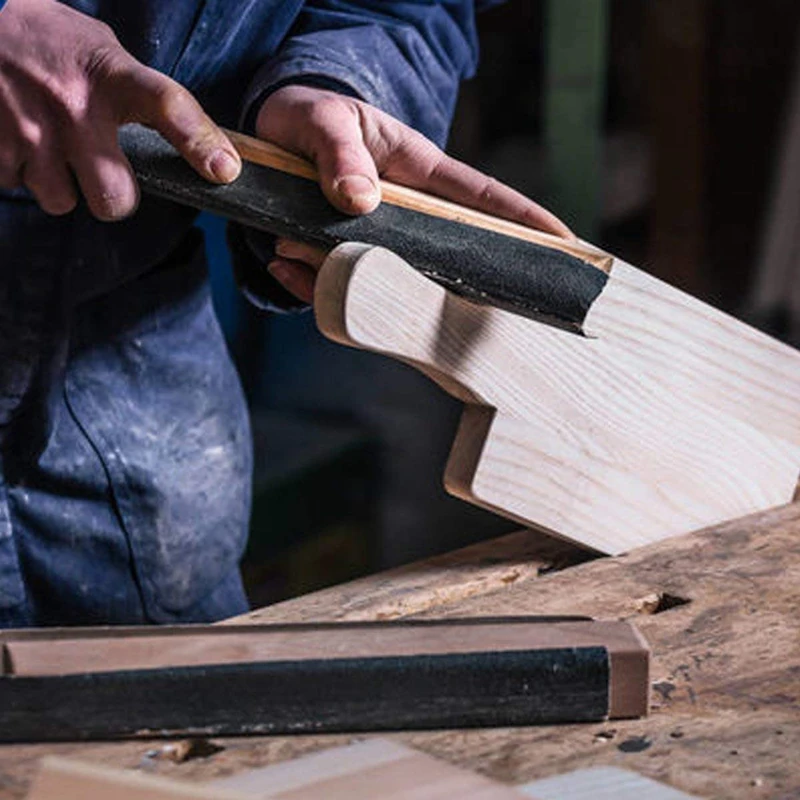
Quick Summary: For most weathered softwood decks, finish at 80–100 grit; start coarser (40–60) only to remove coatings, and avoid sanding past 120 grit to maintain stain penetration.
Why grit choice matters
Sandpaper grit determines how aggressively you cut fibers and how you shape the surface topography. On decks, that topography dictates stain behavior: penetration depth, film thickness, and adhesion. Coarser grits (40–60) cut quickly and open wood pores by shearing fibers; they leave a higher-profile scratch pattern that promotes absorption. Medium grits (80–100) refine that pattern, reducing tear-out while preserving porosity. Fine grits (120+) begin to compress and burnish latewood, especially on softwoods like pine and cedar, which can restrict stain uptake and produce uneven, shiny patches that telegraph as blotches after finishing.
Sanding also interacts with wood anatomy. Softwoods have alternating earlywood (open, porous) and latewood (dense bands). Over-sanding can polish the latewood bands while leaving earlywood rough, a contrast that shows through semi-transparent stains. Hardwoods like ipe or mahogany, by contrast, are dense enough that even 80 grit can leave a surface that’s effectively too tight for oil penetration; in many cases, these species benefit from a light 60–80 grit scuff at most, followed by an oil designed for dense exotics. Knowing the species in front of you keeps you from chasing furniture-level smoothness that undermines finish performance.
Heat is the silent enemy. Overspeeding a random-orbit sander, pressing too hard, or letting a loaded disc skid can glaze resin in pine and harden cut fibers—again reducing absorption. A dust-extracted setup with open-coat abrasives runs cooler and maintains a fresh cutting edge. Think of grit selection as one leg of a tripod—wood species and tool setup are the other two. Balance them, and your stain will wet, wick, and cure as designed.
Grit sequences for efficient deck sanding
A smart grit sequence removes material efficiently without skipping so far that you waste discs trying to erase deep scratches. The target for most decks before staining is a uniform, refined surface at 80–100 grit—coarse enough to encourage absorption, fine enough to feel good underfoot.
- If you’re removing an old film finish (peeling paint, thick acrylics): Start with 40 or 60 grit using a floor sander (drum or large-belt) or a 6" random orbit with aggressive discs. Let the coarse grit do the heavy lifting; don’t jump straight to 100. Once the coating is off and wood is clean, move to 80. Stop there for semi-transparent stains; optionally touch up high-traffic zones with 100 for comfort.
- If the deck is weathered gray with no intact film: Begin at 60 to cut through UV-degraded fibers quickly, then refine to 80. If boards are soft and clean after 80, you can proceed to staining. For handrails or benches, 100–120 feels nicer to the touch since they see less weathering.
- On new lumber with mill glaze (planer-burnished surface): One pass at 80 grit breaks the glaze and opens the grain. Avoid going finer; let the first maintenance cycle be your opportunity to refine further if needed.
- On dense hardwoods (ipe, cumaru, mahogany): Keep it light—60–80 grit, minimal passes, and pair with penetrating oils formulated for exotics. Over-sanding results in shallow, easily abraded color.
Edge work and between-board areas deserve attention. Use a detail sander or a 3"x21" belt sander on edges with the same grit progression as the field to prevent a visual mismatch. Between boards, a carbide scraper or oscillating tool with a sanding finger cleans old finish where machines can’t reach. Always vacuum between grit changes; leftover dust acts like rogue abrasive and can scratch above your current grit, forcing extra passes. The end goal isn’t a glassy deck; it’s a consistent mechanical profile that stains evenly.
Tools that drive grit performance
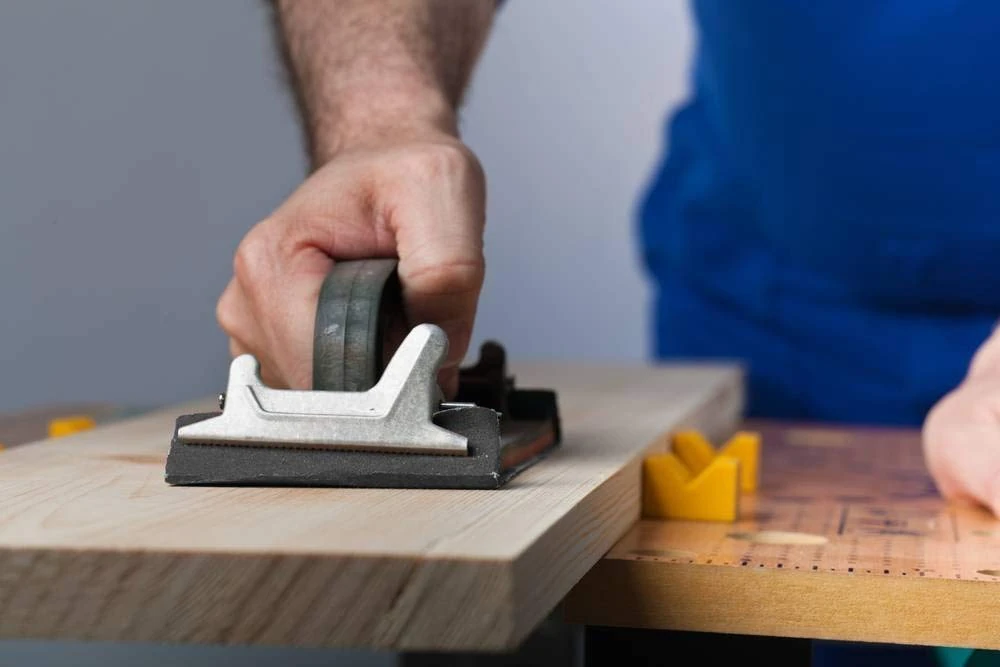
The best grit won’t save a poor tool setup. Random-orbit sanders (ROS) are the go-to for most homeowners: they balance cut speed with control. A 6" ROS with an interface pad and dust extraction removes stock significantly faster than a 5" unit, thanks to larger area and often longer orbit. Floor machines (drum or planetary sanders) excel at stripping thick coatings on large, flat decks, but they require careful handling to avoid gouging soft boards; follow with ROS to refine.
Pad interface matters. A hard backing pad transfers more pressure to the abrasive, increasing cut but also raising risk of swirl marks on softwood. A 1/8" foam interface pad conforms to minor cupping and reduces scratch harshness—ideal when stepping from 60 to 80 grit. For the final pass, switch back to a firm pad to erase micro-curls and keep scratches uniform. Keep speeds moderate; maximum OPM generates heat and accelerates loading on resinous pine. Let the abrasive cut—don’t lean on the machine.
Abrasive pattern and dust management influence results. Multi-hole discs paired to a matching pad create strong airflow, reducing clogging and keeping the scratch free of debris. Dust-extracted systems not only protect your lungs; they lower temperature at the cutting interface, preserving friable cutting edges on modern ceramic and zirconia grains.
Care for edges and steps separately. A compact belt sander with a new 80-grit belt is efficient for nosings and bullnoses; run with the grain, lighten pressure at board ends, and keep the machine flat to avoid divots. For tight corners, oscillating tools with triangular pads and 80-grit sheets finish what larger tools miss.
According to a article.
Finally, sync tool choice to deck condition: don’t attack a lightly weathered surface with a drum sander just because it’s faster. Fit the tool to the material removal task, then let your grit selection dictate how many passes you need.
Abrasive materials that last
Not all 80-grit discs behave the same. The grain, coating, and backing determine how the abrasive cuts and how long it resists clogging. For deck sanding, open-coat abrasives are a smart default: they space the grains so there’s room for dust to evacuate, reducing loading in resinous woods. Stearate coatings (anti-clog) can help, but some formulations soften with heat and smear on hot days; keep your machine cool and your vacuum on.
- Aluminum oxide (AO): The generalist. It’s tough, affordable, and works well from 60–120 grit on softwoods. AO dulls rather than micro-fracturing, so its cut rate tapers off predictably. Use open-coat AO for weathered pine and cedar.
- Zirconia alumina (ZA): Sharper and tougher than AO, with micro-fracturing that exposes new edges under pressure. Excellent for initial removal of stubborn finishes at 40–60 grit, especially on belt sanders or floor machines. It runs cooler and maintains cut under heavier pressure.
- Ceramic alumina: Highest initial cut and strong micro-fracture behavior, often overkill for an entire deck but very effective on thick coatings and hardwood edges. In ROS discs, ceramics shine when paired with good dust extraction to control heat.
- Silicon carbide (SiC): Extremely sharp but brittle, great on mineral-heavy surfaces and between-coat scuffing for finishes; less common for bulk deck removal because it fractures too quickly on softwood fibers.
Backing and attachment are your reliability details. Cloth backings (X-weight) in belts excel on edge profiles and heavy removal; paper backings on discs (C/D-weight) are fine for ROS work but choose a brand with durable resin bond to resist grain shelling. Hook-and-loop discs are convenient for frequent changes; keep the pad clean so hooks don’t let go under heat. PSA (pressure-sensitive adhesive) discs run slightly truer but make mid-task grit swaps slower.
From a cost-performance standpoint, it’s often cheaper to buy a handful of higher-quality ZA or ceramic discs for the coarse passes and standard open-coat AO for 80–100. The coarse passes set the pace of the job—don’t skimp where removal rate and heat control matter most.
Field tests and practical tips
In testing across multiple decks—pressure-treated pine, cedar, and a small run of garapa—I evaluate three outcomes after sanding: stain absorption uniformity, surface feel, and early-wear resistance. Uniformity shows up first: a deck finished at 80 grit tends to drink semi-transparent stain evenly, with minimal “shiny latewood stripes” compared to decks sanded to 120+. Surface feel is subjective but important; where kids and pets play barefoot, a quick 100-grit refinement on high-traffic paths can be worth it without sealing off the grain everywhere. Early-wear resistance emerges in the first season: smoother finishes can look great on day one but may peel sooner if penetration was shallow.
I also watch for heat indicators: darkened swirls or resin streaks mean the abrasive loaded or the speed was too high. If I see that, I drop speed, swap discs more often, and check dust extraction. On exotics, a water droplet absorption test helps—if droplets bead for more than a minute on freshly sanded wood, I consider either a coarser grit or a finish formulated for dense species.
Here are five actionable, field-proven tips:
- Do a two-grit test patch: Sand adjacent 2’x2’ areas to 80 and 100, then wipe each with mineral spirits to preview how stain will wet out. Choose the area that darkens evenly without glossing latewood.
- Break mill glaze, don’t burnish: On new boards, one pass at 80 with light pressure is enough. Pressing hard at 120 can re-create a glazed surface that resists stain.
- Control dust and heat: Use a vac-equipped sander and moderate speed. Swap discs as soon as you see resin streaks—loaded discs polish, they don’t cut.
- Match edges to the field: Whatever grit you finish the field with, finish edges and steps at the same grit to avoid a halo where stain looks different at transitions.
- Verify moisture before staining: Aim for 12–15% or lower in the top 1/4" of the board. If you pressure-washed or it rained, wait 24–48 hours of dry weather, then recheck.
For most softwood decks, the “win” sequence is 60 to strip (if needed), then 80 to finish. Choose 100 only for comfort zones, and avoid finishing the whole deck past 120 unless you’re using a film-forming product that needs a smoother substrate—most penetrating stains perform better with a slightly open surface.
Power washing VS — Video Guide
If you’re weighing power washing against sanding, this short video comparison is useful. It walks through what tools and materials you need and demonstrates how a sanded deck looks next to a washed one. You’ll see how sanding removes grayed fibers, levels raised grain, and creates a consistent surface for stain—something washing alone can’t always accomplish.
Video source: Power washing VS Sanding Deck - See the difference!
320 Grit Sandpaper Sheets (10-pack) — 9x11 in Silicon Carbide Abrasive for Wet or Dry Use — Fine finishing grit for sanding between coats of paint, primer, or lacquer. Provides smooth, even results for woodworking, automotive, and precision finishing. Works efficiently for wet or dry applications. (Professional Grade).
Frequently Asked Questions (FAQ)
Q: What is the best final grit before staining a typical softwood deck?
A: Finish at 80–100 grit. Use 80 for most of the field to maintain penetration, and reserve 100 for handrails or high-touch areas where you want extra smoothness.
Q: Should I ever go finer than 120 grit on a deck?
A: Rarely. Finer grits can burnish fibers and reduce stain absorption, leading to shallow color and earlier wear. Exceptions are film-forming finishes that specify smoother substrates.
Q: How do I handle a deck with peeling paint or thick acrylic coatings?
A: Start at 40–60 grit with a floor sander or a 6" ROS using zirconia or ceramic abrasives, remove the film thoroughly, then refine to 80 before staining.
Q: Do hardwood decks (like ipe) need the same grit?
A: No. Dense hardwoods often need only a light scuff at 60–80 grit and a penetrating oil made for exotics. Over-sanding can limit absorption and cause blotchy results.
Q: Is power washing enough before staining?
A: Power washing cleans but doesn’t level raised grain or remove burnished mill glaze. A light sanding pass (often 80 grit) after washing evens the surface and improves stain uniformity.