
How Long to Wait for Joint Compound Sanding
It’s 10:47 p.m. You’ve spent the evening in a quiet room, spreading thin, even passes of mud across seams that once shadowed your drywall. The lights are low; the blade marks are almost gone. You resist the urge to sand right now because experience whispers that impatience leads to rework. The air smells faintly of gypsum and paint primer, and the walls look nearly finished—but the clock matters more than appearances. Joint compound sanding isn’t just a step; it’s the inflection point between a surface that telegraphs flaws under paint and one that disappears behind a flawless finish.
This is the moment where discipline pays. You know different compounds dry differently. You know humidity can add hours, sometimes a full day. You recall the last time you sanded too soon: the abrasive loaded up, the mud pilled and smeared, and you chased paper fuzz into the surface. Tonight you vow not to repeat that. Instead, you set the room to a steady 70°F, crack a door for crossflow, and plan your abrasive sequence for tomorrow—mesh 150 on a vacuum pole for the field, 220 foam for the corner beads. You run a finger across the last pass you troweled: still cool, slightly darker than the surrounding coats. Not yet.
There’s a satisfaction in leaving surfaces alone until they’re truly ready. Drying is not linear, and “touch-dry” is not “sand-ready.” When your abrasive glides rather than drags, and dust falls crisp instead of clogging in clumps, you know you timed it right. That discipline—understanding how long to wait before sanding joint compound, conditioning the space, and choosing abrasives that cut clean—separates a serviceable finish from a professional one.
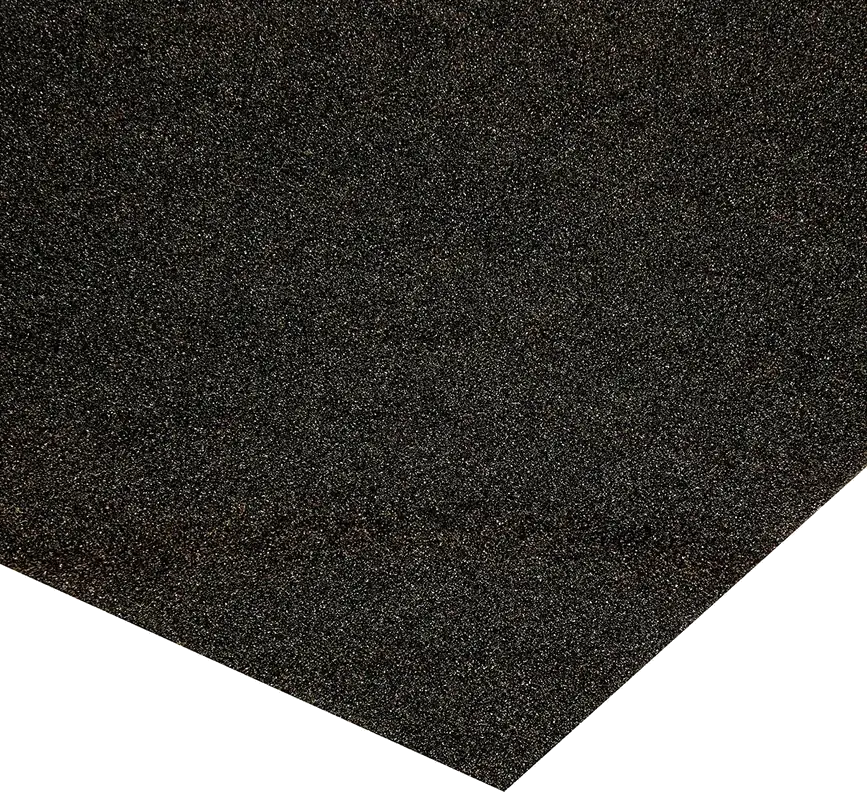
Quick Summary: Wait until compound is fully dry—uniform color, room-temperature to the touch, and producing crisp dust—then sand with an appropriate grit sequence; typical ranges are 8–24 hours for premixed mud and 1–4 hours after set for thin coats of setting-type mud under favorable conditions.
Drying vs. Setting: Know Your Mud
How long you should wait before sanding starts with understanding how your joint compound transitions from wet to sandable. There are two families:
Premixed drying compounds (all-purpose, lightweight, topping): These rely on water evaporation. They dry from the surface inward, which means skinning and color change do not guarantee the core is ready. Thickness, humidity, and air movement determine timing. Typical guidance at 70°F/50% RH: thin feathered coats of lightweight or topping dry in 8–12 hours; all-purpose, especially if applied thicker, often needs 12–24 hours. Deeper fills and bead bedding can require 24–36 hours.
Setting-type compounds (“hot mud”: 20-, 45-, 90-minute): These chemically hydrate and harden even in higher humidity. “20/45/90 minutes” refer to working time, not sand-ready time. After they set, free water still must leave the film. Thin coats may be sandable 1–2 hours after set; thicker applications can need 3–6 hours or more. Setting compounds are denser and can be harder to sand, so plan coarser initial grit and lighter pressure.
Critically, “set” is not “dry.” Many sand too early because the surface feels firm. If the interior is damp, abrasives will load and smear, creating low spots and paper fuzz. Conversely, waiting too long isn’t a problem—fully dry compound sands predictably and generates consistent fine dust. Schedule your workflow so that early coats set/dry while you prep the next area, then return when conditions and compound indicate true dryness.
Practical checklist before you sand: uniform light color with no dark centers, room-temperature feel (not cool), and dust that forms powder on a test pass instead of sticky balls. If any test fails, wait longer or improve ventilation.
Timing joint compound sanding the right way
The right waiting time is a function of compound type, coat thickness, geometry, and environment. For most interiors at 68–72°F and 40–55% RH:
- Feather coats (≤1/32 in.) of lightweight or topping: 8–12 hours.
- Standard all-purpose over tape or bead: 12–24 hours.
- Thin setting-type after set: 1–3 hours.
- Deep fills (>1/8 in.) or inside corners with low airflow: 18–36 hours regardless of type.
Use simple field tests to validate those ranges:
- Color uniformity: Dry compound turns consistently lighter. Any darker patches indicate moisture retention—do not sand yet.
- Thermal feel: Touch lightly with the back of your fingers. If the spot feels cool relative to the air, water is still evaporating.
- Abrasive swipe: Lightly stroke a hidden edge with 150-grit mesh. Properly dry mud creates fine, flour-like dust. Damp mud balls up and smears.
- Edge firmness: A crisp feathered edge should not dent under firm thumbnail pressure; if it does, moisture remains.
Don’t rush between coats. Knock down ridges, trowel burrs, or dried laps between coats with a 6-in. blade or a quick pass of 150-grit mesh, but reserve full surfacing for your final coat. This reduces cumulative dust and preserves flatness. For setting compounds, you can shave high spots within the first 30–60 minutes after set using a sharp knife; shaving reduces later sanding and yields flatter planes.
If you must compress a schedule, switch the second-to-last coat to a setting-type compound, which sets predictably even in marginal humidity. Follow with a thin topping coat that dries overnight for a more effortless final sand the next day.
Environment, Thickness, and Substrate Effects
Surface geometry and ambient conditions often influence wait times more than product labels. Corners, fastener clusters, and bead terminations dry slower because of reduced airflow and accumulated thickness. The substrate matters, too: Fresh drywall paper is moderately permeable; primed or painted surfaces under skim coats slow vapor diffusion and can double drying time.
Control the environment to control your clock:
- Temperature: Target 65–75°F. Below 60°F, evaporation slows significantly; above 80°F, premature skinning can trap moisture beneath the surface.
- Humidity: Maintain 40–55% RH. At 70% RH, expect 1.5–2× longer drying. Above 80% RH, consider only setting compounds for intermediate coats and extend wait times before sanding to ensure through-dry.
- Airflow: Gentle, indirect airflow accelerates drying without over-skinning. A box fan aimed at a wall can case-harden the surface; instead, aim fans to move air across the room and crack a door for pressure relief.
- Thickness: Each doubling of thickness more than doubles dry time, especially over non-absorbent substrates. Break deep fills into multiple thin lifts to keep the schedule moving.
Diagnostic tools can tighten your timing. A pinless moisture meter calibrated for gypsum provides relative readings; track a patch until it plateaus near ambient drywall. Infrared thermography can reveal cool, damp zones that a visual check misses. Even a simple hygrometer/thermometer will help you predict delays.
Between coats, it’s normal to lightly knock down imperfections rather than fully sand. According to a article, you should remove bumps but avoid chasing perfection until the final surfacing pass, where you’ll invest in a controlled, dust-managed sanding sequence. That approach keeps timelines realistic and surfaces flat.
Abrasives and Dust-Control Workflow
When the surface is truly ready, your abrasive system determines how quickly you reach paint-ready. Choose media that cut cleanly without scarring the paper face or polishing the compound into chatter.
Recommended workflow:
- Primary cut: 120–150 grit open-coat mesh or stearated paper on a vacuum-ready pole sander. Mesh resists loading and evacuates dust through the abrasive. Use light, even strokes with the pole nearly parallel to the wall, letting the abrasive float. Avoid tip pressure that digs corners and creates divots.
- Corner and detail work: 150–180 grit foam-backed pads for inside corners and around trim returns. The foam conforms to profiles and reduces gouging along bead edges.
- Final refinement: 180–220 grit stearated paper or fine mesh. This is a quick unification pass to remove crosshatch marks and micro ridges, especially where light grazes the surface.
- Spot leveling: For small highs caught under raking light, a carbide hand scraper or drywall rasp trims cleanly without spreading dust or burning through the paper.
Dust control matters for both health and surface quality. Pair mesh abrasives with a dust-extracting pole connected to a HEPA vacuum; the negative pressure keeps dust out of the room and reduces loading that can burnish instead of cut. If you’re dry-sanding without extraction, work from the top down and vacuum the surface between grit changes to prevent loose particles from scratching.
Wet-sanding with a damp sponge is an option for small patches or sensitive environments, but it muddies pores and can raise paper fibers; it’s slower and less precise. Use it only for micro touch-ups or to soften edges between coats—never as a replacement for a proper final dry sand. Keep strokes long and consistent, and check under raking light every few passes to avoid carving low spots.
Pro Tips and Common Failure Modes
Practical, field-tested habits prevent costly rework and keep timelines predictable. Here are targeted tips for timing and technique:
- Stage your coats by geometry: Hit inside corners first (slowest drying), then flats, then fastener fields. By the time you return to corners for the next pass, the first is closer to sand-ready.
- Read the dust: If your abrasive produces curls or pills, stop immediately—your compound isn’t dry. Crisp, talc-like dust is your green light.
- Use raking light: Set a bright light at a low angle across the wall. Shadowing exposes ridges and shallow dish-outs early, so you sand only what’s necessary.
- Keep edges safe: Chamfer the leading edge of your pole sander pad with 220 grit so it won’t gouge when you rotate or approach bead terminations.
- Batch testing: Choose one inconspicuous area as your “pilot patch.” When it’s sand-ready by all tests, areas of similar thickness and exposure usually are too.
Common failure modes—and how to avoid them:
- Pilling and smearing: Caused by sanding damp compound or using dull, loaded abrasives. Wait longer, refresh the abrasive, and verify airflow.
- Paper burn-through: Excess pressure or too coarse a grit at the feathered edge. Switch to 180–220 grit and float the head; if you expose paper, seal with a drywall sealer/primer before repainting.
- Waves and chatter: Short, inconsistent strokes or a stiff pad telegraphing through. Lengthen strokes, reduce pressure, and consider a softer interface pad.
- Glazing: Polishing the mud instead of cutting due to clogged paper or overspeed on powered sanders. Clean or replace media, lower speed, and use mesh with extraction.
Finally, consider schedule buffers. Even with perfect prep, seasonal humidity swings or unexpected substrate conditions can push drying 4–8 hours longer. Build that into your plan so you don’t feel forced to sand early.
SPACKLE Vs. DRYWALL — Video Guide
This short video breaks down the practical differences between spackle and drywall mud (joint compound), clarifying where each material fits in wall repair and finishing. It highlights how spackle excels for tiny, isolated patches while joint compound is engineered for taping, topping, and broad surfacing—contexts where sanding characteristics, open time, and feathering behavior matter.
Video source: SPACKLE Vs. DRYWALL MUD/JOINT COMPOUND (What's the Difference? When Should You Use Them?!)
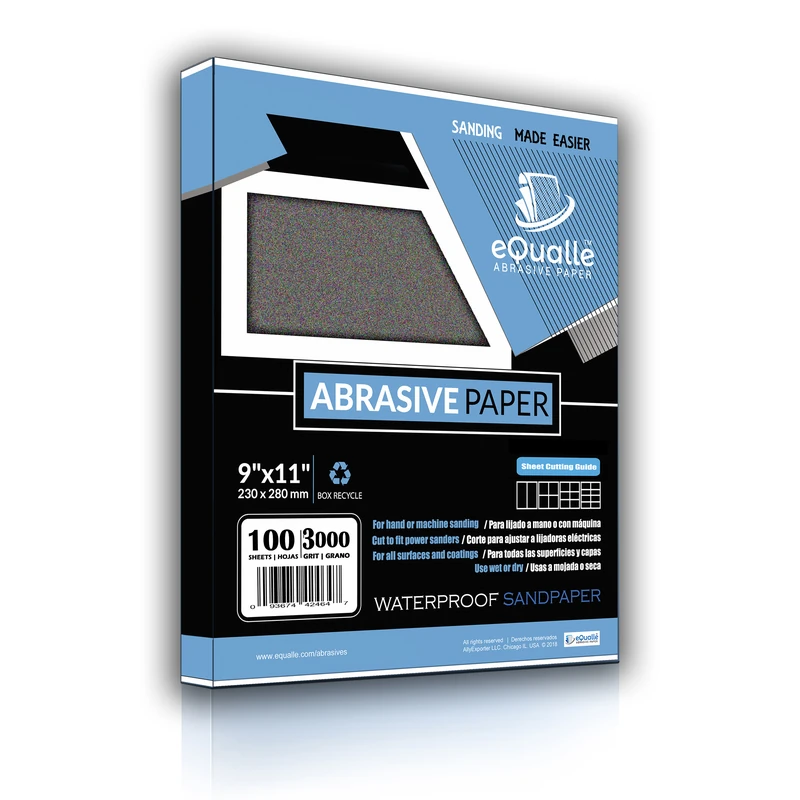
320 Grit Sandpaper Sheets (100-pack) — 9x11 in Silicon Carbide Abrasive for Wet or Dry Use — Precision finishing grit that enhances clarity between paint or lacquer coats, ensuring a flawless final layer. (Professional Grade).
Frequently Asked Questions (FAQ)
Q: What’s a safe baseline wait time before sanding premixed mud?
A: For thin feathered coats at 70°F/50% RH, plan 12–24 hours. Verify with color uniformity and a light 150-grit test swipe that yields dry, powdery dust.
Q: Can I sand setting-type compound as soon as it sets?
A: Not immediately. After initial set (e.g., 45 minutes), allow 1–3 additional hours for thin coats to shed free water. Confirm dryness with the dust and temperature tests.
Q: Do I need to sand between every coat?
A: No. Knock down ridges and bumps between coats with a blade or quick mesh pass, but reserve full surfacing for the final coat to preserve flatness and reduce dust.
Q: What grit should I start with on the final sand?
A: Begin with 120–150 mesh on flats, then refine with 180–220. Use foam-backed 150–180 for corners and bead transitions to prevent gouging.
Q: How do I speed up drying without causing defects?
A: Maintain 65–75°F, 40–55% RH, and create gentle crossflow airflow. Avoid direct fan blasts at the wall, which can skin the surface and trap moisture beneath.