
Eco Sandpaper: Low-VOC Binder Options That Work
You know that smell the minute you crack open the shop on a warm morning—the stale bite of solvents baked into the air, the stuff that lingers in your nose long after the last pass with the sanding block. That’s the old world of abrasives talking. As a cabinetmaker turned workshop coach, I’ve logged hundreds of hours testing sheets, belts, and discs that either left my head buzzing or my surfaces butter-smooth. These days, the best of both worlds is real: low-VOC binders in eco sandpaper that can hold grit like a bulldog, resist loading, and let you breathe easier in a small shop without a giant extractor humming all day.
I get it—“green” doesn’t mean much if your finish blotches, your paper grenades after three minutes, or your sander burns in a swirl of dust. What matters is a binder that grabs abrasive grains, flexes with your work, and shrugs off heat and moisture without coughing up fumes. The binder is the unsung hero in every sheet you buy. It’s the thin glue layer (actually two in most coated abrasives) that decides how long the grit stays on and how clean your cut stays over a project’s life.
For you, the user, the question isn’t just “Is it low-VOC?” It’s “Will it perform under a handheld sander, a drum, or a wet block?” That’s where today’s waterborne phenolics, acrylics, and polyurethane dispersions come in—and where the newest bio-based resins, from lignin blends to cashew nutshell resin phenolics, are starting to punch above their weight. If you want shop air that doesn’t taste like a chemistry set, and finishes that still make clients run a hand along the grain and grin, this guide will walk you through the options, the tradeoffs, and a step-by-step workflow to keep you moving clean and fast with eco sandpaper that actually earns its keep.
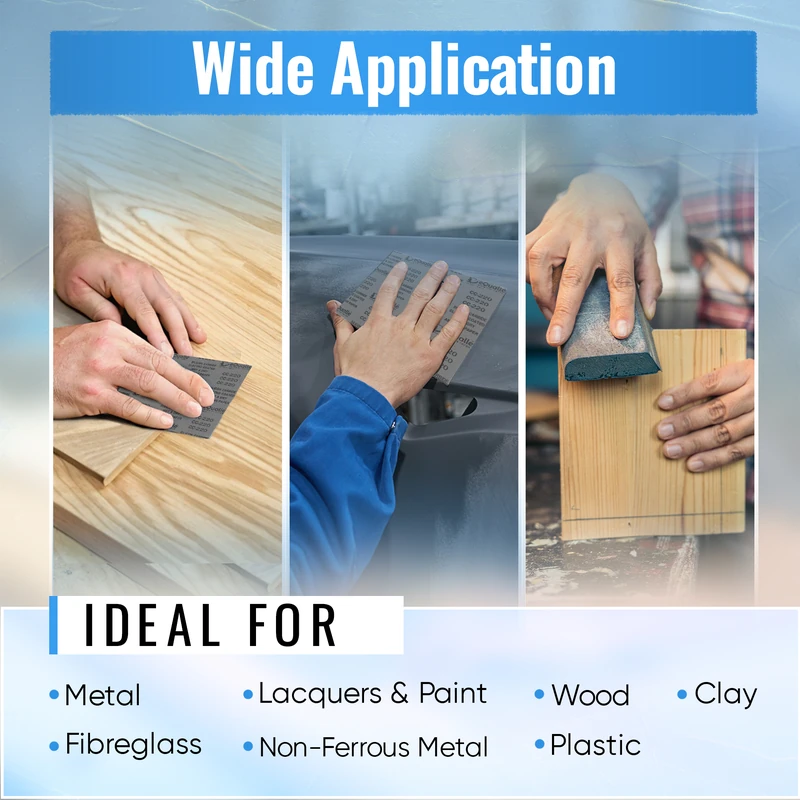
Quick Summary: The right low-VOC binder—matched to your grit, substrate, and sanding method—delivers cleaner air, longer life, and pro-grade surface quality without performance loss.
Binder basics for better abrasives
Every sheet or disc you use has a backbone (paper, film, or cloth), a “make” coat that anchors the grit, a “size” coat that locks it down, and sometimes a topcoat like anti-clog stearate. The binder system is what sets the tone: tack, flexibility, heat resistance, and wet durability. In solvent-heavy systems, those coats off-gas during manufacturing and sometimes in your shop with a distinct “sweet” or sharp odor. Low-VOC binders cut that dramatically by using water as the carrier or by building the resin itself from components that don’t need solvents to flow.
Here’s the practical angle. When you press 120-grit into hardwood or rip through pine with 80-grit, heat builds fast. Phenolic binders (the industry standard) thrive on heat resistance, which is why they dominate pro abrasives. Traditional solvent phenolics get that strength but at an air-quality cost. Waterborne phenolics now deliver similar thermal performance with much lower VOC emissions. Acrylic latexes bring excellent flexibility and clarity—great for delicate grits and film-backed papers—but can hit a ceiling on heat before they soften. Polyurethane dispersions (PUDs) give a tough, elastic bond that excels on flexible cloth belts and at weird contours, with careful formulations reaching respectable heat tolerance.
The big question: do low-VOC binders shed grit faster? That used to be the story. With modern crosslinking and resin blends, the gap is closing quickly. The size coat chemistry and the cure schedule now do most of the heavy lifting. If the sheet says “water-based resin” or “low-odor,” don’t assume compromise—check the make/size coat combo and the intended duty. For heavy stock removal, you still want heat-resistant binders. For fine finishing and between-coat leveling, a flexible, low-VOC acrylic or hybrid can feel smoother, run cooler, and keep dust finer and more controllable.
Low-VOC chemistries that hold up
Let’s break down the low-VOC binder families you’ll actually see on shelf specs and what they mean in your hand.
Waterborne phenolic resins (resols): These are phenolics emulsified in water or formed with low free-phenol/formaldehyde content. They can match the traditional heat resistance—think 150–180°C service—essential for high-friction phases like 60–120 grit on hardwood or metal deburring. They also cure hard, so they’re ideal in belts or discs that must resist edge shelling. If you’re pushing a 6" random orbital hard, this is still your workhorse.
Acrylic latexes: Emulsion acrylics give a tough but slightly more flexible bond with very low odor and very low VOC. They shine in fine grits (P240 and up), film-backed abrasives, and between-coats finishing on clear coats and painted surfaces. Expect nice feedback through the pad and reduced chatter. Heat softening can occur under aggressive loads, so keep these for light to medium pressure or when you favor finish quality over speed.
Polyurethane dispersions (PUDs): Water-dispersed urethanes deliver impressive toughness and flexibility, great for contour sanding, cloth-backed rolls, and longboard movement where bending fatigue kills sheets. Newer self-crosslinking PUDs raise heat resistance into phenolic-adjacent territory, while staying very low-odor. If you make sanding belts sing across a curved chair rail, this chemistry earns its keep.
Hybrid and bio-based phenolics: Here’s where sustainability gets teeth. Blends that incorporate lignin, cardanol (cashew nutshell resin), or other bio-phenols lower fossil content and can cut toxicity footprints while holding onto phenolic performance. They’re still evolving, but the best examples offer strong grit anchoring and high thermal stability without the solvent load.
Epoxy and acrylic-urethane hybrids: Waterborne epoxy dispersions crosslinked with amines, or acrylic-urethane blends, show up in specialty film abrasives for automotive and composites. They’re formulated for low VOC and controlled cut patterns—great when you need uniform scratch profiles for paint systems.
For wet sanding, confirm the binder’s water resistance—many low-VOC systems are fine submerged once cured, but some acrylics swell if they weren’t designed for wet service. For metal, a high-temp phenolic or hybrid with anti-loading topcoats makes a visible difference. For wood finishing, acrylic and PUDs keep edges from shelling and preserve an even scratch with less heat marking.
Choosing eco sandpaper without losing performance
When you’re matching eco sandpaper to a project, start with the job, not the label. The binder must suit heat, pressure, and wet/dry demands; “low-VOC” should be the tie-breaker, not the only criteria. Here’s how I choose for most shop tasks:
Heavy stock removal (rough milling, flattening): Waterborne phenolic or bio-phenolic hybrids, open coat, with stearate topcoats if you’re in resinous woods. Belts and discs that list heat-resistant resin systems stay sharper longer.
General carpentry and cabinetry: PUD or hybrid size coats on paper or cloth backers, P80–P180. You’ll get cleaner edges and less cracking on corners.
Finishing and between coats: Acrylic latex or acrylic-urethane on film backers in P240–P800. These run cool, telegraph the surface better, and minimize swirl.
What to look for on packaging or tech sheets:
- “Water-based resin” or “low-odor/low-VOC binder.”
- “NMP-free” and “formaldehyde-free” claims in the resin system, which indicate cleaner chemistries.
- Heat rating or duty designation (coarse work vs finishing).
- Stearate or anti-clog topcoat compatibility with your material.
Field test like a pro:
- Press-test: Do five 10-second passes on the same hardwood board with identical pressure. Check if the sheet edges crack—that’s a binder flexibility tell.
- Heat-test: Run 60 seconds on end-grain pine with a 120-grit disc. Smell and check for softening or shedding. Low-VOC binders shouldn’t melt out or stink.
- Wet-test (if applicable): Soak a scrap of fine-grit sheet for 10 minutes, then hand-sand a painted panel. If the binder lifts or smears, pick a wet-rated system.
According to a article, market pressure and policy are pushing water-based, low-VOC, and biodegradable options ahead—which is great for our lungs, but only useful if the sheet still cuts straight and lasts.
In short: pick by task, confirm the chemistry, and run a 5-minute shop test. If the low-VOC option equals your current sheet on cut rate and outlasts it by even 10–15%, switch and don’t look back.
A low-VOC sanding workflow, step by step
Here’s the process I use on a hardwood table refinish to keep air clean and results tight. It scales from DIY garage to pro shop.
Step 1: Prep the space
- Hook your sander to a HEPA vac with a smooth anti-static hose.
- Add a box fan with a MERV-13 filter at the exit side of the shop to create gentle negative pressure.
- Lay out low-VOC sheets by grit (80/120/180/240/320) so you aren’t hunting mid-pass.
Step 2: Start with the right binder at the right grit
- P80/P120: Waterborne phenolic discs, open coat, stearated if you’re lifting old finish.
- P180: PUD or hybrid; it transitions smoothly to finishing while staying durable.
- P240 and up: Acrylic or acrylic-urethane film discs for flat, predictable scratch.
Step 3: Control heat and dust
- Keep the pad flat, pressure low to medium. Let the binder do the gripping—forcing it only cooks the coat.
- Run your vac at a setting that pulls dust without choking the pad to the surface.
Step 4: Inspect and swap on time
- After each grit, raking light plus a quick hand sweep tells you if the scratch is uniform. Don’t chase ghosts; move on if you can’t find low spots.
- The minute you feel the cut slow, swap. Low-VOC paper fails more gracefully, but dull grit makes heat, and heat makes any binder struggle.
Step 5: Finish sanding wet (optional)
- On high-gloss work, switch to wet-rated P400–P800 acrylic film. Use a light soap solution and a firm interface pad. Wipe dry and inspect often.
Step 6: Clean up smart
- Bag used sheets; don’t leave them to outgas near finishes. Even low-VOC systems can carry residuals after a hot session.
- Vacuum the pad face to keep it from loading the next disc.
Actionable tips that pay off:
- Score the disc edge lightly with a utility blade on fresh sheets—just a kiss—so the perimeter doesn’t prematurely chip under high heat.
- Warm-cure a new stack: leave them in a closed vehicle or sun-warmed window (not hot) for an afternoon; some low-VOC binders finish crosslinking and shed less early dust.
- For softwoods, choose open-coat stearated discs in low-VOC systems; you’ll see half the loading and a cooler cut.
- On curved work, pair cloth-backed PUD-bonded sheets with a soft interface pad to spread pressure and save edges.
Troubleshooting and real-world shop tips
Problem: The paper loads instantly on pine or paint.
- Fix: Pick a stearated topcoat with your low-VOC binder, and go open coat. Increase vacuum flow and cut pressure by 10% at the start to clear dust channels. If you hear the pitch change to a whine, you’re riding dust—not cutting.
Problem: Grit sheds at the disc edge, leaving streaks.
- Fix: That’s either heat or a too-rigid binder for your pad hardness. Drop speed one notch, use a 5 mm orbit if you can, and switch to PUD or hybrid binder at the same grit. If you can only run phenolic, add an intermediate foam pad to reduce edge shear.
Problem: Swirl marks telegraph through finish.
- Fix: Move to film-backed acrylic at the final two grits. Their binder forms a smoother bed under the particle, which leaves a cleaner, consistent scratch. Add a final cross-grain pass with the next grit up before switching to parallel with the grain.
Problem: Strong odor after a long session.
- Fix: Even low-VOC sheets can smell when hot. Improve extraction, reduce pressure, and swap discs before they dull. Store unused sheets in a sealed bin; if they’re in the sun, residuals can vent into your shop. Choose products labeled “NMP-free” and “formaldehyde-free” for the lowest odor profile.
Quick disposal and storage
- Don’t pile spent discs in a bucket near your finishing rack. Bag them sealed, and take them out with the day’s dust. Heat accelerates odor.
- Store low-VOC abrasives flat in a cool, dry bin. High humidity can soften some waterborne binders at the edges and cause cupping.
Pro move for consistency
- Weigh a new disc and a “done” disc on a pocket scale. Track material loss to know when you’re changing too late. This simple metric extends life across the board because you stop chasing dull grit with pressure, which protects the binder.
Ask The Pool — Video Guide
A helpful short from a pool-building crew digs into why a “smooth” eco-style finish can still feel rough to the touch. They explain that surface profile, filler particles, and how the coating crosslinks will dictate tactile roughness—even when the chemistry is designed to be friendly to air and water. That’s a useful lesson for abrasives: the binder and topcoats shape not just durability, but how the grit presents itself and clears swarf.
Video source: Ask The Pool Guy: Why does my ecoFinish feel like sandpaper?
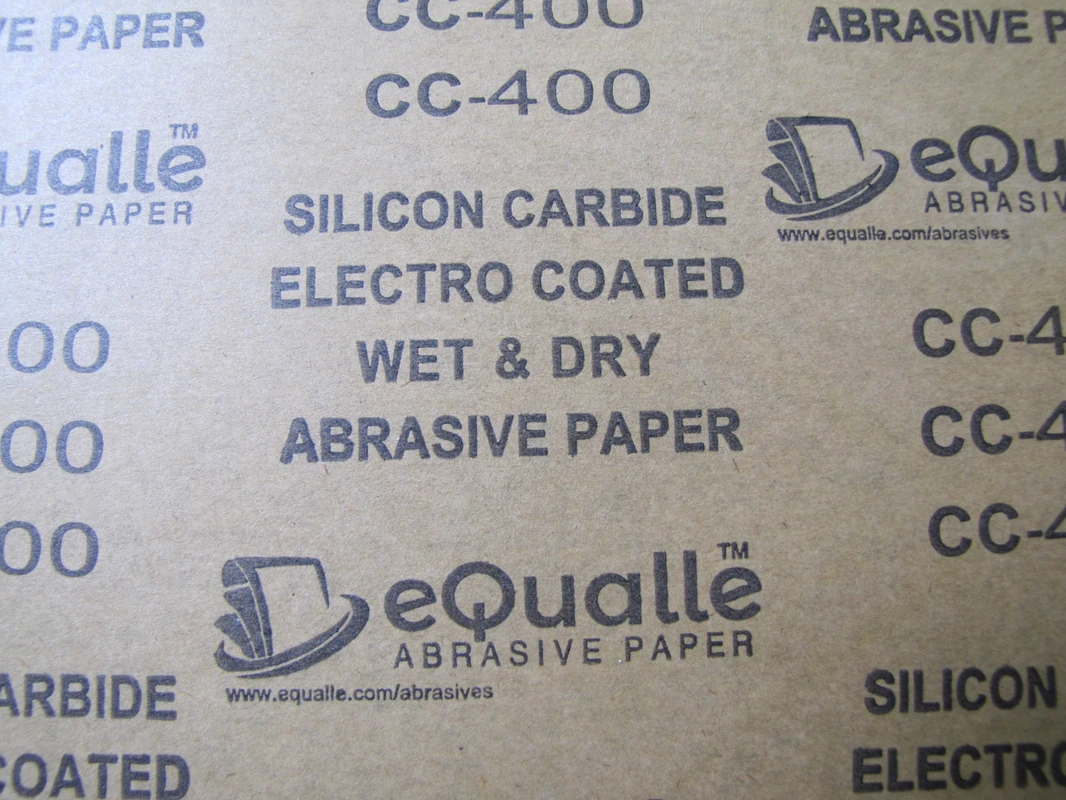
150 Grit Sandpaper Sheets (10-pack) — 9x11 in Silicon Carbide Abrasive for Wet or Dry Use — Versatile medium grit that transitions from shaping to smoothing. Works well between coats of finish or for preparing even surfaces prior to paint. (Professional Grade).
Frequently Asked Questions (FAQ)
Q: Are low-VOC binders as durable as traditional solvent phenolics?
A: In coarse to mid grits, modern waterborne phenolics and hybrid phenolic-bio systems match traditional durability and heat resistance. For fine finishing, acrylic and PUD systems often feel smoother and last as long or longer under light to medium pressure.
Q: How can I verify that a sandpaper uses low-VOC binders?
A: Check packaging for “water-based resin,” “low-odor,” “NMP-free,” and “formaldehyde-free.” Many brands publish resin info on tech sheets. If there’s a strong solvent smell out of the wrapper, it’s likely not a low-VOC system.
Q: What’s the best low-VOC option for wet sanding clear coat?
A: Film-backed acrylic or acrylic-urethane sheets rated for wet use. They keep a uniform scratch pattern, resist swelling, and run very low odor while submerged.
Q: My low-VOC discs load quickly on softwood—what now?
A: Use open-coat, stearated discs with a heat-tough binder (waterborne phenolic or PUD hybrid). Increase dust extraction and lighten pressure; forcing the cut clogs any paper, regardless of binder.
Q: Do low-VOC sheets affect finish adhesion?
A: No—if anything, they can improve it. Their binders often produce a finer, more uniform scratch in higher grits, which helps coatings bite consistently without trapped dust or smear.