
Open Coat Sandpaper vs Closed Coat: Pro Workflows
A fresh sheet on a random-orbit sander tells you a lot in the first few seconds: the pitch of the motor settles, dust streams through the holes, and the panel under your palm either glides or grabs. On a soft pine shelf heavy with resin, the wrong abrasive loads so fast you can smell the heat within a minute. The scratch blends into a smeared sheen, then the pad starts skating—not cutting. You lift the sander and the disc is glazed with gummy dust cakes. The fix isn’t more pressure or another pass; it’s choosing the right coat density. That’s where open coat sandpaper, with intentional spacing between grains, changes the whole day’s trajectory.
I’ve watched finish schedules stall when a team fights loading on primer surfacers or clogs instantly on body filler. I’ve also seen a production cell double throughput just by switching to the correct coat for the substrate. It’s not magic; it’s abrasive engineering meeting practical workflow. The percentage of grain coverage on the backing—how “open” or “closed” it is—governs chip evacuation, heat, and the stability of the scratch pattern. If you prep surfaces for paint, clear coat, welding, or adhesive bonding, understanding coat density is as pivotal as grit selection. In the pages ahead, we’ll translate coat types into predictable outcomes: cleaner cuts on soft materials, longer disc life during heavy leveling, and tighter scratches on hard stock where finish uniformity is non-negotiable. Whether you run vacuum-assisted ROS discs in a cabinet shop or belt and flap systems on metal, the right coat is the quiet difference between rework and repeatable quality.
Quick Summary: Open coats resist loading and run cooler on soft or clog-prone materials, while closed coats deliver maximum grain contact and uniform scratch on hard substrates.
Coat density and why it changes everything
Abrasive “coat” describes how densely grains are distributed on the backing. In closed coat, roughly 90–100% of the surface area is covered with abrasive. Semi-open often lands near 70–80%, and open coat typically ranges around 50–70% coverage. That spacing creates void volume between grains—the air and escape paths where swarf can go. Those voids are not wasted space; they are your on-disc chip conveyor.
Mechanically, each grain takes a bite proportional to pressure divided by the number of engaged grains. With closed coat, more grains share the load, so each grain’s penetration is shallower at a given pressure. That yields a dense, uniform scratch field—good for precision finishing on hard materials. With open coats, fewer grains engage, so each has a higher effective chip load. That increases individual cut depth, improves swarf clearance, and reduces the tendency to smear soft, resinous, or ductile materials.
Heat follows this equation, too. Clogged inter-grain spaces become insulators, raising interface temperature. Open coats counter by providing ejection routes; pair them with stearate (load-resistant) supersize and you can triple disc life in certain paints and softwoods. Closed coats concentrate contact area and can heat faster in clog-prone applications, but they excel when the material fractures cleanly—metals, hardwood end grain, and cured finishes—and when you need consistent scratch density for a predictable sheen under finish.
Finally, coat density interacts with grit size and bond. A ceramic closed-coat P80 on steel is aggressive yet controlled, while an open-coat aluminum oxide P80 on pine prioritizes chip shedding. The bond (resin-over-resin is standard) and any supersize layers (stearate, antistatic) tune how long grains stay sharp and how they shed heat. If you track cycle time, disc wear, and rework rates, coat choice often shows up as the largest hidden variable after dust extraction.
When to choose open coat sandpaper
Open coat sandpaper is designed to keep cutting where loading usually kills momentum. If your work generates stringy or gummy swarf, or if the substrate is soft enough for grains to plow rather than chip, an open coat will maintain a cleaner interface for longer.
Common green-light scenarios:
- Softwoods and resinous species: Pine, fir, cedar, and spruce shed fibrous swarf and pitch. Open coats with stearate minimize galling and keep the scratch crisp.
- Paint, primer, and body filler: Leveling high-build primers or polyester fillers produces fine, sticky dust that compacts quickly on a closed field. Open coats provide relief channels, and stearate reduces adhesion to the grain tips.
- Nonferrous metals and plastics: Aluminum and brass smear when overheated; acrylics and polycarbonate can melt. Open coats lower frictional heat and give debris somewhere to go.
- Contaminated surfaces: If you’re scuffing surfaces with spots of adhesive, sap, or old finish, open spacing helps keep those contaminants from glazing the disc.
Open coats do have trade-offs. Because there are fewer active grain tips per unit area, the scratch pattern can be slightly more open—fine for prep and leveling, less ideal when you demand the tightest, most uniform sheen prior to high-gloss finishing. On harder woods and metals, the higher local chip load can lead to micro-fracturing of grains, accelerating wear unless bond and mineral (ceramic vs aluminum oxide) are matched correctly.
To tune performance, combine coat type with the right grit progression. For stock removal on softwood, start with open-coat P80 or P100, step to P120–P150 open or semi-open, then decide if the final pass before finish should move to semi-open or closed at P180–P220 to tighten the scratch. On primer, open-coat P220–P320 with stearate excels for flattening; switch to a tighter coat above P320 when you need uniform reflectivity for topcoats. This hybrid approach—leveraging open coats to control loading, then closing the field to control scratch—yields speed without sacrificing downstream finish quality.
Closed coat for precision and tough substrates
Closed coat abrasives shine where workpiece hardness and required precision demand a dense, uniform scratch distribution. By maximizing grain coverage, you engage more cutting points at once, distributing pressure and yielding a finer, more consistent profile. That consistency matters when your next step is an optical finish, tight-tolerance flatness, or a weld-ready edge.
Applications that reward closed coat:
- Ferrous metals: Mild steel, stainless, and tool steels fracture cleanly under sharp grains. Closed coat ceramic or zirconia in coarse grits (P36–P80 on belts, P60–P120 on discs) maintains steady removal rates without the smear characteristic of softer alloys.
- Hardwood end grain and dense species: Maple, hickory, and exotics like ipe cut better when more grains participate. The denser scratch buries quickly under subsequent passes, reducing stray deep lines that telegraph through finish.
- Finish uniformity zones: Above P240 on hardwood or P400 on coatings, closed coats help you achieve a predictable gloss ladder. Optical uniformity is easier when the scratch field is statistically tighter.
- Edge work and profiles: On molder knives or routed profiles, closed coat abrasives minimize random scratch spacing that can catch light across curved surfaces.
Closed coats can load in the wrong context. On aluminum or pine, for example, grabby swarf plugs the interstices, and heat rises fast. This is where coolant, lubricant, or stearate supersize may be required—or you simply select an open or semi-open coat. According to a article, coat density fundamentally shifts how abrasives behave by altering contact area and chip clearance, which is why proper pairing with substrate is so critical.
When you select closed coat, pay attention to mineral and bond. Ceramic grains micro-fracture to reveal fresh edges under load, extending life on steel. On wood, premium aluminum oxide with a tough resin bond resists premature dulling. Ensure your dust extraction is adequate: a multi-hole pattern with strong vacuum (≥90 CFM at the pad) prevents heat buildup even in dense coats, preserving the sharpness of the grain tips and the integrity of the resin.
Workflow design: grits, passes, and pressure
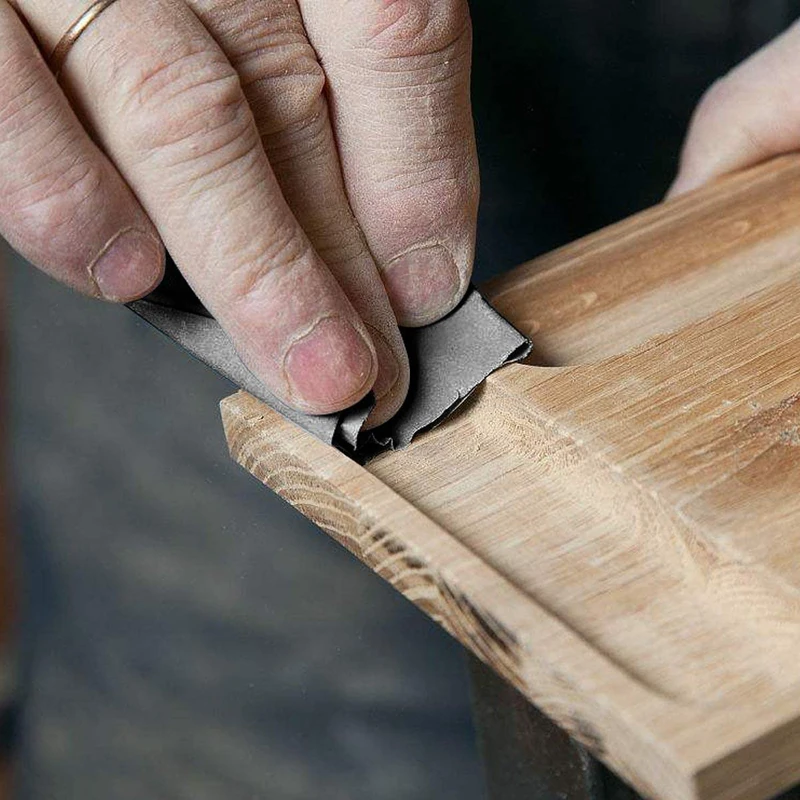
Abrasive choice is half the battle; the other half is a disciplined workflow. Coat density, grit sequence, pressure, and machine setup interact to govern scratch depth, flatness, and throughput. Codifying these variables turns “feel” into repeatable quality.
Start by defining the endpoint. For clear finishes on hardwood, your goal might be a uniform P180 or P220 scratch after leveling. For paint, you may target P320–P400 prior to sealer. Work backward: the first grit should remove prior defects in 2–3 passes without leaving deep troughs that require excessive steps to erase. On soft, clog-prone materials, that first grit is often open-coat P80–P100. On hard materials, closed-coat P80–P100 shortens the path.
Pass count and overlap matter. With a 5-in ROS at 10,000 OPM, aim for 50% overlap and a cross-hatch pattern (with-the-grain then diagonal) to randomize directional bias. Let the pad do the work: downforce should generally sit around the weight of the sander plus 1–2 lbs. Excess pressure collapses the foam interface and deepens the scratch, amplifying coat-dependent issues like loading or heat.
Vacuum and interface control are non-negotiable. Multi-hole discs dramatically help in open coats by purging swarf before it compacts; in closed coats, strong extraction keeps temperatures stable. Use firm interface pads for leveling and medium/soft interfaces for contours. Inspect pads—compressed or heat-hardened foam reduces compliance, increasing swirl risk and heat.
Actionable tips:
- Use staged coat strategy: Open coat for first cut on soft or coated surfaces; switch to semi-open or closed for final two grits to tighten the scratch ladder.
- Set pressure by scale: Place the sander on a small scale and practice applying 1–2 lbs additional force. Train technicians to feel the correct downforce.
- Time your discs: Track disc life in minutes per material and coat type. If open-coat discs lose cut rate, replace before heat rises; don’t “chase value” by running them to glaze.
- Map grit jumps: Keep jumps ≤50% (e.g., P100→P150→P220). Larger jumps on closed coats leave hidden troughs that telegraph under finish.
Document your sequences on a one-page card at each station. Consistency beats artistry when the goal is defect-free surfaces with predictable cycle times.
Controlling dust, heat, and loading
Loading is the failure mode you feel first—cut slows, temperature climbs, and the disc smears instead of shears. Coat selection is your primary lever against loading, but extraction, chemistry, and handling complete the system.
Start with dust extraction. For ROS discs, match your pad’s hole pattern to the disc and ensure full contact. A vacuum producing 90–110 CFM at the hose end with antistatic lines dramatically reduces both dust and heat. On open coat sandpaper, those voids rely on airflow to clear chips; without it, the benefit narrows. For closed coats, airflow prevents boundary layer heating around densely packed grains.
Chemistry helps. Stearate supersize creates a sacrificial barrier that discourages paint and resin adhesion. Use it on open coats when sanding primers, fillers, or softwoods. Avoid stearate on bare wood if finishing with certain oil-based stains—residuals can interfere—though most modern stearates are finish-safe when dust is properly evacuated.
Technique finishes the picture. Clean discs with a directed burst of compressed air between passes rather than aggressive rubbing on a crepe block, which can dislodge grains on finer grits. Monitor temperature by touch on the workpiece—warm is normal; hot indicates loading or excessive pressure. Swap discs at the first sign of glazing rather than burning both the disc and the substrate.
For metal, heat is both a quality and safety issue. Closed-coat ceramic on steel loves pressure, but keep the work moving to prevent bluing. On aluminum, favor open or semi-open with lubricant or a light mist coolant where appropriate to mitigate galling.
Finally, watch your pad and backing. A worn hook-and-loop pad reduces disc stability, increasing chatter marks. Replace interface pads regularly and keep couplings airtight—micro leaks sap vacuum efficiency, raising temperature across both coat types. The net effect of these controls is simple: consistent removal rates, longer abrasive life, and cleaner surfaces ready for finish or bond.
Brief Description of — Video Guide
In this short video, a seasoned maker breaks down how abrasive papers differ in composition, grit, and intended use. He touches on grain minerals, backings, and how coat patterns influence cut and finish outcomes without diving into jargon.
Video source: Brief Description of Sandpaper Told By Woody
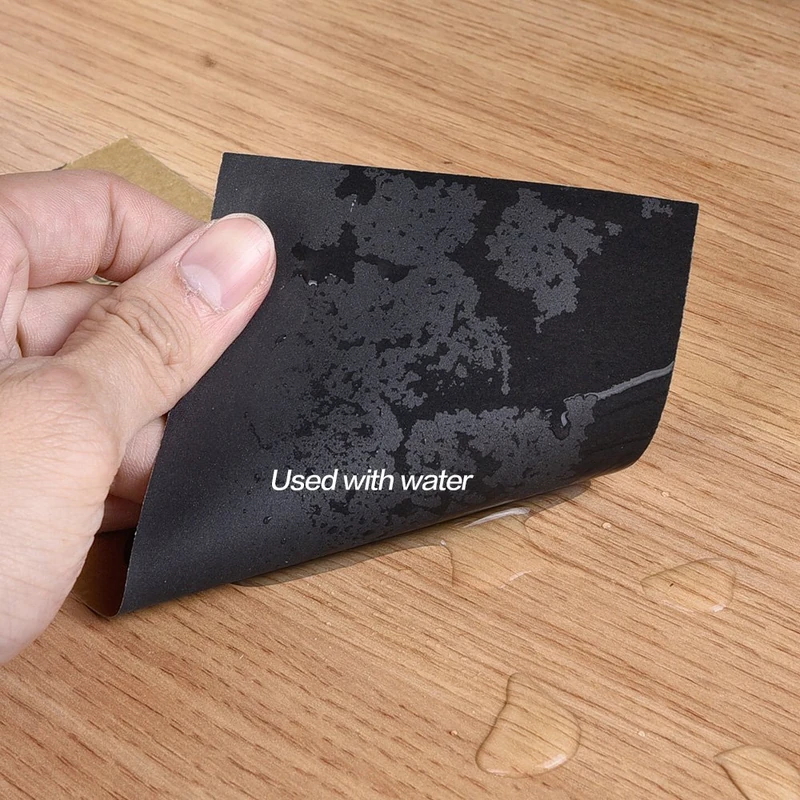
150 Grit Sandpaper Sheets (50-pack) — 9x11 in Silicon Carbide Abrasive for Wet or Dry Use — Versatile medium grit that transitions from shaping to smoothing. Works well between coats of finish or for preparing even surfaces prior to paint. (Professional Grade).
Frequently Asked Questions (FAQ)
Q: What is the actual difference between open, semi-open, and closed coats?
A: Coat refers to grain coverage on the backing. Open coat typically runs about 50–70% coverage, leaving more voids for chip evacuation. Semi-open sits around 70–80%, balancing clearance and scratch density. Closed coat approaches 90–100% coverage, maximizing grain contact for uniform scratches on hard, cleanly cutting materials.
Q: Can I use open coats on metal, or is that strictly for wood?
A: You can use open coats on nonferrous metals like aluminum and brass, where loading and smearing are common. The added spacing and, ideally, stearate or lubricant reduce galling. For ferrous metals (mild steel, stainless), closed coat ceramic or zirconia is usually superior due to consistent scratch density and higher pressure tolerance.
Q: How do I decide grit progression when switching coat types mid-process?
A: Keep grit jumps conservative (≤50%) and switch coat types at transition points where your goal changes from removal to refinement. For example, stripping paint on pine: open-coat P100 for removal, open or semi-open P150 to refine, then closed-coat P220 for a tight pre-finish scratch. Always confirm the last two grits with a raking light.
Q: Why do my discs load even with open coats and dust extraction?
A: Common causes include excessive downforce collapsing the foam pad, inadequate CFM at the pad due to leaks or clogged filters, mismatched hole patterns reducing airflow, and using the wrong mineral/bond for the substrate. Reduce pressure to 1–2 lbs over tool weight, verify vacuum performance at the pad, and consider stearate-treated open coats for paints and resinous woods.
Q: Are open coats appropriate for waterborne finish prep?
A: Yes—especially for intermediate sanding between coats where stearate-treated open coats resist loading from partially cured finishes. For final pre-topcoat passes (P320–P400 on coatings), many shops switch to closed coats to tighten the scratch pattern and improve gloss uniformity. Always vacuum thoroughly to avoid stearate transfer concerns.