
Standardizing Abrasive Testing for Cut Rate
The day before a critical ship-out, I watched a fabricator lean into a 36-grit ceramic belt, chasing a hot streak across a stubborn stainless coupon. The clock said 4:42 p.m., the air smelled like quenched metal, and the part needed a uniform finish before welding at dawn. He’d tested three belts over two weeks and still didn’t know which one would chew through scale faster without burning the edges. The problem wasn’t skill—he had that in spades. The problem was data. His “test” consisted of feel, sound, and a gut sense of speed. Useful to a point—but not when deadlines hinge on repeatable outcomes. This is where standardized abrasive testing elevates experience into a defensible workflow.
Without a common protocol for cut rate, every shop and vendor speaks a private dialect. One operator pushes harder because it “cuts better,” another runs cooler, a third swaps backup pads and unknowingly changes contact stiffness. You can’t compare results across rigs, let alone across facilities. The consequences are expensive: wasted belts, unpredictable cycle times, and finish defects that cascade into extra blending and rework. A consistent, instrumented approach turns those unknowns into controlled variables—so a 30-second cut on 304 stainless means the same thing on Monday, in May, or in a different lab.
What we standardize isn’t the craft; it’s the test conditions that isolate the abrasive’s true performance. That means setting the material, drive speeds, applied load, cooling method, dressing or break-in state, and measuring outputs with calibrated tools. It’s not bureaucracy. It’s how you link cut rate to surface quality, thermal load, and part tolerance. When you do, your sanding workflow stops guessing, and your purchasing decisions start compounding into measurable throughput.

Quick Summary: A rigorous, controlled protocol for cut rate—anchored by calibrated force, speed, and measurement—makes abrasive results comparable across tools, teams, and labs.
Why Cut Rate Needs a Standard
“Cut rate” sounds simple—how fast material disappears—but it hides a tangle of confounders. Lift any abrasive catalog and you’ll see claims of faster stock removal, cooler cutting, or longer life. Without standardized testing, those claims are not truly comparable, and shop trials often bias toward an operator’s habits or a specific machine setup.
Define cut rate first. For coated abrasives and bonded wheels, the most defensible metric is mass loss per unit time (g/min) or volume removal per unit time (mm³/s), measured on a defined work material. Complementary outputs include specific material removal rate (Q’w in mm³/s·mm), normal and tangential forces (Fn, Ft), and specific energy (J/mm³). These tie cut rate to heat input and scratch mechanics, not just a time stamp.
The second reason to standardize is lifecycle cost. Cycle time is only one piece. Belts that cut fast but glaze early shift cost into frequent changeouts and erratic finishes; wheels that need heavy dressing move labor into maintenance. A standard cut rate test includes wear tracking (e.g., G-ratio for bonded wheels, grams removed per gram of abrasive consumed for belts) and documents the “knee” where cutting declines. That converts marketing adjectives into curves with confidence intervals.
Third, finish quality matters. Stock removal is useless if it produces deep, unmanageable scratches that extend the sequence. Including post-cut roughness (Ra, Rz), scratch orientation, and thermally affected zone as part of the same protocol links the first pass to downstream blending. A true standard makes those relationships visible and repeatable.
In short, standardization is the difference between anecdotes and engineering. It transforms selection, scheduling, and QA from noisy variables into controllable inputs with predictable outputs.
Building an Abrasive Testing Protocol
A credible protocol for abrasive testing is a recipe: controlled ingredients, precise utensils, and repeatable timing. Start with the workpiece. Specify alloy, hardness, and heat treatment. For ferrous materials, use 1018, 4140, or 304/316 with defined hardness; for nonferrous, 6061-T6 or Ti-6Al-4V. Machine coupons to consistent geometry (e.g., 100 × 25 × 6 mm) with flatness ≤0.05 mm. Deburr, then standardize the surface state: solvent-degrease, wipe with isopropyl alcohol, and if necessary, set a uniform pre-grit on a separate belt to normalize oxide and baseline roughness.
Define the contact mechanics. For belts and discs, specify backup pad/platen hardness (shore A durometer), contact width, and wrap angle. For wheels, define wheel grade, porosity, and dressing state. Use a regulated normal force via a pneumatic or electromechanical actuator verified by an inline load cell; set force within ±1% of target. Control sliding speed as surface speed (m/s) via tachometer or encoder.
Set thermal conditions explicitly. For dry tests, specify ambient temperature and humidity; for wet, define coolant chemistry, flow rate (L/min), temperature, and nozzle geometry relative to the contact patch. Record all of it.
Measurement: weigh coupons pre/post on a scale with 0.1 mg resolution, or use a thickness gauge/3D profilometer for volume. Capture force and speed at 100–1000 Hz for deriving Ft and power. For surface outcomes, measure Ra/Rz after a fixed removal depth, not just after time, to decouple roughness from cut variability.
Finally, define sequence and replication. Include break-in passes: for coated abrasives, perform a fixed number of light passes on mild steel to stabilize grain exposure; for bonded wheels, dress with a defined overlap ratio and speed ratio. Randomize test order to mitigate drift and perform at least n=5 replicates per condition to estimate variance robustly.
Controlling Variables That Skew Results
Even well-written procedures can yield poor reproducibility if hidden variables drift. The most common culprits are force, speed, compliance, temperature, and edge conditions.
Force creep is subtle. Regulators drift, friction changes in pivots, and pads compress differently as they heat. Use closed-loop control on normal force with a load cell mounted as close to the contact as possible, and log force at high rate to compute actual mean and standard deviation during each cut. Reject trials where force deviates beyond your control band.
Speed is equally slippery. Nameplate RPM means little under load: belt slip and motor droop reduce surface speed. Instrument with an optical or magnetic encoder on the driven contact wheel, not the motor, to obtain true surface speed. Maintain SFPM within ±2%.
Compliance comes from the backup pad, platen, wheel grade, and the workpiece mounting. For coated abrasives, note pad durometer and geometry; a softer pad increases contact area, lowers pressure, and can falsely suggest a slower abrasive if you compare against a hard pad test. For wheels, record dressing aggressiveness and make it a fixed parameter; dull dress increases rubbing, heat, and measured energy.
Thermal state changes abrasivity. Pre-heated coupons remove faster initially, and grains fracture differently when hot. Define a cool-down interval or enforce a starting coupon temperature via a non-contact IR sensor. If wet cutting, measure coolant inlet and exit temperature to quantify heat extraction.
Edges and clamping matter. Edge-start cuts concentrate load and cause premature grain fracture; inconsistent clamp locations stiffen the system unpredictably. Use a sacrificial lead-in and a fixed clamping jig that standardizes bending stiffness.
Instrumentation integrity sits underneath all of this. Calibrate scales, force sensors, tachometers, and thermometers on a schedule with traceable standards. Validate with check cuts on a reference abrasive to spot drifts before they contaminate production data. And document environmental conditions; humidity and dust accumulation can affect mass readings by milligrams in minutes.
According to a article, harmonized test methods reduce cross-program variability and make results portable—a lesson that translates directly to industrial abrasive evaluations.
Instrumentation and Data Integrity
Your cut rate is only as credible as the measurement chain. Begin with power and force. Install a torque transducer or measure input electrical power and derive mechanical power after accounting for motor efficiency; combine with volumetric removal to compute specific energy, a sensitive indicator of rubbing vs cutting. Pair this with a dual-axis force sensor to separate Fn and Ft, revealing how friction evolves as grains dull.
For removal quantification, weigh both the work coupon and, when feasible, the abrasive article before and after test to estimate consumption and compute grams removed per gram consumed. This provides a practical analog to G-ratio for coated abrasives. When mass loss is small, switch to a 3D optical profilometer and compute volume from a scanned region, masking edges and outliers.
Surface quality closes the loop to workflow relevance. Measure Ra, Rz, and peak count (Pc) perpendicular to scratch direction. Track scratch depth distribution using confocal microscopy on representative swaths. The goal is to pair high cut rates with scratch patterns that blend predictably into the next grit—something you can’t infer from time alone.
Data logging and integrity practices matter. Use time-synchronized logging for all channels (force, speed, temperature, power), and assign immutable sample IDs. Store raw data with metadata: abrasive type (grain chemistry, shape, grit, coating), backing weight, pad hardness, dressing parameters, workpiece batch, and operator. Export derived metrics with documented formulas; version those formulas so recalculations remain traceable.
Validation is not an afterthought. Include a control abrasive in every test batch—a widely available, stable product—to generate a control chart. If the control’s cut rate drifts, stop and diagnose before testing high-value candidates. Build automated sanity checks: if specific energy exceeds a threshold, flag potential glazing; if Ft/Fn ratio spikes, flag lubrication or coolant delivery issues.
Reporting and Cross-Lab Comparability
Standards fail in practice when reports bury the parameters that matter. A good report is compact, structured, and portable across labs. Start with a one-page summary: test matrix, workpiece, force, speed, thermal condition, and headline metrics with 95% confidence intervals. Graphs should include error bars and clearly state n.
Include both time-based and depth-based views. Time-based cut rate (g/min) suits production scheduling; depth-based removal with associated roughness relates to finish transitions. Provide specific energy vs removal time to reveal glazing or grain self-sharpening behavior. If wear is relevant, show removal per abrasive mass or G-ratio-like curves, noting the knee where efficiency falls off.
Statistical treatment should be explicit. Randomize test order, block by day or machine, and run a two-way ANOVA to separate abrasive effects from day/machine effects. Where claims hinge on sameness, apply equivalence testing (TOST) rather than null-hypothesis testing. Report p-values, effect sizes, and confidence intervals; do not rely solely on means.
Comparability hinges on a shared reference. Create a house standard consisting of one stainless and one carbon steel coupon, a defined pad, and a control abrasive. Send this kit to partner labs or vendors along with your procedure and ask for a control run. Compare their control to yours; if alignment is within your preset window (e.g., ±7% on cut rate and ±10% on specific energy), then you can credibly compare their candidate runs to your database.
Finally, translate results into workflow guidance. Map each abrasive to a process slot: stock removal, intermediate blending, final prep. Specify recommended force/speed windows from the test, note expected scratch characteristics, and list cool-down guidance. That’s how a test report becomes an operational playbook.
Practical Tips That Improve Test Quality
- Use a constant-stiffness pad stack: Bond a thin, high-durometer layer atop a compliant pad to stabilize contact area across heat and load, yielding more repeatable pressure.
- Establish a fixed break-in protocol: For coated belts, run 10 light passes on mild steel at half load; for wheels, dress at a constant overlap ratio and dwell to a measured or visual grain protrusion.
- Weigh in a humidity-controlled enclosure: Allow coupons to equilibrate for 10 minutes before and after cutting; handle with nitrile gloves to prevent oil mass errors.
- Define a cooling audit: For wet tests, log inlet/outlet temperatures and flow; for dry tests, enforce a minimum cool-down to a target coupon temperature before the next replicate.
- Randomize within blocks: Shuffle abrasive order within each force/speed condition to spread any day-to-day drift evenly, improving the reliability of between-abrasive comparisons.
A Grinding Disc — Video Guide
A recent demonstration pits a precision-shaped grain grinding disc against a conventional stone disc to visualize differences in cutting efficiency. The video shows side-by-side removal on steel, highlighting how engineered geometries sustain high cut rates with lower force and heat.
Video source: A Grinding Disc That EATS Metal! Victograin VS Traditional Grinding Discs
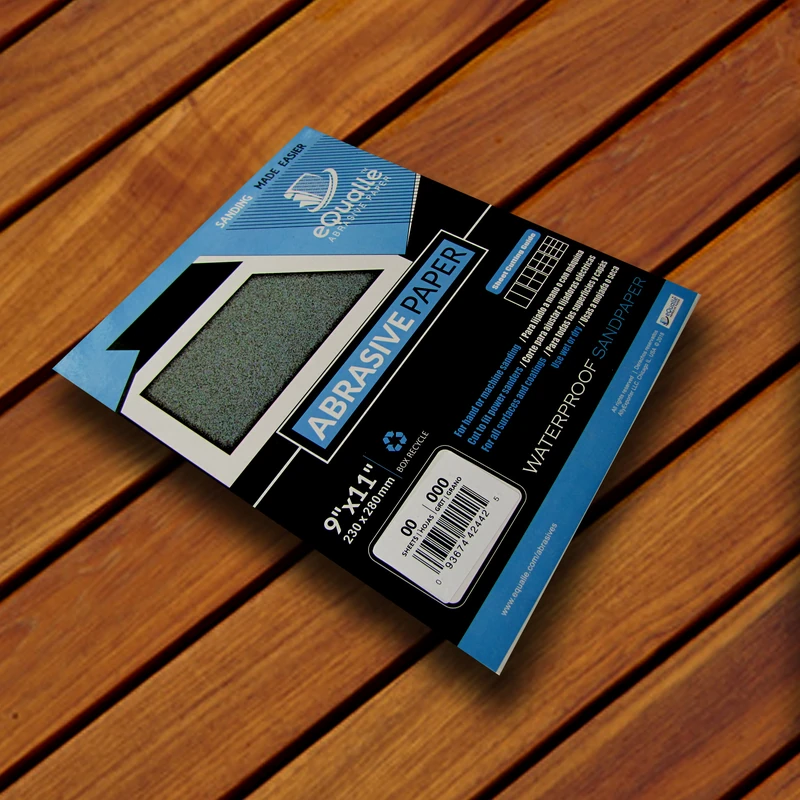
320 Grit Sandpaper Sheets (25-pack) — 9x11 in Silicon Carbide Abrasive for Wet or Dry Use — Precision finishing grit that enhances clarity between paint or lacquer coats, ensuring a flawless final layer. (Professional Grade).
Frequently Asked Questions (FAQ)
Q: What is the most reliable way to express cut rate?
A: Use volume or mass removal per unit time (e.g., mm³/s or g/min) on a defined work material, complemented by specific energy (J/mm³) to reflect cutting efficiency and heat generation.
Q: How many replicates are enough for abrasive testing?
A: Five replicates per condition is a practical minimum to estimate variance and detect medium effect sizes. For tighter decisions or regulatory contexts, run 8–10 replicates and include blocked randomization.
Q: Do I need wet and dry tests for the same abrasive?
A: Test under the condition you will use in production. If both are plausible, include both, controlling coolant type, flow, and temperature. Wet results are not directly comparable to dry unless thermal variables are accounted for.
Q: How should I handle wheel dressing or belt break-in?
A: Treat it as a fixed, documented parameter. For wheels, specify dresser speed ratio, depth, and overlap. For coated abrasives, standardize a short break-in sequence to stabilize initial grain exposure.
Q: Can I compare results across different machines?
A: Yes, but only after verifying comparability with a control run. Use the same coupons, pad/wheel conditioning, and force/speed setpoints. If the control abrasive matches within set tolerances, cross-machine comparisons are defensible.