
Crosshatch Sanding for Clear Coat Leveling
You notice it first when the sun dips behind a cloud. Your car—or maybe that guitar body you’ve been refinishing—looked perfect in full daylight. But now a soft, diffused glow reveals a faint orange peel, a sprinkling of swirls, and the slightest rippling along a contour line. It’s not ruined, but it’s not the glassy surface you had in mind. The promise of a flawless finish is what pulls many of us into the workshop on a Saturday morning, and it’s what makes techniques like clear coat leveling feel less like a chore and more like craftsmanship. What you need isn’t more product or a heavier hand; it’s a repeatable way to flatten texture without taking unnecessary risks.
Crosshatch sanding is that methodical approach. By moving your abrasive in one diagonal direction and then the opposite, you create a uniform scratch map that methodically chisels down high spots while preserving film build. Instead of chasing defects with random motions and guesswork, you’re guided by a simple, reliable pattern. It improves visibility, controls heat, and helps you know when to stop. Whether you’re refining a freshly sprayed panel or refreshing a faded clear, the crosshatch pattern aligns with the way clear coat wears, reacts, and polishes. And just as importantly, it makes your results repeatable: panel to panel, project to project.
If you’ve ever tried to level a finish and found yourself zigzagging, stopping, starting, or doubling back, this is your sign to slow down and trust a process that puts you in control. Crosshatching translates patience into precision—so you come away with a mirror-like finish you’re proud to show in any light.
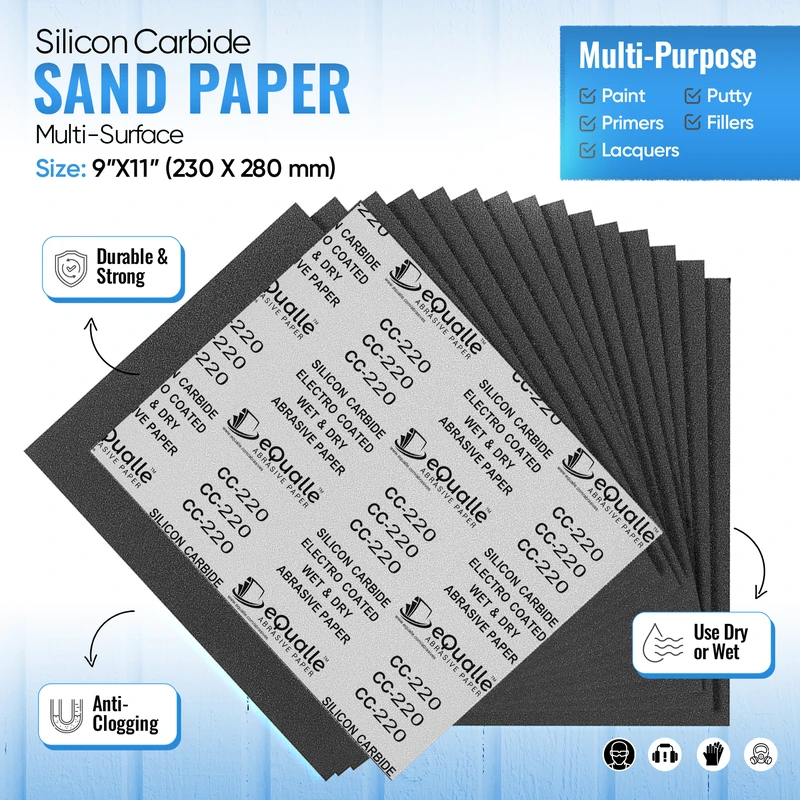
Quick Summary: A disciplined crosshatch sanding pattern flattens texture evenly, making clear coat leveling safer, faster, and more predictable from prep to final polish.
Why crosshatch sanding works
The clear coat’s job is to protect and refract light evenly. Texture—orange peel, nibs, or waviness—breaks that uniform reflection. Leveling is simply removing the peaks until they meet the valleys, and crosshatch sanding is the most consistent way to do it.
Uniform scratch mapping: Sanding in one diagonal direction (think 45 degrees) produces a visible, organized scratch pattern. Crossing the other way creates an “X” that highlights untouched low spots. If you still see texture after the second pass, it’s real texture—not just directional scratching.
Balanced material removal: Single-direction passes can leave subtle tracks or “tramlines.” Alternating angles distributes pressure and contact, reducing the risk of uneven spots or pressure marks, especially around curved panels or edges.
Heat and slurry control: Wet sanding generates slurry and heat. Crosshatching moves slurry off the path naturally and limits dwell time on any one area, helping maintain a cool, lubricated surface and a consistent cut.
Visual feedback: Because each direction leaves a distinct “grain,” you can quickly see when your previous scratches are replaced and when the surface is equally matte. The instant the whole area has a uniform sheen, you’ve flattened the texture with that grit and can step down safely.
Safety margin near edges: Edges and body lines are thin. A crosshatch cadence keeps you from repeatedly hitting the same thin areas. You’ll naturally lift slightly over edges during each directional change, preserving film build.
The principle is simple: cut in one direction, verify, then crosscut. By repeating this with progressively finer abrasives, you’re not just removing defects—you’re creating a controlled topography that polishes quickly and finishes brilliantly.
Crosshatch steps for clear coat leveling
A great result comes from a simple, repeatable sequence. Here’s a field-tested routine that works on cars, guitars, furniture clear coats, and more.
Prep and decontamination: Wash thoroughly. If on a vehicle, clay to remove bonded contaminants. Dry completely. Mask edges, trim, and sharp creases; if possible, add an extra layer of tape on high-risk edges for insurance.
Choose your starting grit: For moderate orange peel, start with P1500 or P2000. For mild texture or post-correction refinement, begin at P2500–P3000. On fresh clears that are still relatively soft, err on the finer side.
Wet the panel: Mix clean water with a couple of drops of pH-neutral soap in a spray bottle. Lightly mist the surface and your disc or sheet. Keep everything gliding—not dragging.
First pass at 45 degrees: With a foam interface pad (on a DA sander with a 3/32 orbit) or a firm hand block, move diagonally across the panel at consistent speed and pressure—the weight of the tool plus a light hand is enough. Overlap each lane about 50%.
Cross pass at the opposite 45: Rotate your body (or the panel) and sand at the opposing diagonal. Your goal is to replace the first set of scratches with the second set until the surface looks evenly matte with no shiny pockets. Wipe and inspect often.
Step down through grits: Move to P2500 (if you started at P1500–P2000) and repeat the crosshatch. Finish with P3000 (foam-backed finishing discs are ideal). Each step should remove the previous scratch pattern, not create new flat spots.
Final check: Dry the panel, wipe with a panel prep or diluted IPA, and inspect under both diffused and raking light. You should see an even, fine haze ready for compounding—not random scratches or glossy troughs.
Actionable tips:
- Draw light pencil guide marks on the panel. When they’re uniformly gone after each pass, you’ve leveled evenly.
- Time in zone: 8–12 seconds per 12-by-12-inch area per pass is plenty. If it’s not cutting, change paper—not pressure.
- Keep the disc clean. Rinse after each section and replace at the first hint of “loading.”
- Edge insurance: Place a low-tack tape “bumper” on sharp creases and sand up to—but not into—the edge with each stroke.
- Stop at uniform matte. If a glossy dot persists after two cross passes, isolate it gently; don’t over-sand the entire panel.
Grits, blocks, and lube that matter
Your technique is only as good as your touchpoints on the surface: abrasive, backing, and lubrication. Choose them intentionally.
Abrasives: Quality matters. For initial leveling, P1500–P2000 film discs or sheets cut cleanly without gouging. For refinement, P2500 followed by P3000 foam-backed or structured abrasives (like engineered “pyramids”) produce a tight, easy-to-polish scratch. If the clear is thin or aged, skip the coarser grit and start finer.
Blocks and pads: A hand block keeps your surface flat; a soft foam interface pad on a DA sander helps wrap gentle contours without “dishing.” Avoid sanding with fingertips—they create pressure points that telegraph into the finish. On flat areas, a semi-rigid block maintains geometry and speed.
Lubrication: Water with 2–3 drops of pH-neutral soap per quart is a reliable wet medium. Keep a continuous film; if your slurry turns pasty or the surface squeaks, re-wet and wipe clean before continuing. Work clean—dust and dirt become rogue abrasives.
Pressure and passes: Let the abrasive do the work. Imagine pressing a thick paperback onto a table—that’s the approximate load you want. Overpressure creates pigtails and hotspots, especially with worn discs.
Slurry management: Wipe the panel every couple of lanes. Fresh slurry is milky and thin; sludge signals spent abrasive or poor lubrication. Replace discs early—fresh discs cut cooler and flatter.
According to a article, wet sanding with structured abrasives produces a consistent slurry that helps you see removal in real time. That visual feedback is your friend; it’s how you confirm you’re leveling texture, not just chasing scratches. Keep towels and clean water nearby and treat each section like its own micro-project. When you control the small variables, the big results follow.
Reading the surface like a pro
The difference between “good” and “great” is rarely another minute of sanding—it’s better inspection. Learn to read what the surface tells you and respond accordingly.
Light is your instrument: Use diffused overhead light to confirm uniform matte and raking light (a handheld LED at a shallow angle) to reveal low spots or directional scratches. If you see shiny islands under raking light, those are untouched valleys—keep crosshatching until they disappear.
Guide coats aren’t just for primer: A whisper-thin guide coat (powder or a dry erase-like marking) on clear can help you spot uneven removal. As you sand, the remaining specks map low areas without adding grit that could scratch.
Contours and edges: Film build thins over edges and body lines. Reduce pressure, shorten your strokes, and let the block glide over high-risk zones. If you must level near an edge, make your passes perpendicular to the edge so the block “bridges” it rather than wrapping around it.
Know when to stop: A perfectly even matte after your final grit is your green light to polish. If a tiny defect remains after one more cross pass at your finishing grit, move on to polishing—it’s safer to correct a small remnant by machine polish than to push the clear too far.
Avoiding common defects:
- Pigtails: Circular “comet tails” signal debris or excessive pressure. Stop, rinse the disc, clean the panel, and replace the disc if the pattern persists.
- Tracers: Faint straight lines running the direction of travel often come from a hard contaminant under the paper or a rigid block. Clean, re-lube, and soften the interface.
- Burn-through: A sudden glossy spot that won’t go matte may be thinning clear—or you’ve reached color on a single-stage surface. Stop immediately and reevaluate.
If you build a rhythm—sand, wipe, inspect, adjust—you spend less time guessing and more time removing exactly what you intend. That’s the heart of professional-looking results at home.
Polish and protect for the long haul
After a disciplined crosshatch level, polishing should feel almost easy. You’re no longer fighting deep, random scratches—just refining a fine, uniform haze.
Compounding: Start with a medium-cut compound on a dual-action polisher and a foam or microfiber cutting pad. Work a 2-by-2-foot section, moderate speed, and minimal pressure. Your goal is to fully remove the P3000-equivalent haze and establish a clear, sharp reflection.
Polishing: Follow with a finishing polish and a soft foam pad to boost clarity and depth. If you see faint micro-marring, step down your pad firmness or speed and let the polish cycle. Wipe with a clean towel and inspect under multiple light angles.
Solvent check: For a true read on finish quality, do a gentle panel wipe with IPA (diluted) or a dedicated prep solution to remove any fillers. If defects reappear, add a short refining set; don’t jump back to aggressive compounds unless necessary.
Protection: Lock in your work. A quality sealant or ceramic coating will slow down UV oxidation and make washing safer. If your clear is fresh (recently sprayed), follow the product’s cure timeline before applying long-term protection; many clears need 24–48 hours before aggressive polishing and more time before coatings.
Aftercare: For the first week, avoid harsh washes and abrasives. Use a soft wash mitt and pH-neutral shampoo. Keep a quick detailer on hand to reduce friction when dusting or removing fingerprints.
By seeing polishing as the last 10% of an already controlled process, you avoid chasing your tail with endless pad and product experiments. A properly crosshatched, evenly leveled surface will reward you with faster, cleaner correction and a finish that holds up.
Clearcoat repair; No — Video Guide
If you’re curious how self-leveling clear behaves, there’s a helpful demonstration of a wipe-on clearcoat addressing swirls, scratches, and tired finishes—no spray gun required. The presenter uses a product similar to “Speed-Clear,” showing how it flows out and fills minor defects on a black panel.
Video source: Clearcoat repair; No Paint Gun needed! Black Rhino Speed-Clear!
120 Grit Sandpaper Sheets (25-pack) — 9x11 in Silicon Carbide Abrasive for Wet or Dry Use — Refines surfaces after coarse sanding by removing scratches from lower grits. Consistent performance on wood, drywall, and metal. Ideal for wet or dry finishing before applying primer or stain. (Professional Grade).
Frequently Asked Questions (FAQ)
Q: What angle should I use for the crosshatch pattern?
A: Aim for about 45 degrees in one direction, then 45 degrees the other way, creating a clean “X.” The exact angle is less important than consistency and full coverage with 50% overlap.
Q: Where should I start in terms of grit?
A: For moderate orange peel, start around P1500–P2000, then refine to P2500 and P3000. On thinner or older clear, start finer (P2500–P3000) to preserve film and minimize risk.
Q: How do I know I’ve leveled enough before polishing?
A: When the entire section shows a uniform, even matte with your finishing grit—no shiny islands under raking light—you’ve flattened the texture. A quick panel wipe should reveal a consistent, tight haze ready to polish.
Q: Can I do this by hand, or do I need a DA sander?
A: You can level by hand with a proper sanding block, especially on small or complex areas. A DA with a foam interface speeds larger panels and keeps pressure more uniform, but the crosshatch principle stays the same.
Q: What if I see pigtail scratches during sanding?
A: Stop immediately. Rinse the panel and disc, check for debris, and replace the abrasive if needed. Reduce pressure, re-lube, and resume with slower, more deliberate passes to avoid repeating the defect.