
Sandpaper Grit Chart: Choose the Right Starting Grit
The first time I watched a flawless finish come alive, it happened in the last ten minutes of a long Saturday in the shop. Cold radio in the background, dust collector humming, I wiped a splash of mineral spirits across a dining tabletop and the grain popped like a film reveal. That moment didn’t come from luck—it came from choosing the right starting grit. I keep a small sandpaper grit chart taped to my cabinet door, not because I can’t memorize grits, but because the surface in front of you changes the rules. A hundred-year-old oak stained dark is not the same as new maple fresh off the planer. Paint sprayed last month is not like six coats of hand-brushed oil from the 90s. The trick is reading the job, then picking the grit that does the heavy lifting without making more work.
If you’ve ever started too fine and felt like you were just polishing the old finish, you know the pain—burning through time and discs while the sander glides without cutting. Start too coarse and you’ll leave tracks that haunt your final coat. The sweet spot is a starting grit that removes defects or coatings in 2–4 efficient passes, then peacefully hands off to the next grit without leaving deep scars. That’s the focus here: practical, real-world decisions about where to start, how to move through the sequence, and when to stop. Whether you’re flipping furniture, prepping trim, or flattening a slab, I’ll give you the cues I use on-site and in the shop to choose your first grit with confidence.
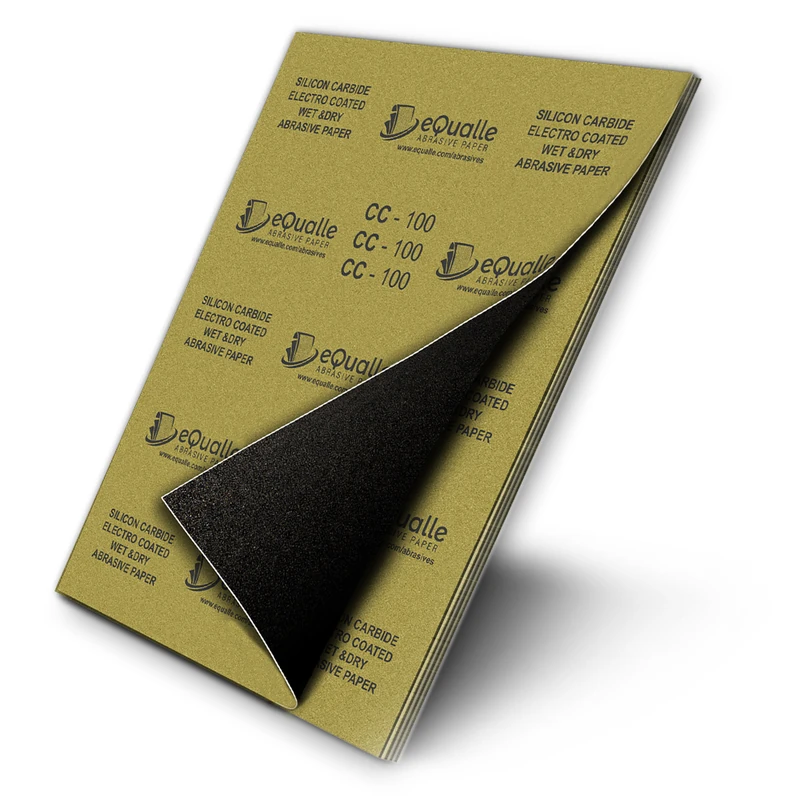
Quick Summary: Pick a starting grit that removes the worst defects in 2–4 passes, then progress through sensible grit jumps to erase scratches without wasting time.
The first pass sets the tone
Choosing a starting grit is like setting feed rate on a jointer: get it wrong and everything downstream is compromised. My rule is simple—start just coarse enough to remove the “big problem” quickly, but not so coarse that you carve trenches you’ll fight later.
Here’s how I size up the surface:
- Identify the worst defect you must erase: thick finish, deep scratches, planer tracks, cupping, or uneven color.
- Decide your tool: belt sander for heavy leveling, random orbital for general prep, hand block for edges and veneer.
- Run a 30-second test in an inconspicuous corner with a likely grit and inspect with raking light.
If a thick finish barely dulls after 30 seconds with 120-grit on a random orbital, that’s the sander telling you to go coarser—probably 80 or even 60. If 60-grit chews through the finish and starts digging into the wood faster than you can react, back off to 80 or switch tools to a scraper for the first pass.
Targets for the first pass:
- Coating removal: You should see consistent dullness or bare wood appearing across the pad path after 2–4 passes.
- Leveling: Pencil lines disappear evenly, with no shiny low spots left behind.
- Scratch removal: Previous scratches should fade to uniform new scratches in the current grit’s pattern.
Don’t be afraid of coarse grits—fear unevenness. Keep the sander flat, move at a steady pace (about 1 inch per second), and use minimal pressure; let the abrasive do the work. Your first pass is a setup for success: remove the problem, leave uniform scratches, and give yourself a clean runway for the finer grits to take over.
Surface clues: coatings, wood, and defects
Surfaces talk. Your job is to listen before you sand. The right starting grit depends on three things: what’s on the surface, what the surface is made of, and what went wrong with it.
- Coatings and adhesives
- Thick, old oil varnish or epoxy: Start at 60–80 with a random orbital or use a cabinet scraper first, then 80. Epoxy drips and flood coats often need 60 on a hard pad.
- Modern waterborne finishes: Usually softer; 80–100 can lift them quickly without gouging.
- Paint on hardwood: If it’s stubborn and chipped, 60–80; if thin, 80–100 is safer.
- Contact cement or PVA squeeze-out: Spot-scrape or chisel first, then 100–120 for cleanup to avoid embedding glue into the grain.
- Species and substrate
- Hardwoods (oak, maple, ash): Accept 80 as a standard starter for finish removal; go 100–120 for light prep on fresh millwork.
- Softwoods (pine, fir): Start finer when possible—100 or 120—because coarse grits can chew soft earlywood deeply and telegraph through stain.
- Veneer plywood: Avoid going coarser than 120 unless you’re sure of thickness; use a hand block at edges and watch heat buildup.
- Defects and milling marks
- Deep scratches, planer snipe, or belt chatter: 60–80 on a flat hard pad, then climb to 100/120.
- Minor nibs, dust, or raised grain: 150–180 lightly, especially if your finish system recommends it.
- Uneven surfaces: Pencil a crosshatch, then sand until all lines disappear evenly. If low spots remain shiny, you need a coarser grit or a flattening tool first.
A quick test I love: wipe with mineral spirits to preview the surface. Shiny islands after a few passes mean lows; dull uniform sheen means contact. Also, drag a utility knife lightly across the surface; if it clogs with finish, you’re still fighting coating—go coarser or switch tactics. Reading the surface upfront keeps you from losing an hour to the wrong starting grit.
Decoding the sandpaper grit chart for starts
Let’s translate the numbers into starting decisions. A sandpaper grit chart simply ranks particle size: lower numbers are bigger, more aggressive abrasives; higher numbers are finer, polishing abrasives. For starters, think in bands:
- 36–60: Heavy removal, flattening, or thick coatings; best with belt sanders or for epoxy/leveling passes.
- 80–100: General stripping and defect removal; my go-to start for hardwoods with finish present.
- 120–150: Light prep on bare wood, veneer-safe starts, and pre-finish touch-ups.
- 180–220: Final prep for film finishes or in-between coats; rarely a starting grit unless you’re only knocking down dust.
- 240–320+: Specialty finishing steps, polishing between coats, or prepping for high-gloss systems.
You’ll see P-grit (FEPA) and CAMI numbers; P120 and 120 are close but not identical—don’t mix systems mid-sequence on critical work if you can avoid it. Jump sizes matter. From a coarse start, move to the next 40–50% finer step (60→80→120, or 80→120→180). Avoid big jumps like 60→150; they’re slower and leave scratch ghosts.
According to a article.
Practical starting picks:
- Unknown finish on oak: Begin with 80 and test. If it smears instead of powders, drop to 60.
- Freshly planed maple with faint ridges: Start at 100 or 120, especially if you’re staining; maple telegraphs scratches.
- Painted pine bookshelf: Start at 100; only drop to 80 if the paint laughs at you.
- Veneered dresser top: Start 120 on a soft interface pad and keep the sander moving; prioritize survival over speed.
Your goal is a starting grit that creates uniform, controllable scratches while erasing the existing problem. Choose the band that fits the task, then fine-tune one step up or down based on your test patch.
Proven grit sequences that save time
Choosing the first grit is half the game; the other half is knowing how to climb the ladder without wasting discs or leaving tracks. Here are shop-tested sequences for common scenarios. Each starts with a realistic starting grit and advances just enough to erase the previous scratches.
- Strip and refinish a hardwood table (old film finish)
- Start: 80 (drop to 60 if the finish gums).
- Progress: 80→120→150→180.
- Notes: Use a hard pad for 80, switch to a medium/soft pad by 150 for contour-friendly scratch patterns.
- Prep fresh hardwood for clear coat
- Start: 100 or 120 depending on planer marks.
- Progress: 120→150→180→220.
- Notes: If you’re spraying waterborne, stop at 180; for oil-based, 180–220 is a sweet spot.
- Painted softwood shelving
- Start: 100 (80 only if paint is thick and hard).
- Progress: 100→150→180.
- Notes: Watch for uneven earlywood removal; keep the sander moving and pressure light.
- Veneered dresser top
- Start: 120.
- Progress: 120→150→180.
- Notes: Use an interface pad and minimal pressure; hand-sand edges with a block at the same grits.
- Epoxy flood coat leveling
- Start: 60 (hard pad).
- Progress: 60→100→150→220.
- Notes: Vacuum often and keep the pad clean; melted epoxy on discs scratches unpredictably.
Shop steps to stay efficient:
- Pencil guide coat: Lightly scribble across the surface before each grit; sand until all lines vanish evenly.
- Stay in the lane: Remove 80% of prior scratches before moving on; don’t chase perfection at coarse stages.
- Time boxing: If a grit isn’t producing change in 60–90 seconds, you picked too fine—drop a step.
- Edge discipline: Hand-sand edges with a block two grits finer than the face to avoid roll-over and burn-through.
- Dust management: Connect extraction and keep discs clean—clogged paper cuts like a worn shoe and leaves swirl marks.
Pick the sequence that matches your project, then adjust by one grit if your test spot says you’re too slow or too scratchy. This is the kind of “on the tool” decision-making that separates frustration from flow.
Tools, pressure, and scratch control
Even the perfect starting grit can fail if your technique fights it. The first pass is where bad habits carve the deepest. Let’s lock in mechanics that make any grit work harder and cleaner.
Tool choices
- Random orbital sander (5" or 6"): Best all-around. A 6" with good extraction cuts flatter and faster.
- Belt sander: For flattening or heavy removal with 36–60 grit. Keep it moving, parallel with the grain, and finish with an orbital to refine.
- Hand block: Essential for edges, veneer, and between-coat touch-ups. It reveals highs and lows better than power sanding.
Pressure and pacing
- Pressure: Let the sander’s weight do 90% of the work. Overpressure stalls the pad and creates pigtails.
- Speed: Move at roughly 1” per second with 50% overlap; faster with finer grits is okay once you’ve established uniformity.
- Pass count: Expect 2–4 full overlapping passes per grit; if you need more, your starting grit was too fine.
Scratch visibility and lighting
- Raking light: Set a work light low to the surface. If you can’t see the scratch pattern clearly, you’re sanding blind.
- Cross-grain warning: Keep the machine with the grain whenever possible. If you must cross-grain to level, return with with-the-grain passes one grit finer to erase.
- Interface pads: A soft pad helps conform to subtle curves but can round edges; use hard for flattening, soft for final grits.
Actionable tips to prevent scratch ghosts:
- Switch to fresh discs when cut rate drops; dull paper polishes defects instead of removing them.
- Vacuum the surface and pad between grits to avoid reintroducing coarse particles.
- After your coarsest grit, wipe with mineral spirits to reveal hidden scratches before moving on.
- Mark defects with a pencil circle so you re-check them after each grit change.
- Avoid skipping more than one grit size; better to add one extra grit than fight lingering scratches two steps later.
Dial in these fundamentals and your chosen starting grit will do exactly what you asked—remove the big problem fast and set up a clean finish.
How Do I — Video Guide
If you’re newer to furniture flips or just want a quick refresher, there’s a clear, beginner-friendly video that breaks down how to sand furniture and pick the right grit at each stage. It demonstrates where to start on typical painted and finished pieces, then shows how to move through the sequence without over-sanding or stalling out.
Video source: How Do I Sand Furniture? | Sandpaper Grit 101 - Know Which Grit to Use for Each Step of Your Flip!
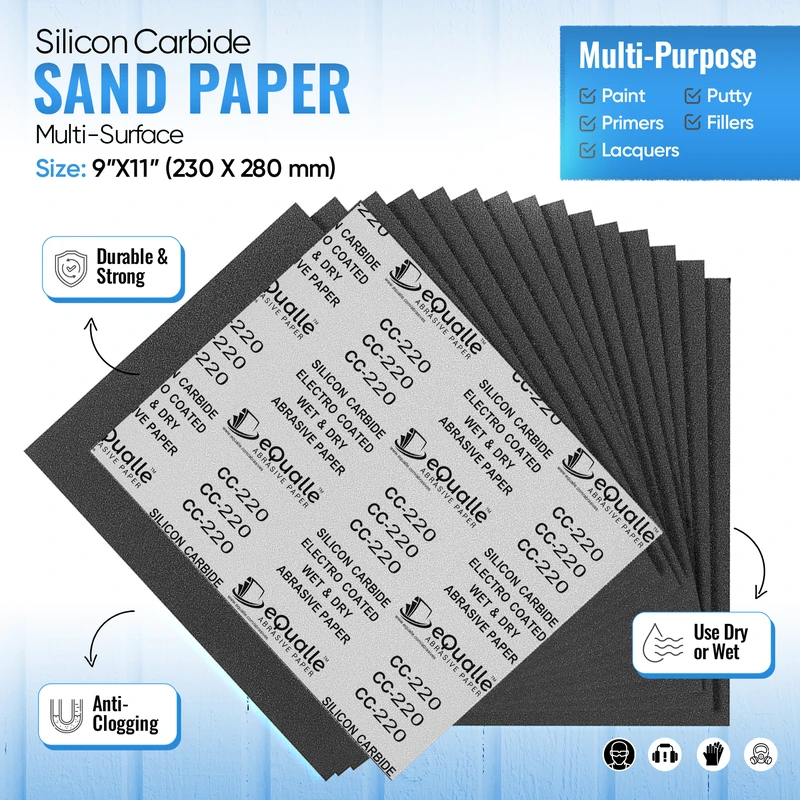
80 Grit Sandpaper Sheets (10-pack) — 9x11 in Silicon Carbide Abrasive for Wet or Dry Use — Durable coarse abrasive that evens out irregular surfaces and clears old coatings. Ideal for early sanding stages in woodworking, fiberglass, or metal preparation. (Professional Grade).
Frequently Asked Questions (FAQ)
Q: What’s a safe starting grit for an oak table with thick old varnish?
A: Start at 80 on a random orbital. If the varnish smears and loads the disc, drop to 60 or scrape first, then return to 80. Move 80→120→150→180 for a clean finish.
Q: How do I choose a starting grit for veneer without blowing through?
A: Begin at 120 with light pressure and a soft interface pad. If you need more cut, try 100 briefly and check often. Hand-sand edges with a block at 150–180 to stay safe.
Q: Can I jump from 80 straight to 180 to save time?
A: It usually costs time. 80→120→180 is faster because 120 erases the deep 80 scratches efficiently. Big jumps leave faint scratch ghosts that reappear under finish.
Q: When should I stop sanding before finish?
A: For most clear coats, stop at 180–220. Waterborne likes 180 for good tooth; oil-based can go to 220. If you’re staining, test—ending too fine can reduce color absorption on some species.
Q: Are P120 and 120 the same grit?
A: Close, but not identical. P-grit (FEPA) and CAMI scale differ slightly. Stick to one system through your sequence on critical work to keep scratch patterns predictable.
As always, pick a starting grit that removes the real problem in a few decisive passes, then climb the ladder with purpose. You’ll spend less time sanding—and a lot more time admiring the finish.