
Microfinishing Film: Uniform Scratch Every Time
It’s late, the shop lights are a soft hum, and you’re chasing a finish that doesn’t lie—flat, even, and honest under any light. I know that moment well: when a part looks good to the naked eye, but under a raking beam the scratch pattern flares in swirls and hot spots. That’s where film backed sheets earn their keep. With microfinishing film, you don’t rely on luck; you rely on controlled, repeatable abrasion that leaves a uniform scratch from corner to corner. It’s the difference between “good enough” and “go ahead, mic it—twice.”
I’ve been in enough garages and production floors to see the cycle repeat: paper sheets sagging when wet, grit clumps carving gouges, and pressure variations telegraphed into the surface. Film-backed abrasives solve those variables. The polyester film stays flat and dimensionally stable, the micron-graded minerals cut predictably, and the result is a scratch pattern that sets you up for the next step—without surprises. Whether you’re fitting a shaft, prepping a gloss finish on a guitar body, dialing in a die shoe, or taking dust nibs out of clear coat, uniformity is the currency. This guide is about making that level of control your new normal, using smart setups, measured technique, and microfinishing film that does exactly what it’s built to do: cut clean, stay true, and finish consistently.
Quick Summary: Film-backed microfinishing sheets deliver consistent, uniform scratch patterns—use them with smart grit steps, controlled pressure, and flat backing for precision results.
Why Film-Backed Sheets Beat Paper
Paper abrasives have their place for rough shaping, but when your goal is a uniform scratch and controlled stock removal, film-backed sheets are in another class. The backing—typically a polyester film—has a consistent thickness and stiffness that keeps pressure even across the contact area. That means fewer divots from soft spots, fewer high lines from creases, and a more predictable path to the finish you want.
Micron-graded mineral is another big advantage. Instead of the wide grit distribution you get with many papers, film abrasives are engineered with tightly graded particles—often aluminum oxide or silicon carbide—so each grain is doing similar work. The upshot is a scratch field that’s even under magnification and easy to step through with finer grades.
Because the film backing stays stable when wet, you can use water or a light lubricant without worrying about swelling or sheet breakdown. That helps control heat, clears swarf, and reduces the chance of “mystery scratches” from loaded sheets. Also, film resists edge wear; you won’t get ragged edges that track scars as the sheet ages.
Actionable tips you can use today:
- Use a hard, flat backing block for flat surfaces; soft pads round edges and break uniformity.
- Apply consistent pressure—think “firm handshake,” not a death grip; let the abrasive cut.
- Crosshatch each grit step at 30–45° to reveal where previous scratches remain.
- Switch sheets early; once a film sheet loads or dulls, uniformity drops off quickly.
- Mark the work lightly with a Sharpie and sand until the marks disappear evenly—your built-in flatness indicator.
In short, film-backed sheets help you eliminate variables that sabotage uniform scratch patterns. If you want control, start with the right backing.
Dialing In Uniform Scratch with microfinishing film
Uniform scratch isn’t accidental—it’s a repeatable process. Here’s how I set up for success with microfinishing film and carry it through to a clean, consistent surface.
Step-by-step process:
- Prep the surface: Degrease and wipe down. Any oil or grit on the part is a rogue that will cut its own channel.
- Choose your starting micron: For light refinement of a decent surface, start around 30 µm; for polishing a previously prepared part, 15 µm or 9 µm may be enough.
- Back it right: Mount your film sheet on a dead-flat block. Acrylic, phenolic, or aluminum with a thin PSA layer works well. Avoid foam unless you’re contouring.
- Lubricate: A mist of water with a drop of dish soap reduces loading and evens cutting. On metals, a light oil can help—but keep it consistent across steps.
- Control the stroke: Use long, overlapping passes with even speed. Crosshatch between steps: first pass lengthwise, second pass diagonally. This reveals lingering deeper lines.
- Inspect aggressively: Wipe the surface, dry it, and check under raking light. If even a few deep scratches remain, don’t move up a grit. Regression costs time later.
- Step smart: Typical progression might be 30 µm → 15 µm → 9 µm → 3 µm. Avoid skipping more than one grade; uniformity depends on erasing the prior scratch completely.
- Clean between steps: New sheet, fresh towel, clean work area. Contamination is the fastest way to inject random scratches into an otherwise uniform field.
Pro tip: Use a loupe (10x–20x) or your phone’s macro mode to inspect the scratch field. Uniform scratch looks like parallel, evenly spaced lines with consistent reflectivity. Random deeper lines or arcs mean pressure or contamination issues.
On curved work, use a semi-hard interface pad, and keep the contact patch small and controlled. The goal is the same: consistent pressure, predictable scratch, and clean transitions between microns.
Selecting Grit, Backing, and Lubrication
Not all film-backed sheets are the same. Your choices in mineral, micron size, backing thickness, and lubricant will make or break the uniformity you’re chasing.
- Mineral: Aluminum oxide is tough and predictable on steels, alloys, and hardwoods. Silicon carbide is sharper and excels on glass, composites, and softer metals where crisp cutting and finer finishes matter.
- Micron grading: Think in microns, not P-grit. 60 µm is a coarse prep, 30 µm is a common cut-in for cleanup and shaping, 15 µm gets you into the fine zone, 9 µm and 3 µm reach pre-polish territory.
- Backing thickness: 3 mil film is more conformable; 5 mil stays flatter and resists buckling. For flatness-critical work, go 5 mil with a hard block. Use thinner film for slight contouring without losing too much control.
- Adhesive system: PSA-backed rolls and sheets are fast and secure on platens and blocks. For manual work where you change often, non-PSA sheets with a light spray adhesive or mechanical clamps also work.
- Lubrication: Water with a drop of surfactant (soap) keeps the cut cool and swarf-free on most materials. On stainless or tool steels, a light honing oil can extend sheet life—just keep every step consistent so carryover doesn’t clog the next grit.
For those who want the lab-level consistency, select film that specifically calls out “micron-graded mineral” and “polyester film backing.” It means the scratch size distribution will be tight and repeatable. According to a article.
Quick picks that save time:
- Flat finishing on metal: 5 mil film, aluminum oxide, 30 → 15 → 9 → 3 µm with soapy water.
- Composite edges: Silicon carbide film, 30 → 15 → 9 µm dry or lightly misted.
- Automotive clear nibs: 9 µm → 3 µm by hand on a rigid nib block, then polish.
- Shaft microfinishing: Film strip on a tensioned shoe, steady rotation, 30 → 15 µm with controlled oil feed.
One more variable to plan: part support. A surface plate, a well-leveled bench, or a stable jig will protect uniform pressure from the start. If the part flexes, your scratch will tell on you.
Shop-Proven Techniques and Setups
The best abrasive in the world won’t fix a sloppy setup. Use these proven shop configurations to make uniform scratch not just possible, but inevitable.
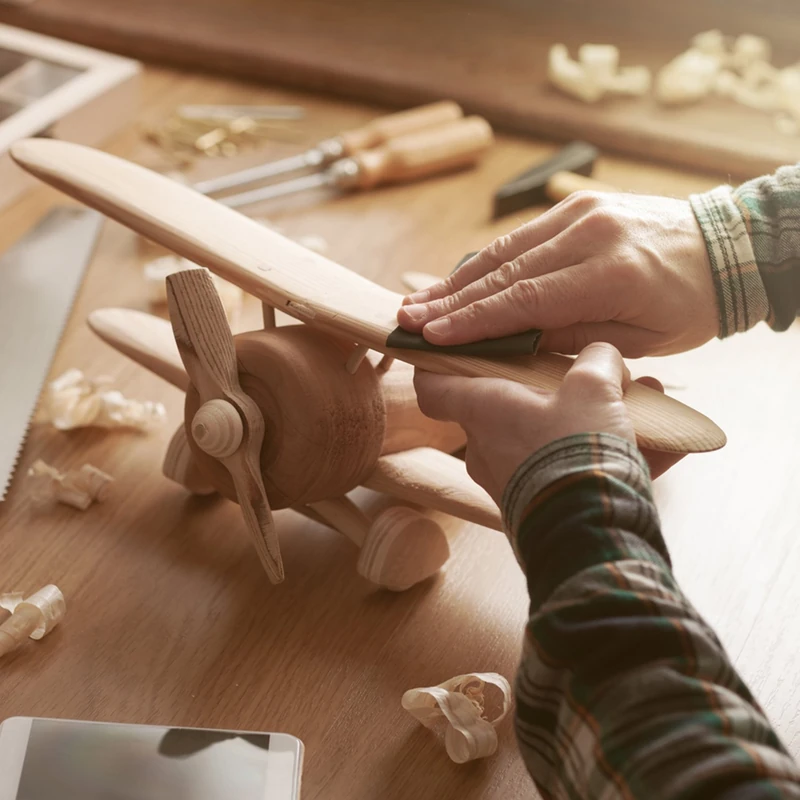
- Hard-block hand sanding: For flat plates, die shoes, plane soles, and knife flats, mount film on a rigid block. I like acrylic blocks because they show swarf and keep me honest about pressure. Keep the block large enough to bridge highs without dipping into lows.
- Platen sanding with tension: On longer parts or shafts, tension the film across a rubber-faced shoe or platen. The rubber should be firm (60–80A durometer) to absorb micro-variations without rounding edges. Apply even pressure and keep the motion steady.
- Wrapped mandrel for bores: For internal diameters, wrap film on a dowel or split mandrel. Use a minimal overlap and keep the seam aligned with your stroke to avoid tracking marks. Rotate the part or tool evenly to avoid spiraling scratch density.
- Crosshair indexing: On round parts, mark four quadrants and clock your strokes around them. This helps equalize contact time and prevents overworking a zone.
- Clean as you go: Between passes, wipe the film with a lint-free cloth. If you see gray tracks or clumps, the sheet is loading—rinse or swap. Don’t try to “push through”; uniformity will suffer.
Troubleshooting on the fly:
- Random deep lines: Contamination. Clean the part, your hands, and the sheet. Replace if suspect.
- Patchy sheen after a grit step: You didn’t fully remove prior scratches. Stay at the same micron and crosshatch until uniform.
- Curling film edges: Excess heat or too much pressure on the edge. Reduce pressure, especially on corners, or use a larger block to spread load.
- “Orange peel” texture in softer materials: Too soft a backing or dry cut causing micro-tear-out. Add a light lubricant and move to a slightly harder backing.
Three quick wins:
- Score and snap sheets into shop-friendly strips so you always have a fresh, square edge.
- Label your blocks with the micron in use—no guesswork, no cross-contamination.
- Use raking light at 15–30° to the surface; uniform scratch should reflect evenly with no hot streaks.
懷園開箱 20200724 3M — Video Guide
A short unboxing clip of a 3M 372L roll shows exactly what you’re buying into: tightly wound film, clean edges, and clear labeling for micron size and backing. Seeing the roll in hand highlights the robust polyester film and the way a quality product resists creases and telescoping—details that matter when you’re feeding strips into a jig or platen.
Video source: 懷園開箱 20200724 3M 80137 Micro Finishing Film Roll 372L
2000 Grit Sandpaper Sheets (25-pack) — 9x11 in Silicon Carbide Abrasive for Wet or Dry Use — Precision polishing grit designed to remove haze and restore clarity to clear coats and high-gloss automotive paint. (Professional Grade).
Frequently Asked Questions (FAQ)
Q: What’s the best starting micron for uniform scratch on steel?
A: If the surface is reasonably flat and free of deep defects, start at 30 µm and step to 15 µm, then 9 µm. If you see heavy tool marks, drop to 60 µm first. Always verify under raking light before moving up.
Q: Do I need lubricant with film-backed sheets?
A: It depends on the material and finish goals. Water with a drop of dish soap works for most metals and plastics, reducing loading and heat. For stainless or hardened steels, a light honing oil can extend life and smooth the cut—just keep the same lubricant through each grit stage.
Q: How do I keep edges from rounding during finishing?
A: Use a hard, flat backing block that’s larger than the area you’re finishing and lighten pressure at the edges. Avoid soft foams unless contouring, and maintain long, even strokes that don’t pause at corners.
Q: How can I tell if I’ve fully removed the previous grit’s scratches?
A: Crosshatch your passes at a new angle and inspect under raking light or with a 10x loupe. If you still see the prior orientation of scratches, stay at the current micron until they’re gone. A uniform sheen across the surface is your green light to step up.
Q: PSA or non-adhesive film—what’s better?
A: For repeatable, flat work on blocks and platens, PSA is fast and secure, minimizing ripples. For quick hand changes or specialty fixtures, non-adhesive sheets with a light spray adhesive or clamps offer flexibility. Choose based on how often you swap sheets and how critical flatness is.