
Ceramic sanding discs vs standard: longer life
The dust collector hummed like a steady metronome as Marcus leaned into the oak tabletop, fighting a familiar battle against swirl marks and rising heat. He’d already burned through three conventional discs by mid-afternoon, each one cutting hard for a minute and then fading into a smear of loading and noise. With dinner guests arriving at seven and the table still scarred from yesterday’s router tear-out, frustration felt inevitable. His phone chimed: a colleague’s message, short and to the point—“Try ceramic sanding discs. Run lighter pressure. Keep it moving.” He shrugged, swapped the pad, and clipped on a mesh-backed ceramic disc he’d picked up on a whim.
The difference was immediate. The scratch pattern was crisp and uniform, the disc ran cooler, and the shop’s air felt clearer as the mesh paired with the sander’s vacuum to keep dust from snowballing under the pad. Marcus dropped his pressure, watched the grain self-sharpen instead of glazing, and found a rhythm: overlapping passes, consistent speed, minimal edge dwell. He stepped through grits without the usual backtracking to erase deep gouges. The disc simply lasted—long enough that he stopped counting. By early evening the surface showed an even, low-stress sheen, ready for finish. Relief replaced urgency.
Whether you’re finishing tabletops, blending welds, or preparing composite layups, the difference between a consumable that dies early and one that maintains a stable cut isn’t just cost—it’s process stability. Abrasive life sets the cadence for your entire workflow: changeovers, cleanliness, heat input, and rework. Ceramic grains, engineered to micro-fracture and reveal fresh cutting edges, shift that cadence decisively. They let you sand with intent instead of compromise, aligning surface integrity with predictable throughput. The result is less time wrestling the tool and more time dialing in the surface you actually want.
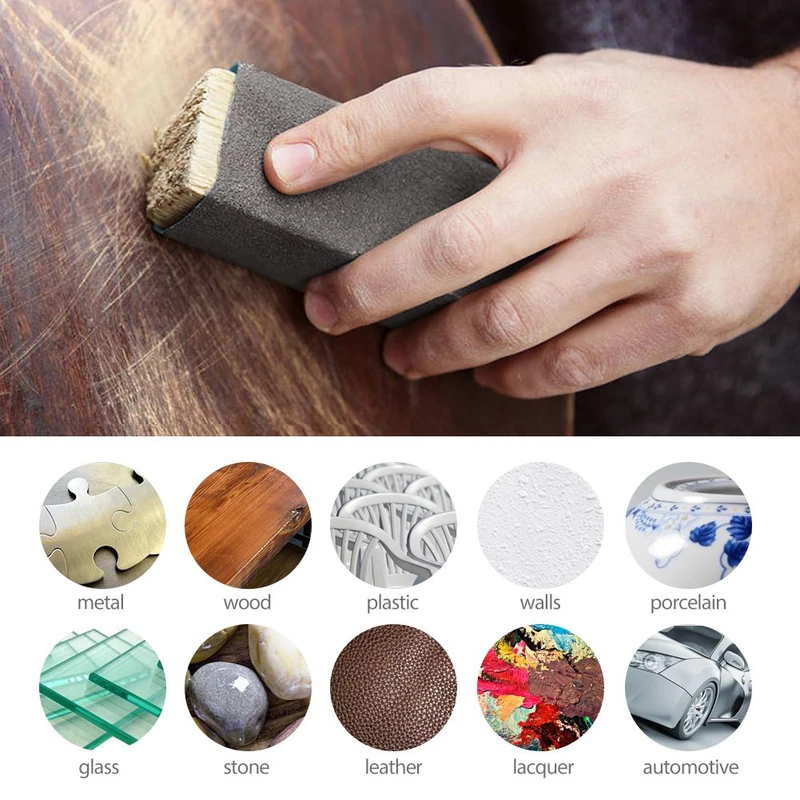
Quick Summary: Ceramic grains deliver longer life and cooler, more consistent cutting than standard abrasives; pair them with the right backing, pressure, and speed to maximize throughput and surface quality.
Why longevity matters in abrasives
Longevity is not merely about how many minutes a disc spins before the trash can. It’s a compound metric that affects heat input, scratch uniformity, dust loading, operator fatigue, and the percentage of time spent sanding versus changing discs. Long-life abrasives stabilize your process window—especially critical when your tolerance for surface defects (stain, burn, pigtails, HAZ) is narrow.
From a mechanics standpoint, standard aluminum oxide grains blunt as they plow; friction rises, heat builds, and the binder softens. Once glazed, cutting drops sharply. Ceramic grains are engineered to be friable at a microscopic scale. Instead of dulling, they fracture along controlled planes and expose fresh edges. This self-sharpening action keeps specific cutting energy lower and reduces thermally driven defects, such as resin smear on wood or temper color on carbon steel.
Longevity also reduces cumulative handling time. If a conventional disc lasts five minutes of effective cutting and a ceramic lasts twenty, you cut changeovers by 75%. That time reappears as uniform pressure and motion—critical to avoid over-sanding edges or creating local flat spots. Furthermore, fewer disc changes mean fewer opportunities for pad contamination, misalignment, or skipping grits that later expand into rework.
Dust is another multiplier. Extended-life discs—especially mesh-backed designs—keep the scratch valley open by evacuating fines that otherwise create a boundary layer under the pad. Lower dust loading preserves cutting and reduces the runaway heat rise that accelerates bond breakdown. In metals, that means a smaller heat-affected zone (HAZ) and less risk of discoloration or work-hardening. In wood, it means fewer burn marks and a finish-ready surface with less risk of witness lines after topcoat.
When you normalize for labor, rework, and consumable cost per square foot of finished surface, disc longevity becomes the primary lever for cost control and quality assurance.
Selecting ceramic sanding discs for longevity
Choosing the right ceramic disc is principally about matching grain architecture, backing, and coating to the substrate and machine.
Grain architecture
- Precision-shaped ceramics (triangular microreplicated geometries) yield the longest life and fastest cut on metals due to consistent, sharp points and predictable micro-fracture.
- Seeded-gel ceramics (sol-gel) provide excellent life with broader versatility across metals and hardwoods.
- Conventional ceramic blends beat aluminum oxide and zirconia but won’t match precision-shaped performance on heavy stock removal.
Backing and format
- Film backings deliver a flat, stable carrier for a uniform scratch, ideal for finishing passes and finer grits.
- Heavyweight paper/cloth backings offer durability for coarse grits and edge loading.
- Mesh backings excel at dust extraction and reduce loading on resinous woods and drywall; they also extend disc life by limiting abrasive-clog contact.
Coat density and top coats
- Closed-coat discs maximize point density for metals and rapid stock removal.
- Open-coat discs shed dust better for wood, reducing loading and heat.
- Stearate or “top-size” lubricants reduce resin transfer and heat, extending life on soft materials.
Attachment and hole pattern
- Hook-and-loop is fast and compatible with random orbit sanders; ensure full hook engagement to prevent heat from micro-slippage.
- Alignment with multi-hole or mesh patterns is crucial for dust extraction; poor alignment shortens life.
Grit selection
- For metals: 36–60 for weld blending, 80–120 for refinement.
- For hardwoods: 80–120 for flattening, 150–180 for pre-finish.
- For composites: 120–240 to avoid fiber pull and resin smear.
Real-world longevity deltas vary with technique, but shaped-ceramic discs routinely outlast aluminum oxide by several multiples under controlled pressure and speed. According to a article. In contrast, some premium precision-shaped ceramic systems can run several times longer than standard abrasives on carbon steel under identical load.
Specification checklist
- Substrate: mild steel, stainless, hardwood, softwood, composite, drywall
- Machine: ROS, geared ROS, angle grinder, drywall sander
- Dust management: solid, multi-hole, or mesh backing to match extractor
- Desired outcome: removal rate vs. finish uniformity
- Thermal sensitivity: need for top-size/stearate coating
- Budget vs. throughput: prioritize life when changeovers or rework dominate
Dialing in machines, pressure, and speed
A long-life disc used with short-life technique still fails early. Three variables dominate life and surface integrity: speed (RPM/OPM and surface speed), pressure, and dust extraction.
Speed. Random-orbit sanders function best in the 8,000–12,000 OPM range, depending on diameter and orbit size. If the orbit stalls visually when you apply pressure, you’re overdamping the motion, which smears grain and raises heat. For 4.5–5-inch grinders with ceramic discs or flap wheels, 4,500–6,000 RPM often balances cut with heat; larger diameters demand lower RPM to maintain similar surface feet per minute (SFPM). Aim for consistent tool speed to prevent local overheating and premature bond failure.
Pressure. Ceramic grains want moderate, steady pressure to activate micro-fracture. As a rule of thumb, target 1.5–2.0 kg (3.3–4.4 lb) of hand force on a 5–6 inch ROS—just enough to maintain contact without slowing the orbit. Excess pressure burns life by glazing grains and trapping fines. Conversely, featherlight pressure starves the grain and reduces the self-sharpening effect.
Dust extraction. Open pores in the scratch valley keep the cut cool and aggressive. Match your pad hole pattern, disc holes (or mesh), and a vacuum with adjustable flow. Too much suction can anchor the pad; too little leaves fines building under the disc. Use an interface pad for contoured surfaces—especially with mesh discs—to maintain full-face contact without point loading.
Stroke pattern matters. Maintain 50% overlap, move at 25–35 cm/s (10–14 in/s), and avoid pivoting on edges. Let the abrasive do the work; your job is to supply stable kinematics.
Actionable tips:
- Calibrate pressure: place the sander on a postal scale and practice keeping it between 1.5–2.0 kg while maintaining full orbit motion.
- Set speed by SFPM: for a 5-inch disc, 10,000 OPM typically delivers an effective surface speed; reduce 10–15% on heat-sensitive woods or thin stainless.
- Use an interface pad (3–5 mm) with mesh-backed ceramics to improve conformity and life on profiles; replace the pad when hooks polish smooth.
- Clear the scratch: pulse the vacuum to verify debris evacuation; if dust cakes at the disc edge, reduce pressure or increase extraction.
- Dress your workflow: blow off the surface and pad between grits; a 3-second air blast doubles the time before loading sets in.
Workflows and cost: when to switch
Switching to ceramics is easiest when you quantify both throughput and surface consistency. Consider three representative workflows:
Metals (weld blending on mild steel)
- Start at 36–60 grit precision-shaped ceramic for rapid knockdown. Keep grinder at ~5,000 RPM and avoid dwelling on weld toes to reduce HAZ.
- Refine with 80–120 grit ceramic to unify the scratch. If final finishing is required, transition to a film-backed 180–220 grit on a ROS.
- Outcome: lower heat input, fewer temper colors, and reduced rework on adjacent base metal. Expect multiple times the life versus aluminum oxide under consistent pressure, improving cost per linear foot.
Hardwoods (tabletops and doors)
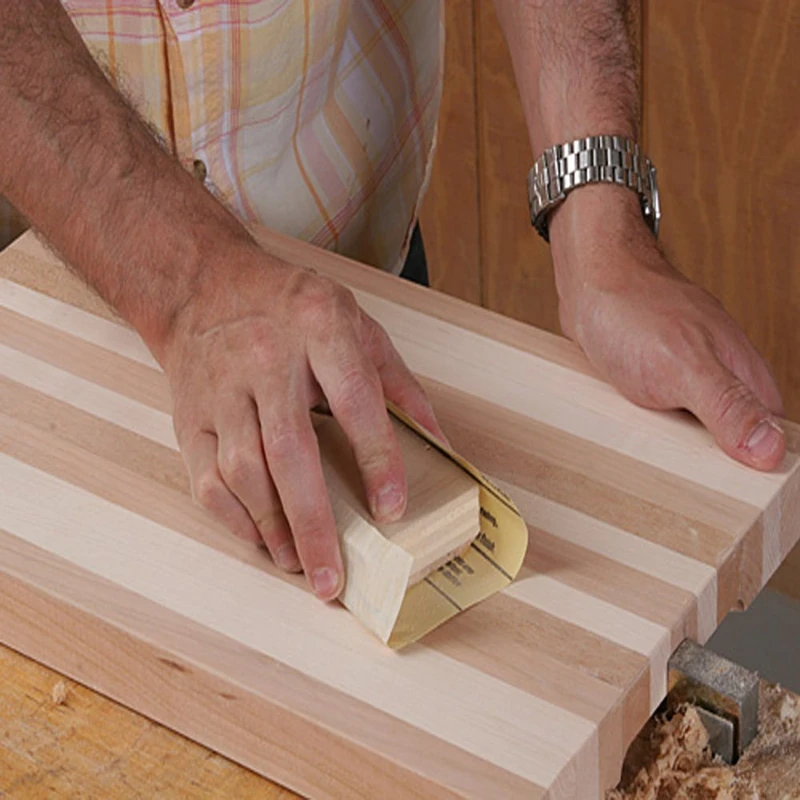
- Flatten at 80–100 grit ceramic mesh with strong extraction. Use an interface pad for minor cup or twist; keep travel speed uniform to prevent pigtails.
- Step 120 → 150 → 180 ceramics; stop once the scratch is uniform under raking light. The even cut reduces the risk of stain blotching and witness lines after finishing.
- Outcome: fewer disc changes, consistent scratch progression, and lower dust loading. The cooler cut minimizes burnishing, which can repel stain.
Composites (gelcoat and carbon fiber)
- Start finer (120–150) to prevent fiber pull; use film-backed ceramic for a flat scratch and a top-size coating to reduce smearing.
- Maintain high extraction; clogging kills life and drives heat into the resin system.
- Outcome: longer usable life with less risk of telegraphing scratches through clearcoat.
Cost math is straightforward. Track:
- Discs per job and average minutes of effective cutting per disc.
- Changeover time and rework minutes per job.
- Consumable cost per disc.
Compute cost per finished square foot or per weld blended. If ceramic is 2–3× the unit cost but yields 4–6× the effective cut time and halves rework, it wins convincingly—especially where changeovers disrupt flow. Payback accelerates further in environments where dust control, finish consistency, and thermal sensitivity dominate quality metrics.
Pilot intelligently. Run a side-by-side with standardized pressure and speed, identical dust extraction, and controlled pass count. Record temperature at the work (IR thermometer), scratch depth (replica tape or profilometer if available), and time-to-fade of cutting efficiency. This turns “feels faster” into data-backed policy. After initial validation, standardize grit progressions and machine settings, train operators on pressure control, and stock a focused set of ceramic SKUs—don’t dilute the benefit with a dozen marginal variants.
Norton MeshPower 9" — Video Guide
In a recent live session, Mark Wilson from AMES Taping Tools sat down with Jevaris of Norton Abrasives to unpack the design intent behind 9-inch MeshPower ceramic discs. They discuss how the open mesh architecture pairs with high-efficiency dust extraction to keep the abrasive cutting cooler and cleaner, especially on large surfaces like drywall and ceilings.
Video source: Norton MeshPower 9" Ceramic Sanding Discs
360 Grit Sandpaper Sheets (50-pack) — 9x11 in Silicon Carbide Abrasive for Wet or Dry Use — Ultra-controlled abrasive for gentle refinement and removing faint imperfections before clear coating or buffing. (Professional Grade).
Frequently Asked Questions (FAQ)
Q: Do ceramic grains actually run cooler than standard aluminum oxide?
A: Yes. Ceramic’s self-sharpening micro-fracture maintains sharp cutting points and lowers friction. Combined with appropriate top-size coatings and effective dust extraction, this reduces heat generation and limits defects like burn marks in wood and temper colors on steel.
Q: What’s the ideal pressure for maximizing disc life on a random-orbit sander?
A: Aim for 1.5–2.0 kg (3.3–4.4 lb) of downward force on a 5–6 inch ROS, maintaining full orbit motion. Excess pressure stalls the orbit, glazes grains, and accelerates loading; too little pressure reduces the self-sharpening action.
Q: How should I structure a grit progression with ceramics to avoid rework?
A: Use tight, sequential steps: metals 60 → 80/120; hardwoods 80/100 → 120 → 150/180; composites 120/150 → 180/220. Don’t skip more than one grit step unless you verify the scratch is fully erased under raking light.
Q: Are ceramic sanding discs worth the higher purchase price?
A: In most professional workflows, yes. Accounting for reduced changeovers, lower rework, cooler cutting, and better dust control, ceramics typically deliver a lower cost per finished area and more consistent results than standard abrasives.
Q: Can I use mesh-backed ceramic discs on non-perforated pads?
A: You can, but you’ll leave life on the table. Mesh thrives with active dust extraction and a compatible pad. Add an interface pad to improve conformity and ensure full-face hook engagement to prevent heat from micro-slippage.