
Best Sandpaper Brand: Scratch Patterns Compared
Saturday mornings in the shop have a rhythm: kettle on, dust extractor humming, the first pass of the sander checking if the week’s idea holds water. I still remember one particular maple tabletop that had me pacing. It looked flat, felt flat, yet stain kept telegraphing faint halos and random cat-scratch lines. I’d done everything “right,” but the finish wouldn’t sing. That’s when a friend dropped by and asked a deceptively simple question: “Do you trust the scratch pattern your paper leaves?” Since then, I’ve made a small obsession of it—because picking the best sandpaper brand isn’t just about how fast it cuts; it’s about how consistently it scratches, grit after grit, sheet after sheet.
If you do this long enough, you realize sanding isn’t just abrasion—it’s controlled geometry. Every grit writes a story in the surface. If that story is uniform, predictable, and easy to erase in the next chapter, your finish pops with clarity and depth. If it’s a jumble of rogue deep cuts, swirl marks, and clogged streaks, you’re chasing ghosts in the final coats. Consistency is what lets you step confidently from 80 to 120 to 180 without discovering that one stray, deep groove after dye or lacquer locks it in.
So when folks ask me about the best sandpaper brand, I answer like a woodshop mechanic, not a marketer: the best paper is the one that leaves a tight, even scratch field that clears quickly with the next grit on YOUR machine, on YOUR material, under YOUR hand. Some discs are lightning-fast but chaotic. Others cut a hair slower yet produce an incredibly uniform field that finishes faster overall. In this guide, I’ll break down why scratch pattern uniformity matters, how to actually test it, and how top brands stack up in real benches and body shops—not just spec sheets.
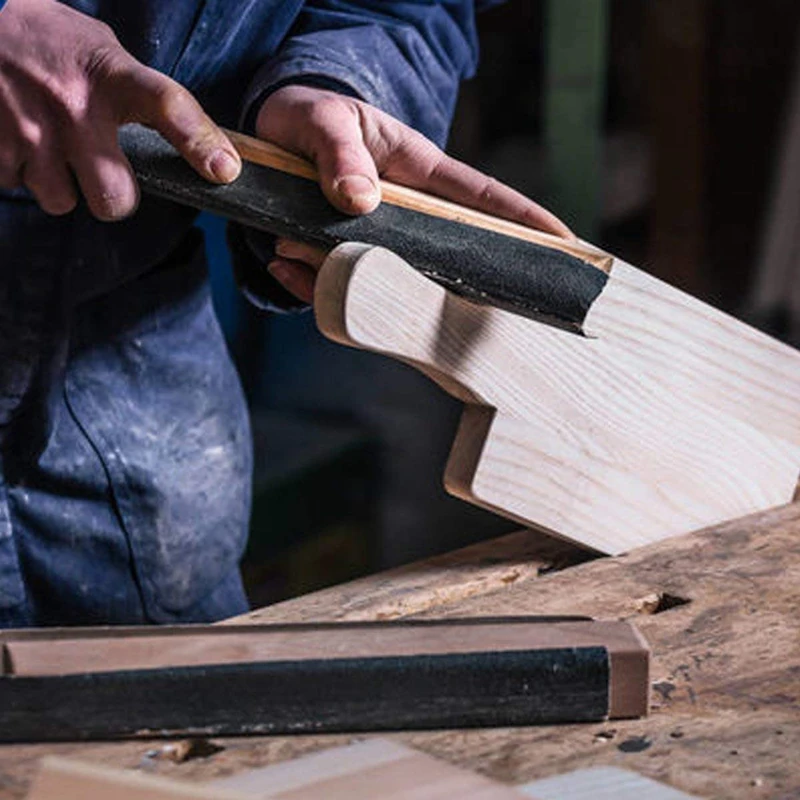
Quick Summary: Uniform scratch patterns beat brute cutting power; pick abrasives with stable grain and backings, test them in your workflow, and build a disciplined grit ladder for flawless finishes.
Why Scratch Pattern Consistency Matters
Think of a scratch pattern as the surface’s “pixel grid.” The more evenly those “pixels” are distributed, the easier it is to step down grits and erase the previous marks. Inconsistent patterns—where a few grains are oversized, poorly oriented, or break unpredictably—leave outliers that refuse to clear. Those are the pig-tail spirals you spot under raking light or, worse, after stain and clear coat have amplified them.
Consistency matters for three big reasons:
- Predictability: If 120 leaves a uniform field, 180 clears it in fewer passes. Your sanding plan becomes clockwork instead of guesswork.
- Finish clarity: Transparent finishes and dyes magnify stray deep scratches. Uniform scratch fields refract light evenly, which reads as clarity and depth.
- Rework prevention: Random outliers ruin jobs after hours of work. A consistent pattern means fewer surprises and less backtracking.
Abrasive tech plays a role. Electrostatic grain orientation, precision-shaped grains, resin bonding, and backing stability all dictate whether scratches line up like disciplined soldiers or scatter like a broken bottle. Film-backed discs often produce more uniform patterns than paper, especially on ROS machines, because the base doesn’t wrinkle under heat and vacuum pressure. Mesh improves dust extraction and reduces loading—less loading means fewer grains riding high and carving random deep tracks.
Practical shop takeaways:
- Cross-hatch your passes (e.g., 0° then 60°) so you can see when the prior scratch field is fully erased.
- Choose an interface pad on curves; hard pads exaggerate high spots and rogue scratches.
- Keep dust extraction strong; loaded grains behave like rocks in your tread—unpredictable and gouge-prone.
- Use raking light after each grit. If you can still spot prior marks, you’re not ready to move on.
How to pick the best sandpaper brand for uniform cuts
Let’s build a selection checklist rooted in how a scratch field behaves, not just how fast a disc hogs material. Choosing the best sandpaper brand for your jobs means balancing grain science, backing, and real shop fit.
What to evaluate:
- Grain type and shape: Ceramic and precision-shaped grains (3M Cubitron II) fracture predictably and cut evenly. Cheaper aluminum oxide can be fine on soft woods but may leave outlier scratches at coarser grits.
- Grain orientation: Good discs use electrostatic coating to “stand” grains upright for consistent cutting angles. Poor orientation equals scattershot scratches.
- Backing and bond: Film backings stay flat under heat; premium resin bonds resist grain shedding. Paper can flex and telegraph machine pad patterns.
- Anti-load and coating: Stearate coatings and mesh designs (Mirka Abranet, Diablo SandNet) reduce clogging—clogging is enemy number one of scratch consistency.
- Hole pattern and extraction: Matching your sander’s hole layout improves dust removal and scratch uniformity.
Four quick, actionable tests before you commit:
Sixty-second grid test
Draw a soft pencil grid on a test board. Sand with 120 for 60 seconds using your usual ROS speed and vacuum. A uniform brand erases evenly with no stubborn “ghost” lines.Backing feel and flatness
Bend a disc edge-to-edge. Film should flex and return without creasing. Feel the adhesive; weak hook-and-loop shed equals chatter and inconsistent patterns.Grain sparkle check
Under bright light, new disc surfaces should “glitter” evenly. Clumps or dull zones can translate to variable scratch depth.Lot consistency
Buy two packs from different lots and repeat the grid test. The best sandpaper brand performs consistently across lots; bargain lines can swing wildly.
Remember: uniform scratch fields mean you can minimize the number of grit steps without gambling. In many setups, a high-quality 120 → 180 → 220 ladder beats a 100 → 120 → 150 → 180 slog with cheaper paper.
Abrasive technology by brand
The badge on the box matters less than the grain science inside it. Still, certain brands have signature technologies that influence scratch uniformity.
- 3M (Cubitron II, Wetordry, Fre-Cut): Cubitron II’s precision-shaped ceramic triangles self-sharpen, keeping scratch depth controlled even as the disc ages—excellent for predictable refinement. Wetordry papers in mid-to-high grits are favorites for primer and clear because they leave tight, even tracks when used with proper lubrication. According to a article, their Wetordry line emphasizes a consistent scratch pattern, particularly in primer-sanding ranges.
- Norton (Blaze, ProSand): Blaze ceramic is engineered to micro-fracture, refreshing cutting edges while maintaining a predictable scratch profile—especially noticeable in the “coarse but clean” range (60–80 grit). ProSand aluminum oxide remains a reliable general-purpose option with decent uniformity for wood.
- Mirka (Abranet, Abralon, Gold): Abranet’s mesh gives top-tier dust extraction that reduces loading and random deep gouges. Scratch patterns are impressively even on flat work with interface pads; Abralon is a foam-backed system for contour finishing with ultra-uniform micro-scratches.
- Festool (Granat, Rubin): Granat blends ceramic and aluminum oxide with a resin system that holds grains tight, yielding a “balanced” scratch field across woods and cured coatings. Rubin is optimized for raw wood and tends to cut clean with predictable scratch geometry.
- Diablo (SandNet), Bosch (C470), Makita, DeWalt: Diablo’s mesh competes well on dust extraction; early passes are uniform, though some users find wear ramps faster than premium lines. Bosch C470 film-backed discs produce tidy patterns and resist edge tearing. Makita and DeWalt offer solid mid-tier options; consistent on pine and construction hardwoods when matched to their ROS hole patterns.
- Budget shop staples (Dura-Gold, shop-brand): Value lines can be fine for roughing, but watch for rogue grains at 60–100 grit that carve scratches you’ll chase for hours. If you use them, plan an extra grit step to clear.
Note: mesh systems shine on open-grain woods and paint removal, but pair them with the right interface pad. A hard pad plus mesh on a contoured part can “print” edges and introduce erratic micro-facets.
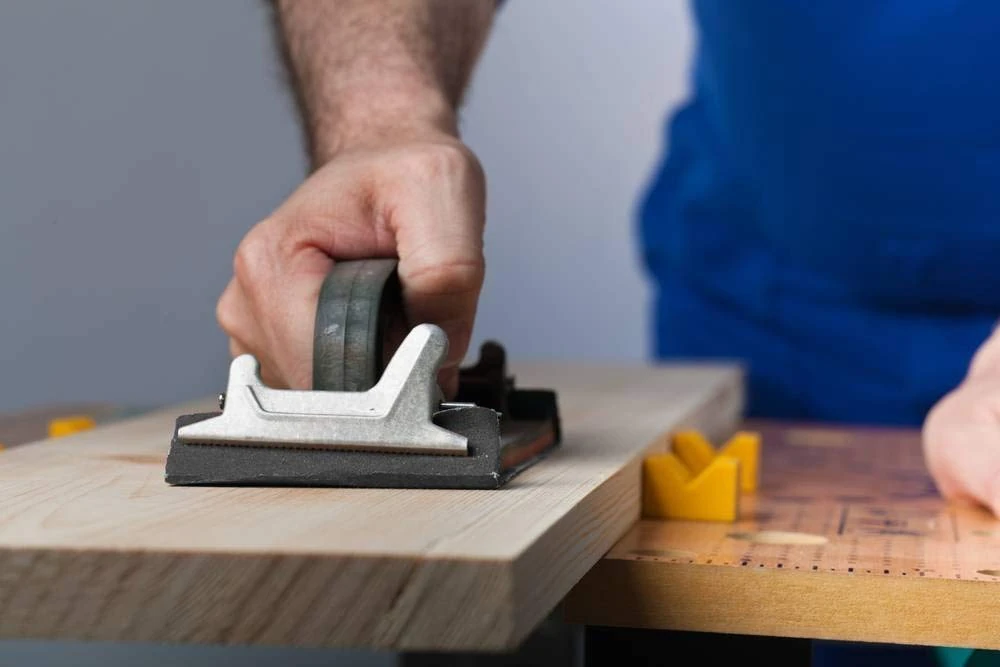
Shop tests: measure your scratch pattern
If you don’t measure, you’re guessing. Here’s a simple bench protocol I use to compare brands and build a grit ladder that never bites me in the final coat.
Materials and setup:
- Substrate: Prepare two identical panels (e.g., maple and MDF) and, if you do auto/body, a primed steel test panel.
- Machine: Same sander (5" or 6" ROS), same pad hardness, same vacuum and hose.
- Conditions: Set ROS speed constant. If possible, use a small digital luggage scale to feel 1.5–2.0 kg of downforce—this consistency matters.
Procedure:
- Pencil the panel with a light crosshatch. Note starting moisture and room temp—heat and humidity change loading behavior.
- Mount a new 120-grit disc. Sand 10 passes in one direction, then 10 passes at 60°. Keep the sander moving; don’t park it.
- Examine under raking light. Use a 10x loupe or phone macro to check scratch spacing and outliers.
- Mark any visible outliers. Time how long 180-grit takes to fully erase the 120 field. Log seconds and passes.
- Repeat 180 → 220 (or 240). On mesh, include a test with and without an interface pad; record which yields tighter uniformity.
- For wet-sanding: switch to Wetordry sheets on a hard rubber block. Use a dash of dish soap in water. Track how uniformly the milky slurry forms; uneven slurry often equals uneven scratch depth.
- Optional dye reveal: Wipe a thin coat of alcohol dye or shellac with black pigment. Sand lightly with the next grit—the remaining dark in valleys highlights deeper scratches.
Shop-proven tips:
- Always blow out and tap the disc after each pass set; loaded discs carve trenches.
- Rotate the disc 120° if using hook-and-loop—some pads wear in patterns; rotation evens out the scratch field.
- If you see pig-tails, check: dust extraction, pad bearings, interface pad cleanliness, and disc alignment. Pig-tails are symptoms, not just “bad paper.”
- Track “time to uniformity” per grit and brand. The fastest total finishing time usually comes from the most uniform scratch field, not the most aggressive cut.
Brand-by-brand field notes and use-cases
Here’s how popular lines behave in real shops, with a focus on scratch uniformity and where each shines.
- 3M Cubitron II (film discs): Phenomenal consistency at coarse and mid grits. The triangular grains cut fast but leave predictable scratch depth that clears a step sooner than many competitors. Watch your downforce—too much pressure on hard pads can stack triangles and dig rails. Ideal for hardwood leveling, cabinet doors, and body filler/primer knockdowns.
- 3M Wetordry (sheets, 320–2000): Wet on primer and clear coats, it lays down a silky, uniform micro-scratch that buffs out cleanly. Great “insurance” before finish coats in both woodworking (turnings, high-gloss panel edges) and auto refinishing.
- Norton Blaze (ceramic): Coarse grits feel “calm” compared to some aggressive discs; they move material fast while keeping the scratch field tight. Warmth stays manageable with good extraction. Blaze often makes 80 → 120 transitions painless, especially on tough hardwoods or cured finishes.
- Mirka Abranet (mesh) and Abralon (foam): Abranet’s uniformity stands out when dust control is dialed. On flats, scratch pattern is extremely even; on edges, use a soft interface. Abralon is the king of uniform micro-scratches on profiles—fantastic for scuffing between coats or prepping complex curves.
- Festool Granat: Balanced behavior. The scratch field is fine and consistent, with long disc life on resinous woods and pre-cat lacquers. Granat’s predictability often nets one fewer grit step in pro cabinet shops.
- Diablo SandNet: Good uniformity out of the gate with excellent dust evacuation. For the price, patterns are tidy, though longevity trails premium lines. Solid choice for jobsite finishing where discs are semi-disposable.
- Bosch C470: Film backing and stable resin make for clean, even tracks. Not the absolute fastest, but reliably uniform on a range of woods.
- Makita and DeWalt (ceramic blends/aluminum oxide): Mid-tier consistency; pair well with their own ROS hole patterns for decent uniformity. Great for framing-to-finish transitions and site work.
- Budget lines (Dura-Gold, Tiger Shark, assorted shop brands): Use for rough shaping or stripping where you expect to follow with a premium disc. Watch 60–100 grit: occasional rogue grains can etch scratches two grit steps deeper than the label suggests.
Use-case matches:
- Fast leveling, predictable refinement: 3M Cubitron II, Norton Blaze, Festool Granat
- Dust-critical work and uniformity on flats: Mirka Abranet, Bosch C470
- Wet, ultra-uniform micro-scratches: 3M Wetordry, Mirka Abralon
- Budget-to-bench blend: Diablo SandNet for roughing, step to premium for prefinish passes
Four pairing moves I trust:
- Slab flattening: 80 Blaze → 120 Granat → 180 Granat → 220 Granat
- Painted cabinet doors: 120 Cubitron → 180 Cubitron → 220 Cubitron; scuff between coats with 400 Abranet/Abralon
- Auto primer: 320 Wetordry (wet) → 600 Wetordry → compound
- On-site trim: 120 Diablo SandNet → 180 Granat → 220 Granat
Best "Sandpaper" Brand? — Video Guide
There’s a solid video roundup that pits common discs against each other—3M Cubitron, Diablo, DeWalt, Dura-Gold, Mirka, Tiger Shark, Norton, Bosch, Makita, and more. The host runs practical cut-and-finish trials and lays out how each brand behaves on speed, loading, and how clean the resulting surface looks under light.
Video source: Best "Sandpaper" Brand? 3M Cubitron, Diablo, Mirka, Norton, Makita, DeWalt, Bosch Sand Paper
400 Grit Sandpaper Sheets (100-pack) — 9x11 in Silicon Carbide Abrasive for Wet or Dry Use — Fine-cut abrasive delivering consistent, silky-smooth surfaces—used for pre-polish finishing and intermediate layers. (Professional Grade).
Frequently Asked Questions (FAQ)
Q: What causes pig-tail scratches and how do I stop them?
A: Pig-tails come from a loaded or damaged grain riding high and spiraling under ROS motion. Fix the root: improve dust extraction, replace worn interface pads, keep discs clean, and use quality film- or mesh-backed abrasives. Lighten pressure, and don’t park the sander.
Q: Is mesh better than film for a consistent scratch pattern?
A: Mesh (Abranet, SandNet) excels at dust removal, which helps consistency, especially on resinous woods and paints. Film backings (Cubitron, C470) stay flatter under heat and often deliver the most uniform scratch on flats. Choose mesh for dust-heavy work, film for precision flats.
Q: Can I skip grits if my paper is premium?
A: Sometimes. If 120 leaves a very uniform field (e.g., Cubitron/Granat), you can jump to 180 or even 220. Validate with a pencil-grid test. If ghosts remain under raking light, don’t skip.
Q: Do cheaper discs always leave inconsistent patterns?
A: Not always, but variability is higher. Budget discs can work for roughing. For finishing passes, premium abrasives earn their keep with tighter scratch fields, fewer outliers, and shorter total sanding time.
Q: How long should a disc last before uniformity drops?
A: When the scratch field begins to look glossy or smear-prone, or when time-to-uniformity increases, it’s done. With proper extraction, premium discs often maintain uniformity 2–3 times longer than bargain options. Rotate discs and keep pressure consistent to extend life.