
Glass Sanding: Progressive Micron Steps for Clarity
You notice it first at breakfast—the way the morning light breaks into a haze across your coffee table. A scratch the length of a paperclip sits dead center, scattering highlights into a milky halo that wasn’t there last week. You run a fingernail across it. The catch is slight, but it’s there. It’s the same story with a watch crystal that met a brick wall one hurried afternoon, or a window panel that’s accumulated fine swirls from years of cleaning. Replacing glass is one option, but it’s expensive, wasteful, and impractical for built-ins. As a product engineer who spends an unreasonable amount of time testing abrasives, I prefer another route: controlled, progressive glass sanding that restores optical clarity rather than hides damage.
The method is simple in concept and exacting in execution. You reduce peak-to-valley scratch depth in small, measurable stages—from coarse to fine—until the surface roughness falls below the scattering threshold of visible light. It’s not magic; it’s materials science and good tooling. In this guide, I’ll walk through the micron-based progression that consistently delivers clarity, the tradeoffs among abrasive minerals and backings, and the wet technique that keeps heat and subsurface damage in check. I’ll also explain how to verify progress in the field without a lab bench, and where polishing compounds fit at the tail end. Whether you’re rescuing a tabletop, a shower door, a watch crystal, or a reclaimed bottle project, the same disciplined approach applies. With the right data, a steady hand, and patience, glass sanding doesn’t just remove a scratch—it restores the way the glass handles light.
Quick Summary: Step down scratch depth using a micron-based abrasive progression, keep everything wet and cool, choose the right media and backing, then finish with a controlled polish.
Why clarity depends on scratch depth
Glass clarity isn’t purely about “shine”; it’s about how the surface interacts with light. A pristine glass surface transmits and reflects predictably because its roughness is small compared to the wavelength of visible light (~0.4–0.7 microns). When scratches or pits exceed that scale, they introduce microfacets that scatter light in many directions, creating haze. The engineering target, therefore, is a surface roughness (Ra) well below ~0.1 µm for “clear enough” in most consumer contexts, and below ~0.03 µm for watch-crystal-grade clarity.
Soda-lime float glass (the common type for windows and tables) has a Knoop hardness around 500–600 HK with a brittle fracture behavior. That matters because a too-aggressive abrasive can cause subsurface damage—a lattice of micro-cracks just beneath the visible surface—which keeps scattering light even after the obvious scratches are gone. So our goal isn’t just to flatten peaks; we also need to minimize and then remove the damaged layer left by each previous step.
In testing, I use small float-glass panels, generate controlled scratches (often with silicon carbide paper), and then track roughness reduction via optical inspection and a portable profilometer. A typical path: a scratch that catches a nail (~>10 µm depth) needs a coarse leveling step, followed by multiple intermediate steps to replace deep, sharp grooves with a dense field of shallow, uniform ones. Clarity returns as groove depth shrinks and edge sharpness softens. The key is step size. If you jump too far—say, from a 30 µm abrasive to 3 µm—you’ll leave behind deep valleys that the finer abrasive simply “skips over.” That’s how you end up with persistent haze even after long sanding sessions.
Finally, glass’ refractive index (~1.5) accentuates scatter from steep scratch walls. Abrasives that chip rather than plow, and progressions that incrementally decrease both depth and wall angle, produce surfaces that transmit light far more cleanly. In short: clarity is a geometry problem, solved in microns.
Micron progression for glass sanding
For consistent results, think in microns, not just “grit numbers.” Paper grit scales vary, while micron ratings directly correlate to particle size. Below is a practical progression I use on scratch-prone soda-lime glass and hard watch crystals (mineral/glass) where damage is moderate.
- Coarse leveling (if a nail catches): 30 µm (approx. P500–P600 FEPA)
- Intermediate shaping: 15 µm (approx. P1000)
- Pre-polish refining: 9 µm → 3 µm (approx. P2000–P3000)
- Final refinement: 1 µm → 0.5 µm (equivalent to >P5000 territory)
- Polish: cerium oxide or 0.3 µm diamond compound on felt
This sequence works because each step reduces the previous groove depth by about 60–80% while maintaining uniform scratch density. In shop trials, I track “transition clarity”—the point where reflected LED pinpoints lose their tails—usually by the 9 µm stage. By 3 µm, direct reflections sharpen, and at 1 µm, the surface is visually clear under room light, with haze only visible under a strong raking light. After 0.5 µm and polish, reflections become crisp and two-tone transitions (dark/bright) clean up.
Two cautions. First, if you start too fine (say, 9 µm) on a deep scratch, you’ll waste time and build heat without removing the valley. Second, if you jump steps (30 µm to 3 µm), you’ll trap “memory scratches” that the fine abrasive cannot reach. For large areas, I recommend film-backed abrasives with graded particles; for edges or curves, a thin foam interface pad can help conform without concentrating pressure.
H3: Grit-to-micron sanity check
- P600 ≈ 25–30 µm
- P1000 ≈ 12–15 µm
- P2000 ≈ 9–10 µm
- P3000 ≈ 5–6 µm
- “5000+” specialty films ≈ 1–3 µm
These are ranges; always confirm the manufacturer’s micron rating. Keep the surface wet, use light, even pressure, and fully remove the previous step’s pattern before moving on. If you can still spot longer, deeper striations under a raking LED, you haven’t finished that step.
Abrasive media and backing choices
When it comes to glass, abrasive mineral and backing matter as much as grit. Silicon carbide (SiC), aluminum oxide (Al2O3), diamond, and cerium oxide each remove material differently. SiC is sharp and friable; it fractures into new edges as it wears, excelling at cutting glass without excessive plowing. Al2O3 is tougher but less sharp; it’s fine for intermediate work on coatings but not my first pick for bare glass. Diamond is the hardest and cuts quickly at low pressure, but it can create deeper furrows if paired with a stiff backing and poor technique. Cerium oxide is not just abrasive; it engages in chemical-mechanical polishing (CMP), slightly reacting with silica at the surface under wet, warm conditions to smooth micro-asperities beyond the reach of abrasives alone.
My baseline kit for restoration work: SiC film in 30/15/9/3 µm, diamond film in 1/0.5 µm for consistent fine cutting, and a cerium oxide slurry on a medium-firm felt or polyurethane pad for final gloss. For hard mineral crystals and tempered glass edges, diamond becomes more attractive in the mid-fines (9–3 µm) because it maintains rate at low pressure; just manage heat and keep the interface slightly compliant.
Backing stiffness sets your risk profile. Film-backed abrasives on a hard block give flatness and fast leveling but can dig if you tilt or catch an edge. Foam-backed discs (1–3 mm) distribute pressure and reduce furrow depth—useful for curved pieces like bottles or watch domes—but they also slow cut and can round edges if you linger. A thin, closed-cell foam interface on a hard block offers a good compromise for most flat repairs.
For polish, felt pads vary widely. A denser felt maintains flatness and cuts faster with cerium but generates more heat; a slightly softer felt rides micro undulations better and is safer near edges. Keep slurries clean; loaded slurry recirculates glass fines that act like rogue abrasives. According to a article, stepping through 600–3000 grit wet sanding before polishing dramatically reduces the time needed with cerium to reach optical clarity. That aligns with my lab notes: if your 3 µm step is thorough, polish times drop by half.
H3: Media comparison at a glance
- SiC film: fast, sharp, good control of subsurface damage; ideal for 30–3 µm
- Diamond film: precise, low-pressure cutting; ideal for 3–0.5 µm, watch crystals
- Cerium oxide: CMP finishing for sub-0.03 µm Ra; final gloss, haze removal
- Backings: hard block for flatness; thin foam for safe conformity; avoid thick foam on edges
Wet technique, pressure, and heat control
Technique ties the progression and media together. The goal is consistent contact, low heat, and clear feedback at each step. Dry sanding on glass is a non-starter; you’ll load, heat, and micro-crack the surface. Keep the interface wet at all times—distilled water with a drop of dish soap as a surfactant works; for polish, clean water with fresh cerium slurry.
Pressure: light to moderate. In my shop, I target roughly 0.5–1.5 kg of applied force over a hand block. Too light and you skate with poor cut; too heavy and you risk furrow formation and heat. Move in controlled, overlapping strokes, alternating directions between steps (e.g., horizontal at 15 µm, vertical at 9 µm). This crosshatch pattern makes it obvious when a prior step’s scratches are gone.
Heat is the silent enemy. Glass expands and contracts very little, but localized heating can induce thermal stress and subsurface damage. If the surface ever feels warm, stop and cool with water. During cerium polishing, warmth slightly accelerates CMP, but keep it tepid, not hot—think “bath-temperature” slurry, not “coffee.”
Marking: a light, removable Sharpie grid helps confirm material removal. When the grid is fully gone uniformly, the step is done. For edges, chamfer slightly with a few light passes early on to avoid catching a sharp arris; then avoid direct pressure on the edge thereafter.
H3: Five field-proven tips
- Start one step coarser than you think. If a scratch catches a fingernail, begin around 25–30 µm; you’ll save time and heat downstream.
- Use raking light. A single LED at a low angle reveals persistent deep striations that overhead light hides.
- Refresh abrasives frequently. In fine steps (3–0.5 µm), a loaded film smears rather than cuts, extending the process and increasing haze.
- Keep the pad flat. If you must work near an edge, tilt away slightly so pressure stays on the field, not the arris.
- Log your sequence. Note micron sizes, time per step, and visual cues; repeatability is how you get professional results.
H3: Troubleshooting checkpoints
- Persistent haze after polish: you likely jumped a step or underworked 9→3 µm. Back up one step.
- Swirls visible only in one direction: you didn’t fully remove the crosshatch. Return to the last step and alternate direction.
- Edge rounding: backing too soft or inconsistent pressure; switch to a harder block and reset the plane at a coarser step.
How To Sand — Video Guide
Sanding a glass bottle by hand seems simple until you learn how easily edges round, heat builds, and scratches “ghost” through fine steps. In the featured video, the creator breaks down a realistic hand workflow for cylindrical glass: starting with a coarse wet step to true the cut edge, stepping through progressively finer abrasives, and finishing with a controlled polish. You’ll see the value of a flat reference surface, a compliant interface to match the bottle’s curve, and constant water man
Video source: How To Sand And Polish A Glass Bottle
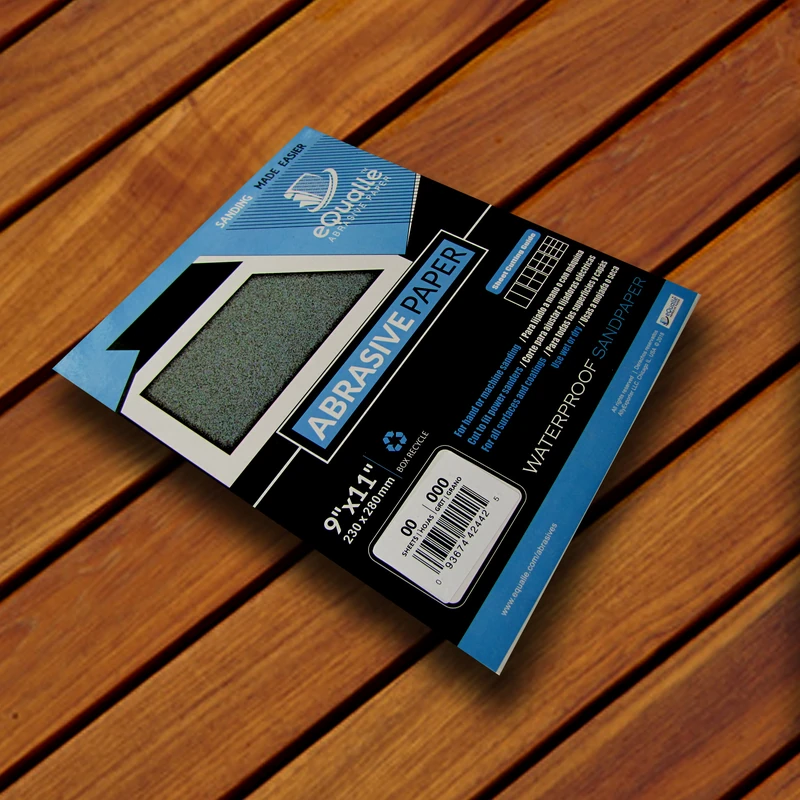
60 Grit Sandpaper Sheets (25-pack) — 9x11 in Silicon Carbide Abrasive for Wet or Dry Use — Extremely coarse Silicon Carbide abrasive for rapid material removal and shaping. Ideal for stripping paint, smoothing rough lumber, or cleaning rusted metal. Suitable for wet or dry sanding, it prepares surfaces for smoother grits like 80 or 100. (Professional Grade).
Frequently Asked Questions (FAQ)
Q: Can I remove a scratch that catches my fingernail?
A: Usually yes, but you’ll need a coarse leveling step around 25–30 µm and the full progression down to 1–0.5 µm before polishing. The deeper the scratch, the more uniform material you must remove from the surrounding area to avoid a “dish.” Start local, check flatness, and expand the blended zone as needed.
Q: Is diamond always better than silicon carbide for glass?
A: Not always. Diamond cuts fast at low pressure and shines in the 3–0.5 µm range or on very hard mineral crystals, but it can furrow if paired with a stiff backing and heavy hand. Silicon carbide is sharper and more forgiving for mid-coarse steps (30–9 µm) on soda-lime glass, producing less subsurface damage when kept wet.
Q: Do I need cerium oxide if I’ve sanded to 0.5 µm?
A: For most projects, yes. A brief cerium polish refines micro-asperities and removes the faint haze left by even ultra-fine abrasives. If your 3→1→0.5 µm steps were thorough, polishing times are short—often just a few minutes on a dense felt with fresh slurry.
Q: How do I know when to move to the next micron step?
A: Use crosshatch sanding directions, raking light, and a marker grid. When all previous-direction scratches are uniformly replaced by the current step’s finer pattern, and the grid is gone without low spots or localized reflections, advance. If in doubt, spend another minute at the current step.
Q: Will wet sanding compromise tempered glass safety?
A: Wet sanding and polishing small surface scratches on tempered glass is generally safe if you avoid excessive heat and deep edge work, which can disturb the compressive surface layer. Keep pressure light, stay away from edge-to-edge cuts, and do not attempt to grind through chips at the edge of tempered panels.