
Paint polishing: compound vs polish for clear coat
A Saturday morning sun can be the most unforgiving inspector you’ll ever meet. You back the car out after a late-night respray—coffee in hand, optimism high—and the light slices across the hood like a straightedge. Orange peel you knew about, sure. But then the swirls appear, whisper-fine arcs barely visible at dusk now glaring at full volume. You feel them before you see them: the drag of a microfiber catching on texture, the way your eyes follow a ghosty hologram around a curved fender. This is the moment when “wash and wax” ends and craft begins—where surface preparation, abrasive control, and paint polishing decide whether you get a mirror or a mirage.
Clear coat is thin and complex, more like a laminated lens than a coat of armor. Across modern two-stage finishes, usable clear typically sits around 40–60 microns, with a safe corrective budget often no more than 5–10 microns once you account for future maintenance. That constraint is why the compound-versus-polish decision isn’t simply “more aggressive” or “less aggressive.” It’s a question of how much you must level to remove defects, how fast you can refine the surface geometry, and how cleanly you can transition to optical smoothness without building sub-surface haze.
In practice, sanding workflows dictate everything that follows. If you denib at P1500 and chase texture with P2000–P3000, you are engineering a defect profile that compounds can level with minimal heat and minimal resin removal. Skip steps or mismatch abrasives and you’ve forced the compound to be both sandpaper and polish—which is where holograms and micro-marring are born. Every pad, machine orbit, and liquid you choose either reduces or amplifies that risk. The good news: with the right sequence and some process discipline, you can make paint polishing feel almost inevitable—like a smooth runway you set the airplane down on, not a cliff you try to climb with your fingertips.
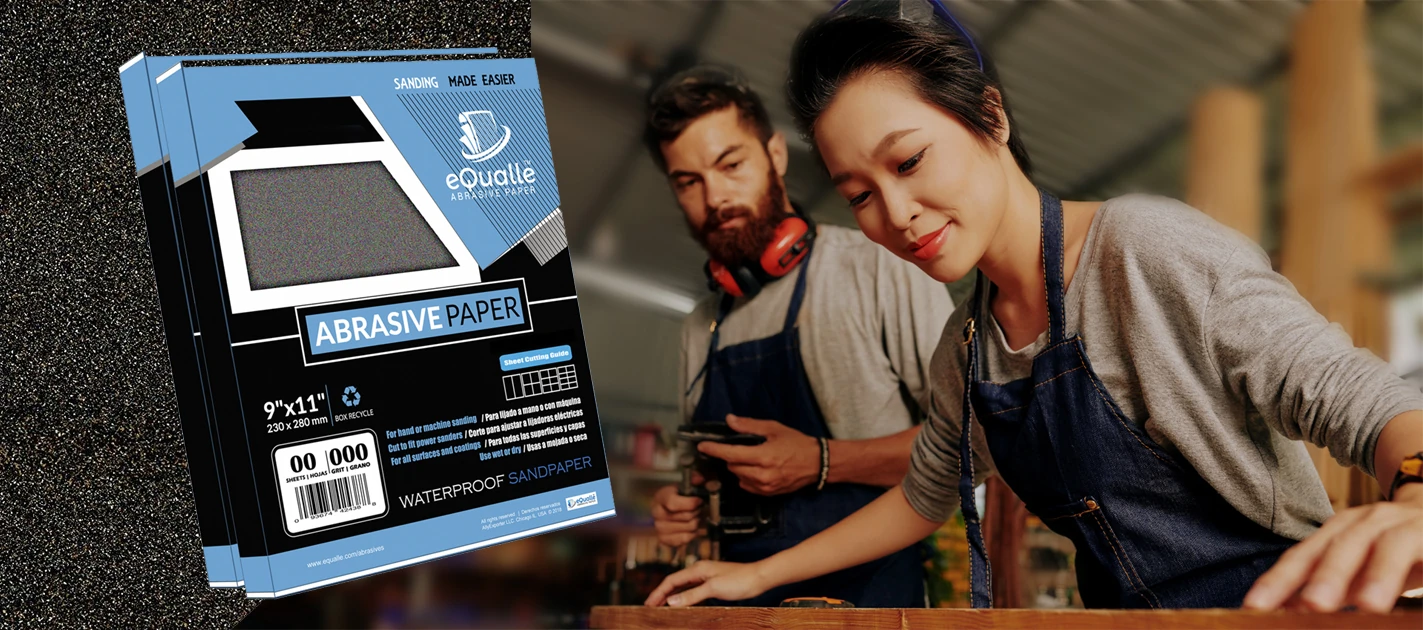
Quick Summary: Use sanding to control defect depth, let compounds level only what’s needed, and let polishes restore clarity—always measuring, testing, and minimizing clear removal.
Compounds and Polishes: What Sets Them Apart
At a material level, “compound” and “polish” are both abrasive slurries, but their particle geometry, distribution, and lubrication packages are tuned for very different tasks. Compounds provide “cut”—controlled micro-planing that removes the uppermost micro-layer of clear coat to level defects such as sanding marks, RIDS (random isolated deep scratches), and texture remnants. Polishes refine—removing significantly less material while annihilating the pits, peaks, and directional tracers left after cutting.
Key variables:
- Abrasive type: Diminishing abrasives fracture into smaller particles as you work, effectively reducing cut over time. Non-diminishing (uniform) abrasives maintain consistent particle size, offering predictable cut and longer open time. Modern “SMAT-style” abrasives have extremely tight distributions and spherical morphologies to reduce marring.
- Carrier system: Oils, solvents, and emulsifiers determine work time, dusting, wipe-off behavior, and pad saturation. Lower-oil systems cut fast and wipe clean but can dust. Higher-oil systems extend lubrication and reduce temperature but risk filling if overused.
- Pad interaction: Microfiber pads amplify cut by providing more edge engagement per unit area; foam pads distribute pressure and control temperature; wool pads on a rotary provide massive cut with a higher risk of hologramming.
Material removal rates are context-specific. On a dual-action (DA) with a compound and microfiber pad, expect roughly 1–3 microns per heavy pass on medium-hard OEM clear. Rotary plus wool and an aggressive compound might exceed that range quickly. By contrast, finishing polishes on a soft foam pad remove a fraction of a micron while dramatically boosting DOI (distinctness of image) and gloss units. The art lies in using the lightest effective tool: if P3000 sanding haze is uniform, a medium-cut compound on a DA may require only one or two cycles, leaving sufficient film for a quick refining polish.
Actionable tip: Evaluate whether you need “cut” or “refine” before touching the panel. If a defect catches a fingernail, start with a localized denib or spot sand; do not ask a polish to erase a scratch or a heavy compound to finish hologram-free.
Surface Prep: Sanding That Saves Clear Coat
Sanding is not damage—it’s control. The right workflow builds an even topography that compounds can level efficiently without chasing random, deep defects across the panel. A disciplined sequence might look like:
- Spot denib at P1000–P1500 on dust nibs only.
- Level orange peel/urethane wave using P2000 in a cross-hatch pattern, maintaining light, even pressure with an interface pad on curves.
- Refine to P2500 or P3000 to reduce valley depth and narrow the defect spectrum so that your compound doesn’t need to remove unnecessary resin.
The physics is simple: the deeper and more irregular the scratches you leave behind, the more material you must remove later to reach the valley floor. Uniform sanding marks of known grit provide a predictable “ceiling” for the compound to plane. Keep your paper fresh; spent abrasives “skate” and generate random marring. Use generous lubrication—purpose-made sanding lube or a diluted surfactant solution—so your paper cuts cleanly and the scratch pattern remains consistent.
H3: Technique and pressure control
- Use firm backing on flats to avoid image distortion; use a soft interface pad for contours.
- Aim for even scratch depth: 8–12 passes per zone in a 50% overlap, switching directions between stages.
- Feather edges to avoid thinning near bodylines; measure film thickness at center, edges, and critical transitions.
H3: When to stop sanding Stop as soon as defects are uniformly replaced by your current grit’s trace. Over-sanding to “perfect” clarity at the sanding stage consumes clear coat for no optical gain; that’s what the compound and polish are for.
Practical cues:
- After P2000, if you still see isolated deeper scratches, spot-sand those only. Don’t re-cut the entire panel.
- If the panel temperatures rise during wet sanding, dry and allow cool-down. Elevated temps soften the resin and can exaggerate cut.
Actionable tips:
- Pre-soak abrasives 15 minutes to stabilize backing and prevent initial over-cut.
- Mark the panel with a dry-erase grid; sand until the grid clears evenly to confirm uniformity.
- Replace discs at the first sign of loading or “stiction.” A $2 disc is cheaper than 2 microns of clear.
Dialing in paint polishing stages
Once the sanding set-up is clean and uniform, paint polishing becomes a two- or three-stage, data-driven process. Begin with a test spot that reflects the panel’s worst-case hardness and curvature. On modern medium-clear coats, a DA with a medium-cut compound and microfiber pad often clears P3000 sanding haze in one or two working sets. If you’re stepping out of P2000, consider a heavier compound or an intermediate “cutting polish” to avoid excessive dwell.
Machine and pad selection:
- DA (8–21 mm throw): Safer, less heat, less hologram risk. Microfiber pads = higher cut; firm foam = controlled cut; soft foam = finishing.
- Rotary: Maximum cut, fastest leveling, but higher hologram risk—reserve for severe texture or when time is critical, followed by DA refinement.
- Gear-driven (forced rotation): Middle ground; consistent motion under load, useful on sticky or curved panels.
Technique variables:
- Pad priming: Fully prime microfiber with a thin film of compound for even engagement; foam needs only light pre-wet to prevent dry buffing.
- Pressure and arm speed: Start with moderate pressure (3–5 kg) and slow, even arm speed (2–3 inches/sec) for cutting; lighten pressure and increase speed slightly for finishing.
- Section size: 16" x 16" on flats; reduce on curves to maintain contact and temperature control.
Inspection protocol:
- Use neutral, high-CRI lighting (5000–6500K) to chase micro-marring and haze.
- Solvent wipe (non-aggressive panel wipe) after compounding to reveal true finish and prevent oil masking.
According to a article, methodical wet sanding and staged polishing can achieve deep gloss even when starting with 3000 grit—that’s consistent with the principle that controlled abrasion beats brute force. Respect your removal budget: if you measure 50 microns average clear, target under 2–3 microns total removal during correction so future maintenance remains viable.
Actionable tips:
- Swap or clean pads often; a loaded pad cuts hotter, dusts more, and leaves haze. Compressed air bursts every set keep fibers standing.
- If dusting appears, reduce machine speed one notch and add a pea-sized dot of fresh compound rather than more pressure.
- For sticky clears, switch to a lower-oil compound with a short-cycle approach or increase pad cell openness to evacuate residue.

Defect Types, Testing, and Workflow Control
Not all defects require the same abrasive logic. Your workflow should map defect type to the minimum effective correction:
- Sanding haze (uniform): Medium compound on DA, microfiber or firm foam, followed by a finishing polish on soft foam.
- RIDS: Spot-sand with P2000/P3000 to localize depth; compound only the spot, then blend with a wider polishing pass.
- Holograms: Usually rotary-induced; fix with a DA and a finishing polish, low pressure, and slower machine speed.
- DA haze on soft clears: Switch to a finer finishing polish and ultra-soft foam; reduce throw or go to a smaller machine for precision.
- Marring from contaminated wipes: Decontaminate the surface, re-polish with a finishing pad, and review your wipe materials and solvents.
Control methods:
- Test spot discipline: Lock your recipe on a 12" square—document pad, product, machine speed, arm speed, pressure, passes, and results. Only then scale.
- Panel temperature thresholds: Keep surface under ~125°F (52°C) during cutting; above this, resin softening increases haze and removal rate unpredictably.
- Film build monitoring: If possible, use a paint thickness gauge. Edge readings 25% lower than flats demand gentler approaches—smaller pads, less pressure.
H3: Finishing for optical clarity A perfect finish is about DOI as much as gloss. High gloss can coexist with micro-texture that blurs reflection edges. The final pass with a finishing polish should use:
- Soft, open-cell foam
- Minimal product (thin film)
- Low machine speed and near-zero pressure
- Short cycles with frequent inspection under raking light
Finish with an IPA-compatible panel wipe to verify the result. Sealants or ceramic coatings add protection but do not fix optical errors; they lock in what you created.
Actionable tips:
- Use two towels for wipe-off: one dampened with panel wipe to break residue, one dry to chase streaks.
- If you see “tick marks” aligned with machine travel, reduce throw or rotate the work path 90 degrees and switch to a pad with smaller cell structure.
- Keep a defects log per panel; the next correction will be faster and safer with your own data.
Polishing Compound Comparison/Review — Video Guide
For a practical angle on selection, there’s a helpful comparison video by a how-to creator who specializes in custom paint, guitars, and airbrushing. He walks through several popular compounds on a test panel, highlighting differences in cut rate, residue behavior, and working time. You’ll see how some products dust more but clear sanding marks faster, while others trade speed for cleaner wipe-off and lower haze.
Video source: Polishing Compound Comparison/Review
800 Grit Sandpaper Sheets (50-pack) — 9x11 in Silicon Carbide Abrasive for Wet or Dry Use — Ultra-fine grit for pre-polish refinement on paint, clear coats, or resin. Smooths imperfections without damaging the base layer. Provides optimal control when used wet or dry before 1000 or 1200 grits. (Professional Grade).
Frequently Asked Questions (FAQ)
Q: How much clear coat can I safely remove during correction?
A: On most OEM finishes, limit total removal to roughly 2–5 microns during a correction cycle, preserving a future maintenance budget. Always measure if possible, go uniform with sanding to minimize the amount the compound must plane, and favor fewer, more effective passes over repeated light cuts.
Q: Should I always sand before compounding?
A: No. Sand only when you need to control texture (orange peel) or localize deep defects. If you’re addressing light swirls, go straight to a test spot with a polish or a mild compound on foam. Use sanding to create a predictable defect profile when leveling is unavoidable, not as a default step.
Q: Can a finishing polish remove P2000 sanding marks?
A: Typically no. P2000 marks are too deep for a finishing polish. Step through P2500–P3000, then compound. The polish is for refining after the compound has leveled the scratch valleys.
Q: Rotary or DA for clear coat finishing?
A: Use a rotary when you need maximum cut quickly—severe texture or heavy orange peel—then follow with a DA to remove rotary holograms. For most modern clears and maintenance corrections, a DA offers ample cut with better temperature and haze control.
Q: Why does my finish look glossy indoors but hazy in sunlight?
A: Indoor lighting can mask micro-marring and filler oils. Inspect with high-CRI, raking light and perform a solvent wipe to remove fillers. If haze appears, run a refining pass with a finishing polish, low pressure, and a soft foam pad, ensuring the panel is cool and pads are clean.