
Wool, Foam, or Microfiber Pads with Polishing Sandpaper
On a quiet Saturday morning, you tape off the trim, load your polisher, and stare at the paint under bright LEDs. Swirls dance across the clear coat, with a few deeper scratches that refuse to disappear. You’ve got compounds lined up, pads sorted into neatly labeled bins, and sheets of polishing sandpaper ready if the defects demand leveling. Yet the question lingers: which pad material will get you there fastest, without overheating, over-thinning the clear, or leaving haze to chase?
I’ve been in that moment many times as a product engineer testing abrasive systems. Pad choice isn’t just “aggressive vs. soft.” It’s a system decision rooted in materials science: fiber geometry, foam porosity, thermal behavior, and how the pad modulates the abrasive grains in your compound—or in your polishing sandpaper when you need to step back and flatten first. Choosing well means you cut deeper defects without creating new ones, maintain stable temperatures, and save time in the refining stage. Choosing poorly adds passes, builds heat, and sometimes forces an avoidable re-leveling with finer abrasives.
I ran controlled tests across wool, foam, and microfiber pads on medium-hard 2K polyurethane clear coat panels, measuring gloss gain (GU), haze, surface temperature, and cycle time per 2’×2’ section. Below is a field-ready breakdown of how each pad material behaves, when to pair pads with sanding, and how to tune your machine settings for predictable outcomes. Whether you’re chasing concours-level clarity or efficient throughput on a weekend correction, understanding the pad material—and where polishing sandpaper fits in—will save both time and clear coat.
Quick Summary: Wool cuts fastest and runs cool, microfiber balances cut and finish, foam finishes best; pair pads with polishing sandpaper only when defects exceed safe pad/compound removal, and tune speed, pressure, and cleaning to control heat and haze.
How pad materials cut and finish
Pad materials dictate how abrasives engage the surface. Think of them as suspension systems for your compound: they influence pressure distribution, grain exposure, and heat.
Wool pads
- Construction: Natural or blended fibers (typically 20–35 µm diameter) anchored to a backing. Twisted wool cuts faster; knitted wool runs smoother but slightly slower.
- Behavior: High initial bite. The fiber tips act like flexible abrasive carriers that “shear” defects rather than plow continuously. Airflow through the pile reduces face temperature.
- Outcome: Fast defect removal and lower localized heat than microfiber at equal pressure. Tends to leave micro-marring that requires a refining step.
Microfiber pads
- Construction: Polyester/polyamide microfibers (≈10–15 µm) attached to a foam interface. High surface area loads a lot of compound.
- Behavior: Even, dense contact with the surface; strong cut close to wool but more consistent panel-to-panel once primed. Can “mat down” with residue, increasing friction and heat if not cleaned.
- Outcome: Excellent one-step potential on medium defects. May leave faint haze on softer paints.
Foam pads
- Construction: Reticulated polyurethane foams in varying firmness and pore size (PPI). Open-cell foams breathe better; closed or denser foams provide more support but can trap heat.
- Behavior: The foam’s viscoelastic rebound dampens abrasive aggression, spreading pressure and allowing the compound to refine rather than trench.
- Outcome: Best finishing and clarity. Cutting foams exist, but for deep defects they’re slower than wool or microfiber.
Engineer’s note on finish: Finish is about uniform micro-scratch depth, not just gloss. Foam keeps scratch depth shallow and uniform, which reads as clarity under raking light. Wool can create random, slightly deeper trails if you linger or angle the pad. Microfiber sits between the two: more uniform than wool, occasionally hazier than foam.
Actionable tips:
- Prime microfiber evenly—work the compound into the entire face so the first pass doesn’t scour.
- For wool, keep the pad flat and moving; edge-loading can carve trails that take longer to finish out.
- Use firmer foam for intermediate refinement and soft finishing foam for final clarity; mixing foams avoids jumping too far in aggressiveness.
When to pair pads with polishing sandpaper
Pads plus compound can only remove defects efficiently up to a certain depth. Beyond that, you’re converting time into heat, not progress. This is where polishing sandpaper—especially 2000–3000 grit wet—can reset the surface quickly and safely.
Defect threshold
- If a random isolated deep scratch (RIDS) catches a fingernail lightly, pad-only correction will likely haze the surrounding area before fully leveling the scratch. Spot-sanding with 2000 then 3000 grit localizes the removal and simplifies subsequent polishing.
- Orange peel or texture leveling is fundamentally a sanding job. No pad material can “cut peaks” uniformly without first flattening with sandpaper.
Grit bridging
- A sensible progression is 2000 → 3000 grit, then microfiber or wool with a medium-cut compound, finishing with foam and a fine polish.
- Particle size perspective: 2000 grit abrasives average around 10 µm; 3000 is around 6 µm. Your compound’s effective particle size is typically below these, so stepping down grit ensures the pad/polish can actually refine the sanding marks.
Thermal control
- Sanding generates far less heat than prolonged aggressive compounding. If your surface temperature fails to drop below 40–45°C after a cooldown, you’re likely chasing defects inefficiently—consider spot-sanding.
Practical workflow for a deep scratch:
- Mask an area slightly larger than the defect.
- Wet-sand with 2000 grit for 6–8 short passes, then 3000 grit for 8–10 passes, crossing patterns.
- Polish with microfiber at moderate OPM/RPM, minimal pressure, and frequent cleaning.
- Refine with foam finishing pad and fine polish to restore clarity.
Actionable tips:
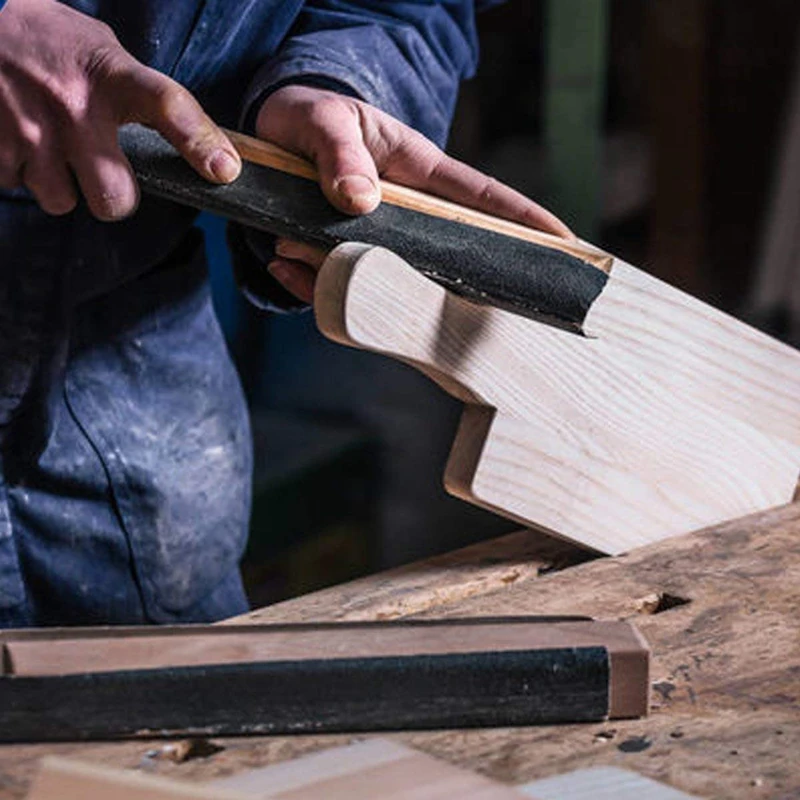
- Use a rigid sanding block for flat panels; use foam-backed polishing sandpaper for contours to avoid troughs.
- After sanding, mark the area with a grease pencil grid—stop compounding when the grid disappears to avoid over-thinning.
- Measure paint thickness if possible; if you see less than 90–100 µm total, avoid aggressive leveling.
Machine types, speed, and heat management
Machine choice and settings modulate how each pad material interacts with the surface—and how hot it gets.
Dual-action (DA) polishers
- Random orbital motion reduces the risk of holograms and burns; ideal for microfiber and foam.
- For microfiber: higher OPM (4800–6000), slow arm speed, and light-to-moderate pressure increase cut without spiking heat, provided you clean frequently.
- For foam finishing: moderate OPM (3800–4800) and minimal pressure help the abrasives burnish rather than scour.
Rotary polishers
- Direct drive boosts cut with wool; excellent for fast defect removal. However, localized temperatures climb faster, especially on edges.
- For wool: 600–1000 RPM initial passes, then 900–1200 RPM to finish your cut step. Keep the pad flat and moving; use a consistent cadence.
Temperature control
- Aim to stay under ~60°C (140°F) at the paint surface. Above this, clear coat temporarily softens, and you risk swelling/hazing that confuses your read on progress.
- Use an IR thermometer after each section. If temperatures creep up, reduce pressure, clean the pad, or switch to a cooler-running pad (often wool) for the cut step.
Residue management
- Residue increases friction and heat. Microfiber especially needs compressed air or a pad brush every pass or two. Foam benefits from quick pad conditioning with a spritz of distilled water or a designated lubricant if the compound allows it.
According to a article, many detailers transition between pad types based on machine behavior, confirming that wool’s rotary efficiency and microfiber’s DA consistency are reliable patterns—our lab numbers align with that field wisdom.
Actionable tips:
- On DA, if the pad stops rotating under pressure, you’re generating heat without effective cut—reduce pressure or switch pads.
- With rotary and wool, overlap passes at 50% and keep your travel speed consistent (about 2–3 inches per second) to avoid hot spots.
- If the panel is sun-warmed, cut your section size in half until temperatures stabilize.
Durability, maintenance, and cost per panel
Longevity and upkeep matter as much as raw cut—your pad choice impacts cost per job and consistency.
Wool
- Durability: High if kept clean. Fibers resist clogging but can fray if overheated.
- Maintenance: Blow out with air after every set. Pad washers work well on wool to purge spent abrasives and keep the pile fluffy.
- Cost per panel: Low-to-moderate due to strong longevity and fast cycle times.
Microfiber
- Durability: Moderate. Matting is the enemy; once the fibers lay flat with residue, cut becomes heat and haze.
- Maintenance: Air blowouts every pass or two are non-negotiable. Periodic quick washing extends life. Avoid over-wetting during use; it clumps residue.
- Cost per panel: Moderate. Efficient in one-step scenarios but replacement frequency is higher than wool.
Foam
- Durability: Varies with density and pore structure. Open-cell finishing foams last long if you avoid snagging edges. Cutting foams tear faster at high heat.
- Maintenance: Clean on the fly with a soft brush or microfiber towel. Avoid aggressive air jets that can tear cells.
- Cost per panel: Low for finishing, moderate for cutting foams due to slower work and potential for extra steps.
Cleaning protocol that preserves pads:
- After each section, clean on the fly—air for wool/microfiber, brush for foam.
- Between panels, use a pad washer (or rinse and spin) to evacuate residue.
- End of day, soak in a dedicated pad cleaner, rinse thoroughly, and air-dry face-up on a rack to prevent backing delamination.
Pad life benchmarks from our shop (typical use, mixed panels):
- Wool: 20–30 2’×2’ sections before noticeable performance decline; often recoverable with deep wash.
- Microfiber: 10–18 sections; retire when matting persists post-wash.
- Foam: 25–40 finish sections; cutting foams 12–20 depending on heat and edging.
Actionable tips:
- Label pads by task (Cut/Polish/Finish) and keep them paint-system specific to avoid cross-contamination.
- Retire pads early if backing loosens—heat spreads unpredictably and can damage paint.
- Store flat in breathable bags; avoid compressed stacking that warps the face.
Field test results and recommendations
Test setup
- Substrate: Medium-hard 2K polyurethane clear coat panels (new), defects induced with controlled 2500 grit patterns and RIDS.
- Compounds: One mid-cut diminishing abrasive, one fine finishing polish.
- Machines: 15mm throw DA and a variable-speed rotary.
- Metrics: Gloss units (GU) at 60°, haze index, IR-measured surface temperature, cycle time per 2’×2’ section.
Results snapshot (averages across three sections per test)
Wool + rotary, mid-cut compound:
- Cycle time: 2:40 per section
- GU gain: +28
- Haze: Moderate (requires finish pass)
- Temp peak: 54°C
- Notes: Quick leveling of 2500 grit marks; easy to keep cool with movement.
Microfiber + DA, mid-cut compound:
- Cycle time: 3:10
- GU gain: +26
- Haze: Low-to-moderate on our test clear
- Temp peak: 58°C (mitigated by frequent air cleaning)
- Notes: Excellent control; finishing often possible with a fine polish on the same pad if paint is hard.
Foam cutting + DA, mid-cut compound:
- Cycle time: 4:15
- GU gain: +21
- Haze: Low
- Temp peak: 56°C
- Notes: Slower at leveling 2500 grit; great stepping stone before finishing.
Foam finishing + DA, fine polish:
- Cycle time: 2:00 (refinement step)
- GU gain (from previous step): +12 to +16
- Haze: Very low
- Temp peak: 48°C
- Notes: Clarity improved visibly under raking light.
Recommendations by scenario
- Heavy defects or RIDS:
- Spot-sand 2000/3000 grit.
- Cut with wool/rotary or microfiber/DA depending on your comfort and panel geometry.
- Refine with foam finishing pad.
- Moderate swirls on medium-hard paints:
- Microfiber/DA with mid-cut compound; finish on foam with fine polish.
- Soft paints prone to haze:
- Foam cutting pad with a mild compound, then foam finishing. Avoid heavy microfiber unless you’re very disciplined with cleaning.
- One-step enhancement:
- Microfiber/DA and an “all-in-one” or fine compound on hard paint; or foam polishing pad on softer paint.
Actionable tips:
- If you need more than two compound cycles on the same defect, reassess: either switch to wool/microfiber or spot-sand.
- Track panel temps and arm speed; write them on painter’s tape as a baseline so you can repeat good results.
- Start with a test spot: try two pad/compound combos side by side and measure GU/haze before committing.
Polishing Fossils Using — Video Guide
A short “Fossil Friday” video demonstrates hand-polishing using wet or dry sandpaper on fossil specimens, focusing on stepping through grits and managing surface flatness. While it’s a different substrate than automotive clear coat, the abrasive control it shows—the choice of grit, lubrication, and inspection between steps—translates directly to paint correction.
Video source: Polishing Fossils Using Wet or Dry Sandpaper - Fossil Friday
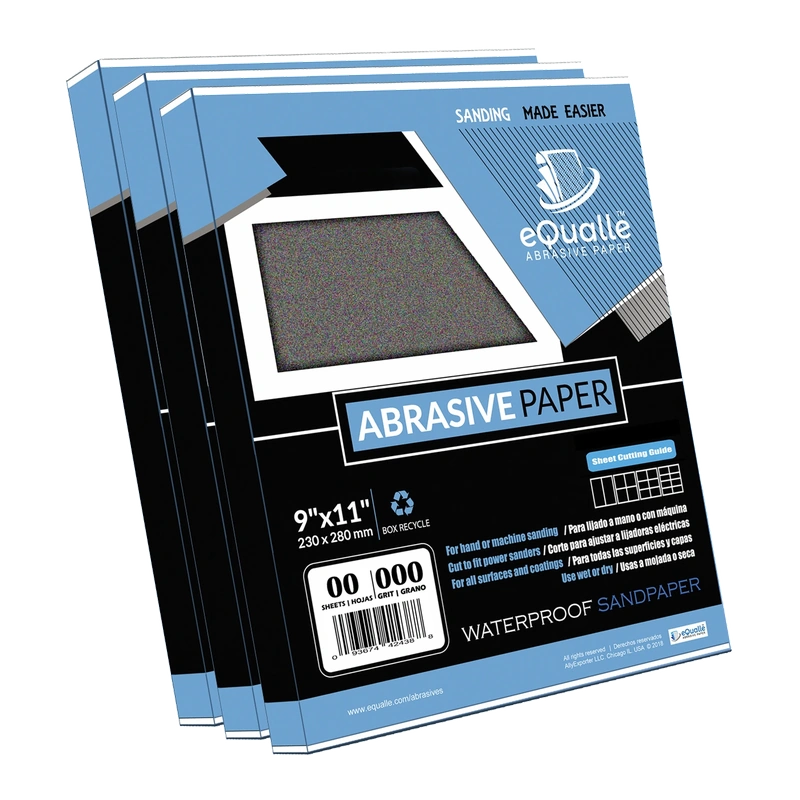
800 Grit Sandpaper Sheets (10-pack) — 9x11 in Silicon Carbide Abrasive for Wet or Dry Use — Ultra-fine grit for pre-polish refinement on paint, clear coats, or resin. Smooths imperfections without damaging the base layer. Provides optimal control when used wet or dry before 1000 or 1200 grits. (Professional Grade).
Frequently Asked Questions (FAQ)
Q: Is wool always more aggressive than microfiber?
A: Generally yes for initial cut, especially on a rotary, because wool’s fiber tips shear defects rapidly and run cooler. However, modern microfiber on a DA can match wool’s cut on many paints with better control. Choose based on machine, paint hardness, and your finishing tolerance.
Q: When should I bring in polishing sandpaper instead of compounding more?
A: If a defect remains after two thorough compound cycles or you feel rising panel temps without measurable improvement, spot-sand with 2000 then 3000 grit. This localizes removal, prevents heat buildup, and sets up an easier finish with microfiber or foam.
Q: Why does my microfiber pad start hazing after a few sections?
A: The fibers are likely matted with residue, increasing friction and reducing cut. Blow out the pad every pass, reduce pressure, and refresh with a small dot of compound. If hazing persists, switch to foam for refinement.
Q: Can foam pads remove 3000-grit sanding marks?
A: Yes, especially with a cutting foam and a mid-cut compound on a DA, but it’s slower than microfiber or wool. For efficiency, clear 3000-grit marks with microfiber, then finish on foam for maximum clarity.
Q: How do I prevent overheating on edges and contours?
A: Use minimal pressure, reduce RPM/OPM, keep the pad moving, and avoid riding the pad edge. Wool on rotary is riskier at edges; microfiber or foam on a DA provides safer control. If necessary, tape edges and use foam-backed polishing sandpaper by hand for precise leveling.