
between coats sanding: remove dust nibs in clear coats
A flawless clear coat is more than gloss; it’s the tactile confidence you feel when your hand glides across a panel with zero grit or drag. If you’ve ever stepped back from a gorgeous piece—be it a walnut tabletop, a painted cabinet door, or a guitar body—only to see and feel the specks of dust that settled into the finish, you know the sting. Those tiny dust nibs are an inevitable reality of shop air, static, and curing dynamics. Fortunately, they’re also manageable with disciplined surface prep, controlled technique, and smart abrasive choices. That’s the core of between coats sanding: deliberate, minimal-material removal focused on de-nibbing without compromising film build or clarity.
I’ve watched skilled finishers transform a slightly gritty coat into a glass-smooth foundation in minutes, not with aggressive leveling, but with precise, low-pressure strokes and the right abrasive geometry. The biggest shift is mindset: you’re not “sanding the finish” so much as you’re shaving protrusions to reset the surface plane and increase uniform wetting for the next coat. That demands attention to abrasive performance (cut rate, loading, scratch profile), the finish’s cure window (evaporative lacquers versus cross-linking polys), and dust management (static, filtration, and wipe-down practices). Done right, you remove only microns of material, avoiding witness lines, burn-through on edges, and orange peel amplification.
This guide breaks down why nibs happen, how to identify them in raking light, and how to select the best grit and backing for your finish type—lacquer, shellac, waterborne acrylic, polyurethane, or conversion varnish. We’ll cover workflow specifics: when to sand, how hard to press (almost not at all), whether to dry or lubricant-sand, and how to keep your shop and tools from reintroducing contamination. Along the way, I’ll share proven tips for eliminating nibs fast and cleanly, while protecting the film you’ve built.
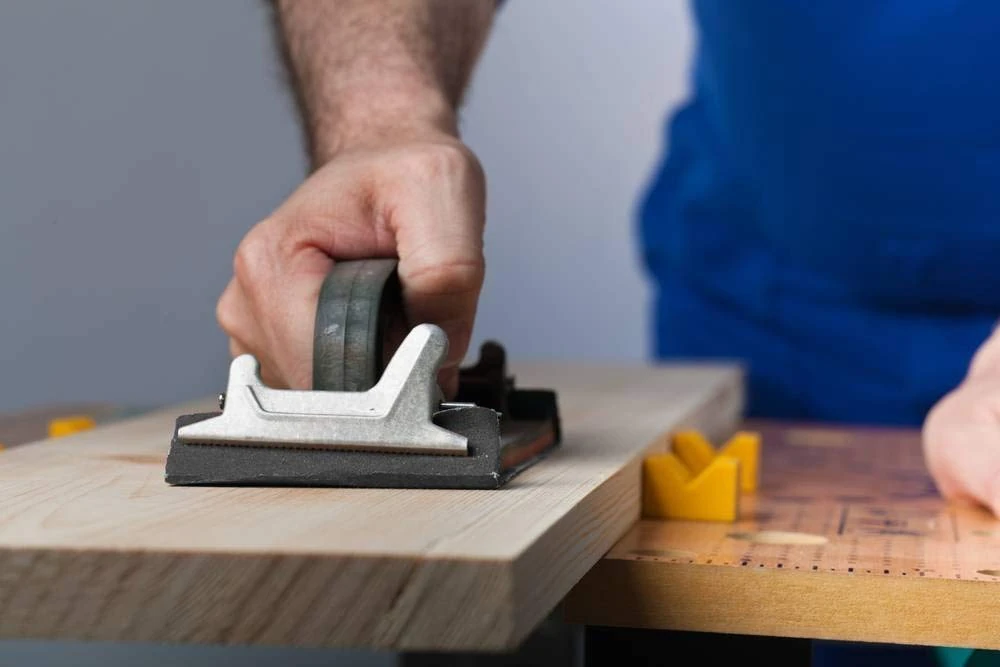
Quick Summary: Use light-pressure, fine-grit de-nibbing targeted only at protrusions, with proper dust control and curing discipline, to achieve a flawless clear coat.
Dust nibs: causes and diagnostics
Dust nibs are protruding particles trapped in or atop the cured (or semi-cured) clear coat. They originate from airborne dust, abrasive debris, fabric lint, dried finish particles, and in stubborn cases, silicone contamination. Understanding how and when they occur is your first efficiency gain.
Start with lighting and inspection. Raking light at a low angle exposes nibs as crisp, high-contrast points. A pencil circle around each spotted area helps you track removal. On high-gloss surfaces, use a 5000K light and tilt the piece; on satin or matte, rely on tactile detection with a gloved hand and a fresh microfiber wipe to reveal snags.
Consider dynamic sources. Dust stirred by foot traffic or a vac discharge often lands in the first 10–15 minutes post-application, when the film still flows. Static-charged plastics, ungrounded vac hoses, and microfibers can pull debris from the air onto your work. Edges are highly susceptible—they dry faster, building ridges that trap particles.
Diagnose finish compatibility and cure state. Evaporative finishes (lacquer, shellac) set quickly and tolerate earlier de-nibbing, but friction heat can smear or melt if you’re too soon. Reactive finishes (oil-modified poly, 2K urethane, conversion varnish) need their specified intercoat window for safe scuffing. Over-sanding a green film loads paper instantly and risks curl or print-through.
Finally, differentiate defects. A dust nib is a point protrusion; orange peel is a global texture; bubbles leave domed islands; fisheyes are craters from contamination. Each needs a different response—de-nib for nibs, level for orange peel, puncture and shave for bubbles, solvent and surface re-prep for fisheyes.
Optimizing between coats sanding for clarity
When you sand between coats, the goal is not stock removal—it’s surface refinement with minimal abrasion. Choose abrasives that produce shallow, easily filled scratches and resist loading. Open-coat, stearated papers or films in P400–P600 are the default for polyurethanes and waterbornes, while high-gloss systems may benefit from P600–P800 to keep the scratch valley shallow. For lacquer, P320–P400 dry is common because it reflows and melts in subsequent coats.
Use the right backing. A firm, flat block ensures you hit only high spots, not low valleys. Foam interface pads (3–5 mm) on a random orbit sander distribute pressure for safer work on curved parts, but can telegraph pigtails if you press too hard or run at high rpm. Keep the sander flat, run low speed, and use vacuum extraction with a matched hole pattern to clear dust from the cutting zone.
Pressure is your enemy. De-nibbing should sound like faint whispering, not grinding. One to three light passes are enough if you’re targeting nibs rather than leveling. On edges and profiles, switch to hand-sanding with a backed piece of abrasive or a worn pad to reduce risk.
Avoid wet sanding between reactive coats; water and surfactants can interfere with coalescence and adhesion. For fully cured films during final rub-out, wet sanding is appropriate with P1000–P2000, but that’s a different workflow. Dry de-nibbing keeps the chemistry clean and your cure on spec.
Actionable tips:
- Set sander stroke to 3 mm or less for safer intercoat work.
- Circle detected nibs in pencil, and stop as soon as the circles vanish.
- Keep one “dull” de-nib sheet dedicated to edge work to reduce cut rate.
Abrasive selection and cut mechanics
Abrasive performance hinges on grain type, resin bond, and backing. Aluminum oxide is the workhorse for clear coats—tough, micro-fracturing, and predictable. Silicon carbide cuts faster and leaves a finer scratch in lacquer and shellac but can break down quickly on tougher polymers; use it if you value clarity over life, especially in higher grits. Film backings maintain flatness and scratch uniformity better than paper, especially in P600 and above.
FEPA P-grits differ from CAMI numbers; use FEPA where possible for consistency. For de-nibbing, P400 (≈35 μm), P500 (≈30 μm), and P600 (≈25 μm) define the sweet spot for most systems. The objective is to create a controlled micro-scratch that the next coat wets and fills without telegraphing. Too coarse and you’ll see witness lines in the final sheen; too fine and you’ll skate over nibs without actually removing them.
Stearated coatings reduce loading by lubricating the grain, but they can leave residues. With waterborne finishes, ensure your stearate is WB-compatible and clean thoroughly after sanding. Vacuum-assist discs with multi-hole patterns (e.g., 44–121 holes) maintain cut rate by clearing fines continuously; match the pad to the disc to prevent dead zones that clog.
For isolated nibs, consider a three-step micro-removal:
- Shave with a single-edge razor blade modified with two layers of tape on both corners to form a micro-scraper.
- Feather with P600 film on a small block, two or three strokes.
- Scuff the surrounding area with a maroon non-woven pad to even reflectivity.
According to a article, P400 between coats is rarely about adhesion and mostly about removing nibs and leveling micro-defects—an important distinction that emphasizes restraint over aggression.
Workflow: from cure window to wipe-down
Your workflow should respect cure chemistry, minimize contamination, and standardize touchpoints. Start with the manufacturer’s intercoat window. Waterbornes often allow sanding within 45–90 minutes under ideal conditions; oil-modified polys may need 6–24 hours; catalyzed coatings have defined recoat times beyond which you must scuff for adhesion. If you miss the chemical window, a uniform scuff becomes mandatory.
Sequence:
- Cure: Allow the coat to reach a sandable state—no clogging within one light pass and no soft print under finger pressure.
- Inspect: Raking light, pencil-mark the nibs, and delineate zones.
- De-nib: Dry-sand P400–P600 with minimal pressure. Keep the pad flat.
- Scuff: If outside the window, uniformly scuff with a non-woven pad or P600; otherwise, limit to spot de-nib.
- Clean: Vacuum with a soft brush; blow with filtered, oil-free air; final wipe with a compatible solvent or WB-safe cleaner.
For wipe-downs, avoid resinous tack cloths with waterborne finishes; they can cause fisheyes. Instead, use a slightly dampened microfiber with distilled water plus a drop of finish-compatible cleaner. For solvent systems, naphtha is safer than mineral spirits for fast evaporation and reduced residue. Always ground your vac and use anti-static hoses to prevent re-attraction of fines.
Edge management matters. Tape off sharp edges before scuffing broad fields, then remove tape and lightly hand de-nib edges with a worn abrasive. Most sand-throughs happen at edges due to thinning and higher pressure concentrations. On high-gloss projects, finish each panel by “sanding off the sheen” evenly; the next coat will reveal any missed nibs in seconds.
Defect removal for tricky finishes
Not all clear coats behave alike. Lacquer and shellac are thermoplastic and re-dissolve; polyurethane and acrylics are tougher and scuff-dependent; conversion varnishes and 2K urethanes cross-link aggressively and demand strict timing.
Lacquer: You can de-nib earlier because lacquer sets fast, but avoid friction heat. Use P320–P400 with a light touch or a gray non-woven pad. If you create a local haze, the next coat usually melts in and clears it. For orange peel, level with P320 on a firm block, but only if you have enough film build.
Waterborne acrylic: Opt for P500–P600; the clarity is excellent but soft early in the cure. Paper loads quickly if you’re too soon. Ensure your wipe-down is tack cloth–free or WB-compatible to avoid fisheyes. Anti-static measures help, as WB systems often generate static with microfiber wiping.
Oil-modified polyurethane: Let it cure fully to the “powdering” stage before de-nibbing. P400–P500 is typical. Resist steel wool between coats; it can shed fragments and rust under WB topcoats or leave residues that inhibit adhesion. Synthetic non-wovens are safer.
Conversion varnish and 2K urethane: Follow the datasheet. Once past the re-coat window, a uniform scuff is required for adhesion. P600 film-backed discs maintain an even scratch profile. Avoid water or solvent wipes that could disrupt the cross-linking; use the system’s recommended cleaner.
Advanced nib removal:
- Card scraper with a minimal burr can precisely clip a tall nib on cured films; follow with P600.
- Nib files (fine) are effective on catalyzed finishes; use with extreme care to avoid flat spots.
- For entrained bubbles, puncture with a pin, shave with the taped razor trick, then feather.
Improper sanding between — Video Guide
This short video deconstructs common mistakes when sanding between coats and shows a clean, repeatable process to reach a silky-smooth surface. It covers when to sand, safe grit ranges, and how to avoid over-sanding that leads to burn-through and uneven sheen. The host demonstrates light-pressure technique, smart grit choices, and proper dust removal, emphasizing that de-nibbing removes protrusions rather than flattening the whole film.
Video source: Improper sanding between coats of finish- HOW TO AVOID IT!
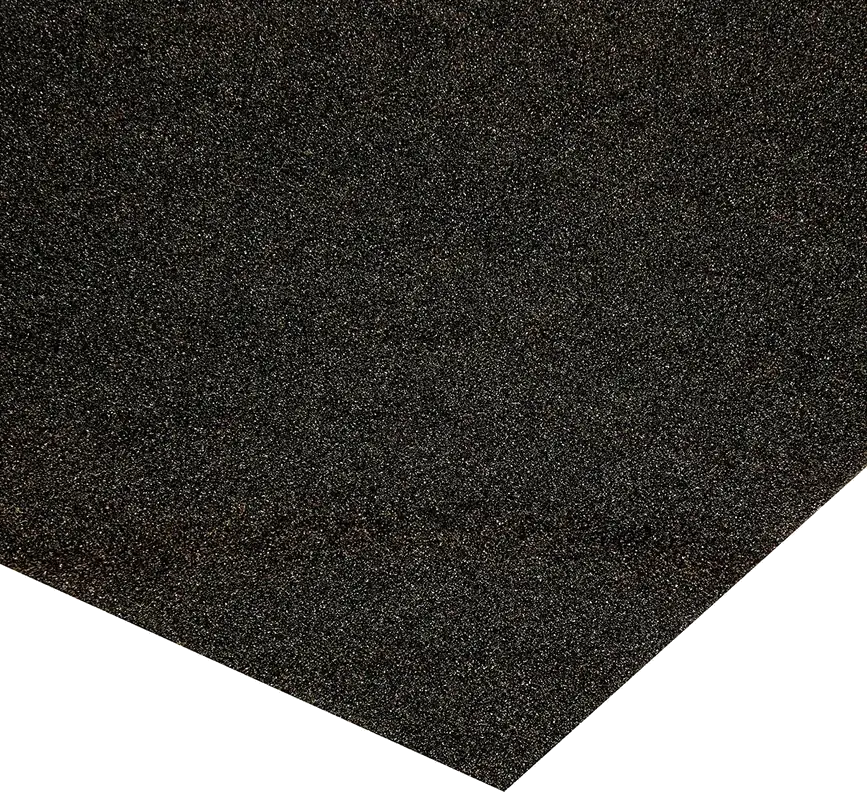
320 Grit Sandpaper Sheets (25-pack) — 9x11 in Silicon Carbide Abrasive for Wet or Dry Use — Precision finishing grit that enhances clarity between paint or lacquer coats, ensuring a flawless final layer. (Professional Grade).
Frequently Asked Questions (FAQ)
Q: What grit should I use to remove dust nibs between clear coats?
A: For most waterborne acrylics and polyurethanes, P500–P600 is ideal for de-nibbing with minimal scratch depth. For lacquer, P320–P400 is common, as subsequent coats will reflow. High-gloss systems may warrant P600–P800 to protect clarity.
Q: Do I need to sand the entire surface between coats for adhesion?
A: Only if you’ve exceeded the manufacturer’s recoat window. Otherwise, spot de-nibbing is sufficient. Full scuff sanding with uniform scratch is required when chemical adhesion is no longer viable.
Q: Is steel wool safe for between-coat sanding?
A: Generally, no. Steel wool can shed, embed, and rust—especially under waterborne topcoats. Use synthetic non-woven pads or fine-grit abrasives (P400–P600) instead for consistent, contamination-free results.
Q: How do I avoid reintroducing dust after sanding?
A: Use vacuum-extracted sanding with matched hole patterns, ground your vacuum and hoses to reduce static, and wipe with a compatible cleaner and clean microfiber. Allow dust to settle for 10–15 minutes after any disturbance, then do a final wipe-down just before finishing.
Q: Why do I get more nibs on edges and profiles?
A: Edges dry faster and build thinner films, so particles are more likely to protrude and sand-through risk is higher. Tape edges during broad scuffing and de-nib them by hand with lower-cut abrasives to preserve film thickness.
Actionable checklist:
- Verify cure stage: powdering under light pass indicates sandability.
- Use P400–P600 film-backed abrasives with vacuum extraction.
- Target nibs; limit pressure and pass count.
- Clean with compatible, residue-free wipe-down.
- Protect edges; de-nib by hand with worn abrasives.