
Stop Burn Marks: Master Belt Sanders & Sanding Belts
You smell it before you see it—the faint sweet, acrid note that means heat has been winning. The shop is quiet except for the belt sander’s steady hum, dust hanging in the light like early fog. You’re two boards into a Saturday batch of maple shelves, and there it is: a brown kiss on the edge, curved perfectly to match your contact drum. It’s the same mark that has sent too many good pieces to the scrap bin. You lighten your touch, bump the feed, try another pass. The scorch grows one shade darker. If you’ve stood at a belt sander—handheld, benchtop, or wide-belt—you’ve had this moment. It’s not a lack of care. It’s heat, friction, and time teaming up faster than you can move.
I’ve been in that trench more times than I’ll admit, and every time, the fix comes down to the same fundamentals. The abrasive cuts or it rubs. The machine cools or it cooks. The workpiece cooperates or it fights you. And the quiet hero—or villain—is your choice of sanding belts. When they are matched to the job, kept clean, and run under the right conditions, burn marks stop being a mystery and start being a memory. In this guide, I’ll walk you through the entire setup: the physics behind scorch, the adjustments that change the outcome, and the materials that keep temps down without killing your throughput. We’ll tune feed and belt speed, pick abrasives that shed heat, prep wood so it doesn’t tar up your belt, and get the machine square, clean, and predictable. This isn’t about babying the work. It’s about running like a pro—steady, efficient, and cool to the touch—so you finish your day with crisp grain and zero brown streaks.
Quick Summary: Prevent burn marks by managing heat—use the right sanding belts, keep passes light, maintain belt speed, clean abrasives, and tune your machine for cooling.
Heat is the enemy: understand scorches
Burn marks aren’t a moral failing—they’re a heat problem. Heat builds when the abrasive stops cutting cleanly and starts rubbing. That happens for a few reasons: dull grains, glazing with resin or pitch, too much pressure, too-slow belt or feed speed, or lingering in one area. Once the surface temperature rises enough, the wood fibers thermally degrade, sugars caramelize, and extractives smear. On maple and cherry you’ll see a crisp brown or almost violet arc, often matching your drum diameter. On resinous softwoods, you’ll smell it first, then find a gummy streak.
Think in terms of energy flow. Your belt converts motor energy into cutting and heat. You can’t eliminate heat, but you can manage where it goes—into the chips and out with the dust, rather than into the wood. Cutting makes bigger chips that carry heat away; rubbing makes fine dust that lingers and insulates. Dust collection, open-coat abrasives, and antistatic treatments help move that heat out of the cut.
Material matters. Cherry, maple, beech, and purpleheart burn easily. End grain heats faster than face grain. Glue lines act like brakes if they’re proud or partially cured. Moisture content also plays a role: wood that’s too wet smears; wood that’s too dry burns quickly.
Use these quick checks to read your process:
- If burn marks match the belt seam location, the belt may be glazed at the splice or tracking off-center.
- If burns cluster at the leading edge, you’re stalling the work at entry—raise feed speed or lighten pressure.
- If burns increase as the belt ages, you’re beyond the abrasive’s cutting life or not cleaning it often enough.
Three actionable fixes:
- Keep passes light: on drum or wide-belt sanders, aim for 0.1–0.3 mm stock removal per pass on hardwoods.
- Favor belt speed plus moderate feed over slow belt and heavy cuts—moving air cools.
- Clean and rotate belts at the first hint of glazing, not after a full scorch.
Dial in feed, speed, and pressure
Your settings decide whether friction or cutting wins. The trio to master: belt speed, feed rate, and downforce (or cut depth). We’re aiming for enough chip load to cut, not polish, and enough movement to ventilate the cut zone.
Start with a baseline test on scrap from the actual project:
- Mark the surface with pencil squiggles.
- Set a conservative cut depth (or minimal pressure for a handheld), moderate belt speed, and a brisk feed.
- Take a pass and inspect the pencil removal and temperature by touch—warm is okay, hot is not.
- Increase cut by a tiny increment and repeat until the pencil disappears in one steady pass without heat.
Guidelines by machine type:
- Handheld belt sander: Keep it moving at a steady pace—about 1–2 feet per second. Use two hands and let the machine’s weight do most of the work. If you must lean, you’re dull or too fine in grit. Start at 80–100 grit for flattening, 120–150 for smoothing. Lift off gradually at the end to avoid dwell.
- Benchtop/drum sander: Take light passes. A good rule is a quarter-turn on the height wheel per pass for hardwoods; less for softwoods. Keep conveyor feed in the mid-to-high range; too slow cooks the work at the drum. If you hear the motor labor, you’re too deep.
- Wide-belt: Run the belt fast enough to clear chips while keeping the work moving—don’t go under your machine’s recommended belt speed. Set the platen out for roughing passes, in for fine finishing at light load. Spread heat by alternating passes with a slight skew where possible.
Pressure is last resort. More push doesn’t equal faster sanding—it equals more heat and less flatness. If you need to press harder, jump to a coarser grit or replace the belt.
Actionable tips:
- Map your heat window: one light pass, pause 5 seconds, then a second pass. If heat spikes on pass two, your setup isn’t shedding heat—reduce depth or increase feed.
- On edges or narrow stock, take quicker, lighter passes; there’s less mass to absorb heat.
- Don’t chase perfection at one station—step through grits and let each do its share.
Choose sanding belts that run cool
Not all abrasives handle heat the same. The right sanding belts cut cooler, resist glazing, and maintain chip flow—all of which fight burn marks. If you’re burning despite good technique, you may be fighting the belt’s chemistry.
What to select and why:
- Abrasive grain: Zirconia and ceramic grains stay sharp under pressure and fracture to expose fresh edges, running cooler on hardwoods and heavy stock removal. Aluminum oxide is fine for general sanding but dulls faster, leading to rubbing and heat.
- Coating: Open-coat belts leave more space between grains for dust and chips, which reduces clogging and heat—great for resinous woods and softwoods. Closed-coat gives a finer finish but runs hotter if the dust extraction isn’t strong.
- Load-resistant treatment: Look for stearate or antistatic coatings. They shed resin and reduce dust cling, helping chips exit instead of insulating the cut.
- Backing: Durable cloth backings (X or Y-weight) track better and stay stable at higher belt speeds. They also dissipate heat more evenly than flimsy paper.
- Joint quality: A poorly made seam can bump, stall, and scorch at each rotation. If you see a repeating burn at belt pitch, suspect the splice.
Maintenance matters just as much:
- Use a crepe/rubber cleaning stick frequently, especially on gummy species. Clean as soon as the belt looks shiny.
- Rotate belts in a set to allow cooling between uses.
- Retire belts that have glazed—no cleaner will restore dulled grain.
According to a article, keeping passes light and belt speed healthy dramatically reduces burning and striping, aligning with what we see in shops every day.
Practical picks:
- Rough flattening on hardwoods: 60–80 grit zirconia or ceramic, open-coat.
- General hardwood sanding: 100–120 grit premium aluminum oxide or zirconia with stearate.
- Resinous softwoods: 80–120 grit open-coat with heavy load-resistant treatment.
If you’re tempted by bargain belts, test one on scrap first. A belt that saves pennies but runs hot costs hours in rework.
Prep the wood to avoid thermal trouble
Even a perfect machine setup loses to messy stock. The cleanest, coolest sanding happens on wood that’s flat, dry, and free of contaminants. When burns show up “out of nowhere,” wood condition is often the culprit.
Moisture content is first. Work stock between 6–9% MC for indoor projects. Too wet and the fibers mash and smear, loading the belt; too dry and they overheat fast. Acclimate your boards to the shop for at least 48 hours before sanding.
Glue lines are the next trap. Even microscopic squeeze-out acts like brake pads and overheats the belt. After assembly:
- Scrape glue lines flush and let cures fully harden before sanding.
- Never hit partially cured glue—it will smear and clog instantly.
- Avoid flooding edges with PVA; use just enough glue and clamp pressure to prevent excessive squeeze-out.
Resins and contaminants: Pitch pockets, sap, and oils load abrasives. On softwoods, clean the surface with mineral spirits and let dry, or warm the board slightly and wipe with a resin solvent made for pitch. Pencil lightly. Heavy graphite lines can smear and add friction.
Surface geometry matters:
- Knock down proud joints with a plane or scraper before sanding so the belt doesn’t dwell on a high spot.
- Cross-grain scratches increase surface area and friction; keep sanding direction with the grain when possible.
- Avoid narrow, tall pieces on wide-belt/drum machines; they tip and concentrate load on a small area. Use sleds or gang identical parts to distribute pressure.
Dust extraction is a heat tool too. A high-CFM, well-sealed system pulls chips out before they insulate the cut. Clean filters and empty bags keep airflow strong; plugged filters mimic slow feed by holding hot dust near the work.
Before any production run, run a “heat pass” on an offcut: one light pass, then a second, and touch the surface. If the second pass feels significantly hotter, change something—depth, grit, or cleaning—before you commit.
Machine setup that prevents scorch
A dialed-in machine runs cooler because it spreads load, cuts cleanly, and pulls heat away. Ten minutes of setup beats an hour of fixing burns.
Start with alignment. Make sure your table or platen is parallel to the drum. A high corner creates a local pressure spike that scorches before you notice. Check with a wide, flat board and feeler gauges or light passes; adjust until you get even scratch patterns side to side.
Belt tracking and tension: A wandering belt rubs on edges and heats at the seam. Track the belt so it centers itself on the drum and platen, and set tension per the manufacturer—too loose and it slips (heat), too tight and it wears bearings and concentrates friction.
Platen and contact surfaces:
- On wide-belt sanders, maintain the graphite platen pad. Worn pads increase friction dramatically. Replace when they’re thin or glazed.
- Choose contact drum durometer (hardness) wisely. Softer drums conform and spread load (cooler for thin passes), while hard drums cut aggressively but can burn quickly if you overfeed.
- On handhelds, keep the shoe flat and the graphite liners fresh if your model uses them.
Speed control: If your machine allows, keep belt speed up and control removal by depth, not by slowing the belt. Fast-moving abrasive plus light cut equals cooler sanding.
Cleanliness and extraction:
- Blow out drums, housings, and guards. Caked dust traps heat around the work.
- Keep dust collection gates open and hoses short and smooth. Every bend costs you airflow.
Three fast, high-impact tips:
- Index your height wheel: mark “light pass” and “finish pass” positions that you know run cool on your common species.
- Skew when possible: a slight diagonal feed spreads contact over more belt area, lowering peak temps.
- Use a belt cleaning stick regularly, then let the machine run empty for 10–15 seconds to cool the belt before the next part.
Maintenance cadence:
- Replace or rotate belts before they glaze.
- Inspect bearings; hot bearings add heat and vibration that shows up as burn bands.
- Verify conveyor feed is smooth; surges cause momentary dwells and scorches.
I Bought These — Video Guide
In a recent segment, Dr Decks tries a batch of bargain sanding belts picked up for about eight bucks. He points out how quickly he goes through sanding belts and uses the cheap set to see if they can keep up. The takeaway is familiar to anyone who’s fought scorch marks: lower-cost belts often glaze faster, run hotter, and can introduce seam bumps that leave repeat marks—conditions ripe for burning. You’ll see how the belts behave under real use, not just spec sheets, and how small choices like o
Video source: I Bought These $8 Sanding Belts And... Ohh Boy || Dr Decks
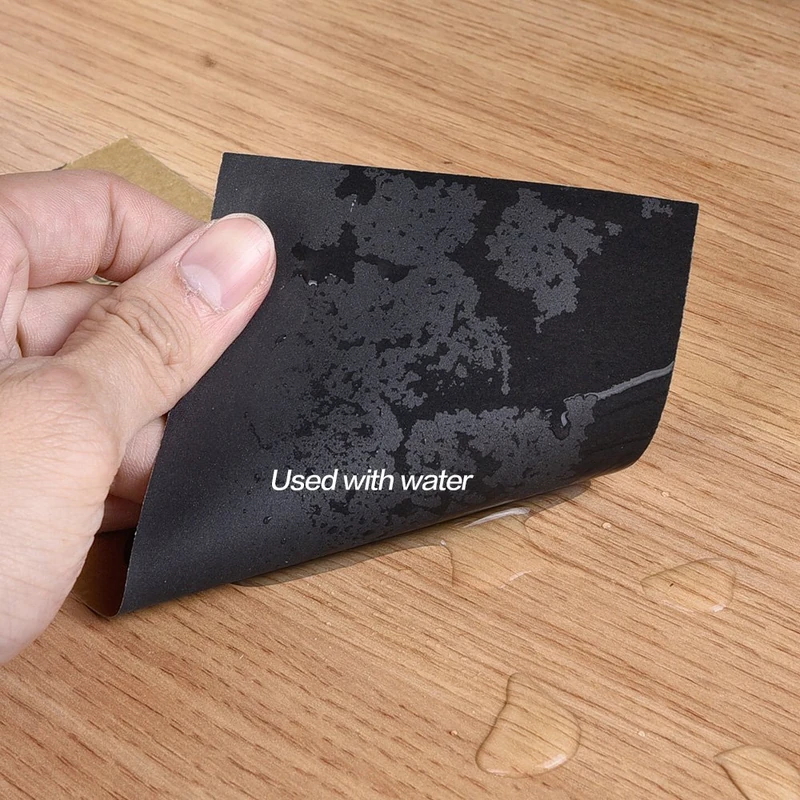
240 Grit Sandpaper Sheets (25-pack) — 9x11 in Silicon Carbide Abrasive for Wet or Dry Use — Smooth-cut abrasive for soft blending, de-nibbing, and light surface preparation before polishing or coating. (Professional Grade).
Frequently Asked Questions (FAQ)
Q: Why does cherry burn so easily under a belt sander?
A: Cherry’s extractives and fine, closed grain heat quickly, and the brown oxidation shows up fast. Use open-coat belts, keep passes light, and maintain higher feed speed with clean abrasives.
Q: What grit should I start with to avoid burn marks on hardwoods?
A: For flattening, start at 80–100 grit zirconia or ceramic. Jumping in too fine (150–180) forces rubbing instead of cutting and raises heat. Step through grits in small jumps.
Q: How do I know if my belt is glazed and causing heat?
A: A glazed belt looks shiny and feels slick. It cuts slowly, leaves polished tracks, and runs hot. Clean with a crepe stick; if performance doesn’t return, replace it.
Q: Do slower feed speeds always reduce burning?
A: Not necessarily. Too slow increases dwell time and heat. It’s better to keep the work moving briskly with a lighter cut and a clean, sharp belt.
Q: Can dust collection actually reduce burn marks?
A: Yes. Strong airflow removes chips and fine dust that trap heat at the surface. Clear filters, open blast gates, and short, smooth hose runs help keep the cut cool.