
Removing PSA Residue on Pads for psa sanding discs
There’s a moment every finisher dreads. The shop is quiet, the first pass on a white oak tabletop is planned, and you’re chasing a flawless, flat reflection. You peel off a used adhesive disc, reach for a fresh one, and—snap—the new disc blisters away from the pad seconds after the machine spins up. You pull the pad and run a thumb across the face. It’s not flat rubber anymore; it’s a patchwork of glazed islands and stringy adhesive, the aftermath of a too-hot removal. If you rely on psa sanding discs for flatness-critical work—whether it’s a disc grinder, DA sander, or a 20-inch platen—you know how fast one gummy pad can unravel an entire day’s finishing plan.
The problem isn’t just inconvenience. Adhesive residue disrupts contact pressure and friction, and it introduces runout-like artifacts that telegraph onto the work. On open-coat abrasives, residue collects dust and hardens into contamination; on fine-grit films, it creates local heat that accelerates resin breakdown. The pad itself is at risk too: solvent swelling, mechanical gouging from improvised scrapers, and thermal damage from overzealous heat guns. Rescue the pad the wrong way and you trade a sticky face for a cupped one; go too gentle and you lose an hour only to discover the next disc still doesn’t bond.
This guide is a field-tested workflow for removing PSA residue from backing pads without deforming the pad, degrading its durometer, or sabotaging your abrasive performance. We’ll cover why residue forms in the first place, pad materials and solvent compatibility, step-by-step removal methods, and prevention tactics that keep you sanding instead of scraping. Expect specifics: dwell times, solvent choices, tool angles, and telltale signs you’ve gone far enough. The goal is simple—restore a true, clean pad face that makes your psa sanding discs stick, cut, and track the way they should.
Quick Summary: Remove PSA residue with controlled heat and compatible solvents, light mechanical action, and a test-fit protocol—then prevent reoccurrence with disciplined pad care and workflow.
Why residue builds up
PSA adhesives used on sanding discs are pressure-sensitive elastomers—typically tackified rubber-resin or acrylic systems—engineered to flow under load and temperature, then hold with viscoelastic grip. That same “cold flow” behavior is why residue accumulates on pads. Three conditions accelerate it:
- Excess heat at removal: Pulling a spent disc immediately after a heavy pass softens the adhesive. Warm adhesive elongates and shears, leaving strings and islands on the pad face. Worse, the softened glue wicks into pad pores.
- Contamination: Dust fines, stearates, oils from hands, or aerosol lubricants form a barrier. The disc bonds more to the contaminant layer than to the pad; when you pull it, the barrier lifts and smears.
- Compliant pads under high pressure: Soft urethane or rubber pads (low Shore A) deform more, increasing shear within the adhesive layer and promoting transfer—especially on large-diameter discs and coarse grits where torque is high.
Residue isn’t just sticky—it’s uneven. Even 0.1 mm of adhesive variation alters pressure mapping. On rigid platens, that telegraphs as circular “witness” patterns; on random orbit sanders, it shows up as micro-hops and inconsistent scratch density. Efficiency drops too: discs load faster because they skid slightly on adhesive islands, generating extra heat that prematurely kills the work-side resin.
Understanding pad construction guides safe cleanup. Common faces include:
- Molded rubber (NBR or natural rubber): Good chemical resistance to aliphatic solvents like mineral spirits and naphtha, but swells with aromatics and ketones.
- Urethane: Generally resistant, but may soften with prolonged contact; avoid strong ketones.
- Aluminum or steel platens (on big disc grinders): Mechanically robust; solvent-compatible, but adhesives can hard-bake with heat cycling.
Finally, note the clock. Adhesive residue cures. Within hours it’s pliable; days later it crosslinks and hardens, requiring more aggressive chemistry and dwell time. Fast attention is almost always cheaper in both time and pad wear.
Pad selection for psa sanding discs
If you’re committed to psa sanding discs for flatness and torque transfer, your pad choice is the first defense against residue. Match the pad face and hardness to both your adhesive chemistry and the mechanical load you apply.
Start with surface energy and topology. PSA adhesives want a smooth, high-energy face to maximize wetted contact. For DA sanders, choose smooth urethane or rubber pads designed explicitly for PSA (not hook-and-loop). Micro-textured faces intended to vent dust under hook-and-loop can trap adhesive and complicate removal. For disc grinders and large platens, ground metal faces offer the most stable bond and easiest cleanup, provided you control heat.
Durometer matters. Soft pads (Shore A 35–50) conform to irregularities but increase adhesive shear under torque, which promotes transfer. Medium (Shore A 60–70) often represents the best balance for general woodworking and metal deburring. Hard pads (Shore A 80+) on rigid platens excel for precision flattening and minimize shear, reducing residue—with the caveat that they telegraph any contamination or scratches.
Thermal path is the other piece. Pads with venting or aluminum cores dissipate heat, slowing adhesive softening during heavy stock removal. Where available, choose pads that allow some heat transfer away from the adhesive bond line; it’s a quiet way to extend disc life and reduce residue risk.
Sanding diameter amplifies everything. Larger discs demand more torque and generate more heat at the hub and rim. If you’re stepping up to an 8–12 inch DA or a 20-inch disc grinder, expect adhesive to behave differently than on a 5–6 inch hand sander. Thin, rigid platens keep bond-line temperatures lower at a given pressure.
Finally, establish a pad rotation. Have at least two pads for your most-used machine: one in service, one cooling/curing after cleanup. Adhesives that feel “gone” can still off-gas; a rested pad avoids bonding problems with the next disc. Treat pads as precision components; the right selection and handling let psa sanding discs perform to spec instead of fighting the interface.
Safe solvents and removal methods
Before you reach for the hottest solvent in the cabinet, map your pad material and the adhesive state. The safest approach is progressive: heat to soften, mild solvent to loosen, light mechanical assist, then a compatibility rinse and dry. This sequence preserves pad geometry and avoids chemical attack.
- Controlled heat
- Goal: Soften the residue so it releases cleanly.
- Method: Warm the pad face with a heat gun or infrared lamp to 40–55°C (104–131°F). Keep the nozzle moving and measure with an IR thermometer. Avoid exceeding 60°C on rubber or urethane to prevent swelling or permanent set.
- Alternative: If you just finished a hot pass, let the pad cool 3–5 minutes so the adhesive regains cohesive strength; paradoxically, slightly cooler glue often peels off in larger pieces.
- Mild solvent dwell
- For rubber/urethane pads: Start with aliphatic hydrocarbons—naphtha or low-odor mineral spirits. Apply with a lint-free wipe until the surface is wetted, not flooded. Dwell 2–5 minutes.
- For metal platens: Heptane or citrus d-limonene removers work well and won’t harm metal. Alcohols (isopropyl 99%) are less effective on rubber-based PSAs but can help with acrylics.
- Avoid ketones (acetone, MEK) on rubber/urethane—swelling risk is high.
- Mechanical assist
- Use a plastic razor blade or a sharp-edged nylon scraper at a low angle (15–25°). Push; don’t pry. Follow the scraper with a nylon brush to gather strings.
- Melamine foam (eraser) is effective on metal platens; be gentle on polymer pads to avoid abrading the face.
- For stubborn, oxidized glue on metal platens, a small rubber “eraser wheel” (vinyl decal remover) at low RPM can speed work. Do not use on polymer pads.
- Refresh solvent and wipe
- Re-wet with solvent and use fresh, lint-free wipes, switching sides frequently to avoid redepositing adhesive. Work from center outward on round pads to avoid creating ridges at the rim.
- Neutralize and dry
- Wipe with isopropyl alcohol (IPA 70–99%) to remove oily solvent traces. Allow 10–15 minutes air-dry. Light compressed air helps but avoid silicone-containing “air tool oils” near the pad.
- Test bond
- Apply a spent disc or a sacrificial patch to check uniform adhesion. If you see islands that don’t tack, repeat the mild solvent dwell locally. If the pad face looks hazed or swollen, stop and allow a full overnight rest; tackling it again immediately can lock damage in.
Common removers and compatibility:
- Heptane-based adhesive removers: Fast on rubber PSAs; safe for metal; short dwell on rubber/urethane.
- Citrus (d-limonene) gels: Effective with longer dwell; rinse thoroughly with IPA to remove oily residue.
- Mineral spirits/naphtha: Gentle, slower. Good starting point for polymer pads.
- 3M General Purpose Adhesive Remover or Goo Gone Pro: Work well; follow with IPA and full dry.
According to a article, maintaining a clean pad face is key to disc performance and longevity—routine light cleaning is faster than periodic deep rescues.
Two cautions: Tack cloths often contain wax—don’t use them on pad faces. And avoid steel scrapers or Scotch-Brite on polymer pads; you’ll flatten microtexture or cut grooves that permanently reduce bond strength.
Workflow: clean, test, return to work
A disciplined, repeatable sequence turns cleanup from a frustrating time sink into a brief pit stop. The aim is minimal downtime and zero surprises when the next disc hits the work.
- Step 1: Remove warm, not hot. If a disc is fresh off a heavy cut, pulse the machine for 5–10 seconds with no load to shed heat, then wait 2–3 minutes. Peel by pulling low and parallel to the surface, not straight up. This keeps most adhesive on the disc.
- Step 2: Fast inspection under raking light. Look for sheen changes, streaks, or islands. Mark suspect spots with a grease pencil. On metal platens, feel for raised glue with the side of a plastic card.
- Step 3: Targeted cleanup. Apply solvent to marked zones first; don’t soak the entire pad unless necessary. Use the plastic razor at low angle and short strokes. Keep a clean edge by snapping off or swapping blades frequently.
- Step 4: Full-face wipe and IPA rinse. Rotate wipes to avoid smearing. If you see the solvent “bead” oddly, that’s contamination—repeat until wetting is uniform.
- Step 5: Adhesion spot test. Lightly press a scrap of PSA liner or an old disc onto three locations (center, mid-radius, rim). Peel. You want consistent, moderate resistance in all spots.
- Step 6: Log and rotate. Note the cleanup in your pad’s service log if you keep one; swap to a cooled spare pad if time-sensitive passes are next.
Actionable tips:
- Pre-warm tough residue, then cool the pad slightly before peeling. This increases cohesive failure within the disc adhesive and reduces transfer.
- Use nitrile gloves and handle discs by the edge only. Skin oils act like a release agent and worsen residue over time.
- Keep a dedicated “adhesive kit”: heat gun, IR thermometer, plastic razor blades, nylon brush, melamine foam, naphtha, IPA, and lint-free wipes—ready at the machine.
- Store discs and pads at 18–24°C (65–75°F). Cold adhesive is brittle and tears, leaving more residue; too warm and it smears.
- For large platens, scribe a faint radial reference on the back of the disc and pad; align marks each changeout to track any repeatable slip that hints at residue or pressure imbalance.
When downtime hurts, prioritize the center-to-rim pressure quality over “perfectly spotless.” A pad that presents uniform tack and planarity will cut true; minor cosmetic haze that doesn’t affect adhesion can be addressed in a later deep clean.
Prevention and lifecycle management
Preventing residue is simpler—and cheaper—than removing it. Treat the pad-disc interface with the same care you give to abrasive grit selection and dust extraction.
Pad handling and environment:
- Temperature and humidity stability prevent adhesive behavior swings. Aim for mid-60s to mid-70s Fahrenheit and low humidity. Avoid storing discs above machines or near heaters.
- Seal disc boxes and keep PSA liners clean. Dust on a liner migrates to the adhesive face when stacked.
Disc and pass strategy:
- Use the right abrasive backing. Film-backed discs tend to leave less adhesive than paper on high-heat passes. On metalwork, consider ceramic or zirconia discs with robust resin bonds; they run cooler for the same stock removal.
- Step down pressure first, then grit. Lighten pressure near end-of-life to minimize heat, rather than pushing a dying disc to finish a pass.
Pad maintenance cadence:
- Schedule a light solvent wipe every 2–3 disc changes on high-heat jobs, instead of waiting for a full-blown cleanup emergency.
- Consider a sacrificial “release” disc. On big platens, some operators briefly apply and peel a cheap PSA disc after heavy work—essentially using it as an adhesive blotter.
Material-specific cautions:
- Rubber pads: Rotate with rest periods. If you notice a slight “spongy” feel after solvent use, let it recover overnight before heavy passes.
- Urethane pads: Susceptible to edge nicks. Keep scrapers away from the rim; once nicked, it concentrates stress and traps glue.
- Metal platens: Watch for micro-corrosion after citrus removers; IPA followed by a thin oil protective wipe (then a thorough IPA clean before use) keeps faces stable.
Process feedback:
- Track adhesion failures. If a disc lifts at the rim repeatedly, you likely have heat-warped residue there—or pressure is too high at the periphery. Address both: clean and rebalance pressure.
- Measure planarity. A dial indicator sweep across a large platen will reveal adhesive buildup long before it’s visible.
Ultimately, pad life is finite. When repeated cleanings can’t restore uniform tack, or when the face shows permanent wave or gouge, retire it. It’s cheaper than compounding scratch pattern defects, sanding burns, and wasted discs. Routine discipline ensures your psa sanding discs stick reliably and cut to their engineered potential.
Kalamazoo DS20 Disc — Video Guide
The Trick-Tools overview of the Kalamazoo DS20 20-inch disc grinder highlights a machined, balanced steel disc designed to run true with PSA-backed abrasives. It’s a good illustration of why a clean bonding surface matters: at that diameter, even thin adhesive residue can mimic runout, compromise flatness, and heat the work.
Video source: Kalamazoo DS20 Disc Grinder - Trick-Tools.com
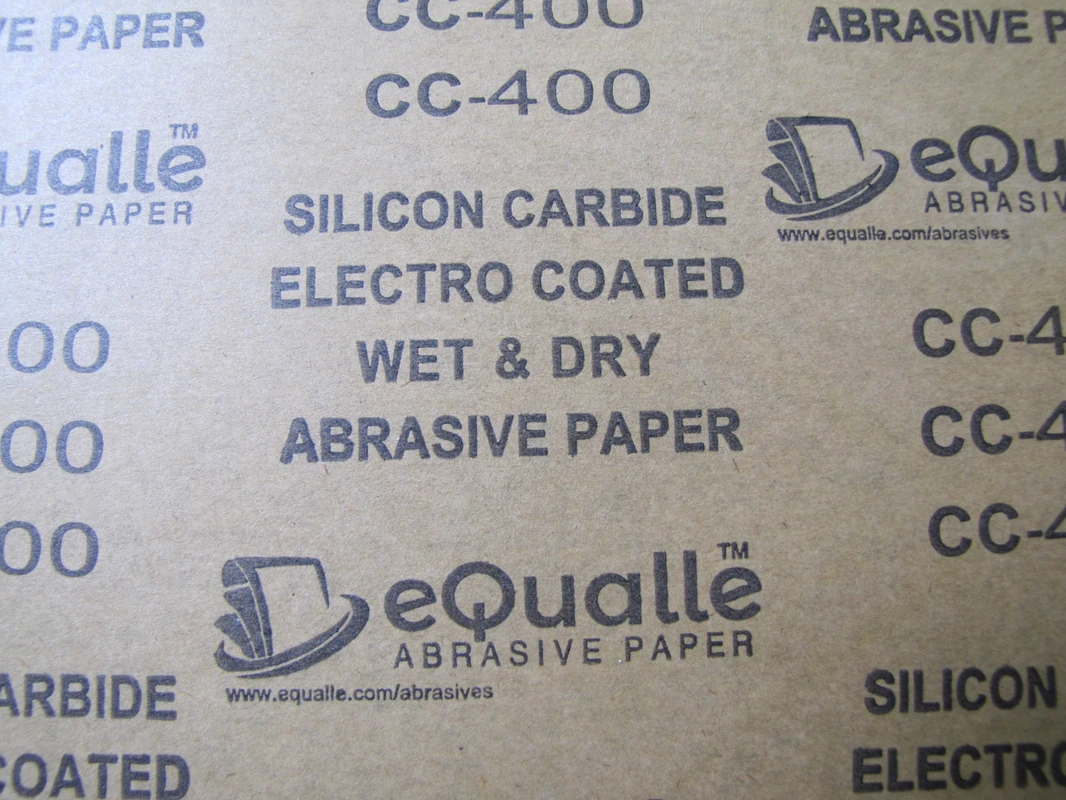
240 Grit Sandpaper Sheets (100-pack) — 9x11 in Silicon Carbide Abrasive for Wet or Dry Use — Smooth-cut abrasive for soft blending, de-nibbing, and light surface preparation before polishing or coating. (Professional Grade).
Frequently Asked Questions (FAQ)
Q: What’s the safest solvent to start with on rubber or urethane pads?
A: Begin with aliphatic solvents like naphtha or low-odor mineral spirits. They soften most rubber-based PSAs without aggressively swelling rubber or urethane. Follow with an IPA wipe.
Q: Can I use acetone to remove PSA residue?
A: Avoid acetone and MEK on polymer pads; they can swell or embrittle rubber and urethane. They’re acceptable on metal platens, but use briefly and rinse with IPA to remove residue.
Q: How hot can I safely heat the pad to loosen adhesive?
A: Keep pad-surface temperature between 40–55°C (104–131°F) and below 60°C for rubber or urethane. Use an IR thermometer; excessive heat risks permanent deformation.
Q: Why do new discs still fail to stick after I clean the pad?
A: Residual oils from removers, incomplete drying, or remaining adhesive islands are common causes. Ensure an IPA final wipe, full air-dry, and perform a three-point adhesion test before returning to work.
Q: Are eraser wheels safe for polymer pads?
A: No. Use eraser wheels only on metal platens. On rubber or urethane pads, stick to plastic razors, nylon brushes, and mild solvents to avoid abrasion and geometry change.