
How to Scuff Sand Between Coats with a Sanding Sponge
The first coat looked perfect under shop lights—glossy, mirror-like, promising. Then morning sunlight cut across the panel and told the truth: a few dust nibs, a faint orange peel near the edge, and the slightest ripple where the grain lifted. I’ve been there more times than I’ll admit. The urge is to lay on more finish and hope it “levels out,” but finishing rarely rewards wishful thinking. What fixes it—quietly, consistently—is a simple pass with a sanding sponge.
In the hand, a good sanding sponge feels like a precision instrument disguised as shop consumable. The foam cushions tiny highs and lows while the abrasive grain scratches just enough to promote adhesion for the next coat. You can wrap it around a beveled rail, hug a cove, or flatten a broad field without gouging. Used well, scuff sanding doesn’t erase your first coat—it refines it. It turns defects into data: micro-scratches you control, instead of random topography left by dust or spray spatter.
As a product engineer, I approach finishing like a materials problem. Film-building finishes—polyurethanes, lacquers, waterborne acrylics, alkyds—rely on both chemical and mechanical bonding between coats. When you scuff sand between coats, you’re doing two things at once: cutting down protrusions (dust nibs, bubbles) and creating a stable, uniform micro-scratch pattern for the next layer to grip. That scratch pattern has geometry—depth, spacing, and distribution—that directly affects adhesion and final optical quality. The foam behind the abrasive controls pressure and conformity; the abrasive mineral and grit size control the cut; and your technique controls consistency.
This article breaks down the “why” and the “how” with test-driven guidance. We’ll discuss the science behind adhesion, how different sponges and grits behave on wood finishes, where and when to scuff, and the exact pressure ranges that avoid burn-through. The goal: predictable, repeatable finishing—so the final coat looks intentional, not lucky.
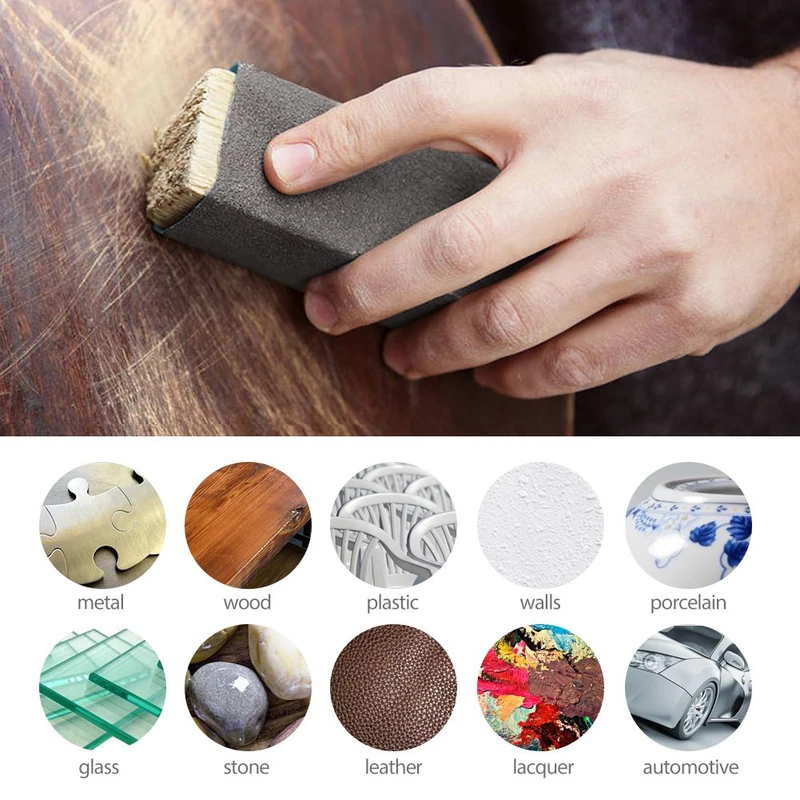
Quick Summary: Use a fine-grit sponge to lightly scuff between coats, targeting nibs and adding a uniform scratch pattern that improves adhesion without cutting through.
Adhesion, scratch patterns, and film build
There are two adhesion mechanisms for coats of finish: chemical and mechanical. Chemical adhesion (coalescence or cross-linking across coats) is strongest when the new coat is applied within the manufacturer’s recoat window. Mechanical adhesion relies on the next coat flowing into microscopic valleys from your scuff sanding, which is why a controlled, shallow scratch pattern matters.
What the sanding sponge contributes is conformity and pressure control. On a flat panel, paper on a block cuts fastest but also risks cutting through at highs. A sponge distributes load over a slightly larger contact area. That lowers local pressure spikes, making it harder to burn through thin edges or profiles. On moldings or face frames, the foam wraps just enough to touch the surface without corner-digging.
Aim for fine, shallow scratches that stay beneath the next coat’s film thickness. Typical brush, roll, or spray coats build roughly:
- Solvent/oil poly: ~1–1.5 mils dry per coat
- Waterborne acrylic/poly: ~0.7–1 mil dry per coat
- Nitrocellulose lacquer: ~0.3–0.5 mil dry per pass (multiple passes = one “coat”)
Your scuff scratches should be substantially shallower than the next coat’s build so they’re buried and optically invisible. That’s why 320–400 grit is the sweet spot for most between-coat work. Coarser grits (220) cut fast but leave deeper troughs that a thin lacquer pass may not fully bury. Ultra-fine grits (600+) minimize scratch depth further but can be too slow to level nibs, and in some systems may slightly reduce mechanical keying.
Timing matters. If you scuff too early, semi-soft films (especially oil-based) can gum up and smear. If you scuff too late—well beyond the recoat window—chemical adhesion falls off and you’re relying almost entirely on mechanical keying, which demands more thorough surface prep. As a rule of thumb, wait until the surface is hard to the touch and powders when abraded. When in doubt, follow the label’s recoat and sand-between-coat guidance.
Actionable checks:
- Touch test: press a fingernail lightly; if it leaves a mark, wait.
- Abrasion test: make a small pass in a hidden area; if it pills, it’s not ready.
- Edge discipline: reduce pressure at edges by half; edges have less film build.
Choosing the right sanding sponge
Not all sanding sponges cut the same. The three variables that matter most are abrasive mineral, grit range, and foam density.
- Abrasive mineral: Aluminum oxide (AlOx) is the default for wood finishing—tough, blocky grains that fracture slowly and maintain a consistent cut rate. Silicon carbide (SiC) is sharper and fractures more readily, making it great for brittle finishes (lacquer) and denibbing between coats, but it can cut more aggressively at first contact. Many “scuff” sponges for auto refinishing use SiC for that reason.
- Grit range: For between-coat scuffing, 320–400 is versatile. Use 320 to knock down nibs and light orange peel on polyurethane; 400–600 for delicate films, final color-sand before a topcoat, or between thin lacquer passes. Ultra-fine pads (1000–1500) are for post-cure rub-out, not general scuffing.
- Foam density/thickness: Softer open-cell foams conform better to profiles but reduce cutting efficiency. Denser foams keep flats flatter and cut faster per stroke. A medium-density, 10–13 mm thick sponge is a good all-rounder.
In our shop comparisons, Norton’s ProSand and 3X contour sponges, 3M’s scuff sanding sponges (notably the 3-2/3 x 9-inch format widely used in body shops), and Mirka’s “soft” abrasives all performed consistently for between-coat work. SiC-based options showed faster initial cut on lacquer; AlOx sponges had more even wear on poly. Stearate-treated surfaces (common on premium sponges) reduced loading and extended usable life—especially on oil-based finishes that tend to clog.
If you finish a lot of profiles—shaker rails, crown, chair parts—keep a mix of edge-profile sponges (rounded or angled edges) and a denser flat sponge. For large flat panels, I often back a sponge with a small rubber block to stiffen it just enough to maintain flatness while retaining foam forgiveness at the edges.
Real-world note: Many finishers swear by a 320-grit contour sponge for Arm-R-Seal and similar wiping varnishes to avoid cutting through thin films. According to a article, 320 on a contour sponge backed by a rubber block kept the cut shallow yet effective between coats—consistent with what we see in testing.
Bottom line: Choose AlOx 320–400 for general-purpose scuffing on poly and waterborne. Opt for SiC 400–600 when denibbing thin, brittle films like lacquer or when a very fine, fast scratch is desired. Let the workpiece geometry determine foam density.
Grit, pressure, and the numbers that matter
Grit is not just a label; it’s a proxy for scratch depth and spacing. For reference, typical FEPA-P grit averages:
- P220 ≈ ~66 microns
- P320 ≈ ~46 microns
- P400 ≈ ~35 microns
- P600 ≈ ~26 microns
These are particle size references; scratch depth is less than particle size and depends on pressure, binder hardness, and grain shape. Finishes with higher hardness (e.g., fully cured waterborne poly) resist scratch penetration more than semi-cured oil-based films, so the same grit can leave different scratch geometries across finishes.
Pressure control is where sponges shine. You only need enough force to level dust nibs and add a faint, uniform tooth. In practice, that means:
- Flat fields: approximately 0.5–1.0 psi contact pressure. With a standard 3 x 5 inch contact patch, that’s roughly 7.5–15 lb of force; but most hand passes are below this, more like 2–6 lb depending on your grip.
- Edges and profiles: reduce pressure by 30–50%. If you can feel the edge through the foam, your pressure is too high.
Technique matters as much as grit:
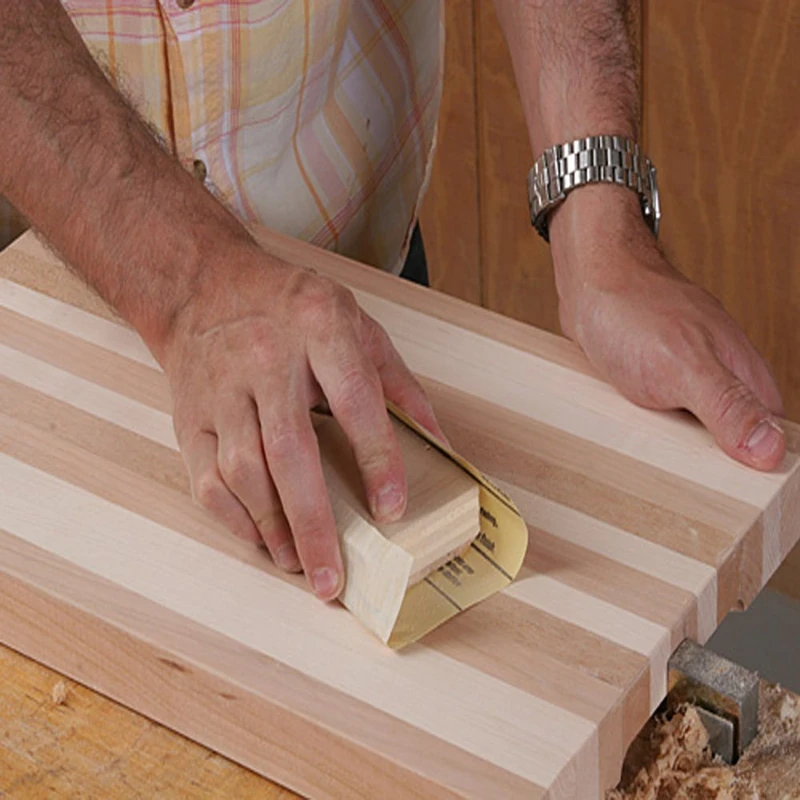
- Crosshatch the surface with light passes—say, four to six strokes in one direction, then the same at 90 degrees. You’re aiming for coverage, not removal.
- Use a “guide coat” when leveling sheen—lightly dust the surface with a contrasting dry pigment or a graphite stick and sand until the guide disappears evenly. This helps avoid over-sanding highs while leaving lows untouched.
- Stop once the surface is uniformly dull and nibs are gone. Over-sanding doesn’t improve adhesion; it just risks cut-through.
- Vacuum thoroughly and wipe with a lint-free cloth slightly dampened with the solvent compatible with your finish system (water for waterborne; mineral spirits for oil-based—but only if the manufacturer allows it). Avoid silicone-laden tack cloths with waterborne.
Actionable tips:
- For wipe-on polys: use P320 sponge after each coat except the last; switching to P400 on the penultimate coat yields a finer lay for the final.
- For lacquer: scuff with SiC P400 after two to three light passes; keep strokes minimal to avoid breakthrough on edges.
- For painted cabinets: P320 sponge between color coats; P400 before clear topcoat to minimize witness lines.
- Keep a fresh edge on the sponge: rotate periodically to maintain consistent cut and reduce loading in one spot.
Wet vs. dry, clogs, and foam chemistry
Loading (clogging) is the enemy of controlled scratch patterns. A loaded abrasive stops cutting and starts burnishing—or worse, dragging particles that gouge. Sponge design and abrasive treatments fight this.
- Stearate coatings: A white, waxy load-resistant layer on the abrasive that helps dust shed before it compacts. Particularly effective on oil-based finishes and paints.
- Open-coat distribution: Leaves space between grains to collect dust without immediately clogging; common on higher-quality sponges.
- Foam porosity: Open-cell foams allow dust to move away from the interface. Denser foams cut faster but can load faster on gummy films if not cleaned often.
Dry vs. wet:
- Between coats, dry scuffing is the safest default. Water can swell raised grain under thin, still-crosslinking films; solvents can interfere with intercoat adhesion if not fully flashed before the next coat.
- Damp scuffing: On fully cured films (e.g., post-cure rub-out), a water-and-drop-of-detergent solution with an ultra-fine sponge (1000–1500) is excellent for leveling, but that’s a different operation from between-coat scuffing.
- Waterborne systems: If the manufacturer explicitly allows damp scuffing between coats, use minimal water and ensure complete dry before recoating. Otherwise, stick to dry.
Cleaning sponges extends life and consistency:
- Tap and brush out dust every few minutes; a crepe rubber “abrasive cleaning stick” or a stiff nylon brush works well.
- For oil-loaded sponges, a quick wash in warm, soapy water followed by full dry restores cut; avoid hot water that can soften adhesives.
- Compressed air helps, but keep pressure moderate to avoid tearing the foam or ejecting abrasive grains.
Foam chemistry contributes to “feel.” Softer foams distribute pressure and resist digging on profiles, making them forgiving on frame-and-panel doors and face frames. Medium-density foams provide better feedback on flats—you can feel nibs disappear, which prevents over-sanding. Very firm foams edge toward block behavior—useful for maintaining flatness on tabletops but easier to burn through edges if you’re not careful.
Practical workflow for most clear finishes:
- Coat 1: level dust nibs with P320 sponge once fully dried to powder.
- Coat 2: P320 for nibs, then optional P400 for uniform dullness before final.
- Final coat: no scuffing—cure fully, then evaluate for rub-out if a higher sheen or flatter surface is desired.
And remember: the goal is uniform dullness, not material removal. If you see color or substrate on the sponge, you’ve gone too far.
Norton ProSand Sanding — Video Guide
Norton’s short ProSand sponge video focuses on why a premium sponge feels sharper and lasts longer: a high-quality abrasive grain, an even coating, and a foam core that navigates corners without scarring flats. The clip highlights how a balanced sponge can both denib and prepare a surface for the next coat, which aligns with the test-driven approach in this guide.
Video source: Norton ProSand Sanding Sponges
320 Grit Sandpaper Sheets (50-pack) — 9x11 in Silicon Carbide Abrasive for Wet or Dry Use — Fine finishing grit for sanding between coats of paint, primer, or lacquer. Provides smooth, even results for woodworking, automotive, and precision finishing. Works efficiently for wet or dry applications. (Professional Grade).
Frequently Asked Questions (FAQ)
Q: What grit should I use to scuff sand polyurethane between coats?
A: Use P320 for most between-coat scuffing on polyurethane, switching to P400 before the final coat if you want a finer lay. Reserve P220 for problem areas (runs, heavy nibs) and be cautious near edges to avoid cut-through.
Q: Can I use a sanding sponge between coats of paint?
A: Yes. For cabinet and trim paints, a P320 sponge between color coats levels nibs and promotes adhesion. Before a clear topcoat, P400 yields a finer scratch that’s easier to bury. Vacuum thoroughly and avoid silicone tack cloths with waterborne paints.
Q: How soon after spraying lacquer can I scuff sand?
A: Once the film is dry to the touch and powders when abraded—often 30–90 minutes for nitrocellulose lacquer in good conditions, but always follow the product label. Use a SiC P400 sponge lightly; lacquer films are thin and easy to overcut at edges.
Q: How do I avoid sanding through at edges and profiles?
A: Reduce pressure by 30–50% at edges, make half-length passes across edges, and let the foam do the conforming—don’t pinch or wrap tightly. Consider a denser sponge on flats and a softer one for profiles. If a sharp edge is critical, mask it and scuff only the adjacent field.
Q: Can I reuse a sanding sponge, and how do I clean it?
A: Absolutely. Brush or blow out dust during use; for oil-loaded sponges, wash in warm, soapy water and let dry fully. Rotate the sponge as you work to distribute wear and maintain a consistent cut. Replace once the abrasive feels slick or the foam collapses.