
Epoxy sanding: best start grit for high spots
The first pass tells the whole story. You stand over a curing project—maybe a kayak hull, a countertop, or a floor section—with yesterday’s resin gone glassy and a few unkind ridges catching the raking light. Your hand slides across the surface and pauses on a drip, a seam, a ripple that won’t disappear by wishful thinking. You can hear the random orbital sander on the bench before you touch it. The only decision that matters now: what grit to start with. Get it wrong and you burn time, discs, and patience. Get it right and the surface flatness comes quickly, scratches stack predictably, and the finish you planned is still in reach. I’ve spent years chasing that first cut—especially during epoxy sanding—because the first cut sets your entire workflow’s cost, heat load, and scratch management.
In these moments, it’s tempting to start gentle, hoping 120-grit will do. Or to overreach with 36-grit and scar the substrate. The reality sits between: read the topography, tune the abrasive to the defect, and control heat and dust. Palming the surface is diagnostic, but so is a straightedge, a pencil grid, and the discipline to scrape or knock down the worst peaks before you ever touch a disc to epoxy. High spots demand strategy, not guesswork. And grit selection is only half the story—pad hardness, disc composition, dust evacuation, and feed rate stabilize the process so your start grit actually performs. This article lays out how to match start grit to defect height, build a progression that removes those scratches efficiently, and keep the resin cool enough to stay cuttable instead of smearing. The goal is practical: take a surface with real-world issues and make it flat with minimal risk, minimal waste, and a professional finish still intact.
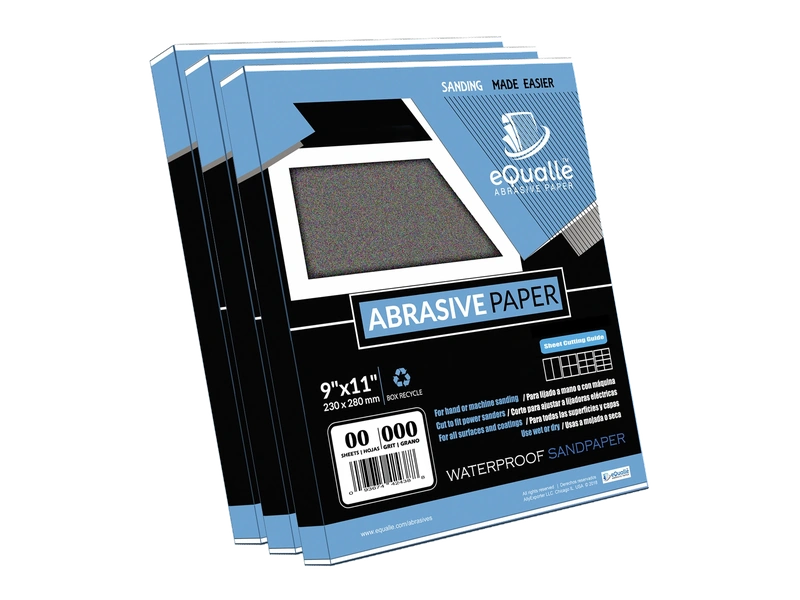
Quick Summary: For leveling epoxy high spots, start with P60–P80 on a firm pad after knocking down peaks; then step through P120, P180–P220, managing heat, dust, and crosshatch patterns for predictable flatness.
Diagnose the surface topography
Before you pick an abrasive, measure the surface—visually and physically. High spots from runs, sags, and seam ridges behave differently than broad waves. The start grit that levels a drip in three passes can gouge an adjacent low spot if you’re not controlling contact and pad stiffness.
- Map high areas with raking light and a soft pencil grid. Sand just until the pencil marks disappear; untouched lines reveal lows that need protection during aggressive passes.
- Use a 24–36 inch straightedge across and along the grain/layup. Note gaps and bridge points; these guide your crosshatch direction and pressure bias.
- Knock down the worst peaks mechanically before sanding. A sharp carbide scraper, cabinet scraper, or block plane on fully cured ridges reduces sanding time by half or more and preserves adjacent film thickness.
- Confirm cure state. Epoxy below full cure (or near its glass transition temperature, Tg) cuts poorly and gums up abrasives. Most systems need 24–72 hours at room temperature; always follow the resin’s data sheet.
Assess defect scale to set your starting window:
- Micro-ripples and light orange peel: P100–P120 start.
- Moderate ridges, tape lines, or sags ~0.2–0.5 mm high: P80 start on a firm backing.
- Severe drips and hard seams >0.5 mm: targeted scraping, then P60 spot-leveling.
Pad and interface selection determine whether that grit truly levels or just follows contours. A firm or hard pad with no foam interface maximizes planarity and bite—critical for high spots. Save soft interfaces for later blending or convex profiles. Keep extraction high; a vacuum-rated perforated pad and clean holes maintain cut rate and transparency so you can see when you’ve hit your target flats.
The diagnostic stage also includes edge management. Mask or shim vulnerable edges so the sander doesn’t roll over and thin them first. When in doubt, block-sand edges by hand at a higher grit than your start grit to control geometry.
Choosing start grit for aggressive flattening
Choosing an aggressive start grit is about removing peak height efficiently while controlling scratch depth, thermal load, and risk to the substrate. For epoxy over wood, composite cloth, or sealed substrates, the safest aggressive window is P60–P80 with a ceramic-alumina or zirconia-alumina disc. Silicon carbide cuts epoxy cleanly as well, but fractures faster on thick films; use it when you want a sharper scratch for later transparency sanding or wet finishing.
- P60 is the “leveling hammer” for localized height: drips, tape-line steps, or seam prouds. Use it selectively and briefly, on a firm pad, with a conservative feed rate (about 150–200 mm/s) and minimal tilt. Transition to P80 as soon as the peak blends to the surrounding plane.
- P80 is the general-purpose start grit for moderate high spots across larger areas. It erases pencil grids predictably and sets up an economical step to P120 without overcommitting to deep scratches.
- P100–P120 are ideal start points for a near-flat epoxy coat where your “high spots” are only microtexture. They start the refinement phase rather than the leveling phase.
Control variables that make an aggressive start safe:
- Contact pressure: Aim for 0.5–1.0 psi on a 150 mm (6 in) ROS. With a palm sander, that’s just enough hand weight to keep the pad flat and spinning without bogging.
- Orbit speed: 8,000–10,000 OPM on a ROS typically maximizes cut without overheating epoxy. If your discs glaze, drop speed and lighten pressure before changing grits.
- Heat management: Keep surface temps under ~45–50°C to avoid softening the resin. Use dust extraction, frequent passes, and compressed air to cool; rotate discs to let them shed heat.
Field-tested tips for the first pass:
- Scribe a tiny witness mark beside each high spot; stop the coarse pass as soon as the mark disappears to avoid digging.
- Crosshatch at 10–15° off the long axis rather than 45°; it improves visibility of flats on glossy epoxy and reduces pad edge gouging.
- Keep the pad flat. A deliberate 1–2° bias toward the high area is fine, but avoid levering on an edge.
According to a article
Once height is controlled, don’t linger with coarse grits. Move promptly into refinement to erase the deep scratch field while the surface is still cool and clean.
Epoxy sanding workflow that prevents clogging
Epoxy dust is fine, staticky, and eager to pack abrasive pores. A robust epoxy sanding workflow starts with surface chemistry, proceeds through controlled cutting, and ends with efficient scratch removal—without glazing discs.
- Surface prep first:
- Wash off potential amine blush before sanding. Use warm water with a Scotch-Brite pad and a dash of mild detergent; rinse and dry thoroughly. Blush smears under the disc and clogs quickly.
- Verify full cure. If the resin is green, wait. If schedule dictates a “green” window, use light cuts and expect more frequent disc changes.
- Attack the peaks with discipline:
- Pre-scrape ridges. A few careful strokes with a carbide scraper will save multiple discs and protect low areas.
- Start at the chosen grit (P60–P80 for true peaks; P100–P120 for micro-highs) on a hard pad. Use low to moderate pressure, keep the pad fully supported, and watch the dust color; yellowing or sticky dust signals heat—pause and cool.
- Maintain a clean cut:
- Run high-efficiency dust extraction. A clean face keeps the abrasive cutting sharp and reduces thermal softening.
- If discs start to smear, “dress” them lightly by sanding a scrap of hardwood or MDF to clear the face. Replace discs sooner rather than later; a clogged P80 behaves like a burned P150 that doesn’t cut or blend.
- Step-up strategy:
- From P80, step to P120, then P180 or P220. Avoid skipping more than one notch at a time; erasing scratch depth predictably is faster than chasing ghost scratches later.
- On clear-finished epoxy, consider P150 between P120 and P180 for better clarity.
- Use crosshatch passes with 20–30% overlap; stop when the previous grit’s scratch pattern disappears uniformly.
- Wet vs. dry:
- Dry sanding offers better topography reading and keeps water away from wood cores. Wet sanding with silicon carbide can be useful for final clarity on fully sealed, non-porous parts, but only after structural leveling is done and with full cure confirmed.
Actionable workflow tips:
- Pencil-grid every stage. If any grid remains after a pass, you’re not flat yet.
- Swap to a medium pad or add a 3–5 mm interface after leveling to blend without telegraphing hard-pad facets.
- Keep a thermometer or IR gun handy; pause above 45°C surface temp to prevent gumming.
- Vacuum and wipe with a clean, dry microfiber between grits; avoid solvent wipes until after final sanding and only if the epoxy is fully cured.
Refine, inspect, and prepare for finish
Leveling removes height; refinement removes evidence. The goal is a uniformly abraded surface with scratch depth appropriate to the next coating or the final sheen.
- Understand grit systems. Use FEPA P-grades (e.g., P80, P120) consistently; CAMI 80 is not identical to P80. Sticking with one standard ensures predictable scratch removal.
- Scratch depth strategy: If you leveled with P60, you must pass through P80 and P120 at minimum. For coating adhesion, P180–P220 is the sweet spot; for high-clarity topcoats, you may continue to P320–P400, but only after every coarser scratch is gone.
- Inspection methods: Raking light at opposing angles, alcohol mist (on fully cured epoxy only), and a 5–10x loupe reveal lingering coarse scratches. Rotate the work or your stance; what disappears from one angle pops at another.
- Edge and detail work: Block-sand edges by hand with the current grit to keep geometry crisp. Use foam-backed abrasives around radii to avoid flat-spotting.
Coating readiness depends on your finish plan:
- For another epoxy coat: Stop at P80–P120 if recoating within the manufacturer’s mechanical-adhesion window; wash blush if present. If outside that window, scuff to P180 before recoating.
- For primer or paint: P180–P220 gives excellent tooth without telegraphing. Vacuum thoroughly and tack with a lint-free cloth if the substrate allows; avoid silicone-based tack rags.
- For a clear gloss topcoat: Refine to P320–P400 dry. Maintain cleanliness; a single coarse disc trace will show under gloss.
Safety is a finish step, too. Epoxy dust is a respiratory hazard; wear a P100 or P2/P3 respirator, maintain extraction, and avoid compressed air blow-off that redistributes dust onto clean panels. After final sanding, handle the surface with nitrile gloves to prevent skin oils from interfering with finishes.
Video: orbital technique for flatter cuts
A short floor-sanding demonstration with an orbital sander shows why pad control and feed consistency matter when flattening stubborn peaks. The presenter emphasizes keeping the machine flat, using systematic passes, and resisting the urge to lean—habits that translate directly to epoxy work on boats, tops, or furniture.
Watch how small changes in pace and overlap affect cut rate and uniformity. Even though it’s a floor, the principles of dust extraction, grit progression, and crosshatching are universal. If you’ve struggled with swirl marks or uneven leveling, you’ll recognize the problems and the fixes. Take a few minutes to internalize the rhythm, then apply that cadence to your next leveling pass.
When you’re ready, try a practice panel to dial in your own pressure and speed before returning to the real piece.
Quick Tip: Floor — Video Guide
Can you really sand a wood floor effectively using just an orbital sander? Yes and No. Watch this video to see how I refinished my ....
Video source: Quick Tip: Floor Sanding using an Orbital Sander.
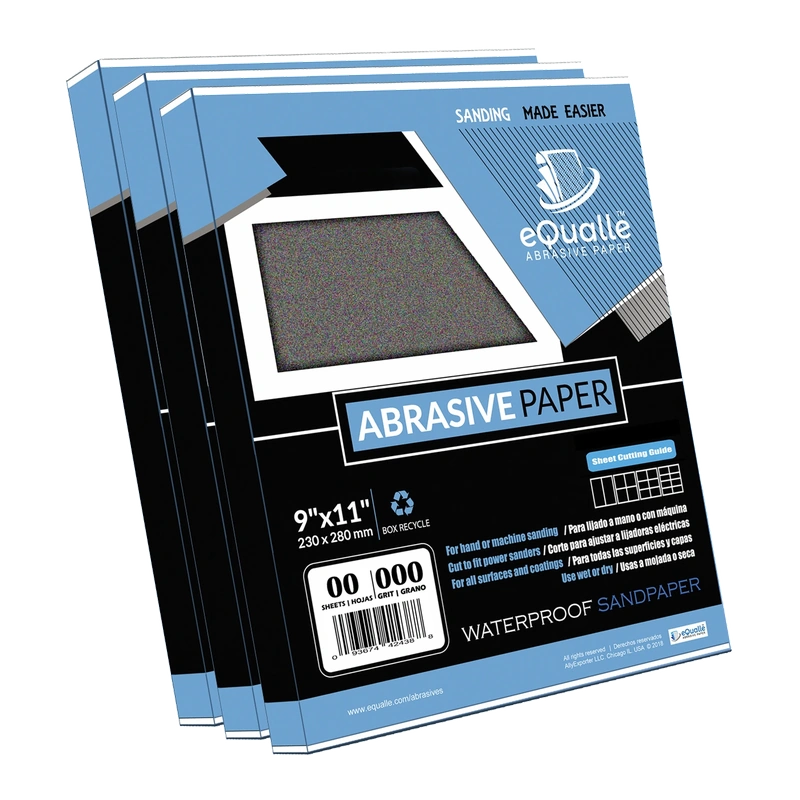
280 Grit Sandpaper Sheets (50-pack) — 9x11 in Silicon Carbide Abrasive for Wet or Dry Use — Fine finishing grit for delicate work—ideal for flattening varnish layers and creating a pre-polish smoothness on wood or resin. (Professional Grade).
Frequently Asked Questions (FAQ)
Q: What start grit should I choose for epoxy drips and runs?
A: For pronounced drips and seam ridges, pre-scrape with a carbide scraper, then spot-level with P60 on a firm pad. Transition quickly to P80 and then P120 to erase the coarse scratch field.
Q: How do I prevent epoxy from clogging my abrasive discs?
A: Ensure full cure, wash off any amine blush, run strong dust extraction, keep pressure light, control surface temperature below ~45–50°C, and replace glazed discs promptly rather than pushing them.
Q: Can I start at P120 to be “safer” on high spots?
A: On true high spots, P120 wastes time and heat; it polishes peaks rather than removing them. Use P80 (or P60 for severe peaks) with a firm pad for quick, controlled height removal, then step to P120 for refinement.
Q: What pad hardness should I use for leveling versus blending?
A: Use a hard or firm backing pad with no foam interface for leveling high spots to avoid conforming to lows. Switch to a medium pad or add a thin foam interface when blending and refining to reduce facetting and improve scratch uniformity.
Q: Is wet sanding recommended on epoxy?
A: Reserve wet sanding for final clarity on fully sealed, fully cured surfaces where moisture cannot reach porous cores. For leveling and early refinement, dry sanding improves feedback, topography reading, and dust control.