
Master Micron Steps with microfinishing film
If you’ve ever tried to slice a ripe tomato with a “sharp” knife that snagged and crushed instead of gliding cleanly, you’ve felt the cost of a rough edge. Maybe it was during a weekend project: you chamfered a piece of walnut for a picture frame, then paused, disappointed by the faint haze that dulled the grain’s depth. Or you inspected a watch case under a bright lamp and saw fine tracks that only appear when the light hits just right—marks that steal the mirror finish you were hoping for. In those moments, perfection seems close but just out of reach.
Perfection, in this context, is less about magic and more about mapping. A consistent, meticulous plan—using clearly graded abrasives—turns “almost there” into “exactly right.” That’s where microfinishing film becomes the quiet hero. Pre-coated with tightly graded abrasive particles on a stable film backing, it removes guesswork from polishing. Instead of jumping between unknown “grit equivalents” and hoping the scratches blend away, you progress in predictable micron steps—30µm to 15µm to 9µm and so on—until the surface stops scattering light and starts reflecting it.
Whether you’re sharpening chisels, refining a chef’s knife, polishing brass jewelry, or bringing clarity to 3D-printed parts, controlled progression is the thread that ties great results together. With microfinishing film, you can feel and see improvements at each stage: deeper scratches replaced by finer ones, then finer still, until a mirror emerges. And that’s the goal—repeatable, measurable results you can trust, not a lucky streak you hope to repeat next time.
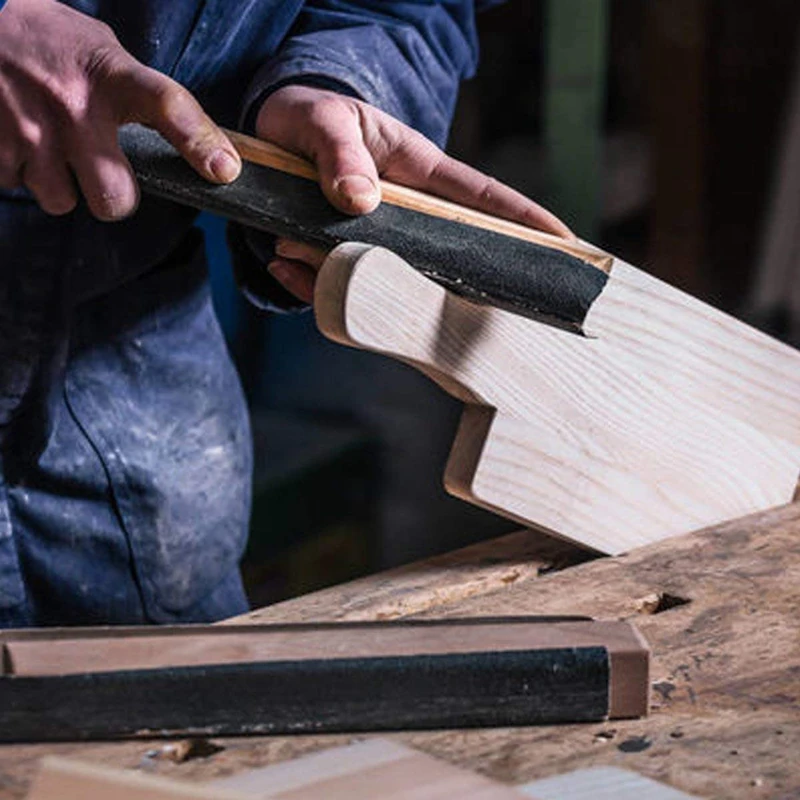
Quick Summary: Use clearly graded micron steps with microfinishing film, track your scratch pattern, clean between stages, and progress only when the previous scratches are fully replaced.
Why micron steps beat guesswork
When you polish, you’re not “making things shiny” as much as you are swapping one set of scratches for a finer, more uniform set. Each abrasive particle leaves furrows proportional to its size; larger particles cut deeper, and those grooves scatter light. If you jump directly from a coarse abrasive to something too fine, the finer abrasive can’t reach the base of the deep grooves, and haze or “ghost scratches” linger. That’s why graded micron steps matter: each stage needs to be coarse enough to efficiently erase the previous scratches, yet fine enough to refine the pattern.
A dependable rule of thumb is to reduce abrasive size by roughly half each step (for example, 30µm → 15µm → 9µm → 5µm → 3µm → 1µm → 0.5µm). In practice, slight variations are fine—9µm to 6µm to 3µm works well, and many users can skip a step once they’ve developed clean technique. The point is to avoid dramatic jumps (say, 30µm directly to 3µm) because the finer film will skate on the ridges instead of fully re-cutting the surface.
Scratch direction matters, too. If you alternate the direction of your passes about 45 degrees each stage, you’ll read the surface more easily and avoid “carrying” old scratches forward. Under side lighting, the previous pattern will appear as distinct lines. Continue until that pattern disappears entirely. Move on only when every visible scratch is replaced by the new, finer pattern.
This approach transforms polishing from guesswork into a controlled process. You’ll spend less time fighting the surface and more time seeing clear progress. And because microfinishing films use tightly graded particles on a uniform backing, they deliver predictable results step after step—something conventional, loosely graded papers can’t guarantee.
Choosing microfinishing film grades
Not all abrasives behave the same. Microfinishing film typically comes with aluminum oxide, silicon carbide, or diamond particles, each suited to different tasks.
- Aluminum oxide: A versatile, durable abrasive that excels on steels and many non-ferrous metals. It’s a common choice for knife edges, woodworking tools, and general polishing where cost-effectiveness matters.
- Silicon carbide: Sharper and more friable, it cuts aggressively and can be ideal for plastics, resins, or soft metals, helping you avoid loading (clogging).
- Diamond: The hardest option, ideal for ceramics, carbides, glass, and high-hardness steels. It removes material efficiently at very fine microns and can reduce step count with careful technique.
You’ll also see PSA-backed (pressure-sensitive adhesive) sheets and plain-backed films. PSA is excellent for sticking to a flat glass or granite plate, preventing slippage. Plain-backed works well with spray adhesive or on lapping plates with a bit of water tension. Choose sizes that match your workflow—letter-sized sheets for “Scary Sharp” sharpening systems, strips for tooling, or rolls for production setups.
A common, well-balanced sequence for steels and general polishing:
- Stock removal and flattening: 30µm or 40µm
- Intermediate refinement: 15µm → 9µm → 5µm
- Pre-polish to near-mirror: 3µm → 1µm
- True mirror or final edge keeness: 0.5µm (and optionally 0.3µm)
For softer metals (brass, silver), consider starting a touch finer to avoid deep scratches—maybe 20µm → 9µm → 5µm → 3µm → 1µm. Plastics prefer conservative pressure and cleaner conditions; silicon carbide films and a drop of soapy water can minimize heat and loading.
It’s worth noting that “grit” numbers don’t translate cleanly across systems. Micron ratings are your best compass. If you buy mixed packs, label each sheet clearly and store them flat to maintain the backing’s stability. Track your sequences and outcomes; small adjustments—like swapping a 9µm step for 6µm—can trim time without sacrificing finish.
According to a article
Step-by-step polishing workflow
A clean, repeatable setup is half the battle. Start with a flat substrate—a thick glass plate, granite surface plate, or machined metal slab. Mount your microfinishing film so it won’t creep: PSA on glass is fast and secure; plain-backed can be misted with water or used with a light spray adhesive.
Prep and mark. Degrease the workpiece to remove oils that trap grit. Use a marker to color the surface—this “witness mark” reveals contact and helps you see when the previous scratches are gone.
Begin coarse and establish geometry. At 30–40µm, focus on flatness, bevel angles, or removing machining marks. Push or pull in steady strokes, keeping pressure even. For edges, mind your angle; for flats, use a platen or jig if consistency is critical.
Clean thoroughly. After each step, rinse the workpiece and your hands. Wipe the substrate and surrounding area. A single rogue particle from a coarser stage can scratch like a chisel.
Rotate scratch direction. Move to 15µm, change your stroke direction 45 degrees, and continue until every previous line is replaced. Repeat for 9µm, 5µm, 3µm, 1µm, and 0.5µm. On softer materials, use lighter pressure. On heat-sensitive plastics, use a drop of water with a bit of dish soap.
Verify with light. Use a bright, oblique light to inspect between steps. If you can still see the previous orientation of scratches, don’t advance.
To speed learning, add these practical tips:
- Keep one microfiber towel per grit. Color-code them to prevent cross-contamination.
- Use a timer for consistency. Early on, 2–4 minutes per step is typical for small parts; reduce as your scratch replacement gets efficient.
- For edges, draw guides. Put two pencil lines across the bevel. If one line remains after a few passes, your angle or pressure is uneven.
- Refresh clogged films. A light rubber crepe block or a rinse can restore cutting; if cutting stalls, replace the sheet.
- Avoid “hover pressure.” Very light pressure at ultra-fine steps (1µm and below) reduces burnishing, letting the abrasive cut rather than just smear.
This workflow scales—from a single chef’s knife to a batch of brass fixtures—because the principles remain the same: clean transitions, careful inspection, and a disciplined progression.
Troubleshooting scratches and haze
Even with careful technique, a few common issues can cloud your finish. The good news: each has a clear cause and remedy.
Persistent deep scratches: If a scratch survives multiple steps, it likely wasn’t fully removed at the prior stage. Back up one or two micron steps. Re-establish a uniform scratch pattern before proceeding. On very hard materials, consider adding a mid-step (e.g., insert 6µm between 9µm and 3µm).
Random rogue lines: These often come from contamination—dust on the workpiece, debris transferred from hands, or a stray particle on the film. Implement a “clean-room lite” habit: wipe the bench between grits, use dedicated towels, and store films in sleeves or zip bags. If you notice a rogue scratch, immediately stop, clean, and reassess.
Haze without obvious scratches: That milky look can result from burnishing, where pressure polishes peaks without fully cutting valleys. Reduce pressure and check that your film still cuts. On soft metals, a finer step may be needed to truly refine the surface rather than compress it.
Edge rounding: If edges lose crispness by the final steps, you may be lifting slightly as you finish a stroke or using a soft backing that wraps the edge. Use a harder, flat substrate and lighten pressure at the end of each pass. For parts that need a subtle chamfer, make it intentional—set a few strokes just for that purpose rather than letting rounding happen by accident.
Curved or complex shapes: Flat films can struggle to reach certain profiles. Use narrow strips, a soft foam interface for gentle convex faces, or switch to flexible film rolls. Keep stroke lengths short and consistent to avoid faceting.
Lighting is your diagnostic friend. A single bright, angled light reveals what the eye misses in diffuse lighting. If you can’t see the scratch pattern clearly, streak a fresh witness mark with a marker and take two dozen strokes; the remaining ink shows low spots or missed areas. Keep your steps deliberate, and don’t be afraid to step back when needed—going backward briefly saves time overall.
Choosing microfinishing film grades
Wait—did we not put two sections with the same H2 title? Oops, our second section already used this title. We must avoid duplicate H2 headings. Let’s fix this section planning. However the instruction says H2 count 4–6; we already used “Choosing microfinishing film grades” earlier. We must ensure unique H2s. Let’s correct: This heading should be something else but must include keyword requirement only once in later H2. We’ve already satisfied that. So we will rename this current section to “Maintenance, storage, and safety”. Continuing.
Maintenance, storage, and safety
Good habits extend the life and consistency of your films—and your results. First, store microfinishing film flat, away from heat or direct sunlight. The polymer backing can curl or distort if exposed to high temperatures, which changes how it contacts the surface. Keep each micron grade in its own sleeve or envelope to avoid cross-contamination, and label clearly in big, bold text (e.g., “5µm AO PSA”).
Before use, inspect the film for embedded debris or damage. A quick rinse or a pass with a clean microfiber can remove loose particles. If you use PSA sheets, apply them to a clean glass or granite plate. Avoid trapping bubbles; a plastic scraper or an old credit card helps press the sheet smooth from center outward.
Track usage. A small pencil mark in the corner each time you use a sheet helps you estimate remaining life. If cutting slows dramatically even after cleaning, replace the film—spent abrasives waste time and promote burnishing. For production environments, keep a simple log by micron step so you can rotate sheets before they underperform.
Safety matters, even at fine microns. Avoid breathing dust from metals or composites; some alloys and materials produce hazardous fines. Use a dust mask when dry-polishing, and prefer light misting or wetting with a drop of dish soap when compatible with your materials and adhesives. Wear eye protection, especially when working with small parts that can catch and flick.
Finally, keep your workspace organized by progression: set out your films left-to-right from coarse to fine, with matching towels above them. This visual lane system dramatically reduces the chance of picking up the wrong sheet or wiping a 1µm surface with a 15µm-contaminated cloth. The few minutes you invest in orderliness will show up as perfect finishes—and fewer do-overs.
懷園開箱 20200724 3M — Video Guide
This short, informal video walks through an unboxing of a 3M microfinishing film roll, highlighting the product label details, backing type, and how the roll is packaged for storage and handling. You’ll see the film’s construction up close, which helps demystify what makes it consistent: the stable backing and evenly distributed abrasive.
Video source: 懷園開箱 20200724 3M 80137 Micro Finishing Film Roll 372L
1000 Grit Sandpaper Sheets (25-pack) — 9x11 in Silicon Carbide Abrasive for Wet or Dry Use — Light polishing grit for removing swirl marks and fine scratches. Commonly used in automotive finishing, plastic restoration, and resin art. Delivers a consistent semi-gloss surface ready for final polish. (Professional Grade).
Frequently Asked Questions (FAQ)
Q: What micron progression should I use for a mirror on steel?
A: A proven sequence is 30µm → 15µm → 9µm → 5µm → 3µm → 1µm → 0.5µm. If your initial surface is already smooth, you can start at 9µm or 5µm. Advance only when the previous scratches are fully replaced under angled light.
Q: Can microfinishing film replace sharpening stones?
A: For many users, yes—especially for flat-bevel tools, knives, and small parts. Films provide predictable, tightly graded cuts and a very flat reference when mounted to glass. However, stones can be faster for heavy stock removal and are more durable; many craftspeople use stones for shaping and films for final refinement.
Q: Should I polish wet or dry?
A: Lightly wetting with water and a drop of dish soap aids swarf removal and reduces heat on plastics and soft metals. Dry is fine for many steels with frequent cleaning. Check your adhesive and backing; PSA films generally tolerate light misting, but avoid soaking unless specified by the manufacturer.
Q: How do I know when to move to the next micron?
A: Change direction 45 degrees each step and inspect under a bright, angled light. If any lines from the previous orientation remain, stay on the current film. A witness mark from a permanent marker also helps reveal low spots and incomplete scratch replacement.
Q: How long does each step take?
A: For small surfaces (knife bevels, jewelry flats), 1–3 minutes per step is common once your technique is dialed in. Large or imperfect surfaces may take longer at the coarse stages. If you’re spending excessive time on a fine step, you likely moved on before the previous scratches were fully removed.