Silicon Carbide Sandpaper: Cut Rate and Loading
Saturday morning in the garage, the air smelled faintly of cut clear coat and soapy water. A half-finished motorcycle tank sat on a foam cradle, its orange peel and dust nibs highlighted by a raking LED panel. I’d already tried a few sheets of 1500 grit from a contractor pack, but they stalled after a few passes, loading with milky slurry and leaving stray scratches that would require more polish later. This is the moment that separates a casual sand from a dependable workflow—the point where abrasive choice dictates not just speed, but consistency and finish quality. Swapping to silicon carbide sandpaper felt like a small change, but it reset the process: faster leveling, more controllable scratch patterns, and fewer surprise defects.
As a product engineer, I look at abrasive performance in two axes: cut rate (how quickly material is removed under controlled load and motion) and loading behavior (how quickly the abrasive clogs with swarf, paint, metal, or resin). The story of whether your sandpaper “just works” is largely the story of these two axes. And behind them are the material science traits of the grain—hardness, friability, toughness—and the system design: coat density, stearate topcoat, backing, and lubrication. When people ask why two sheets labeled 1500 grit can act like totally different tools, this is the reason.
In this piece, I’ll translate that lab perspective to bench-relevant recommendations. We’ll compare common grains, explain why wet sanding with silicon carbide changes the dynamics on paint and composites, show how coatings/backings shape performance, and conclude with a simple selection workflow. No marketing fluff—just how to pick an abrasive that keeps cutting, keeps cool, and leaves a predictable scratch map you can polish out with confidence.
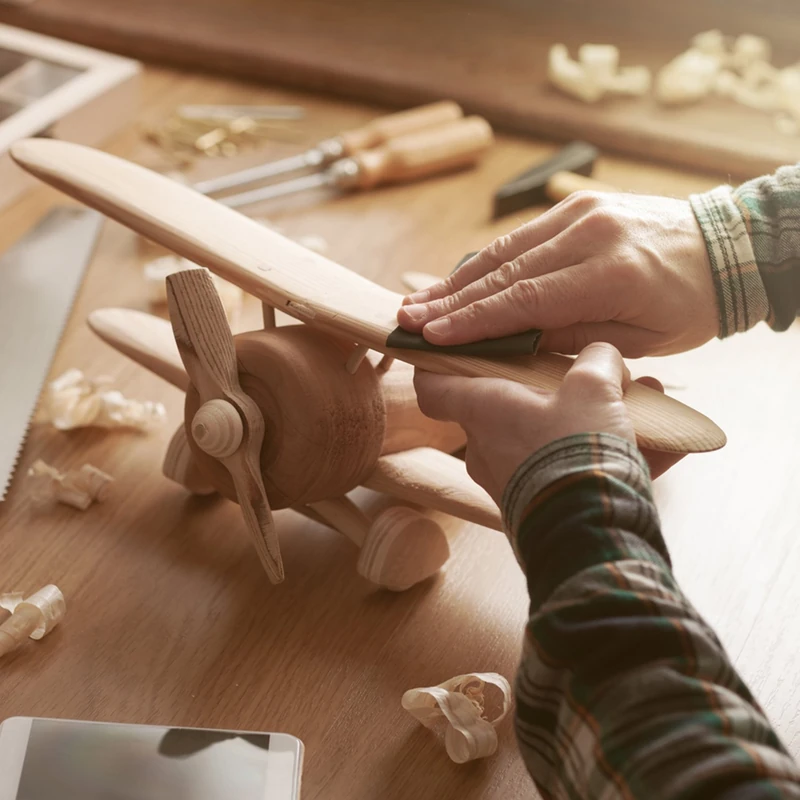
Quick Summary: Cut rate comes from sharp grains that keep renewing; loading is controlled by grain chemistry, coat/open structure, stearate, and lubrication—silicon carbide excels wet on paints and brittle materials thanks to its sharp, friable microfracture behavior.
What really dictates cut rate and loading
Abrasives are not just about grit size; they are systems. Two papers labeled the same grit can perform very differently based on grain, coating density, and lubrication. At the core is the mineral grain:
- Hardness: Determines whether the abrasive can plow/cut the substrate. Silicon carbide (SiC) is harder than aluminum oxide (AO), and both are softer than diamond/CBN but fit the price/performance window for sanding.
- Toughness and friability: Friable grains microfracture, exposing fresh sharp edges. Tough grains resist fracture, retaining shape but dulling over time. SiC is relatively brittle and readily refreshes, increasing early cut rate at the expense of sheet life. AO is tougher and steadier.
Cut rate depends on the presence of sharp cutting points and the abrasives’ ability to refresh them. Two common pathways exist: microfracture (friable SiC; ceramic/precision-shaped grains that cleave under load) and micro-shearing (tough AO slowly dulling). The trade-off: faster cut and cooler action (more sharp points, lower pressure per point) versus longer life and steadier cut on ductile metals.
Loading behavior is about swarf management. On soft paints, aluminum, and resins, swarf smears and packs between grains. This plugs the voids and turns the abrasive into a burnisher. Key controls include:
- Open-coat vs. closed-coat: Open-coat leaves gaps so debris can escape; it cuts a bit slower initially but resists loading on gummy substrates.
- Topcoats (stearate, multi-layer anti-loading): Stearate is hydrophobic and reduces paint/resin adhesion to the grain, delaying clogging.
- Lubrication: Water (often with a drop of dish soap), mineral spirits (with care), or specialized sanding fluids float debris and cool the interface.
- Backing uniformity (film vs. paper): Film keeps grain height consistent; this spreads load evenly and limits heat spikes that encourage loading.
In testing, I standardize force (e.g., random orbital sander with a regulated pad pressure), motion (same orbit and passes), and lubrication (fixed spray cadence). When tuning a system, watch three evaluation cues: the audible pitch (duller tone suggests loading), the swarf color/consistency (paste vs. dry dust), and the scratch clarity under a single-point light. Collectively, they tell you if you’re cutting, skating, or smearing.
Why silicon carbide sandpaper shines wet
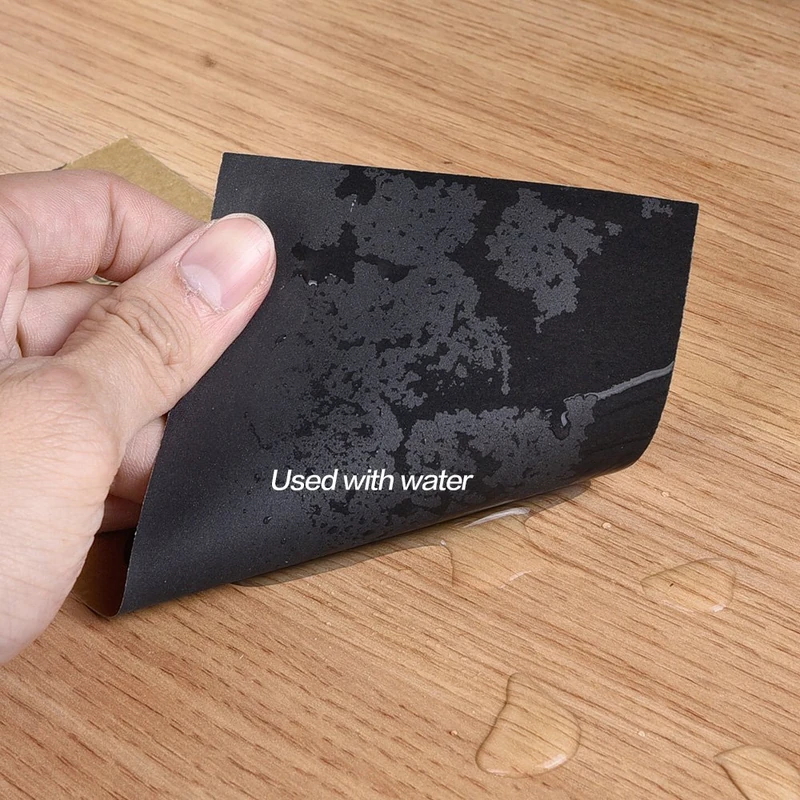
Silicon carbide sandpaper stands out on clear coats, single-stage paints, plastics, and composites for three engineering reasons: edge acuity, controlled friability, and compatibility with water. SiC grains are sharper at equivalent grit sizes compared with AO. Under pressure, they microfracture, exposing fresh facets that maintain a high density of cutting points. When you add water, two beneficial things happen: abrasive temperature drops (reducing thermoplastic smearing) and swarf becomes a suspended slurry instead of a tar-like paste. The result is a higher sustained cut rate with fewer deep, stray scratches.
On automotive finishes, “color sanding” demands predictability: you want to level high spots and dust nibs while preserving film thickness and minimizing scratch depth. SiC’s sharper geometry cuts rather than plows the coating, forming finer, more uniform scratches for the same nominal grit. That matters because polishing is exponential work: a single outlier scratch can add minutes or hours. Running SiC wet also reduces static charge on the sheet, so debris is less likely to reattach or scratch in subsequent passes.
You’ll see SiC dominate waterproof papers from P800 to P3000 in many body shops. A few practical differentiators:
- Waterproof resin bonds resist swelling; older glue bonds can soften when wet, releasing grain prematurely.
- Film-backed SiC holds a tighter tolerance on grain height; scratch patterns are more uniform, which helps when stepping to foam-backed abrasives or compounds.
- Stearated SiC sheets don’t just help dry sanding; they still resist loading in damp conditions, though the hydrophobicity can bead water—use a drop of surfactant.
Caveat: On very ductile metals (e.g., mild steel, aluminum without lubricant), SiC can glaze and fracture too readily, losing life. AO or zirconia may be more economical there. Conversely, on hard, brittle substrates (ceramic glaze, stone, glass fiber edges), SiC’s hardness pays off.
If you’re refinishing guitar lacquer, leveling 3D prints, or removing dust nibs from automotive clear, start with SiC wet/dry in the P1000–P2000 range, use light cross-hatch strokes, and refresh your water often. You’ll see fewer pigtails, cleaner slurry, and a path to a faster polish.
Comparing AO, zirconia, and ceramic grains
Understanding alternatives to SiC sharpens your selection logic. Each grain family trades off cut rate, loading, and life differently.
Aluminum oxide (AO):
- Grain behavior: Tough and blocky; dulls rather than fractures readily.
- Best uses: Wood sanding and general metalwork where steady cut and longer life matter. On wood, AO’s slightly “gentler” edges reduce scratch tear-out in early grits.
- Loading: Can load on paint and soft resins, especially in closed-coat papers without stearate. Dry dust extraction helps; wet use is less common unless the sheet is designed for it.
Zirconia alumina (ZA):
- Grain behavior: Tougher than AO with microcracking under higher pressure; thrives on steel and stainless where pressure and heat trigger self-renewal.
- Best uses: Heavy stock removal (belts/discs) and deburring where duty cycles are long. Often seen on belts rather than sheets.
- Loading: Less of an issue on metals; on paint, ZA tends to be overkill and can cut deeper scratches than needed.
Ceramic/Precision-Shaped Grain (PSG):
- Grain behavior: Engineered shapes that fracture predictably, keeping sharp points active. PSG maintains high cut rate at lower applied pressure, reducing heat.
- Best uses: High-efficiency metal removal, stainless, and even composites when paired with proper backing. Offers industry-leading cut rate and long life in discs.
- Loading: Still requires dust extraction or lubrication on gummy substrates. The sharpness reduces plowing, which can help, but anti-loading topcoats or wet sanding are still advisable.
Garnet and emery:
- Grain behavior: Softer, break down into finer edges.
- Best uses: Final wood sanding and hand work where a “polishing” action is desired. Not for metals or modern automotive coatings.
- Loading: Garnet clogs quickly on resinous woods; an open coat helps.
In my shop tests, if the substrate is a paint or clear coat and the process allows water, silicon carbide wins for speed-to-finish and predictability. On ferrous metals where pressure is high and life matters, PSG and zirconia outperform, particularly on random orbital discs with dust extraction. AO remains the value workhorse for wood and mixed-material tasks. This grain-to-task mapping prevents “mystery loading” and uneven scratch fields.
According to a article, silicon carbide’s role extends deep into advanced manufacturing, highlighting how its intrinsic properties—high hardness, thermal stability—make it a mainstay across processes. While that paper addresses die interconnect sintering rather than abrasives, the shared material foundation explains why SiC stands out when heat control and edge acuity matter.
Coatings, binders, and backer choices
Two sheets with the same grain can behave very differently because of how the grains are placed and what holds them. Think of the abrasive as a micro-architecture: grains, spacing, resin, topcoats, and backing all influence cut rate and loading.
- Open-coat vs. closed-coat: Open-coat spaces grains to create debris channels. On paints and soft metals, this delays loading at a modest cost to initial aggressiveness. Closed-coat maximizes contact points—useful on hard substrates and where loading is minimal or extraction is strong.
- Electrostatic grain orientation: Better manufacturing aligns sharp tips outward, increasing initial cut rate and reducing frictional heat. This is common on high-grade SiC and PSG products.
- Resin bonds (phenolic vs. urea-formaldehyde): Phenolic resins withstand heat and water better, preserving grain retention in wet sanding. For waterproof SiC papers, look for resin-over-resin constructions.
- Topcoats (stearate, multi-layer anti-loading): Zinc stearate is a standard anti-loading coat; it reduces adhesion of paint swarf. Some premium sheets add multi-layer coats that also reduce friction. Note that stearates can interfere with some finishes—wipe surfaces clean after sanding before recoating.
- Backers:
- Paper (A/C/D weight): Lighter (A) is more flexible for contours, but tears more easily; heavier (C/D) is more durable.
- Film: Uniform thickness, better edge wear, tighter scratch pattern; ideal for fine grits in finishing and for wet sanding with SiC.
- Cloth: Durable for belts and heavy work, common with zirconia/ceramic.
H3: Practical tips to reduce loading and keep cut rate high
- Use a surfactant in your water: One drop of dish soap per spray bottle lowers surface tension, helping slurry evacuate from silicon carbide sandpaper.
- Refresh often: Wipe or rinse the sheet every 2–3 passes on paint; a loaded sheet doesn’t just slow down—it scratches unpredictably.
- Match coat to substrate: Open-coat for paint, aluminum, and soft plastics; closed-coat for glass fiber edges, carbon laminates, and hard clears with vacuum extraction.
- Choose film-backed sheets for fine grits: You’ll get a tighter scratch band and fewer rogue scratches, shortening the polish step.
- Don’t starve the process: Apply light, even pressure; let the grain do the work. Excess pressure collapses voids, raises heat, and accelerates loading.
Finally, consider your tool. Random orbital sanders (5–7 mm orbit) with multi-hole pads dramatically cut loading by evacuating dust or slurry. Hook-and-loop pads run cooler than PSA in prolonged sessions; for PSA, ensure clean, flat application to avoid hot spots.
Color Sanding Aluminum — Video Guide
A helpful demonstration compares aluminum oxide and silicon carbide when color sanding automotive finishes. The presenter methodically sands a clear coat and single-stage paint, showing how each abrasive behaves in real time—how quickly defects level, how the slurry looks, and what the scratch field reveals under inspection light. The takeaway aligns with field experience: SiC wet/dry tends to cut faster with a more uniform scratch on paints, while AO can load and leave occasional deeper tracks
Video source: Color Sanding Aluminum Oxide Vs Silicone Carbide Sandpaper - Which Is Best!? (Yes, there Is a Best)
150 Grit Sandpaper Sheets (50-pack) — 9x11 in Silicon Carbide Abrasive for Wet or Dry Use — Balanced medium grit for surface preparation and between-coat sanding. Smooths minor imperfections in wood, paint, or primer. Works equally well for wet or dry applications in both DIY and professional projects. (Professional Grade).
Frequently Asked Questions (FAQ)
Q: What does “cut rate” actually measure in sanding?
A: Cut rate is the speed of material removal under controlled conditions—typically mass or thickness removed per unit time or passes at a defined pressure and motion. Practically, it’s how fast you reach level without overworking the surface. It depends on grain sharpness, friability, coat density, tool dynamics, and lubrication.
Q: Why does silicon carbide sandpaper work better wet on automotive paints?
A: SiC’s sharp, friable grains maintain fresh cutting edges, and water both cools the interface and suspends swarf, reducing loading. This combination yields faster leveling with a more predictable, shallower scratch pattern that polishes out efficiently.
Q: When should I choose aluminum oxide or zirconia instead of SiC?
A: Pick AO for general wood and metal sanding where steady cut and sheet life matter, and loading isn’t severe. Choose zirconia (or ceramic/PSG) for heavy stock removal on steels and stainless under higher pressure; they last longer and self-sharpen under those loads. For soft paints or composites, SiC remains the first choice, especially wet.
Q: How do anti-loading (stearate) coatings affect finishing?
A: Stearate reduces swarf adhesion, delaying clogging and preserving cut rate. It can leave a residue; always clean surfaces before recoating or polishing. On wet sanding SiC, stearate still helps, though a drop of soap in the water is usually enough to keep slurry mobile.
Q: Film-backed versus paper-backed—what difference will I see?
A: Film backers offer consistent thickness, so grain height is uniform, producing a tighter scratch field and fewer rogue scratches—especially noticeable in P800 and finer. Paper is more conformable (A-weight) or durable (C/D-weight), but can introduce variability and tear more easily when wet unless specified waterproof.