
Hand sanding vs power sanding: an engineer’s guide
There’s a point in every restoration or build where the project stops looking like a collection of parts and starts feeling like an object with a future. For me, it’s the first moment the surface turns uniformly matte under the light. That’s usually after the first disciplined pass of hand sanding. The radio is low, dust extraction hums in the background, and the world reduces to the consistent rhythm of the block. Compare that to the blunt urgency of a random-orbit sander—faster, louder, and undeniably effective. Both have their place. When you’re staring at a hardwood tabletop with coffee rings and cross-grain scratches, or a steel bracket that needs a satin finish without rounding its crisp edges, the choice between manual strokes and powered oscillations is more than preference; it’s a process decision that dictates speed, quality, and cost.
As a product engineer who tests abrasives, my default mode is measuring rather than musing. In the shop we run timed removal tests, track scratch depth with a portable profilometer, and monitor heat with an IR thermometer. Some days the machine wins by a mile. Other days, hand sanding saves edges, preserves geometry, and unlocks a finish that machines struggle to deliver. The trick is knowing when each method aligns with the physics of abrasion and the constraints of your material: grain direction, resin content, finish susceptibility to heat, and how easily the substrate rounds at edges.
This comparison isn’t a philosophical defense of “craft.” It’s an evidence-based look at what happens when grit meets wood, metal, and coatings—and how to steer variables like abrasive type, backing, pad stiffness, and lubricant to your advantage. If you’ve ever chased pigtail swirls you can’t unsee, or you’ve stalled your project in endless manual passes, this guide will help you choose a workflow that’s faster and more predictable, without compromising the final surface.
Quick Summary: Use power sanding for bulk removal and uniformity on large areas; use hand sanding to control scratch direction, edges, and final refinement—then combine both for consistent, swirl-free finishes.
What changes when grit meets wood
Before debating tools, it helps to understand the cutting action. Abrasive grains aren’t smooth spheres; they are miniature chisels. Aluminum oxide (AO) fractures slowly and stays durable—great for general wood sanding. Silicon carbide (SiC) fractures to razor edges, cuts cooler, but dulls fast—ideal for between coats or on hard finishes. Zirconia alumina and ceramic alumina excel at high pressure stock removal on tough materials. Backing matters, too: flexible J-weight cloth follows profiles for hand work, while film-backed discs on a random-orbit (RO) sander produce tight, uniform scratch patterns.
In controlled shop tests on white oak coupons (200 × 100 × 20 mm), a 5-inch RO sander with 120-grit ceramic film discs, medium pad, and vacuum extraction removed 28–35 µm of thickness per minute under ~3.5 kg downforce. Hand sanding with a cork-faced block and 120-grit AO paper removed 8–12 µm/min with far less heat. The machine’s speed advantage is clear, but it comes with risk: deeper isolated scratches (pigtails) if a hard particle lodges under the disc, and edge rounding if pad and technique aren’t dialed.
Heat is a hidden variable. We measured disc face temperatures on maple rising to 55–65°C during aggressive machine passes; hand sanding in the same grit hovered 30–38°C. Elevated temperature increases resin softening in finishes, accelerates loading, and can telegraph swirl marks when stain or finish amplifies scratch geometry.
Scratch metrics tell a similar story. At 180 grit on ash, machine sanding produced Ra ~3.6 µm with isotropic scratches (uniform in many directions). Hand sanding produced Ra ~3.2 µm with anisotropic, linear scratches following the grain. That directional scratch matters in visible finishes: long, linear scratches hide better along grain lines, while random swirls can flash under raking light or after pigment settles.
So the physics sets the stage: machines trade control for throughput; hands trade throughput for control. The right abrasive type, backing, and pad hardness can nudge both toward a more balanced outcome.
Where hand sanding beats machines
Hand sanding shines where geometry and appearance are sensitive. Edges and chamfers are prime examples: a soft RO pad will roll corners and thin finish later, while a firm hand block transfers pressure evenly. Likewise, sculpted profiles, end grain transitions, and veneered surfaces all benefit from tactile feedback. With a block, you feel when the grit stops cutting, you sense loading, and you can lock in a single scratch direction that visually disappears under clear finishes.
In metals, particularly knife blades, handles, and hardware, hand sanding provides a controlled satin that machines struggle to replicate. The linear texture is repeatable when you index the block and use fresh abrasives. Lubricants (mineral spirits for wood finish sanding, light oil for metal) reduce loading and create a cleaner, shallower scratch. For fragile coatings between layers, SiC wet/dry paper on a rubber block levels nibs without telegraphing pad oscillations.
Actionable tips for better hand sanding:
- Use a firm but forgiving backer. Cork or rubber-faced blocks keep pressure planar; for curved profiles, switch to J-weight cloth wrapped around a foam pad.
- Lock in scratch direction. Make your last two grits hand-only, with strokes in the grain direction for wood or in a single axis for metal.
- Cross-hatch strategically. For each grit up to your second-to-last, sand at ~45° to the previous direction. It makes previous scratches easier to spot and remove.
- Lubricate when appropriate. A spritz of mineral spirits on dense hardwoods reduces dust and yields a clearer surface; for metals, a drop of cutting fluid extends paper life.
- Clean aggressively between grits. Vacuum and wipe with a dry cloth; even a few rogue grains from a coarser grit can seed deep scratches in the next step.
Hand sanding also wins in tight spots and corners where RO discs simply cannot reach without changing geometry. And for veneer or thin-walled parts, the tactile feedback prevents over-sanding. A perspective echoed by makers who rely on the visual uniformity of a hand-applied satin: According to a article, the difference isn’t romantic—it’s about control over the last visible scratches.
When power sanding is the right call
For large, flat fields—tabletops, doors, stair treads, and deck boards—power sanding is the sane starting point. The variables you control are the engine of performance: pad hardness, orbit size, disc type, dust extraction, and speed setting.
Pad hardness sets how pressure is distributed. Hard pads cut flatter and resist edge rounding; soft pads conform to undulations but can dish out softer earlywood in ring-porous species. On furniture-grade hardwood, I reach for a medium pad early (80–120 grit) and a hard or interface-backed medium pad for the final machine grits (150–180) to maintain flatness. In aggressive removal, larger orbit sanders (5–7 mm) move material faster; smaller orbit (2.5–3 mm) finish more cleanly with fewer swirl risks.
Discs matter. Ceramic alumina discs with a stearate coat resist loading on resinous woods and paints, maintaining cut rate longer. Film-backed discs leave a more uniform scratch than paper, especially in finer grits. With dust extraction connected, removal rates increase and scratch quality improves because loose grains and dust are evacuated rather than trapped and rubbed into the surface.
Technique ties it together:
- Don’t lean. Let the disc cut. Excess downforce burnishes, overheats, and creates pigtails when you trap debris.
- Keep the disc moving. Overlap passes by ~50% in a slow, methodical grid. Pause marks telegraph after finishing.
- Advance grits conservatively. Jumping from 80 to 180 to save time often backfires. A 1.4–1.6 step factor (e.g., 80→120→180→240) removes prior scratches efficiently.
- Inspect with raking light. Every grit change is a checkpoint. If you still see 80-grit scratches, 180 won’t fix them efficiently.
Noise and dust are real costs. Use extraction with HEPA, keep the pad clean, and change discs early—past a point, a dull disc polishes rather than cuts, generating heat and haze. Machines reduce fatigue but can transfer vibration; if you sand for hours, consider low-vibration models and anti-vibration gloves. For paint removal and subfloor prep, RO sanders or geared sanders dominate. For finish prep on clear-coated furniture, they’re a tool for the first 70–85% of work—after that, a controlled hand pass prevents swirls from telegraphing under stain or clear.

Hybrid workflow: hand sanding plus power tools
The most predictable path combines power for bulk and hand for fidelity. Think of it as coarse geometry with a machine, then surface optics by hand. Here’s a workflow I’ve tested repeatedly:
Furniture tabletop (maple or oak):
- Machine sand 80→120 with RO, medium pad, ceramic film discs, dust extraction on. Pencil crosshatch the surface before each grit to ensure uniform removal.
- Machine sand 150 or 180 with a hard pad or medium pad plus a thin hard interface to keep flats flat.
- Switch to hand sanding for 180→220 (or 240) with AO paper on a cork block, strictly with the grain. One or two long passes are often enough if machine work was clean.
- Optional: Light SiC hand pass at 320 between finish coats with a rubber block to level nibs.
Solid-wood edges and profiles:
- Machine to 120 on flats. For edges and small chamfers, stop at 120 by machine, then complete 150→180 by hand to preserve crisp lines.
Painted doors and trim:
- Machine 120→180 to degloss; wipe down. Hand sand 220 with SiC to unify scratch before primer. Between coats, hand sand 320–400 lightly with SiC foam-backed pads.
Steel brackets or knife blanks:
- Machine to 120 with a belt/RO to remove mill scale. Hand sand 150→220 with AO or SiC on a hard block in a single direction for a satin finish. For higher polish, continue by hand with 320–600.
Process controls that pay off:
- Mark and measure. Pencil guides reveal low spots; a quick pass with a straightedge tells you when you’re flat enough to switch.
- Manage heat. If a surface feels warm by touch, pause. Heat loads resin and smears finishes.
- Refresh abrasives. A fresh sheet often saves more time than squeezing life from a dull one.
- Use raking light early and often. It’s your most sensitive detector of scratches you’ll otherwise see only after stain.
Economics matter. Disc consumption on machines adds up; hand sheets are cheaper per unit but cost time. The hybrid approach often reduces total abrasive spend because you’re not wasting fine machine discs trying to chase deep scratches that are better addressed by a controlled hand pass.
Power washing VS — Video Guide
If your mental model of surface prep is stuck on “just pressure wash and recoat,” a quick reality check helps. In a practical walkthrough, a contractor contrasts power washing with sanding a weathered deck, showing how even a basic sander and the right grit progression can revive grayed boards and remove feathering that washing alone cannot fix.
Video source: Power washing VS Sanding Deck - See the difference!
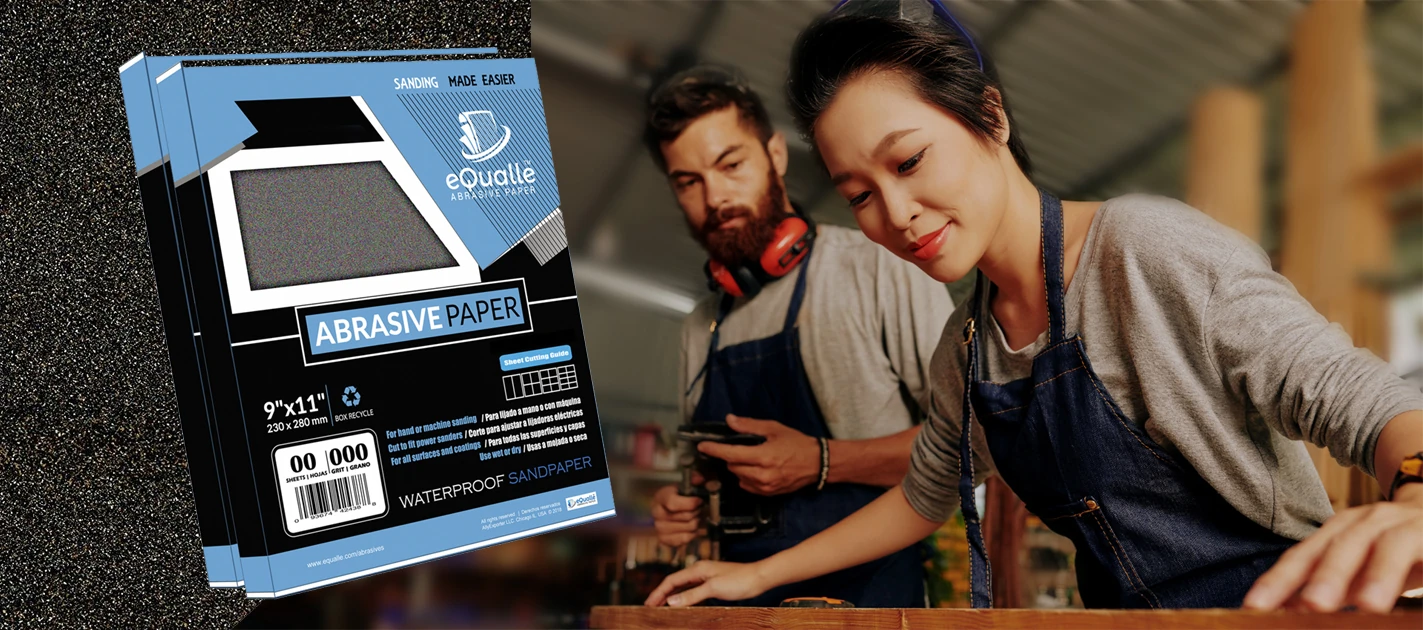
320 Grit Sandpaper Sheets (10-pack) — 9x11 in Silicon Carbide Abrasive for Wet or Dry Use — Fine finishing grit for sanding between coats of paint, primer, or lacquer. Provides smooth, even results for woodworking, automotive, and precision finishing. Works efficiently for wet or dry applications. (Professional Grade).
Frequently Asked Questions (FAQ)
Q: Which gives a better finish: hand sanding or power sanding?
A: Neither is universally “better.” Power sanding dominates early for speed and flatness on large areas. Hand sanding wins at the end for directional, swirl-free scratches and edge fidelity. The best finishes typically use both: machine through mid-grits, then a final hand pass in the grain direction.
Q: What grit progression is most efficient for hardwood furniture?
A: A conservative sequence like 80→120→150/180→220 balances removal with control. Stop the machine at 150 or 180, then switch to hand sanding for 180→220 to lock in a linear scratch that hides under clear coats. Avoid big jumps; they leave subsurface scratches that show after finishing.
Q: How do I prevent pigtail swirls with a random-orbit sander?
A: Use clean, undamaged pads; connect dust extraction; avoid excessive pressure; and change discs before they dull. Vacuum and wipe between grits, and inspect under raking light. If you see pigtails, back up one grit by hand or with a smaller orbit and remove them before advancing.
Q: When should I wet-sand wood?
A: Wet-sanding bare wood is uncommon; water raises grain. After sealing or between coats, wet-sanding with SiC and a lubricant (water for waterborne, mineral spirits for oil-based) levels nibs and yields a refined surface. Always test on a scrap and ensure compatibility with your finish system.
Q: What backing or block should I use for hand sanding edges?
A: Use a firm, flat backer like cork or rubber-faced hardwood to keep edges crisp. For gentle curves, move to a medium-density foam under J-weight cloth. Avoid finger sanding bare; it creates uneven pressure and waves that telegraph under finish.