
Abrasive Testing: Compare Scratch Depth at Equal Grits
It starts the same way in every shop: coffee cooling on the bench, clamp marks still fresh on yesterday’s glue-up, and a stack of sandpaper cut into tidy quarters. You grab two sheets—both labeled 220 grit—because today you’re chasing a clean, consistent surface on a walnut tabletop that deserves better than swirl marks. Ten strokes in, the sheen looks different between sheets. You can feel it with your fingertips too—one side looks hazier, slightly more torn up, and the grain lines pop in a way that screams “deeper scratches.” Both sheets claim the same grit number, so why the mismatch? That’s the kind of moment that sends me down the rabbit hole of abrasive testing.
Whenever I need to dial in a uniform finish or prep for a predictable coat of lacquer, I don’t trust grit labels alone. I set up quick comparisons to see how deep each abrasive cuts under the same conditions. Same grit, same pressure, same strokes—then I compare scratch depth and pattern. It’s not academic for me; it’s about knowing how a specific abrasive will behave on maple vs. walnut, mild steel vs. 4140, or a fiberglass fairing vs. a gelcoat repair. Your finish is only as good as your scratch pattern, and equal grits can leave very unequal trenches.
Today, I’ll show you how I compare scratch depth at equal grits in a practical, repeatable way. We’ll cover the variables that matter, a step-by-step test method you can run in a small shop, and simple ways to measure depth without a lab. By the end, you’ll be able to look past the grit number and choose the abrasive that actually delivers the finish you want.
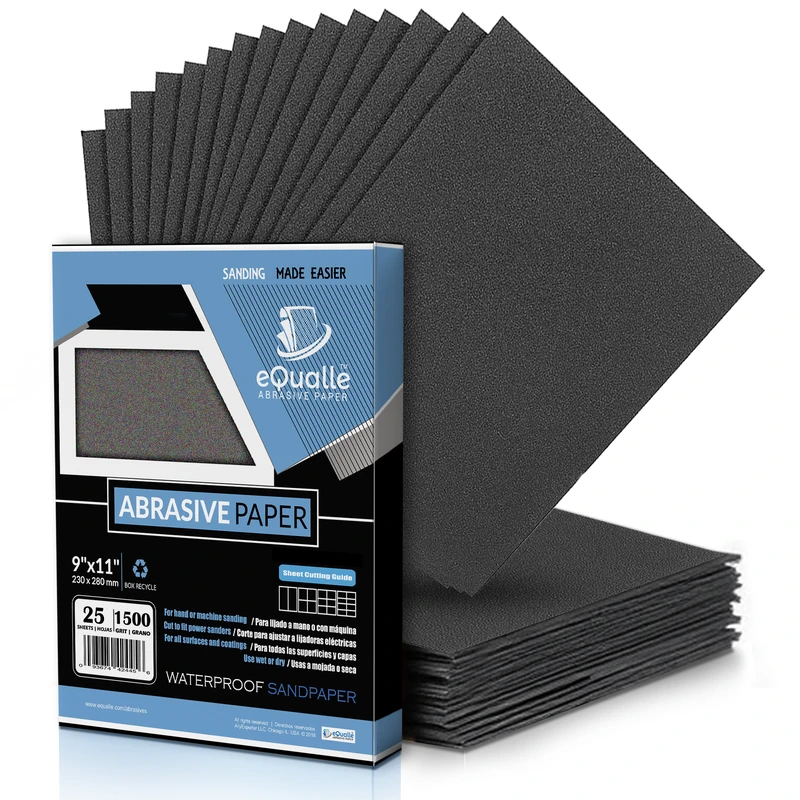
Quick Summary: Equal grit numbers don’t guarantee equal scratch depth—control your variables, run a simple test routine, and measure scratch patterns before committing to a finish schedule.
What scratch depth really tells you
Scratch depth is the silent boss of your finish. It dictates how many steps you’ll need to climb out to a polish, how well varnish or paint will lay down, and whether defects like witness lines haunt you later. When two papers both say 220, you’re dealing with a nominal particle size—what really hits your surface depends on the abrasive’s shape, friability, coating density, and how much the backing flexes under pressure.
Two-body vs. three-body abrasion is the first big line to draw. In two-body abrasion, fixed grains (like fresh, resin-bonded paper on a stiff block) cut with well-defined furrows. In three-body abrasion, loose grit or a loaded sheet rolls and plows, widening and deepening tracks irregularly. Same grit size, different behavior—your scratch depth can double if grains fracture to sharper points or if debris acts like rolling cutters.
Backing stiffness plays a bigger role than most folks expect. A firm block concentrates pressure on peaks, letting grains bite deeper. A soft interface pad smears pressure across valleys, reducing peak depth but encouraging more uniform haze. Coating type matters too: open-coat papers shed dust better and cut cooler, while closed-coat sheets pack more grains per square inch and can cut slightly deeper under equal pressure.
Finally, substrates respond differently. Walnut compresses and recovers around scratches, hiding some depth, while maple shows every line. Mild steel can burnish under lower pressure, whereas hardened tool steel resists and forces grains to plow harder. If you want consistent results, you need a method to see past the grit number and into how an abrasive behaves on your material.
Variables that skew abrasive testing
When you’re comparing scratch depth at equal grits, the enemy is uncontrolled variables. Your goal is to isolate the abrasive’s contribution, not your technique’s quirks. Here’s what most often skews abrasive testing and how to clamp it down.
- Pressure: Human hands are inconsistent. Even a 10% swing in force changes scratch depth noticeably. Use a sanding block and add a known weight (e.g., 1 kg) so every stroke sees the same load.
- Speed and stroke: Faster passes heat up the work and soften resins or wood fibers. Keep your stroke length and pace steady—count seconds per stroke and lock it in.
- Lubrication: Dry vs. wet sanding changes everything. Water or mineral spirits float swarf and reduce plowing. If you test wet, test all samples wet with the same fluid.
- Backing and interface: Paper vs. cloth, stearated vs. non-stearated, cushioned pad vs. hard block—these alter compliance and bite. Standardize your backing and interface for fair comparisons.
- Wear state: Fresh sheets cut deeper. Break-in matters; two to five “conditioning” strokes on scrap can stabilize performance before you test.
Friction heat is sneaky. On thermoplastics (acrylic, ABS) or resin-rich composites, a hot pass can smear the surface, making scratches look shallow but leaving grooves underneath. Metals can glaze under too-light pressure, producing fine-looking lines that actually take longer to remove at the next grit. I’ve also seen certain ceramic papers micro-fracture and get sharper after a few strokes, increasing scratch depth before they settle down.
If you test on wood, align your strokes with the grain for consistency and avoid sanding across hard/soft earlywood-latewood transitions that bias your results. On metals, deburr and degrease first—residual oil reduces cut and changes track geometry. On composite laminates, note the fiber orientation; sanding perpendicular to fibers raises furrows faster.
Quick tips:
- Mark your test zone with a pencil grid so you can compare areas side by side without overlap.
- Log ambient temperature and humidity; they affect wood response and paper loading.
- Vacuum between passes, not just brush; airborne grit landing back on the surface affects three-body abrasion.
- Use the same number of strokes (e.g., 20) every time and count them out loud or with a metronome.
Match abrasive type to the substrate
Not all 220-grit abrasives are created equal. Aluminum oxide, silicon carbide, ceramic alumina, zirconia alumina, garnet, and diamond all share the stage—and each leaves a distinct scratch profile at equal grit size.
- Aluminum oxide (AlOx): Tough and blocky; microfractures slowly. On hardwoods, it leaves a consistent, medium-depth groove. On mild steel, it can burnish slightly at light pressure, making lines look shallower than they are.
- Silicon carbide (SiC): Sharper, more friable. It cuts faster with narrower, deeper initial furrows and self-sharpens as grains split. Great for finishes on plastics and glass-smooth woods, but it can dig aggressively into metals if you push too hard.
- Ceramic alumina: Engineered to microfracture under load, maintaining aggressive cutting edges. At equal grits, expect deeper, more uniform scratches on steel and nickel alloys—ideal for stock removal and blending before you refine.
- Zirconia alumina: Strong grains that excel on pressure—good for shaping and grinding steel. At lower pressures, it may underperform vs. ceramic but still leaves distinct, assertive tracks.
- Garnet: Softer and calmer on wood; produces shallower, more forgiving scratches that close up under finish, but it dulls quickly.
Coating and stearates change behavior without changing grit. Stearated papers resist loading on resinous woods and paints, reducing random deep scratches from trapped debris. Closed-coat ceramic on a firm film backing will cut deeper than open-coat SiC on a flexible paper at the same grit.
One more layer: backing stiffness. A film-backed sheet keeps grains at a uniform height and transfers pressure efficiently, meaning deeper, more consistent scratches at equal grit. Paper backings flex around grain, softening the bite and making depth more variable. On metals and composites where you care about precise stock removal, film-backed ceramic or SiC gives you predictable depth. On finishing passes for wood, a cushioned paper or foam interface intentionally softens the scratch to ease the next step.
According to a article, deeper surface scratches often correlate with subsurface damage in brittle materials—a reminder that scratch depth isn’t just cosmetic; it can affect strength and fatigue life in glass, ceramics, and certain composites.
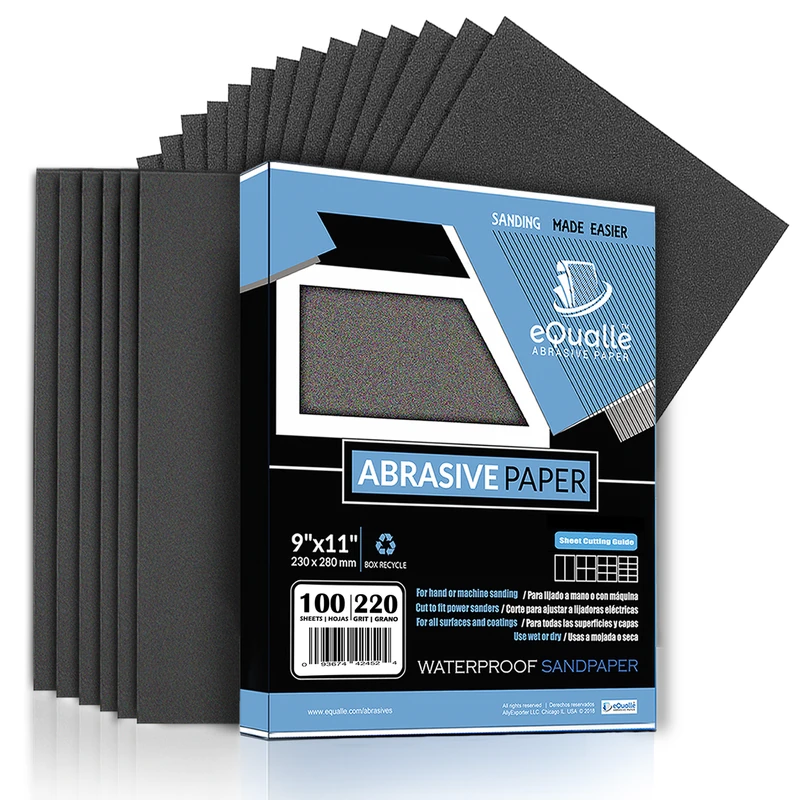
How to compare at equal grits, step by step
Here’s the field-proven routine I run when I need to choose between abrasives that share the same grit number. This takes 20–30 minutes and pays back hours in predictable finishing.
- Prepare standardized samples
- Cut two to four coupons of the target material (e.g., 100×150 mm walnut, 1/8" aluminum, mild steel).
- Plane or mill to flat, then pre-sand to one grit coarser than your test grit (e.g., pre-sand to 180 if testing 220) to clear old scratches.
- Set up constant pressure and stroke
- Use a flat sanding block with a removable weight. I prefer 1 kg for wood, 1.5–2 kg for steel.
- Mark a 100 mm stroke path on each coupon with pencil lines at each end.
- Condition each sheet
- Mount the first abrasive. On scrap, make 5 strokes to break in the sheet so initial over-aggressiveness doesn’t bias results.
- Run the test passes
- On coupon A, make 20 strokes along the marked path, keeping 2 seconds forward, 2 seconds back, steady cadence.
- Vacuum and wipe with a clean rag.
- Repeat for each abrasive, always staying within its marked zone.
- Inspect and measure
- Under a 60–100x USB microscope or a quality loupe with raking light, compare scratch width and uniformity.
- Use a depth proxy: apply a permanent marker over the test zone, lightly re-sand 2 strokes with the next finer grit (e.g., 320). Areas with deeper scratches will retain more ink in the valleys.
- If you have access, run a stylus profilometer or a smartphone macro with a scale to estimate valley depth (Rz).
- Log and decide
- Note the apparent depth, consistency, and any random deep lines (from rogue grains or debris). Pick the abrasive that gives the shallowest consistent pattern for your finishing needs—or the deepest if you’re still in shaping mode.
Actionable tips:
- Standardize surface cleanliness: degrease metals with alcohol; wipe wood with mineral spirits and let it flash off.
- Keep sheets clean: tap against the bench every five strokes; for wood, a gum eraser cleans loaded paper without tearing.
- Align grain: for wood, always test with the grain; for cross-grain correction, run a separate test and expect deeper apparent cuts.
- Label everything: write grit, brand, type, and backing on the coupon edges; future you will thank present you.
- Don’t chase perfection: you’re after relative differences. If abrasive A visibly reduces scratch depth by a full step over B, that’s a practical win.
Measure and log results like a pro
You don’t need a lab to quantify scratch depth, but a little instrumentation goes a long way. Start with good lighting: raking light at 10–20 degrees highlights furrows; cross-polarized light reduces glare to reveal depth. A 60–100x USB microscope is the best value in the shop—look for one with measurement software so you can overlay a scale and record average furrow width and spacing.
For depth estimates, a few low-cost options help:
- Stylus profilometer (if you can borrow one): pull a trace across the test lane and record Ra (roughness average) and Rz (peak-to-valley). Rz correlates better with visible scratches.
- Gloss meter: on wood and coatings, lower gloss after sanding often correlates with deeper, more chaotic scratches. Track gloss units as a fast proxy.
- Replica film or putty: press into the surface, let it cure, then examine the replica under magnification to visualize valley depth consistently.
- Marker reveal: flood with marker, let dry, then make two passes with the next grit. More retained ink in tracks equals deeper scratches—simple and surprisingly repeatable.
On metals, weigh coupons before and after a controlled abrasion routine with a microbalance to quantify material removal. More removal at equal strokes can signal deeper scratches, but read this alongside microscopy; you can remove more material with broader, shallower swaths too.
Log your data. I keep a simple spreadsheet: material, grit, abrasive type, backing, pressure, dry/wet, strokes, gloss, microscopic notes, and a photo. Over time, patterns emerge—ceramic on steel under 2 kg leaves deeper initial cuts but steps out quicker; SiC on resin-rich pine looks sharp but digs random deep lines unless you vacuum every other stroke.
Set thresholds. For a finishing workflow on hardwood, if 220G leaves tracks you can still clearly resolve at 60x, I’ll either switch brand/type at 220 or insert a 280/320 intermediate step. On steel, if 220 ceramic leaves ridges that 400 paper struggles to clear in 10 strokes, I’ll switch to SiC or add a lubricant to calm the cut before moving on.
Oscillatory Cylinder Abrasive — Video Guide
If you want to see controlled abrasion in action, check out a demonstration of an oscillatory cylinder machine used for fabric durability per ASTM D4157, often called the Wyzenbeek method. The setup shows how standardized pressure, stroke count, and motion remove guesswork—exactly what we try to emulate on a smaller scale in the shop.
Video source: Oscillatory Cylinder Abrasive Machine to measure abrasion resistance for fabric as per ASTM D4157.
120 Grit Sandpaper Sheets (25-pack) — 9x11 in Silicon Carbide Abrasive for Wet or Dry Use — High-cut abrasive for refining rough wood grain, removing scratches, and preparing bare surfaces for priming or staining. (Professional Grade).
Frequently Asked Questions (FAQ)
Q: Why do two 220-grit sheets leave different scratch depths?
A: Grit number is only nominal. Grain type, shape, friability, coating density, and backing stiffness all change how aggressively the grains cut. Even at equal grit, one sheet can dig deeper due to sharper grains or a stiffer backing transferring more pressure to peaks.
Q: How can I measure scratch depth without lab gear?
A: Use a USB microscope with a scale to compare furrow width and spacing. Pair it with a marker reveal test or a gloss meter reading as a proxy for depth. For more precision, borrow a stylus profilometer to record Rz.
Q: Do interface pads reduce scratch depth?
A: Yes. A soft interface pad spreads pressure and softens peaks, producing shallower, more uniform scratches at the same grit. It may slightly slow stock removal, but it makes stepping to finer grits easier.
Q: Is wet sanding better for consistent results?
A: Often. Water or mineral spirits carry swarf away, reducing three-body abrasion and random deep scratches. Just keep the lubricant consistent across all samples in your test, and dry the workpiece fully before measuring.
Q: What’s the quickest way to choose between two abrasives?
A: Run 20 standardized strokes at equal pressure on identical coupons, then inspect under 60–100x. Pick the sheet with the shallowest, most uniform pattern. Log the result and update your finish schedule accordingly.