
between coats sanding for stronger finish adhesion
The first coat looked flawless under the shop lights. A fresh panel of maple, sealed in gloss, catching reflections like glass. Then morning sunlight cut through the window and told the truth: a constellation of dust nibs and a few faint brush marks the light had spared me the night before. If you’ve been there, you also know the impulse—grab more finish and try to bury the flaws. That almost always backfires. The next coat telegraphs the defects and, worse, may not bond optimally. That’s where the simple ritual of between coats sanding changes everything, not as a punishment, but as an engineering control.
I come at finishing the way I approach product testing: define the failure modes, choose interventions that address them, then validate with repeatable measurements. In finishing, the two failure modes are cosmetic defects riding on the surface and insufficient intercoat adhesion. Light sanding between coats addresses both. It levels high points so the film builds evenly, and it creates a controlled anchor profile—micro-scratches that promote mechanical interlock when chemistry alone no longer carries the bond. You don’t need to “grind” the surface flat; you need to calibrate the scratch pattern to the finish you’re using, the film thickness you’ve already laid down, and the recoat window.
Through dozens of controlled test panels across waterborne polyurethane, solvent lacquer, shellac, alkyd/urethane varnish, and pigmented primers, the same pattern holds: properly executed between coats sanding improves adhesion grade (ASTM D3359 crosshatch) by half to a full class when the recoat window is exceeded, and it reliably removes dust nibs without breaking through edges. The difference shows up not just in lab numbers but in the way final coats level and the way edges resist chipping under abuse.
The good news is that the technique is simple. The best results come from pairing the right grit range with film chemistry, using abrasives that cut consistently without clogging, and controlling pressure, timing, and dust. Let’s break it down with the same clarity we’d bring to evaluating a cutting disk or a ceramic abrasive belt—because the material science matters here, too.

Quick Summary: Light, controlled sanding between coats levels defects and creates a micro-scratch profile that dramatically improves intercoat adhesion and final film uniformity.
What adhesion we’re actually fixing
Intercoat adhesion happens through two mechanisms: chemical bonding and mechanical interlock. In the first few hours after applying many finishes, especially thermoplastic or partially crosslinking systems (lacquer, shellac, some waterbornes), fresh layers can partially dissolve or fuse into the prior coat. Within the “recoat window,” chemistry does most of the work. Once that window closes—because solvents evaporate, water escapes, and polymers crosslink to a stable network—chemical bonding declines. That’s when your next coat relies more on mechanical keying.
Between coats sanding introduces a controlled surface roughness on the order of a few microns deep—enough to boost surface area and provide peaks and valleys for the next film to lock into, but not so deep that scratches print through. The goal is not mirror flatness between coats; it’s a predictable anchor profile that aligns with the coat thickness you’ll apply next. Most brushed or sprayed clear coats lay 25–60 microns (0.001–0.0024 inches) per coat wet, curing to less. If you create scratches deeper than the cured topcoat, you risk telegraphing; too shallow and you don’t meaningfully raise adhesion.
You also remove defects. Dust nibs, micro-bubbles, and small runs disrupt flow and level in subsequent coats. A light pass shaves those high points, so the next coat’s surface tension can level uniformly. In my shop testing, unsanded panels showed more “islands” around dust nibs—local thicker film that cures with stress concentrations—making chip resistance worse at edges and corners.
The bottom line: between coats sanding is targeted surface engineering. You’re creating a microtexture designed for the next coat’s viscosity, solids content, and chemistry, while deleting the noise that would otherwise accumulate and amplify with each layer.
Grit selection for between coats sanding
The right grit is a function of finish chemistry, coat thickness, and whether you’re inside the chemical recoat window. As a baseline, think in FEPA “P” grades, which correlate to abrasive particle sizes: P220 ≈ 68 µm, P320 ≈ 46 µm, P400 ≈ 35 µm, P600 ≈ 26 µm. Scratch depth in wood finishes is typically a fraction of the grain size due to backing compliance and low pressure.
- Waterborne polyurethane: P320–P400 between coats. Waterbornes are harder and more brittle in early cure; they cut as a fine powder when ready. P400 keeps scratches below the film’s ability to self-level. If you missed the recoat window by more than 24 hours, move to P320 to ensure a meaningful profile.
- Oil-based poly/varnish: P220–P320. These films cure softer and thicker; they bury P220 easily without telegraphing, especially when brushed. For a final rub between penultimate and final coat, move to P320 or non-woven ultrafine.
- Lacquer: P320–P400. Lacquer can melt into previous layers if recoated on time, so sanding is mostly for nib removal and leveling. Use P400 unless you’ve waited days; then P320 improves the mechanical key.
- Shellac: P320–P400 by hand with a soft block. Shellac powders quickly; avoid over-cutting edges.
- Primers (solvent or waterborne): P180–P240. Primers are the place to flatten aggressively and lock in adhesion for topcoats. P220 is a reliable middle ground for most pigmented primers.
Be mindful of coat thickness. If your next coat is a thin spray pass (15–25 µm dry), P400 is safer. If you’ll brush on a heavier coat, P220–P320 is appropriate. The purpose is not to “start over” but to create an anchor profile your next layer can truly grab.
Watch for clogging (loading). If the paper smears or pills, the coat is not ready. A finish ready for between coats sanding will powder—fine dust that vacuums easily, with no gummy streaks. If you see gum, wait longer or improve airflow and temperature to drive off solvent or water.
Abrasive materials: film, paper, and wool
Not all abrasives cut the same. Aluminum oxide (AlOx) is the generalist—tough, micro-fracturing slowly, ideal for varnishes and primers. Silicon carbide (SiC) is sharper and more friable; it excels at cutting harder, brittle films like lacquer and waterbornes, especially at finer grits. Ceramic alumina is overkill for soft films but shines on hard coatings; it’s also pricier and usually found in coarser grits than we’d use between coats.
Backing matters. Film-backed discs and sheets maintain a more uniform scratch pattern, especially above P320, and resist curling when used with light pressure and vacuum. Paper backings (C or D weight) conform slightly more, which is helpful on edges but can produce inconsistent scratches if you bear down. For profiled moldings, foam interface pads help a lot, but they also deepen scratches if you push too hard—keep the pressure feather-light.
Anti-loading stearate coatings are worth it. They reduce clogging, prevent heat buildup, and generate a more consistent cut. For waterborne finishes, anti-static film-backed discs on a random orbital with vacuum extraction produce the cleanest results and minimize dust nibs in subsequent coats.
Non-woven pads (ultrafine, often labeled equivalent to ~P400–P600) are useful for the final pre-coat scuff, particularly on verticals and profiles. Steel wool (0000) can deliver a beautiful surface on oil-based systems, but avoid it entirely with water-based finishes: stray steel fragments can rust and stain under clear coats. If you must use wool on oil, vacuum meticulously and magnet-sweep the surface, then tack with a clean microfiber dampened in mineral spirits.
According to a article the micro-scratches you leave between coats ensure the next layer adheres—experienced finishers often target the P180–P240 range on primer and P220–P320 on clear films to balance cut and coverage.
Dust control and surface cleanliness
The best sanding in the world won’t save a surface contaminated with dust, oils, or residues. Dust nibs originate from three places: the finish itself (bubbles or settled solids), the environment (airborne dust), and your sanding step. Good control breaks the cycle.
Start with vacuum extraction at the tool. A random orbital connected to a HEPA vac with an anti-static hose keeps the cutting path clean and reduces particles that would otherwise float and settle back into wet finish. Perforated discs on a vented pad plate beat solid discs by a wide margin for dust capture, especially above P320 where finer dust becomes airborne easily.
After sanding, vacuum the surface with a soft brush, then wipe with a clean, lint-free microfiber lightly dampened with the appropriate solvent: water for waterborne finishes, mineral spirits for oil-based varnishes, denatured alcohol for shellac. Tack cloths are controversial; some leave residues that can interfere with waterborne finishes. If you prefer a tack cloth, use waterborne-safe products sparingly and never press hard. A slightly damp microfiber does the same job with less risk.
Watch out for compressed air. It’s tempting to blow off dust, but shop air can be oily and can also embed particles deeper into pores. If you must, use clean, filtered air at low pressure and follow immediately with vacuum and wipe-down.
Environmental control matters. Aim for a clean room approach: finish early in the day before dust becomes airborne, wear a clean shirt or shop coat, and let dust settle after sanding before coating again. Temperature and humidity also affect dry times; warmer air and moderate humidity help water escape from waterborne finishes and solvents flash from oil-based, bringing the coat to that “powders under sandpaper” state faster and more uniformly.
Process control: timing, pressure, passes
The single biggest mistake I see is sanding too soon or too aggressively. Both create defects you’ll chase for three more coats. Let’s make the process repeatable.
- Timing: Respect recoat windows. If you’re within the window (often 2–6 hours for lacquer, 4–6 hours for oil poly, 2–4 hours for some waterbornes), you may not need to sand for adhesion, but you can still do a very light pass for nib removal. If you’re beyond the window or the surface feels slick and fully cured, sanding becomes essential. Do the powder test: rub a corner with P320 by hand. If it powders cleanly, you’re ready; if it smears, wait.
- Pressure: Keep contact pressure low—think the weight of your hand plus the tool, no more. On a random orbital, that’s roughly 1–2 psi. Excess pressure collapses the foam pad, deepens scratches unpredictably, and increases the risk of burn-through at edges.
- Passes: Two to three, overlapping by half, are enough. You’re not trying to remove the coat, just to level nibs and set the anchor profile. Use a light pencil guide coat if you need a visual; you should just kiss off the graphite with even coverage.
- Edges and profiles: Hand-sand edges with a folded sheet or a soft block. Edges burn through first; treat them as a separate step with one or two gentle strokes.
- Cleanliness checkpoint: Vacuum, wipe, and inspect under raking light before recoating. If you can feel a defect with your fingernail, it will likely telegraph; a defect you can only see will probably vanish in the next coat.
Actionable tips that raise your success rate
- Match grit to coat thickness: P400 when spraying thin, P220–P320 when brushing thicker films.
- Use film-backed, stearated discs for consistency above P320; switch to SiC for hard waterbornes and lacquer.
- Always do the powder test; never sand gummy surfaces.
- For adhesion-critical topcoat on cured layers, add a crosshatch scuff with P320 by hand at 45° to your machine pattern.
How to Sand — Video Guide
A well-structured demonstration speeds up learning. The “How to Sand Between Coats of Wood Finish” masterclass shows the full workflow from nib detection to grit choices and edge handling, moving from beginner to expert-level habits. It covers how to judge readiness by powdering, why lighter grits help on thick coats, and how to avoid burn-through at edges and profiles.
Video source: How to Sand Between Coats of Wood Finish
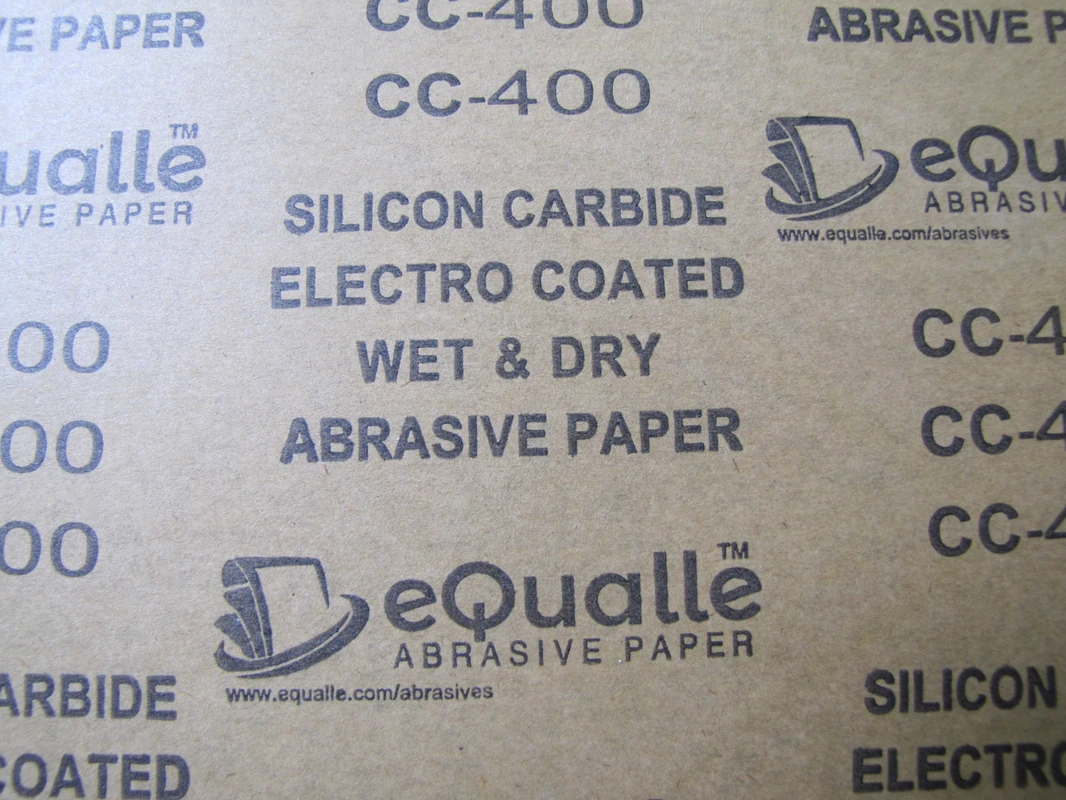
400 Grit Sandpaper Sheets (25-pack) — 9x11 in Silicon Carbide Abrasive for Wet or Dry Use — Ultra-fine abrasive for refining surfaces before polishing or coating. Commonly used in auto body repair and resin finishing. Produces flawless smoothness with wet or dry sanding. (Professional Grade).
Frequently Asked Questions (FAQ)
Q: Do I always need to sand between coats?
A: If you’re within the manufacturer’s recoat window, you can often skip sanding for adhesion, but a light nib-sand improves leveling. Outside the window, sanding becomes essential to create a mechanical key and avoid intercoat delamination.
Q: What grit should I use between coats of polyurethane?
A: For waterborne poly, use P320–P400; for oil-based poly, P220–P320. Use finer grits for thin sprayed coats and slightly coarser for thicker brushed coats. If the prior coat has cured beyond the recoat window, lean toward the coarser end for a reliable anchor profile.
Q: Can I use steel wool instead of sandpaper?
A: Use 0000 wool only on oil-based systems and only when you can thoroughly remove residues. Avoid steel wool with waterborne finishes; residual fibers can rust and stain under clear coats. Non-woven ultrafine pads are a safer universal alternative.
Q: How do I know the finish is ready for sanding?
A: Do the powder test. Lightly hand-sand a corner with P320. If you get a fine, dry powder, proceed. If it smears or pills, wait longer. Also verify there’s no solvent or water odor lingering—a sign deeper layers are still curing.
Q: Should I sand primer between coats before the topcoat?
A: Yes. Prime, then sand with P180–P240 to level and add tooth for topcoats. Primers are designed to sand well; use this to flatten and improve adhesion. Clean thoroughly before applying the topcoat to prevent trapping dust under paint.