
Best Grits for Automotive Hook and Loop Sanding Discs
The garage is quiet except for the soft thrum of a dual-action sander spooling up, and the faint sweetness of primer in the air. Your project is a faded fender you’ve stared at for months—part nostalgia, part challenge. You’ve taped edges, set a new backup pad, and slipped on a fresh pack of hook and loop sanding discs, ready to erase rust blooms and orange peel like they were never there. It’s a simple plan: coarse to fine, feather the old paint, level the filler, bury the scratches. Yet if you’ve ever lost the plot mid-sand—loading discs in minutes, burning through edges, or chasing mysterious swirl marks—you know grit choice and workflow make or break the job.
Most surface problems don’t come from the wrong tool; they come from the wrong grit at the wrong time, compounded by poor dust management or a tired pad. Pick too coarse and you’ll carve scratches too deep for your topcoat cycle. Go too fine too early and you’ll skate, heat, and glaze, losing flatness and wasting discs. With automotive work, the path is narrow: remove as little as necessary, drive defects down in a controlled scratch pattern, and step in tight, predictable increments. The good news is that modern film-backed abrasives, smart hole patterns, and dialed-in vacuum make it easier than ever to produce a clean, consistent surface quickly.
This guide focuses on the best grits for automotive sanding discs and how to sequence them for metal, filler, primer, base, and clear. We’ll cover abrasive minerals, DA orbit choices, interface pads, and when hook and loop discs outperform PSA. The goal: a repeatable process—fast on metal, gentle on edges, and clean enough that your primer and paint behave exactly as the data sheets promise.
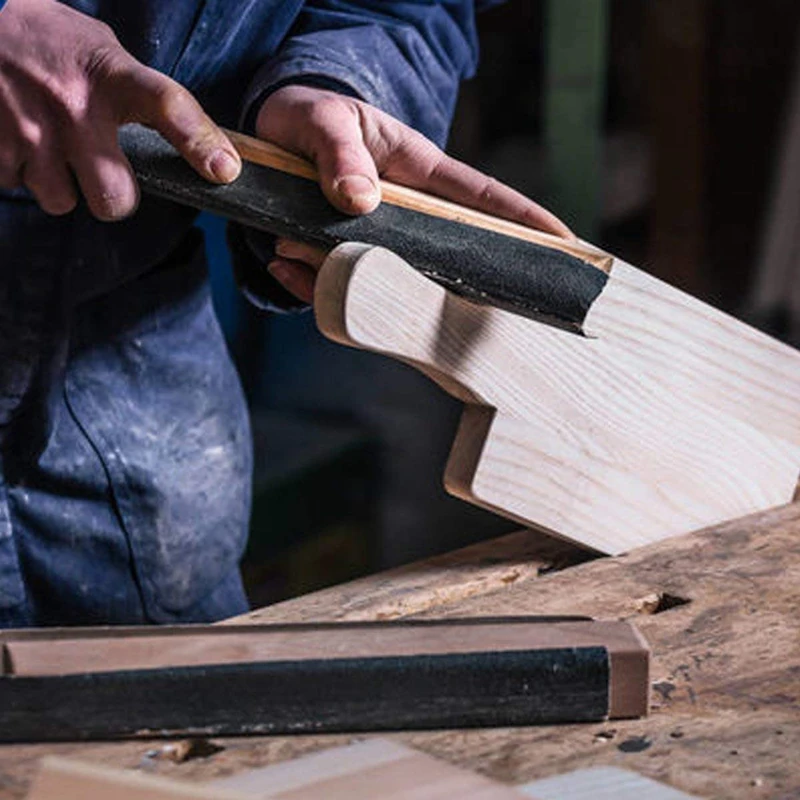
Quick Summary: Match grit to the task, step in tight increments, and leverage film-backed hook and loop sanding discs with strong dust extraction to control scratches and heat.
Grits by task, not by habit
Think in stages. Each stage has a defect depth and a target scratch profile to refine. Use the minimal aggressiveness needed to reach the next stage, avoiding “hero grits” that look fast but leave deep valleys you’ll fight later.
Steel/aluminum substrate prep (bare metal): 80–120 grit. Use 80 for rust/paint removal on thick coatings and rough steel, 100–120 for light mill scale or thin OEM paint. On aluminum, start no coarser than 120 to minimize gouging. Expect to switch discs as soon as cut slows; heat and glazing kill flatness.
Body filler shaping: 80–120 to rough-shape, 150–180 to refine, 220–240 for feather-edge. If you use 40–60 for bulk removal, plan extra steps (80 → 120 → 180) before primer. Tight steps keep low spots from hiding under primer.
Primer leveling (urethane/epoxy build): 320–400 for initial flattening, 400–600 for pre-base. Wet or dry depends on your system and dust control; dry with good extraction leaves cleaner scratch geometry and reduced edge soak.
Basecoat and clear prep: Solvent base often likes 600–800; waterborne typically 600–1000 depending on the manufacturer. Check the TDS—some basecoats tolerate 500 dry; many do not. For blending zones, 1000–1500 to fade cleanly without edge mapping.
Post-clear refinement: 1200–1500 to knock peel/texture, then 2000–3000+ to set up for compounding. Some techs jump to 5000 film finishing discs for a near-polish surface, cutting compound time.
Remember the scratch step rule: reduce your grit’s average scratch depth by roughly 30–50% per step. In practice, this means 80 → 120 → 180 → 240 → 320 → 400 → 600 is safer than big jumps like 80 → 220. If a jump leaves visible coarse lines after a dozen passes, you’ve skipped too far. Always feather old paint edges with one step finer than your surrounding panel grit to avoid witness lines.
Abrasive minerals and film-backed control
The mineral and coating architecture matter as much as grit number. For automotive work, you’ll see three main families:
Aluminum oxide (A/O): A rugged generalist. Fractures moderately, holds shape, cost-effective for primer and filler work. Often used in open-coat formats to reduce loading.
Ceramic (engineered micro-fracturing): High stock removal and long life, especially in coarse grits (60–120). Stays sharp under pressure and heat, ideal for rust and heavy paint removal. Paired with multi-hole patterns, it out-cuts traditional A/O while tracking flatter.
Silicon carbide (SiC): Brittle, pointed grain. Fast initial cut and superior finishing in finer grits, particularly wet on clearcoat leveling and edges. Excellent for 800–3000+ workflows, though disc life can be shorter on aggressive dry cuts.
Backing and coatings steer the scratch. Film-backed discs deliver uniform grain distribution and consistent scratch geometry—critical for primer leveling and pre-paint finish. Paper backings can flex more but vary in stiffness and tear more easily on edges. Stearate load-resistant coatings are essential when sanding paint and primer; they help shed swarf and maintain cut, especially dry. Closed-coat vs. open-coat: closed puts more grain per area (faster on hard substrates), open leaves space for debris (less loading in soft paint and fillers).
Hole patterns impact cut and cleanliness. Multi-hole and “net” designs dramatically improve dust evacuation, reduce loading, and keep temperature down, preserving resin bonds and scratch crispness. On DA sanders, cleaner extraction equals cleaner swirl. Combine a film-backed, stearated disc with a matched multi-hole pad and you’ll see both faster refinement and fewer random deep scratches that survive into paint.
Dialing in DA orbit, pad, and vacuum
Your sander’s orbit and pad hardness control how a grit behaves. A 3/16" (5 mm) orbit is the workhorse—great for flattening primer and general prep. A 3/32" (2.5–3 mm) orbit is more controlled and leaves a finer scratch pattern at the same grit, ideal for finish sanding before base and between coats.
Pad hardness is a precision lever:
- Hard/firm pads keep the disc flat for leveling filler and primer. They transfer pressure directly into high spots, speeding flattening but requiring good edge control.
- Medium pads are versatile and forgiving for mixed surfaces.
- Soft or using a 1/4" interface pad conforms to contours and reduces cut rate, protecting crown lines and edges. Use interfaces with fine grits on curved panels and blending zones.
Vacuum matters. High-flow extraction with a matched hole pattern keeps swarf from recutting, lowers heat, and prevents “pigtails” from partially embedded particles. Pigtails are often misdiagnosed as grit mismatch; they’re frequently the result of dust recirculation or a contaminated pad. Keep your pad and interface clean—blow them off every disc change. Replace worn hook faces; a loose disc chatters and scribes arcs that won’t sand out at the next step.
Pressure and speed: Let the disc cut. Excess downforce flattens the scratch, heats resin, and glazes the abrasive. Run at a consistent RPM, keep the pad flat, and make overlapping passes at a controlled travel speed (about 1–2 inches per second). For edge safety, lift pressure slightly as you approach a tape line and switch to a softer interface.
According to a article, matching grit to job stage—coarse for removal, fine for finishing—yields faster, cleaner results and reduces the risk of telegraphed scratches into topcoat.
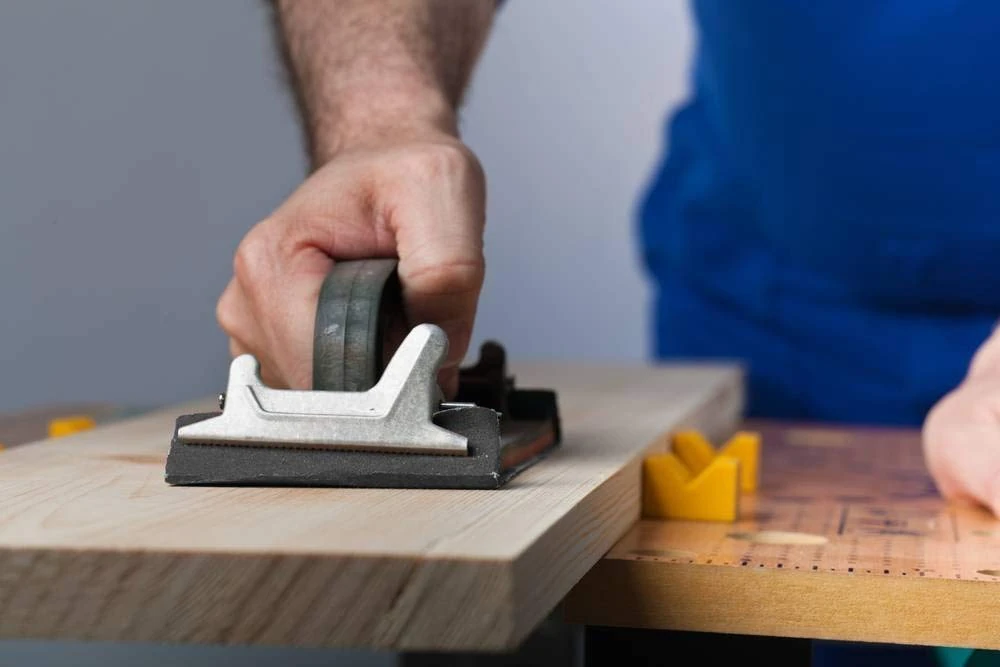
Choosing hook and loop sanding discs wisely
Hook and loop sanding discs are the standard for DA work because they swap fast, track flat with the right pad, and tolerate heat cycles better than many PSAs in automotive conditions. But “hook and loop” is only the attachment. Focus on disc construction to get the grit performance you paid for.
Selection checkpoints:
- Backing film thickness: Thinner films conform slightly and finish finer; thicker films stay flatter and last longer under pressure. For primer leveling and pre-paint, a balanced film (e.g., ~0.125 mm class) delivers consistent scratch and edge durability.
- Mineral and grade accuracy: Some discs run “hot” or “cold” to their labeled grit. If your 320 behaves like 240, you’ll chase scratches into paint. Stick with discs that show predictable scratch geometry under good light.
- Anti-load coating: Look for stearate or similar on anything touching paint, primer, or filler. For wet finishing, ensure the disc is rated for wet use to keep the resin bond intact.
- Hole pattern compatibility: Use a pad that matches the disc’s pattern. Net discs are forgiving (they “breathe” anywhere), but traditional multi-hole discs need alignment to maximize extraction.
- Size and orbit pairing: 5-inch discs with a 3/16" orbit deliver a good balance of control and removal on most panels. 6-inch increases coverage but can overwhelm small contours without a softer interface.
When to prefer PSA: PSA discs can be beneficial on hard blocks or specialty tools where you need absolute flatness and no disc edge lift, such as long-block primer leveling. For DA work, hook and loop dominates due to fast swaps across grit ladders and reduced adhesive transfer.
Pro tips:
- Use a dedicated, color-coded interface pad for 600–1500 finishing to prevent cross-contamination from coarse dust.
- Wipe with a panel-safe cleaner and use a dry guide coat before each grit change; it instantly reveals deep scratches and low spots.
- If you see pigtails at 800+, stop. Clean pad, change disc, and backstep one grit to erase; don’t try to “polish them out.”
Workflow examples for real bodywork
Let’s map complete sequences that respect both defect depth and coating systems. Always confirm with your paint manufacturer’s TDS for minimum/maximum grit recommendations.
Fender rust and repaint (metal to clear):
- Strip and level: 80 ceramic on DA with medium pad, dust extraction on. Feather edges at 120 A/O.
- Filler shape: 120 → 180 A/O. Finish feather with 220.
- Epoxy primer: After flash/cure, block problem areas with 240 on a hard block; DA 320 film to unify.
- Urethane build: Level with 320 → 400 film-backed, using guide coat. On final pass, switch to 600 if base requires.
- Basecoat prep: Tack off; if waterborne, scuff adjacent blend zone with 800 net on soft interface.
- Post-clear refinement: Knock peel with 1500 SiC film (wet or damp-sand) using a soft interface; step 2000 → 3000 film to prepare for compound.
Blend on OEM finish (no bare metal):
- Decontaminate and degloss: 800 net on soft interface for blend panels; 600–800 on repair area perimeter.
- Spot prime feather: 400 film to level; feather with 600.
- Base and blend: Light, even passes. After cure, nib any dust with 1500 spot disc, then 3000 to minimize compound.
Plastic bumper scuff repair:
- Scuff: 320 net for adhesion and defect leveling without gouging; finish 600.
- Adhesion promoter/primer per TDS.
- Pre-paint: 600–800 depending on base system; blend zones at 1000–1500.
Avoid skipping refinement. If you jump from 180 to 400 on fresh primer, you’ll likely see long, shallow ghosts of 180 under base after bake. Instead, insert 240 or 320, monitor with guide coat, and keep the DA flat. Track disc life—if cut drops or color changes, swap. Discs are cheaper than rework.
Actionable checks before paint:
- Under strong, raking light, scan for any directional scratches coarser than your final prep grit.
- Run a solvent wipe in a test area; if scratches “bloom” darker, you’re too coarse—step finer.
- Verify edge feather transitions with one grit finer than the surrounding area to avoid ring-through.
Best 5-inch Sanding — Video Guide
A recent video roundup focuses on 5-inch sanding discs optimized for rust and paint removal, highlighting options that balance aggressive cut with manageable scratch patterns. It demonstrates how disc composition, hole design, and backing influence speed and control when stripping coatings.
Video source: Best 5-inch Sanding Discs - Remove Rust and Paint Like a BOSS!
360 Grit Sandpaper Sheets (50-pack) — 9x11 in Silicon Carbide Abrasive for Wet or Dry Use — Ultra-controlled abrasive for gentle refinement and removing faint imperfections before clear coating or buffing. (Professional Grade).
Frequently Asked Questions (FAQ)
Q: What grit should I start with on a repainted panel?
A: If you’re not stripping to metal, begin with 320–400 film-backed discs to level primer or degloss OEM finishes. Only drop to 220–240 if you need to remove minor texture or light defects; otherwise, stay as fine as possible to maintain film build.
Q: How many grit steps should I use before basecoat?
A: Typically two to three: for example, 320 → 400 → 600 for solvent base, or 400 → 600 → 800 for waterborne. Tight sequencing ensures uniform scratch that basecoat will cover.
Q: When do I use a soft interface pad?
A: Use it with fine grits (600–3000) on contours, edges, and blending zones to prevent cut-through and to maintain a consistent finish. Avoid soft interfaces for heavy leveling; they reduce flatness.
Q: Are net discs better than multi-hole discs?
A: Net discs excel at dust capture and reduce loading, which is great for finishing and soft materials. High-quality multi-hole film discs can cut faster on hard substrates. Choose based on task and your vacuum system.
Q: Can I wet-sand with any hook and loop sanding discs?
A: No. Only use discs rated for wet or damp sanding, typically film-backed with waterproof resins. Many standard stearated discs are designed for dry use; check the manufacturer’s guidance to avoid premature breakdown.