
PSA Sanding Discs for Aggressive Stock Removal
I still remember the first time I leveled a twisted maple slab on a big, humming disc sander. The shop was quiet except for the steady hiss of grit meeting wood and the faint thrum of a balanced steel plate spinning up to speed. It was a late night build—coffee cooling on the bench, layout pencil lines still on the slab. I needed flat and fast, not pretty. Hook-and-loop discs had been slipping and smearing, and I was burning edges before I even got close to level. Swapping to psa sanding discs felt mundane in the moment—peel, align, stick—but the result wasn’t. The interface stopped flexing. The contact became honest. Stock disappeared, angles held, and the surface came out flat enough that a straightedge was suddenly interesting again.
Over years of engineering evaluations and shop testing, I’ve come to treat abrasives like cutting tools, not consumables. The geometry of the abrasive grain, the binder chemistry, and the backing stiffness determine how energy turns into chips instead of heat. PSA (pressure-sensitive adhesive) discs remove one more variable: the fuzzy hook-and-loop layer that cushions the cut and robs pressure from the grains. On wood, that means fewer passes to get past cup and twist. On steel and aluminum, it means you can take a dulling edge back to clean geometry without glazing the disc or dishing the work.
If you’re chasing aggressive stock removal with control—flattening end-grain cutting boards, dressing welds, squaring miters, truing knife scales, or surfacing castings—the path to consistent performance is a short list: the right abrasive mineral, a stiff pad, correct surface speed, clean adhesive bond, and disciplined grit progression. In this guide, I’ll break down the material science and the machine variables that separate a disc that bites from one that just burns.
Quick Summary: PSA sanding discs cut faster and flatter because their rigid adhesive bond minimizes compliance; match the abrasive mineral, backing, grit, pad hardness, and surface speed to your material to maximize removal rate, life, and accuracy.
The physics of fast stock removal
Aggressive sanding is a balance of cutting geometry and pressure delivery. Each abrasive grain is a tiny cutting tool; to remove material rather than plow or smear it, the grain needs enough force per contact area and a shape that fractures or maintains sharp edges under that load.
Where PSA discs matter is stiffness. The pressure-sensitive adhesive creates a direct, thin bond to the platen or backing pad. Compared with hook-and-loop, you lose a soft layer that otherwise absorbs force and tilts grains at the edges. The result is higher effective point pressure and a more planar interface—both crucial for flattening and keeping geometry true.
Three variables dominate removal rate (MRR):
- Abrasive mineral mechanics: Ceramic alumina micro-fractures to constantly expose sharp edges under heavy pressure; zirconia alumina is tough and self-sharpens under high load; aluminum oxide is economical and works well on wood; silicon carbide is sharp and brittle—excellent on stone, composites, and non-ferrous deburring.
- Surface speed (SFM): On disc sanders, SFM = π × diameter (ft) × RPM. A 12-inch disc at 1,725 RPM runs around 5,400 SFM; a 20-inch disc around 9,000 SFM. Higher SFM increases cut rate up to the point where heat and loading outpace chip clearance.
- Pressure and contact patch: Stiffer backings (E/F-weight paper, film, or cloth on a hard pad) condense pressure into smaller effective contact zones, improving cutting action. Softer pads distribute pressure and conform, reducing aggressiveness.
Heat is the enemy. It softens resin bond and PSA adhesive, glazes grains, and accelerates loading. Cooling strategy for discs is technique: shorter dwell, consistent feed, and avoiding edge-leading digs that localize friction. Keep in mind that the effective SFM changes across a disc—outer radius cuts faster than inner. For precise flatness, do your heavy removal near the mid-radius and finish towards the outer edge to blend.
Finally, disc rigidity is critical for accuracy. PSA’s thin adhesive layer limits “dish” that can happen with thick intermediate layers. For stock removal where flatness matters, that’s a decisive advantage.
Choosing psa sanding discs by substrate
Matching abrasive mineral and backing to your workpiece determines performance more than any single variable. Here’s how I select psa sanding discs as an engineer who cares about both removal rate and surface integrity.
- Wood (hard and soft): Aluminum oxide is still the workhorse for cost-effective aggression in coarse grits (24–80). For high-pressure flattening of end grain or resin-rich woods, ceramic alumina discs in 36–60 grit keep cutting longer and resist glazing. Specify open-coat grains with stearate (anti-clog) topcoats to resist loading. Backing: E- or F-weight paper provides planarity; film backings offer tear resistance with consistent thickness if you’re on a high-speed disc.
- Ferrous metals (mild steel, tool steel): Ceramic alumina is the clear winner for 24–60 grit heavy removal, especially on powerful machines, because it micro-fractures to stay sharp under load. Zirconia alumina is a close second and often more economical at coarser grits. Choose closed-coat for maximum bite. Backing: Y-weight cloth or heavy film holds up under edge contact and heat better than paper.
- Non-ferrous (aluminum, brass): Silicon carbide’s sharp points slice better in gummy metals, but loading is a risk. Consider zirconia with a lubricant topcoat to reduce chip welding. Keep grits coarser (24–60) and use wax stick on the disc face if loading persists. Backing: Film or cloth, plus frequent cleaning with a rubber stick.
- Composites and stone: Silicon carbide in film-backed PSA offers fast cutting and consistent scratch pattern. Watch heat; move steadily and vacuum dust aggressively.
Adhesive matters too. Most quality PSA discs use acrylic adhesives rated for elevated temperatures. They hold through typical disc sander heat cycles better than rubber-based PSAs, which can creep when you push hard. The platen must be clean, flat, and free of solvent residue; a wipedown with isopropyl alcohol before application ensures full bond strength. If you’re running hot and hard, warm the shop disc and pad slightly (not hot) to improve wet-out during application.
Paper weight or backing thickness correlates with stiffness: C/D-weight bends easily and is better for contours; E/F-weight and film stay flat under pressure. For aggressive removal where flatness beats flexibility, a heavy backing on a hard pad is the reliable choice.
Grit strategy for speed and flatness
Grit selection is a control system: you’re trading scratch depth for rate. For aggressive removal, start coarse enough to erase highs quickly without driving heat into the surface, then step intelligently to avoid re-sanding the same depth over and over.
A practical progression for wood flattening might be 36 → 60 → 100. On steel plate or heavy weld cleanup: 24/36 → 60 → 80/100 before switching to a different process if you need a refined finish. The key is the “jump factor”: each step should roughly halve the previous scratch depth. Skipping from 36 to 80 is fine on PSA discs because the interface is rigid enough to let the 80 cut the 36 scratches cleanly; just accept an extra pass or two.
Technique matters. Use a consistent, moderate feed and avoid lingering at the edges where SFM is highest; this prevents edge rounding. For flattening, dress your pressure: firm enough to engage the grains, not so hard that you hear the pitch change into a squeal (that’s friction dominance and heat). Rotate the work 90 degrees between grits to crosshatch your scratch pattern—this speeds verification that you’ve removed the previous layer’s scratches.
On big discs (12–20 inches), think radius zones. The outer ring is your fast stock remover; the inner ring is safer for blending. If you’re truing a face, start around mid-radius to keep heat moderate and finish passes outward to blend.
Storage and handling of discs can impact finish. Keep PSA discs flat and cool; a humid shop can curl paper-backed discs, reducing bond area. When applying a new disc, roll with a J-roller or a hardwood block from center outward to evacuate air bubbles—micro-voids act like springs and reduce cut.
According to a article, peel-and-stick discs excel where flatness and aggressive material removal are priorities, which aligns with my test data comparing bond compliance and MRR against hook-and-loop systems.
Heat, loading, and disc life
The same factors that make PSA discs aggressive—rigid bond, high SFM, stiff backing—also raise the stakes on heat and loading. Managing both extends disc life and protects your work.
Loading happens when swarf compacts between grains and smears across the cutting edges. On wood and paint, switch to open-coat, stearate-treated discs; the lower grain density leaves evacuation paths, and the stearate acts as a boundary layer to reduce adhesion. On aluminum, apply a light wax stick to the disc face before the first pass; the film reduces chip welding and keeps the abrasive open. Avoid soaking the disc—too much lubricant can hydroplane the grains.
Heat is mostly technique. Shorten dwell time and keep the work moving. If you must hog in one high spot, pulse the contact: 2–3 seconds engaged, lift, then re-engage. On metal, let the part cool between series of passes. A non-contact IR thermometer can teach you quickly where your thresholds are; many PSA acrylic adhesives are comfortable up to around 90–100°C (194–212°F) at the interface before creep risk rises, though actual performance depends on brand and dwell.
Backing pad hardness is a heat lever too. Hard pads concentrate pressure and cut fast, but they also localize friction. If you see burnishing or adhesive softening at the disc edges, try a medium-hard pad or reduce pressure slightly. Ensure the platen or pad is clean and true; a ding raises a hot spot that kills discs prematurely.
Simple maintenance extends life:
- Clean loaded discs with a crepe rubber stick while the disc is spinning slowly; it often recovers 30–50% of cutting efficiency on wood.
- Inspect the disc perimeter. Chips in the edge can propagate into tears at high SFM; replace at first sign.
- Don’t peel and re-stick. PSA bonds degrade after removal. Plan your workflow to use a disc to its finish window, then replace.
- Keep the machine balanced. An unbalanced disc increases vibration, which heats grains unevenly and fatigues the bond.
Finally, dust extraction matters. While many PSA discs are solid (no holes), a strong hood and close capture at the disc edge keeps air flowing and temperatures down, improving both safety and abrasive life.
Machines, pads, and safety factors
Aggressive removal is a system: machine, disc, pad, workholding, and the operator. PSA sanding discs unlock the most on rigid, balanced machines, but they can also transform a handheld sander when you set it up correctly.
Stationary disc sanders (12–20 inches): This is where PSA shines. A machined steel or aluminum disc running at 1,725 RPM provides a flat, rigid reference. Use a hard-faced platen and check runout with a dial indicator; under 0.002 inches TIR at mid-radius feels smooth and improves finish. Calibrate the table to 90 degrees with a machinist’s square and gauge blocks; a table tram that’s off by 0.2° will telegraph into out-of-square edges no matter how aggressive the disc.
Random orbit and right-angle sanders: PSA discs trade convenience for cut rate and flatness. Ensure you have the correct PSA backing pad (not hook-and-loop) and that the pad’s max RPM exceeds your tool’s free speed. For heavy stock removal on a 5–6 inch ROS, choose a firm or extra-firm pad; this tightens the orbit’s bite. Beware heat on small discs; manage dwell.
Backer pads and interface layers: For true flattening, avoid soft foam interfaces. Go direct PSA to a hard pad or platen. If you must contour, a thin cork or firm foam sheet can provide limited compliance while preserving most of PSA’s stiffness advantage.
Safety and rating checks:
- Disc speed rating: Never exceed the manufacturer’s max RPM. For large discs, SFM can be enormous; size safely.
- PPE: Eye, hearing, and a respirator appropriate to the material. PSA disc sanding can generate fine dust aggressively.
- Secure work: On stationary discs, keep the work firmly against the table or a sled to prevent catching an edge.
Actionable setup tips I use in testing:
- Degrease the pad with isopropyl alcohol, then apply the disc and roll it on with firm pressure from center out. Wait 5–10 minutes before heavy load to let the adhesive wet out.
- Mark the disc in quadrants with a sharpie. Rotate your work across quadrants as you sand to average any minor imbalance or wear.
- For aluminum or resinous woods, pre-load the disc with a light wax and keep a crepe block within reach; clean at the first sign of dulling, not after it’s glazed.
- Set your removal goal per pass. For wood flattening, aim for 0.2–0.4 mm per pass with a 12-inch disc; for steel, think in terms of edge condition—grinding until mill scale is gone but before heat bluing appears.
- Use a straightedge and backlight between grits. If you still see daylight at 60 grit, don’t escalate; finish the flattening at 60 before moving to 100.
Kalamazoo DS20 Disc — Video Guide
The featured video showcases a 20-inch Kalamazoo disc grinder equipped with a machined, balanced steel plate and pressure-sensitive adhesive discs. It’s a concise look at how a large, rigid disc paired with PSA abrasives turns motor power into flat, fast cutting with minimal vibration.
Video source: Kalamazoo DS20 Disc Grinder - Trick-Tools.com
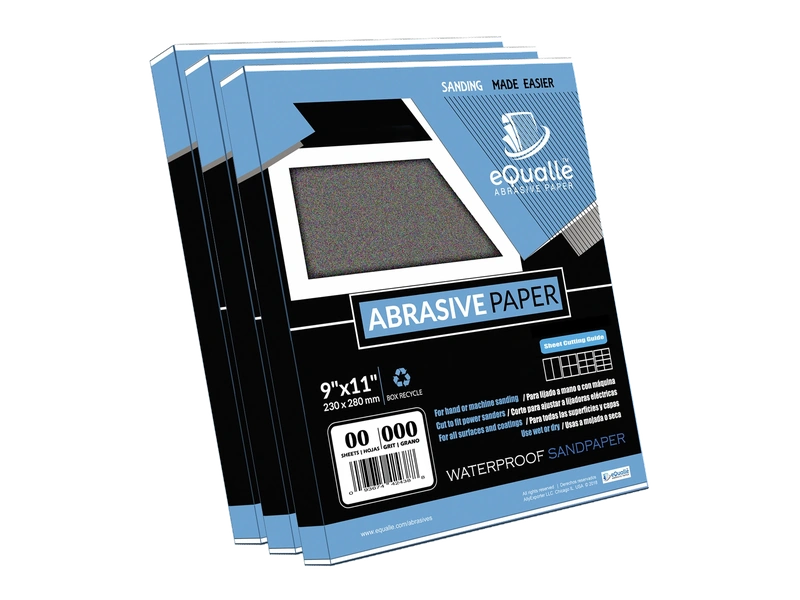
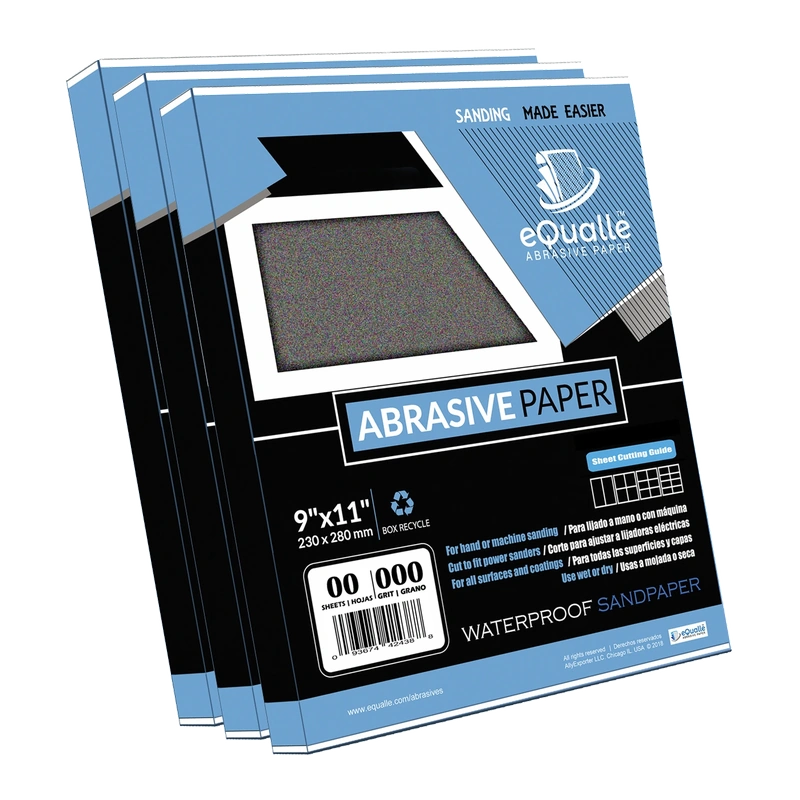
360 Grit Sandpaper Sheets (100-pack) — 9x11 in Silicon Carbide Abrasive for Wet or Dry Use — Precision grit for removing haze and small surface defects. Ensures scratch-free sanding on wood, plastic, or metal. Ideal for both wet and dry use before the polishing stage. (Professional Grade).
Frequently Asked Questions (FAQ)
Q: Are PSA sanding discs better than hook-and-loop for heavy stock removal?
A: Yes. PSA’s thin, rigid bond reduces compliance, which increases point pressure at the grains and improves flatness. In my tests, PSA discs removed 10–25% more material per minute on the same machine and grit compared with hook-and-loop, with less edge rounding.
Q: Which abrasive mineral should I pick for aggressive cutting on steel vs. wood?
A: For steel, ceramic alumina in 24–60 grit delivers the fastest sustained cut and resists glazing; zirconia alumina is a strong, often more economical alternative. For wood, aluminum oxide is cost-effective in coarse grits, but ceramic discs shine on end grain or resinous species where loading and heat are issues.
Q: What backing and pad hardness should I use to keep surfaces flat?
A: Choose heavy paper (E/F), film, or cloth-backed PSA discs on a hard or extra-firm pad or platen. This combination preserves planarity and prevents the “dish” that softer interfaces can introduce under pressure.
Q: How do I prevent PSA discs from loosening under heat?
A: Start with a clean, degreased pad, apply firm pressure during installation, and let the adhesive wet out for several minutes before heavy use. Manage heat with shorter dwell, steady feed, and adequate dust extraction. If your application runs hot, prefer discs with acrylic PSA adhesive and avoid rubber-based PSAs.
Q: What’s a reliable grit progression for fast removal without deep scratch carryover?
A: On wood: 36 → 60 → 100 works well. On steel: 24/36 → 60 → 80/100. Rotate the work 90 degrees between grits to verify scratch removal. Skipping one grade is fine if your technique is consistent and the interface is rigid, as PSA discs are.