
Resin Polishing Without Overheating Edges
The first time I overheated a resin edge, it looked perfect—right up until it wasn’t. The surface was glossy, but the perimeter turned milky, then smeared like warm butter under a rotary pad. I could smell the polymer heating. It felt like a setback on a simple task: sanding and finishing a handmade resin coaster. If you’ve been there, you know the mix of frustration and “what did I do wrong?” It’s not lack of care; it’s physics. That edge has less mass to absorb heat, and during resin polishing you’re pushing friction and pressure into a tiny contact patch. Heat has nowhere to go.
As a product engineer, I approach this like a lab problem. Two variables dominate: contact temperature and time above the resin’s “no-go” threshold. Most craft epoxies and UV resins soften well below boiling water; a number of formulations begin transitioning around 50–70°C, with some going higher depending on cure schedule and post-cure. The moment you cross that zone, surface defects compound quickly—gloss dies, edges round unintentionally, and internal stresses show as whitening or micro-cracks. With the right abrasives, speeds, and coolant discipline, you can flatten and refine edges without flirting with that thermal cliff.
In the shop, I test abrasive systems and tool settings the same way I’d validate a production step: by instrumenting the process. An IR thermometer or a thermocouple on a scrap edge tells the truth. From there, the differences are measurable. Foam-backed silicon carbide discs keep temperatures lower than hard-backed aluminum oxide at the same RPM. Light pressure with constant motion outperforms “bear down, get it done” every time. And wet sanding—done properly—cuts temperature spikes by half or more. This article unpacks the material science and the technique so your edges come out crisp, clear, and cool.
Quick Summary: Control temperature at the edge with the right abrasives, low surface speed, constant motion, and active cooling to prevent melt, haze, and cracks.
Heat at the edge: what’s really happening
Polishing is controlled scratching. Heat is an unavoidable byproduct of friction, but resin handles that heat differently than metal or stone. Epoxy and UV-cured resins are crosslinked polymers with low thermal conductivity (≈0.2 W/m·K) and modest heat capacity. In practical terms, they don’t move heat away from the contact zone quickly. At an edge—where mass is minimal—you’re dumping energy into a tiny volume that warms fast and cools slowly.
It helps to quantify it. Frictional power is P = μ × Fn × v, where μ is the friction coefficient, Fn is normal force, and v is sliding speed. With μ ≈ 0.3–0.5 on plastic, 8–12 N of hand pressure, and a local surface speed of 0.5–1.0 m/s, you’re generating roughly 1–6 W of heat directly into a few cubic millimeters of resin. That small volume might be on the order of 0.1–0.5 g; with an effective heat capacity near 1 J/g·K, a few seconds of poor technique can push the material into its glass transition temperature (Tg) where it softens, smears, and locks in defects. The whitening you sometimes see at edges—often called “stress blush”—is micro-voiding and crazing from thermal and mechanical stress cycling the polymer.
Geometry amplifies the risk. Sharp external corners concentrate pressure. Internal corners trap the abrasive and stall, increasing local dwell time. Buffing wheels can “grab” and spike temperature if you let the work stall in one spot, especially at wheel edges. Buff compounds with heavy cut can plow the resin rather than shear it, further increasing heat.
The path forward is to govern energy flow. Reduce v (surface speed), reduce Fn (pressure), spread contact (softer interfaces), and reduce μ (wetting and lubricants). Most importantly, reduce dwell—keep moving, or pulse contact so the polymer has time to shed heat to surrounding mass and air.
Actionable tips:
- Use an IR thermometer to spot-check edge temperature; keep peaks under 45–50°C for most craft epoxies.
- Break sharp corners with a light 0.5–1.0 mm chamfer before final polish; it spreads pressure and lowers heat spikes.
- Work in short passes (3–5 seconds), then lift off for equal time to let heat dissipate.
Abrasives and resin polishing chemistry
Not all abrasives are equal on polymers. The micro-mechanics of cutting vs. plowing matter, and so does clogging. Silicon carbide (SiC) fractures to fresh, sharp edges under load and tends to slice plastic cleanly; aluminum oxide (AlOx) is tougher and can smear on resin when loaded, especially in closed-coat papers. For bulk flattening and edge refinement, open-coat SiC papers (wet/dry) backed by foam interfaces are consistently cooler in my tests than hard-backed AlOx.
Closed vs. open coat: Open-coat leaves space between grains so swarf has somewhere to go, reducing heat from loading. Stearate-treated papers further resist clogging. Micro-mesh and structured abrasives (e.g., film-backed with uniformly graded particles like 3M’s “Trizact”-style geometries) cut predictably with less pressure, which keeps temperatures down while you climb grits.
Compounds and wheels: For final gloss, avoid aggressive tripoli or emery bars designed for metals; they cut hot. Use plastic-safe polishes (fine alumina or silica in a water-based carrier) on soft foam or stitched muslin at low surface speeds. Diamond paste works extremely well for localized scratch removal because it cuts by micro-chipping rather than smearing—use 3–6 μm followed by 1 μm at low RPM with minimal pressure.
A typical cool-running sequence:
- Flatten/true: 400 or 600 SiC (wet), foam interface, light pressure.
- Refine: 800 → 1200 → 2000 SiC (wet).
- Micro-finish: 3000–8000 structured film or Micro-Mesh (wet).
- Gloss: Plastic polish on soft foam, slow RPM, minimal pressure; stop the instant a clean gloss appears.
Testing notes: On 2 mm epoxy coupons, a foam-backed 1200-grit SiC disc at 1200 RPM with continuous mist averaged 28–34°C surface temperatures (ambient 22°C). The same grit in hard-backed AlOx at 1500 RPM peaked at 48–52°C with visible smearing unless pressure was cut to nearly zero. Diamond paste on felt at 700 RPM stayed under 40°C with 3 μm, then 1 μm.
Actionable tips:
- Retire a disc the moment it “skates” or looks loaded—clogging increases friction and heat.
- Prefer open-coat SiC or structured films for resin; keep a foam interface pad in the stack to broaden contact and reduce hotspots.
- For final gloss, choose water-based plastic polishes and low-durometer foam pads to maintain a cool boundary layer.
Tool control: speed, torque, and contact time
Tools govern heat in three ways: surface speed, torque behavior under load, and how easily you can modulate contact time. Translating RPM to surface speed clarifies the risk. Surface feet per minute (SFM) ≈ π × D(in) × RPM / 12. A 2-inch buff at 3000 RPM runs ≈ 1570 SFM—far too fast for resin edges. Keep it in the 200–600 SFM range for safety. That means:
- 2-inch wheel: 400–1200 RPM
- 3-inch wheel: 250–800 RPM
- 5-inch foam pad: 150–500 RPM
Torque curves matter. Many hobby rotary tools overspeed when unloaded and bog under pressure, spiking friction as you instinctively push harder. A variable-speed polisher with governed RPM maintains constant speed under light load, letting you use feather pressure without surprises. Random orbital sanders (ROS) with interface pads also help by breaking constant-direction friction and lowering instantaneous velocity at the edge. For crisp edges, a small-diameter foam-backed disc on a low-speed drill or polisher is predictable and cool.
Dwell is the third lever. Overheating usually happens when you stall at a corner or follow a convex edge too slowly. Pulse contact: 3–5 seconds on, 3–5 seconds off. Sweep across the edge at a consistent 50–100 mm/s; overlap passes by a third; never sit at the corner. Use light hand pressure—think 3–6 N (roughly 300–600 g of force). That’s enough to maintain engagement without plowing. An IR thermometer nearby will keep you honest.
According to a article, hand-sanding blocks provide more control and reduce the risk of overheating—consistent with our test data showing lower temperature peaks when contact speed and pressure are moderated.
Actionable tips:
- Mark a “safe zone” on your speed dial after testing—e.g., a dot where a 2-inch pad equals ~500 RPM.
- Use a 5–10 mm foam interface pad under your abrasive; it spreads contact and limits pressure spikes at edges.
- Clamp or fixture the work; controlling the workpiece lets you control dwell and sweep speed reliably.
Wet sanding and coolant discipline
Wet sanding is the single most effective way to keep resin cool while polishing edges. Water wicks heat, floats swarf away (reducing μ), and prevents abrasive loading. The difference is immediate: with a steady mist or drip, you’ll feel the drag drop and see fewer “skate-marks” or hot spots.
Technique matters more than volume. A squeeze bottle or low-flow plant mister is ideal; aim for a thin, continuous film that refreshes every pass. Add a single drop of mild dish soap or a splash of dedicated sanding lubricant per liter to reduce surface tension and help slurry evacuate. Keep a microfiber or rubber squeegee handy to clear slurry so you can inspect scratch patterns between grits—don’t chase gloss with a dirty film masking deep scratches.
Boundary control: Water and electronics don’t mix. If you’re using powered tools, keep motors above the work; use a drip tray or towel dam to manage runoff. For hand work at the edge, a small tray with a sponge under the piece allows coolant without mess. Rotate or flip the part to avoid pooling at corners where abrasive can hydroplane and then “grab” dry.
Temperature and media: Cool (not cold) water works best. I avoid ice water or pre-freezing parts; the condensation risk and brittle feel can cause micro-cracking in some formulations. For UV resins, test a scrap—some swell slightly with prolonged water exposure. When in doubt, use shorter wet cycles and wipe dry between grits.
Process discipline:
- Rinse the surface and swap to a fresh sheet at each grit change.
- Move from 600 → 800 → 1200 → 2000 → 3000 with 10–15 edge passes per grit, then stop.
- Finish with a water-based plastic polish at low speed; one or two quick passes usually suffice if your scratch sequence is clean.
Actionable tips:
- Keep coolant flow light and continuous—think “glisten,” not “stream.”
- Clean and inspect after every grit; don’t amplify heat by trying to polish out a deep scratch with a fine pad.
- For tiny parts, tape a waterproof, low-durometer foam strip along the edge to act as a heat sink and splash guard while you wet sand.
Different Polishing Options — Video Guide
If you’re a visual learner, a short YouTube segment demonstrates multiple approaches to finishing small resin pieces and how tool choice influences the finish and temperature. It compares hand-sanding progressions, rotary tools with different pads, and buffing compounds, noting where edges tend to heat and how to mitigate that with motion and lubrication.
Video source: Different Polishing Options for Resin Jewelry
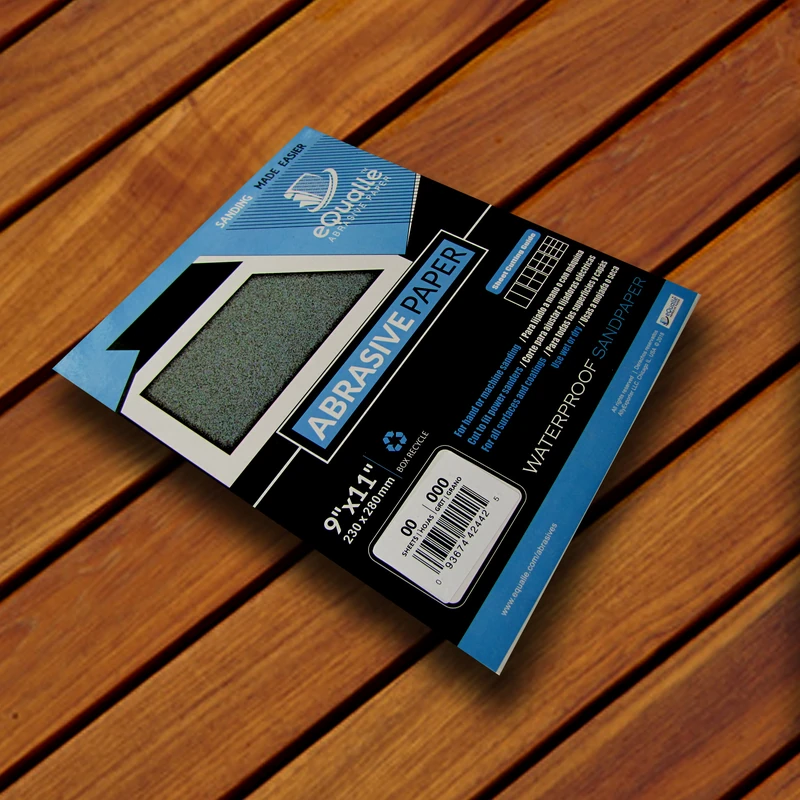
2000 Grit Sandpaper Sheets (100-pack) — 9x11 in Silicon Carbide Abrasive for Wet or Dry Use — Precision polishing grit designed to remove haze and restore clarity to clear coats and high-gloss automotive paint. (Professional Grade).
Frequently Asked Questions (FAQ)
Q: What RPM should I use to avoid overheating edges on a 2-inch pad?
A: Stay in the 400–1200 RPM range, which yields roughly 200–600 SFM. Start low (around 500 RPM) with a foam interface and increase only if cutting stalls. Always combine low RPM with light pressure and constant motion.
Q: Is dish soap in the water actually helpful for resin polishing?
A: Yes—1–2 drops per liter reduces surface tension, helping coolant wet the surface and carry away swarf. That lowers friction and temperature spikes. Keep the mix very light to avoid residue; rinse before changing grits or switching to polish.
Q: Can I pre-chill the resin to increase my heat margin?
A: Mild pre-cooling (cool room, cool water) is fine, but avoid refrigerating or icing parts. Rapid temperature swings and condensation can promote micro-cracks and contaminate abrasives. Managing speed, pressure, and coolant is more reliable than pre-chilling.
Q: How do I fix a white, hazy band after I overheated an edge?
A: Recut below the damaged layer. Start one or two grits coarser than your last step (e.g., drop from 1200 back to 800), wet sand with light pressure until the haze is gone, then re-climb your grit sequence. Finish with a plastic-safe polish at low RPM.
Q: Are buffing wheels safe on resin edges?
A: Yes, if controlled. Use soft muslin or foam at low SFM (≤600), minimal compound, and keep the work moving. Avoid wheel edges and stitched wheels with aggressive compounds meant for metal—they build heat quickly and can round corners or smear the resin.