
Eco sandpaper and reusable sanding sponges
On a Saturday morning, I stood over a maple desk that had seen too many years of coffee rings and hurried notes. The sun cut across the shop floor, catching dust motes suspended in a quiet orbit around the project that would—if I did this right—become an heirloom. Next to me sat a half-empty box of worn paper sheets and a small pile of discarded grits I’d promised myself I’d send to recycling (a promise I rarely kept). It felt familiar and a little defeating: endless sheets, clogged in minutes, and a small mountain of waste. That was the morning I switched the workflow, integrating reusable sanding sponges and eco sandpaper into a process designed not just for finish quality, but for sustainability.
The first pass with a medium-grit sponge was a subtle surprise—more forgiving on the contours, more even pressure on the flat runs, and dramatically less loading on the dust-prone sap pockets. By the time I reached the denibbing stage between coats, the sponge was still cutting, and a quick rinse restored its bite. At cleanup, the trash can stayed nearly empty. Something about that outcome—smoother surface, cleaner shop, almost no waste—felt like a different way to practice the craft.
That shift didn’t compromise quality. It sharpened it. Reusable sponges carry abrasive grains in a cushioned matrix that manages contact pressure; that reduces gouging and yields uniform scratch patterns, even on inconsistent stock. Eco sandpaper—whether a recycled-fiber backing or a plant-derived resin system—pairs well here: use sheets for linear flats and quick removal, then sponges for profiles, transitions, and between-coat leveling. The emotional payoff, for me, is the absence of the late-day guilt pile. The technical payoff is measurable: fewer scratch-throughs, lower rework time, and consistent finish adhesion.
If you’ve hesitated to adopt “greener” abrasives because you’re worried about performance, don’t. The engineering behind modern reusable sponges and eco-oriented sheets is mature. With a proper grit map, maintenance cycle, and dust management plan, you can cut waste by a factor of 5–10 and improve finish predictability.
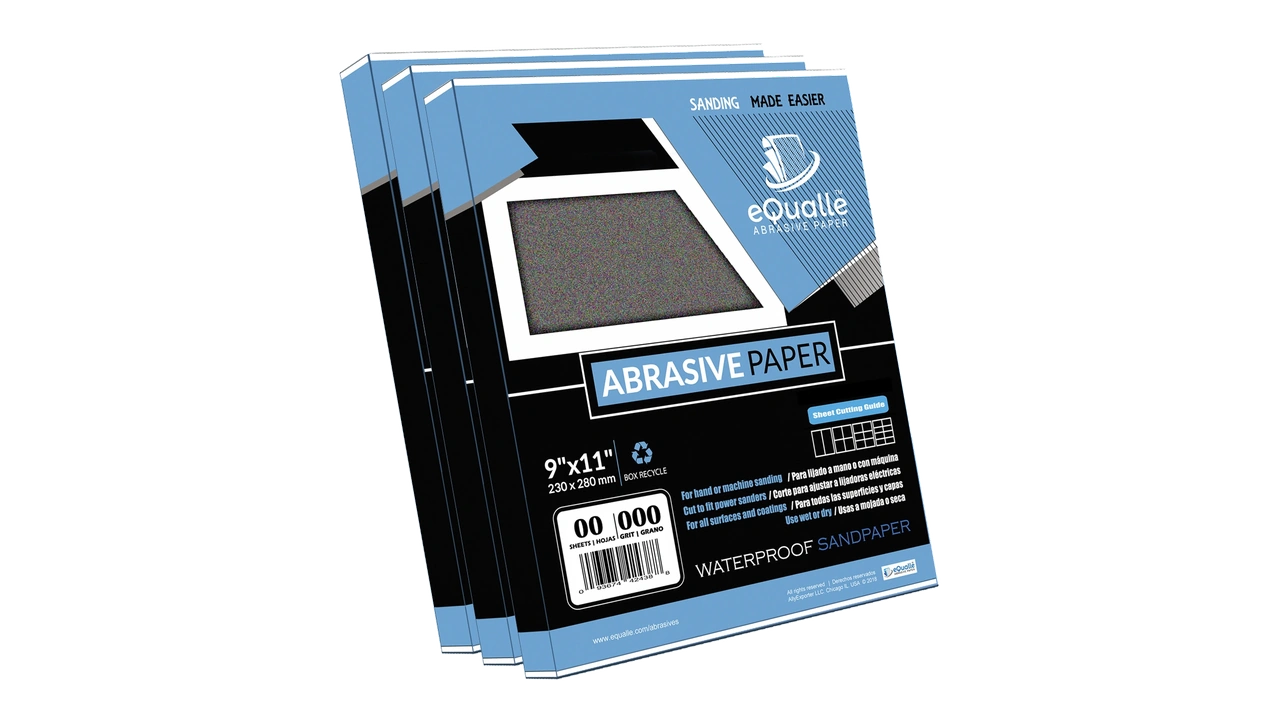
Quick Summary: Reusable sanding sponges paired with eco sandpaper deliver high-precision surface prep with less waste by optimizing contact pressure, reducing loading, and enabling wash-and-reuse cycles.
Abrasive design for sustainable sanding
It helps to understand what you’re holding. A sanding sponge is a foam core (typically polyurethane) with an abrasive coat applied to one or more faces. Three parameters govern performance: foam density and thickness (contact pressure distribution), abrasive grain type and size (cut rate and scratch morphology), and coating architecture (open-coat versus closed, stearate presence, and bond resin).
Foam mechanics. Lower-density foam conforms to profiles and absorbs micro-highs, translating hand pressure into a more uniform normal force. That reduces local overload, lowering scratch depth variance. Thicker cores distribute force further, useful for drywall feathering or rounding edges without faceting. Higher-density or thin cores, conversely, sharpen feedback and are better suited for hard metals where edge rounding must be controlled.
Grain and geometry. Aluminum oxide is the workhorse for wood and drywall; it fractures predictably, maintaining sharpness. Silicon carbide is sharper and more brittle—ideal for non-ferrous metals, composites, and between-coat scuffing of finishes. Ceramic microfracturing grains (in some premium blocks) sustain high cut rates under pressure. Grit selection dictates scratch width and depth: e.g., P120 establishes flatness, P180–P220 refines for sealer, and P320–P400 handles denibbing.
Coating and loading resistance. Open-coat structures leave space between grains for dust to escape. Anti-loading stearate layers further reduce clogging when sanding resins, paints, and softwood earlywood. In sponges, the foam’s micro-porosity also acts as a debris reservoir; when combined with a rinse, you reset the abrasive.
Compared with paper-backed sheets, reusable sponges trade peak stock removal for control and reusability. That’s not a drawback—it’s a design choice. Use sheets when you need aggressive, planar removal with a hard block; use sponges to conform around profiles, blend transitions, and stabilize pressure-sensitive passes. Together, they form a high-precision, low-waste system.
Pairing eco sandpaper with reusable sponges
Eco sandpaper typically means one or more sustainability attributes: recycled or sustainably sourced backings, bio-based bonding resins, or longer-life grain systems that reduce consumption. Functionally, you can deploy sheets and sponges in complementary roles. Wrap eco-oriented sheets around a firm block for flat reference planes; switch to reusable sponges for contours, nib removal, and primer/scuff operations. This keeps sheets in their efficiency lane while the sponge minimizes waste on the finesse steps.
Grit mapping is where performance and sustainability converge. A simple, robust sequence for wood: P120 (flatness), P150 (refinement), P180 or P220 (pre-finish), then P320 or P400 sponge for denibbing. For painted drywall patches: medium sponge to blend joint compound ridges, fine to feather edges, and extra-fine to remove swirl before primer. On metals: P180–P220 silicon carbide sponge for paint prep, then P320 wet to reduce loading and heat.
According to a article, multi-grit sponge packs are washable and reusable, offering a practical route to cut waste without sacrificing usable life. In practice, a single sponge can replace dozens of sheet changes, especially in between-coat operations that traditionally consume paper at an alarming rate.
Actionable tips for pairing and setup
- Reserve eco-oriented sheets for aggressive leveling; switch to a fine or extra-fine sponge at least one grit earlier than you would with paper to prevent overcutting.
- When wrapping a sheet around a sponge for custom stiffness, align the sheet seam on the low-pressure face to avoid seam marking.
- Color-code or mark sponges by substrate (wood, drywall, metal) to prevent cross-contamination that can scratch or inhibit finish adhesion.
- Pre-wet silicon carbide sponges for metal work with a drop of dish soap in water; this lowers surface tension, reduces loading, and improves scratch uniformity.
Maintenance cycles: rinse, refresh, repeat
A reusable sponge’s life hinges on how you de-load it. Dust and resin binders accumulate between grains, dulling cut and increasing frictional heat, which accelerates bond wear. A proper cleaning cycle restores performance and extends life by several factors.
Start with mechanical agitation. Tap the sponge edge against a hard surface to eject loose fines, then use a stiff nylon brush to scrub the abrasive face along the grain lines. For water-tolerant substrates (wood pre-finish, drywall, most metals), rinse under warm water with a mild surfactant. Compress the foam repeatedly to push slurry out of the pores; you’ll see the water run clear as debris evacuates. For resin-heavy woods (pine, fir) or cured finishes that have loaded the surface, an optional rinse with denatured alcohol can break down deposits. Test solvent compatibility first—some bond resins can soften.
Drying matters. Trapped moisture in the foam can promote microbial growth and degrade the bond if left sealed in a toolbox. Air-dry on an edge with good airflow, or place the sponge near—never on—a mild heat source to accelerate evaporation. Avoid high heat; it can distort the foam and crystallize bond resins. Once dry, a quick “dress” pass on scrap stock re-edges microfracturing grains.
For high-throughput shops, consider periodic ultrasonic cleaning. A short cycle in warm water with a few drops of detergent removes fine embedded particles that brushing can miss, especially in extra-fine grits. Track sponge life with a tally mark system; if you notice increased heat, squeal, or a glazed look, it’s time to clean. Most users can expect 10–20 effective cleaning cycles per sponge before cut rate drops below acceptable thresholds, depending on substrate and pressure habits.
Maintenance tips you can implement today
- Rinse before the sponge feels “dead.” Cleaning at the first sign of drag preserves grain edges and reduces bond fatigue.
- Use separate rinse buckets by substrate; hardwood resin, drywall dust, and metal fines should not commingle.
- After rinsing, compress the sponge fully several times; incomplete de-watering leaves abrasive-clogging slurry in the pores.
- Keep a spare set of fine/extra-fine sponges to rotate while the first set dries; this keeps work moving and extends life.
Workflow blueprints for wood, drywall, metal
The highest-value gains come from designing your workflow to the strengths of reusable sponges and eco-oriented sheets. Below are proven sequences that balance cut rate, scratch control, and waste reduction.
Wood finishing (maple desk as example):
- Stock prep: Start with eco sandpaper P120 on a hard block to establish flatness. Check with a raking light and pencil grid. Vacuum.
- Refinement: Move to P150 sheet for quick scratch reduction, then switch to a P180–P220 medium/fine sponge for edges, profiles, and blend zones. The sponge’s compliance prevents flats from rolling over.
- Pre-finish: Raise the grain with a light water mist if using waterborne finishes; once dry, denib with P320 sponge. This preserves depth while erasing lifted fibers. Apply sealer.
- Between coats: After each coat cures, denib with P320–P400 extra-fine sponge using light, even strokes (target 0.5–1.0 kgf hand pressure). Vacuum and tack.
Drywall patch and blend:
- Joint compound leveling: Use a medium-grit sponge to flatten ridges with long, overlapping strokes; the foam bridges valleys without cutting through highs excessively.
- Feathering: Switch to fine grit, working a 2–3x patch diameter perimeter to feather into existing texture. Use circular strokes at the perimeter to avoid linear witness lines.
- Pre-primer polish: Extra-fine sponge to remove swirl; wipe with a damp microfiber. The open-coat structure minimizes clogging in gypsum dust environments.
Metal prep (pre-paint on aluminum or mild steel):
- Deburr and unify: P180 silicon carbide sponge to dull burrs and unify surface sheen. Apply light, consistent pressure to avoid dish-outs.
- Wet scuff: P320 silicon carbide sponge with water plus a drop of surfactant; this reduces loading and creates a uniform anchor profile without deep scratches that telegraph through coatings.
- Final clean: Rinse thoroughly, dry with compressed air, and wipe with a lint-free solvent wipe (compatible with the primer). Inspect under cross-light for uniformity.
Across all substrates, integrate dust control: a HEPA vac nearby and a soft-bristle brush keep abrasives cutting and reduce loading. Set a timer for cleaning cycles when doing repetitive work; cadence beats guesswork. Most importantly, document your grit progressions and tool life. A simple log reduces the temptation to “just grab another sheet,” preserving both finish quality and your waste-reduction goals.
Ask The Pool — Video Guide
A short segment from the Legendary Escapes/Ask The Pool Guy team explores why certain polymer pool coatings can feel rough, almost like sandpaper, after application. They touch on factors such as spray technique, media texture, cure conditions, and how small deviations in process translate into measurable surface microtexture.
Video source: Ask The Pool Guy: Why does my ecoFinish feel like sandpaper?
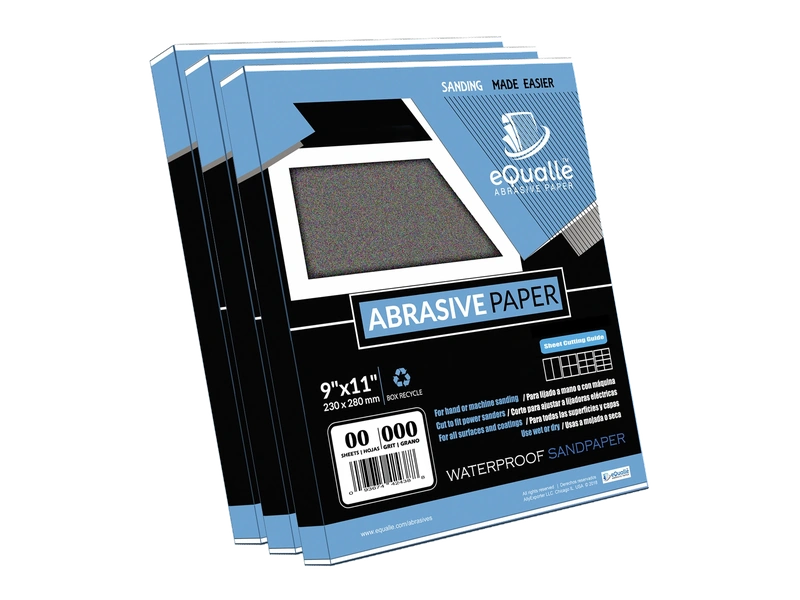
220 Grit Sandpaper Sheets (10-pack) — 9x11 in Silicon Carbide Abrasive for Wet or Dry Use — Fine finishing grit for final surface preparation before painting or coating. Offers uniform cutting on wood, metal, and plastic. Leaves a smooth, paint-ready finish suitable for wet or dry sanding. (Professional Grade).
Frequently Asked Questions (FAQ)
Q: How many times can I wash and reuse a sanding sponge before replacing it?
A: With proper maintenance, most quality sponges deliver 10–20 effective cleaning cycles. Expect fewer cycles on resinous woods and more on drywall or between-coat scuffing. Replace when cut rate falls, the face glazes, or foam resilience degrades.
Q: What grit progression should I use when switching from paper to sponges?
A: Move from paper to sponge one grit earlier than usual. For wood: P120 (block), P150 (sheet), then P180–P220 (sponge) for refinement, followed by P320–P400 (sponge) between coats. This prevents over-aggressive cuts and leverages the sponge’s pressure distribution.
Q: Can reusable sponges achieve a final finish ready for topcoat?
A: Yes. Fine and extra-fine sponges produce uniform, shallow scratch patterns ideal for finish adhesion. Ensure thorough dust removal and consistent stroke patterns; for waterborne coatings, a P320–P400 denib is typically optimal.
Q: Are sponges compatible with both waterborne and solvent systems?
A: They are. Use water rinses for general cleaning and denatured alcohol for stubborn resin loads (after compatibility testing). Always dry sponges completely before returning to solvent-sensitive workflows to avoid contamination.
Q: How do I prevent cross-contamination between substrates?
A: Dedicate sponges by substrate and grit, store them in labeled, breathable pouches, and maintain separate cleaning containers. This avoids transferring metal fines to wood or gypsum dust to finish prep surfaces.