
Guide Coat Sanding: Even Application Before Blocking
The shop is quiet except for the hiss of air through a regulator and the faint tick of cooling metal. You’ve just laid down a uniform film of high-build primer on a long quarter panel, the kind with a subtle crown that punishes any lapse in technique. Under raking LEDs, the surface looks good—flat at a glance, gray and matte like it should. But you know better. Until you perform disciplined guide coat sanding, there’s no honest way to read the surface. The panel has its history: tap-down marks from the last round of metalwork, a skim of filler you were careful not to overshape, and a featheredge that transitions into OEM finish along the dogleg. If any area is slightly low, the topcoat will amplify it like a megaphone.
This is the moment where small habits matter. Do you apply a dry guide coat with even, low-pressure coverage or dust it like you’re seasoning cast iron? Do you reach for a long, rigid block that spans the panel’s geometry, or something short that will telegraph your wrists? Will you remove the guide coat with a consistent, crossing stroke, or chase spots until you carve flats into gentle curves? Decisions like these determine whether your primer is a ready-to-seal substrate or a map of preventable rework.
In this guide, I’ll show you exactly how to apply a dry guide coat evenly over primer before blocking—and how to interpret what it tells you with confidence. We’ll analyze abrasive selection, stroke mechanics, and dust control, and we’ll connect the dots between film build, scratch depth, and reading the surface. Whether you’re refining a panel for a tri-coat finish or building a durable fleet refinish, the same logic applies: guide coat sanding is the most cost-effective form of non-destructive testing you have.

Quick Summary: Evenly apply a dry guide coat over cured, clean primer, then block with the right length tool and grit in a controlled crosshatch until the guide coat disappears uniformly, using what remains to identify and correct lows before refinement.
Primer and cure: ready to read
Guide coats only tell the truth when the substrate is consistent. That starts with primer choice and cure state. Most collision and restoration workflows use a high-build 2K urethane primer for surfacing, sometimes over epoxy. Ensure you’ve reached the recommended through-cure—beyond mere “sandable”—so the film is dimensionally stable and less prone to clogging abrasives or smearing. Temperature, humidity, and film thickness all impact cure time. If you’re not sure, wait. Solvent entrapment shows up as unpredictable paper loading and inconsistent guide coat removal, neither of which you want.
Surface cleanliness is non-negotiable. After final primer flash and before any sanding, wipe with a quality waterborne cleaner, then an oil/silicone-free panel wipe. Avoid heavy solvent soaking that can soften primer. Blow off with filtered air. A clean, dust-free surface ensures the dry guide coat adheres uniformly and isn’t contaminated by fisheye agents or hand oils.
Film build defines your margin for correction. Use a mil gauge on a test coupon sprayed alongside your panel. A common target for blockable surfacer is roughly 4–6 mils total across coats, which allows you to remove 1–2 mils safely during initial blocking. If you’ve primed near a featheredge, verify that area has enough build to permit leveling without breaking through.
Decide your base grit. For first-read blocking on a well-shaped panel, P240–P320 dry is typical; P180 is reserved for heavier correction. Finer grits like P320 produce a shallower scratch pattern, reducing the risk of cutting flats into subtle crowns while still removing guide coat efficiently. If you’re new to a particular primer system, create a test panel to see how quickly guide coat clears and how many strokes it takes at a given pressure and grit. Establishing that baseline removes guesswork before you touch the actual job.
Dial in guide coat sanding for true panel read
An even dry guide coat is not paint; it’s a diagnostic layer designed to be sacrificed. Dry powder systems—graphite or carbon black in a carrier—tend to lay down uniformly, don’t introduce solvents, and sand off predictably. Aerosol guide coats can work but risk solvent sink or patchy deposition if sprayed carelessly. For repeatable results, use a dedicated dry powder pad or puffer.
Application sequence:
- Ensure the primer is clean and static-neutral. A quick pass with an anti-static wipe can help, especially on plastic.
- Load the foam applicator lightly. You want a thin, cloudy veil—think “fog,” not “soot.”
- Apply with wide, overlapping strokes, alternating direction each pass. Avoid pivoting your wrist; keep the pad flat to the panel’s primary curvature.
- Check under raking light. You should see a uniform haze with no dark blobs or bare stripes. If you spot a heavy deposit, gently feather it with the pad—don’t rub it in.
Block geometry determines what the guide coat will reveal. Use the longest rigid block that the panel will accept without bridging over concavities. A 16–24-inch longboard reads doors, hoods, and quarter panels; shorter blocks risk conforming to small waves, masking lows. For curved areas, switch to a semi-rigid or contoured block that matches the radius. Never jump to a soft interface too early; that obliterates the read.
Blocking technique is a controlled crosshatch. Hold the block with both hands, apply even pressure centered over the tool, and push-pull at about 45 degrees to the panel’s length. After 3–5 strokes, switch to the opposite 45-degree direction. Work in zones no larger than you can monitor visually—roughly 12×12 inches. The guide coat should vanish uniformly across the zone. Any persistent dark islands are lows; bright rings that appear quickly are highs. Stop and mark defects with a grease pencil rather than chasing them with more pressure, which distorts the read and risks overcutting.
Finally, remember the point: guide coat sanding is about reading and reacting. Remove the guide coat; don’t plow through it. When the read says “low,” decide whether to keep blocking (if there is sufficient build), spot prime, or go back to glaze. The earlier you make that call, the faster you finish.
Block selection and stroke mechanics
Your block is an amplifier. Get the length, stiffness, and face material right for the panel and the grit. Rigid longboards with a flat face and PSA-backed abrasives excel on large flats and slight crowns, transmitting your stroke evenly. Semi-rigid blocks (dense foam core, hard face) track gentle curves without collapsing. Save soft blocks and interface pads for refinement, not first-read blocking.
Abrasive selection is a balance of cut rate, scratch depth, and clogging. Premium, open-coat aluminum oxide or ceramic blend papers in P240–P320 provide a fast but controllable cut on 2K surfacers. If you need heavier correction on resilient primer, P220 may be appropriate—but monitor your scratch depth. Replace paper often; a sharp, open grain shears guide coat and peaks cleanly. A loaded sheet burnishes lows, lies about highs, and tempts you to push too hard.
Stroke mechanics:
- Stand where you can see the panel under raking light and hold the block so both hands keep it flat. Lead with the front edge; don’t lever with your wrists.
- Use 50–70% overlap on each pass so the block never fully leaves contact between strokes.
- Apply consistent, modest downforce—enough to keep the sheet engaged, not enough to flex the panel or bulge the block. If you’re plowing, you’re wrong.
- Count passes. For example, commit to two crosshatch cycles per zone, then reassess. Measuring your own “strokes-to-clear” helps maintain uniform removal.
According to a article, blocking primer with a dry guide coat and P320 until the coat is fully gone, followed by refining to P600, is a reliable workflow that prevents texture and lows from sneaking through to basecoat. That sequence works because it controls both topology (flatness) and microtexture (scratch profile).
Edge discipline matters. Featheredges and bodylines are the first places you’ll burn through if you angle the block or “hook” an edge mid-stroke. Mask sharp edges with two layers of fine-line tape during the first-read block. Remove the tape only when you refine with a softer block and finer grit.
If you’re tempted to switch to a DA midstream, pause. Dual-action tools are outstanding for refinement, but even with a hard interface they can round features and mute the read. Let the block establish geometry. Use the DA later to unify scratch patterns when the panel already reads flat.
Dust control and defect mapping
Guide coat sanding creates a fine particulate that camouflages the truth if it accumulates. Dry vacuum-block setups remove dust at the source, keeping both the abrasive and the read clean. If you’re using manual blocks, stop frequently to blow off the panel and paper with clean, regulated air angled across the surface, not into it. Wipe only with a dry, clean microfiber between zones; avoid panel wipes until you’re done with the current grit.
As you block, establish a defect map:
- Circle lows that persist after a full crosshatch cycle.
- Underline any bright, fast-revealing highs; check for metal proximity.
- Mark pinholes or porosity that open up in the surfacer.
- Indicate areas with clogging or gumming—these may signal incomplete cure or contamination.
When you encounter a low, decide on a fix by the numbers. If you started with 5 mils of surfacer and have removed approximately 1 mil during your first-read pass, you might have margin to continue blocking another 0.5–1 mil to chase a shallow low. If the low persists, stop and spot prime or glaze. Continuing to sand incorrectly transforms a small depression into a shallow bowl—easier to hide, harder to correct.
Keep your abrasives honest. If the sheet stops cutting guide coat cleanly within two passes, change it. Loaded paper smears powder into scratches, causing false positives that look like lows but aren’t. Conversely, a fresh sheet that instantly reveals bright patches may be telling you that the primer texture is higher than you thought or that you’ve reached a high spot. Trust the read, not your hopes.
Lighting is as critical as dust control. Use a raking light at a shallow angle, moving it across the panel as you work. Diffused overhead lighting hides subtle waves; a portable LED bar with a narrow beam pattern reveals them. Rotate your stance periodically; what disappears under one angle may telegraph at another. Combine the visual read with the tactile: glide a nitrile-gloved hand over the surface. Your fingertips often confirm what the guide coat suggests.
From block to finish: refinement steps
Once your initial block removes the guide coat uniformly across each zone, you’ve proven flatness at the chosen resolution. Now refine the scratch pattern so that it’s sealer- and basecoat-friendly. A typical progression is:
- P320 dry on a long, rigid block for the first read and shape confirmation.
- P400 dry or P500 dry on a semi-rigid block, maintaining crosshatch strokes to unify and shallow the scratch.
- P600 wet or dry with a soft interface or finishing block to remove the last trace of P400/500 pattern without rounding features.
Wet sanding can help see the “water break” and subtle texture, but it obscures guide coat reading. Keep the early steps dry; reserve wet for final refinement if your system allows. Always confirm compatibility with your primer/sealer manufacturer to avoid trapping moisture.
Edges require a two-step approach. Protect them during the first-read block as noted earlier. During refinement, remove the tape and kiss the edges with a worn sheet or a soft block, aligning your strokes parallel to the edge. Never cross a sharp crease diagonally at this stage; you’ll cut through and rework will snowball.
Transition management matters in modern refinishing. Where surfacer meets OEM finish, keep your grit progression consistent across the boundary. If the featheredge is exposed, lightly bridge it with a soft block at the refining grit to avoid creating a witness line. Before sealing, inspect under raking light and again under broader ambient light; both reveal different defects.
H3: Actionable tips for repeatable results
- Load the dry guide coat sparingly: one light pass, two at most. Heavy deposits skew the read and take longer to clear.
- Commit to zones. Clear a 12×12-inch area completely before moving on. Partial clearing invites uneven removal.
- Count crosshatches per sheet. For example, if your P320 sheet clears two zones cleanly, replace it proactively before the third.
- Tape edges twice for the first-read block. Remove one layer for P400 and the second for P600 to step down protection as the risk drops.
- Record “strokes-to-clear” for each primer system you use. Your notes will predict removal rates and keep you from chasing lows through the film.
When the surface reads flat, scratches are uniform to P600, and all mapped defects are resolved, clean thoroughly. Blow off, vacuum, and wipe with the approved cleaner sequence. If required, tack lightly. You’re now ready for sealer, confident that no hidden low will reappear as dieback or mapping under the topcoat.
Hand Finish Sanding — Video Guide
This short video demonstrates a careful, hand-only approach to refining a fully primed panel before color. You’ll see how controlled strokes, appropriate block choice, and deliberate pressure reveal and correct subtle imperfections without relying on power tools. The presenter emphasizes reading the surface under raking light and staying methodical as you clear the diagnostic layer.
Video source: Hand Finish Sanding the Final Coat of Primer for Perfect Car Panels
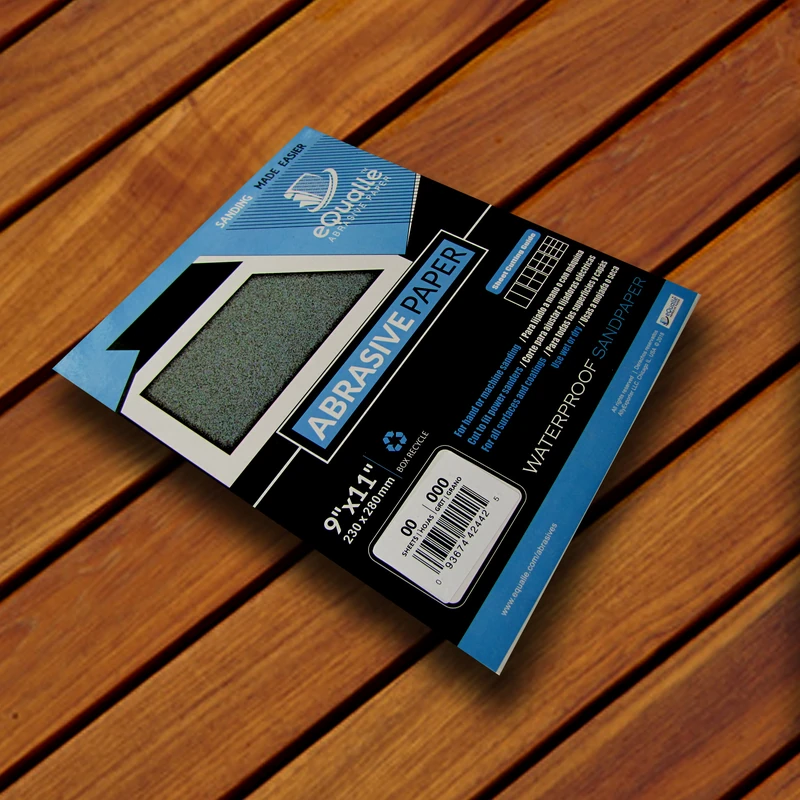
80 Grit Sandpaper Sheets (25-pack) — 9x11 in Silicon Carbide Abrasive for Wet or Dry Use — Durable coarse sandpaper made with Silicon Carbide for fast stock removal and surface leveling. Excellent for woodworking, metalwork, and fiberglass preparation. Works effectively for both wet and dry sanding before moving to 120 grit. (Professional Grade).
Frequently Asked Questions (FAQ)
Q: Do I need to remove 100% of the guide coat before moving to a finer grit?
A: Yes. The goal is to clear the guide coat uniformly across each zone with the initial blocking grit. Any remaining dark islands indicate lows that require additional blocking, spot priming, or glaze. Moving on with residual guide coat masks defects and carries uncertainty into later steps.
Q: Dry powder or aerosol—what’s better for guide coating?
A: Dry powder is more predictable. It avoids solvents that can soften primer, applies in a thinner, more uniform film, and sands off cleanly. Aerosols can work, but they’re easier to over-apply and may deposit unevenly if the nozzle spits or if distance varies.
Q: What grit is best to remove the guide coat on high-build primer?
A: For well-shaped panels, P320 dry on a long, rigid block provides a controlled read and minimizes risk of cutting flats. If you need heavier correction, start at P240 or P220, then reapply guide coat and step to P320 once flatness is confirmed.
Q: Can I leave a trace of guide coat under sealer or basecoat?
A: No. Guide coat is a diagnostic marker, not part of the coating system. Any residue should be sanded away completely. Sealing over guide coat risks adhesion issues, visible specks, or telegraphing under certain color coats.
Q: How thick should the primer be before blocking with a guide coat?
A: Aim for a surfacer build in the 4–6 mil range before the first-read block. That provides enough material to level minor surface texture and shallow lows without risking frequent breakthroughs. Verify on a test coupon and adjust for panel condition and planned corrections.