
EPA RRP Containment for Lead-Safe Sanding
There’s a moment, right before the sander touches the surface, when a room holds its breath. You’ve taped the vents, rolled up area rugs, shuffled furniture to the hallway. In an older home—maybe one built just after the war, with trim thick enough to show paint strata like tree rings—you feel the weight of history in the baseboards and widow’s walk. You also feel responsibility. Dust is memory made airborne, and when that dust contains lead, it crosses the boundary from nuisance to long-term health hazard in seconds. The job becomes less about “cleaning up later” and more about “controlling everything now.” That’s precisely where epa rrp containment setup lives, and it’s the fulcrum between craftsmanship and care.
If you’re planning to sand an old window sash to a clean key for primer, or level heavy brush marks on a door slab so it will close without a catch, lead-safe sanding changes your workflow. The best sanding is often invisible—done under negative pressure, through a shrouded pad connected to a HEPA extractor, inside a containment you built like a cleanroom. You select abrasives not just for cut rate, but for how well they evacuate swarf into the hose. You prep surfaces not only for adhesion, but to minimize frictional heat that embrittles aged paint and generates microscopic lead dust. And when you zip the door behind you, you shift into a mode where every action either keeps dust inside your system, or lets it escape into air you and your family will breathe.
I’ve managed hundreds of RRP jobs and trained crews to think like containment engineers while still sanding like finish carpenters. This guide distills that—how to plan, the materials that actually hold up, the abrasives and extractors that deliver, and the cleanup protocols that verify the space is safe to reenter. The goal is not to slow you down; it’s to work smarter so your sanding yields flatter surfaces, better coating adhesion, and a house that’s as healthy as it is beautiful.
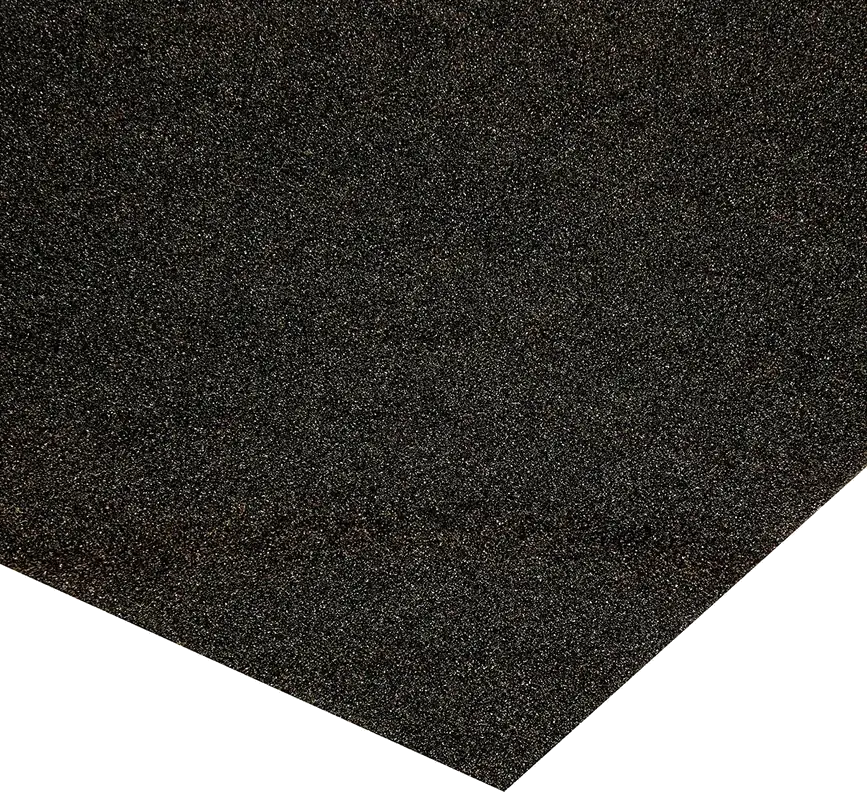
Quick Summary: Build reliable EPA RRP containment, pair the right abrasives with HEPA-extracted tools, and run a low-dust sanding workflow that protects people and finish quality.
Plan the RRP job like a containment engineer
Containment is a system, not a tarp on the floor. Begin with a site assessment: locate all supply and return vents, high-traffic doorways, and the shortest path from an exterior door to your work area. Test paint for lead using an EPA-recognized kit if you’re a certified renovator, or assume lead in pre-1978 coatings. Define work scope tightly: are you scuff-sanding for adhesion (thin, controlled cut) or removing heavy defects (aggressive leveling)? Scope determines both barrier size and tool selection.
Shut down HVAC serving the work zone to stop pressure-driven migration. For interiors, plan floor protection that extends at least 6 feet from the workface, or wall-to-wall for intensive sanding. Design a single controlled entry with a zipper door or magnetic dust door. Place a sticky mat or expendable towel station at the threshold, plus a bin for disposable shoe covers.
If the space permits, run negative air. A HEPA air scrubber ducted to a window can maintain -0.02 to -0.03 in. w.c. relative to adjacent rooms, pulling makeup air through the clean entry. This is not mandated by EPA RRP but it dramatically reduces fugitive dust. Size the scrubber for 4–6 air changes per hour; for a 1,200 cubic-foot room, that’s roughly 80–120 CFM effective after losses. Seal the duct exit to the window with backer board or rigid foam and tape—poly alone flaps, tears, and leaks.
Stage materials before suiting up. You’ll need 6-mil poly for floors, 3–6 mil for walls and doorways, high-tack sheathing tape, reinforced poly or ZipWall poles where vertical containment is required, and sacrificial runners to the exterior. Pre-cut vent covers and outlet masks. Lastly, plan your daily teardown and waste staging: double 6-mil bags with gooseneck seals, a HEPA vac port adapter to deflate bags safely, and a designated, covered storage area until disposal.
Abrasives and vacuums for lead-safe sanding
Lead-safe sanding is not just about containment—it starts at the pad. The wrong abrasive loads with softened paint, overheats, and smears; the right abrasive stays cool, sheds dust through the pattern, and maintains consistent cut so you spend less time on the surface.
Use open-coat, stearate-coated papers or mesh abrasives designed for paint. Ceramic alumina in P80–P120 for initial leveling, then aluminum oxide or ceramic in P150–P180 to refine the scratch before primer. For scuff-sanding intact coatings to promote adhesion, P180–P220 is usually sufficient—more aggressive grits risk cutting into deeper paint layers and releasing more dust. Mesh discs like Abranet or similar, mated to a multi-hole extraction pad, maximize airflow and minimize loading; pair with a soft interface pad on profiled trim to maintain contact without digging corners.
Tooling matters. Use a shrouded random-orbit sander with a full-brush skirt, tight pad perforations, and anti-static hose. Your extractor must be true HEPA (99.97% at 0.3 microns) with tested containment; look for EN 60335-2-69 Class H or equivalent. Aim for 130 CFM and 90+ inches of sealed water lift to maintain surface capture through a 27–36 mm hose. Variable suction is a real asset—dial it down on thin veneer doors to prevent swirl marks or pad chatter, up on thick paint where you want maximum capture.
Don’t neglect hose routing. Keep the hose suspended or routed along a wall to prevent snag-induced tears in your poly. Use a cuff with a secure bayonet or friction-fit; leaks at the cuff are invisible but costly in dust. If your extractor uses self-cleaning bags or fleece filters, check them mid-day; a loaded bag kills airflow, heating the pad and boosting dust generation. Replace pre-filters before they harden into bricks.
Finally, remember prohibited practices: no machine sanding without HEPA extraction, no dry scraping beyond the small spot allowances, no open-flame burning, and no heat guns above 1100°F. Compliance isn’t a box-check—it’s how you keep micro-scale contaminants out of breathing zones.
Build airtight barriers that actually hold
Most containment failures are adhesive failures. Poly detaches, seams gap, zipper doors peel. Solving that begins with surface prep for the barrier itself. Wipe dusty substrates with a damp microfiber before taping. Where tape must cross rough plaster or brick, apply a narrow strip of masking tape as a primer surface, then bridge with sheathing tape or duct tape designed for poly sheeting. For critical seams near workfaces, a light spray adhesive under the tape increases peel strength without marring paint.
Floors: lay 6-mil poly wall-to-wall when sanding multiple surfaces. Overlap seams 12 inches in a shingle fashion (upgradient over downgradient toward your exit) and tape both the seam and the perimeter to the baseboard. In high-traffic entries, add a second sacrificial layer you can roll up and replace at breaks. Where feasible, run the floor poly up the wall 6 inches and tape—a “tub” detail that catches dust.
Walls/doorways: for interior doors, remove the slab and mount a double-zipper door on a 3–4 mil sheet; the second zipper adds redundancy and a clean pass-through for hoses or cords. Press zipper edges firmly, then tape the perimeter of the sheet to the casing with continuous runs—avoid patchwork tape that creates weak points. For larger openings, vertical supports (spring poles) keep poly taut and resist pressure surges from door swings.
Vents and penetrations: cover registers with pre-cut poly squares and tape on all sides; then tape the poly to the floor poly to unify the layer. Do the same for outlets and switches. Small penetrations for cords should pass through a butyl or rubber grommet or a taped slit reinforced with a patch on both sides.
Exterior work demands ground poly extending at least 10 feet from the façade, further if wind or elevation warrants. Add vertical containment (reinforced poly on framing) to capture chips, and weigh the sheets at the edges so gusts don’t lift them.
According to a article, common renovation activities easily generate hazardous lead dust; robust containment and dust-minimizing methods are the frontline controls that keep it from spreading.
Low-dust sanding workflows that still cut fast
Containment is necessary, but process determines how much dust you generate in the first place. A smart sanding workflow uses cut sequencing, tool setup, and motion discipline to reduce dust at the source while delivering better surfaces for finishing.
Start with defect mapping. Circle drips, ridges, or open grain telegraphing through old paint. Where heavy buildup exists, score the ridge with a sharp pull scraper under light misting to fracture the high spot. Avoid broad dry scraping—think surgical reduction, not demolition. Misting lightly with a spray bottle before localized scraping keeps chips from aerosolizing without saturating the substrate.
Move to machine sanding with extraction. For leveling, begin at P80–P100 on the worst areas only, then quickly step to P120 to unify the field. Keep the pad flat, one-third overlap passes, and a slow, metronomic pace—about 1–2 inches per second. Let the vacuum do the dust removal; pressing harder does not increase cut, it smears paint, clogs the abrasive, and drives fine dust under the skirt.
For scuff-sanding intact coatings ahead of primer, go straight to P180–P220 on a soft interface pad. Your goal is a uniform scratch pattern for mechanical key, not color change. Edges and profiles respond well to a 3 mm orbit tool; broad fields flatten faster with 5 mm. If your disc loads, swap sooner than you think—spent abrasives burnish rather than cut, which paradoxically increases time-on-surface and dust.
Add a mobile HEPA air scrubber in the room, positioned to create a gentle crossflow from the clean entry toward the tool workface and then to the exhaust. This complements point-source extraction and keeps airborne fines moving away from you.
Actionable tips for faster, cleaner results:
- Pre-score drips with a carbide pull scraper under light mist to reduce machine time at P80.
- Use mesh abrasives on a multi-hole pad; they clear better and last longer in painted film.
- Dial vacuum suction to the lowest setting that still keeps the pad seated; too much suction increases swirl risk.
- Swap discs when cut rate drops by half; don’t ride a loaded disc.
- HEPA vacuum between grit steps to remove swarf and prevent regrinding fines into the surface.
Cleanup, verification, and waste handling
The job isn’t done when the surface is flat; it’s done when verification says it’s clean. RRP’s cleaning sequence is a three-stage process designed to capture settled dust, remove residue, and then re-capture what the wash dislodged.
Stage 1: HEPA vacuum all horizontal surfaces starting at the top—window heads, sills, casings—then down walls, then floors, using smooth, overlapping strokes. Use a soft dust brush for trim; avoid stiff bristles that flick dust back into the air. Vacuum tools and hoses before you lay them down.
Stage 2: Wet clean with a detergent suitable for lead dust. Traditional TSP is effective; if your jurisdiction restricts phosphates, use a lead-specific surfactant cleaner. Work with two-bucket method: wash and rinse. Change rinse water frequently. Wipe in one direction, turning cloths often, and dispose of them as contaminated waste. For floors, use a microfiber flat mop rather than a string mop to maximize particulate pickup.
Stage 3: HEPA vacuum again when dry. This second pass collects particles liberated by washing and ensures the floor poly can be rolled without releasing residues.
Cleaning Verification: In EPA RRP, certified renovators use disposable wet and dry cleaning verification cards on representative surfaces to confirm cleanliness, or, where required (HUD projects, certain jurisdictions), clearance testing by a risk assessor may be mandated. If any surface fails verification, repeat cleaning on that area and re-test.
Waste handling: Mist debris and used abrasives before bagging. Double-bag in 6-mil poly with gooseneck seals: twist the neck, fold over, then tape tightly. Use your HEPA vac to gently draw down bag volume through a small opening before final seal to reduce air-borne dust at disposal. Store sealed bags in a covered container until you can dispose of them per local rules. Most residential RRP waste is managed as construction debris unless testing indicates otherwise; check your solid waste authority for requirements.
Decontaminate the work zone: roll floor poly in on itself, shingle-style, and bag it. Remove door sheeting last, folding inward. Run the air scrubber for an extra 30 minutes after tool shutdown. Only then re-enable HVAC and remove warning signage.
House sanding with — Video Guide
There’s a widely shared clip showing exterior sanding with no containment, no extraction, and visible dust plumes trailing off the house. The footage is stark: the operator’s tool spits pigment and particulate into the air with each pass, while the ground below collects paint chips that can migrate into soil and be tracked indoors. It’s a concise demonstration of how fast lead dust disperses absent basic controls.
Video source: House sanding with no EPA Lead Safe Measures
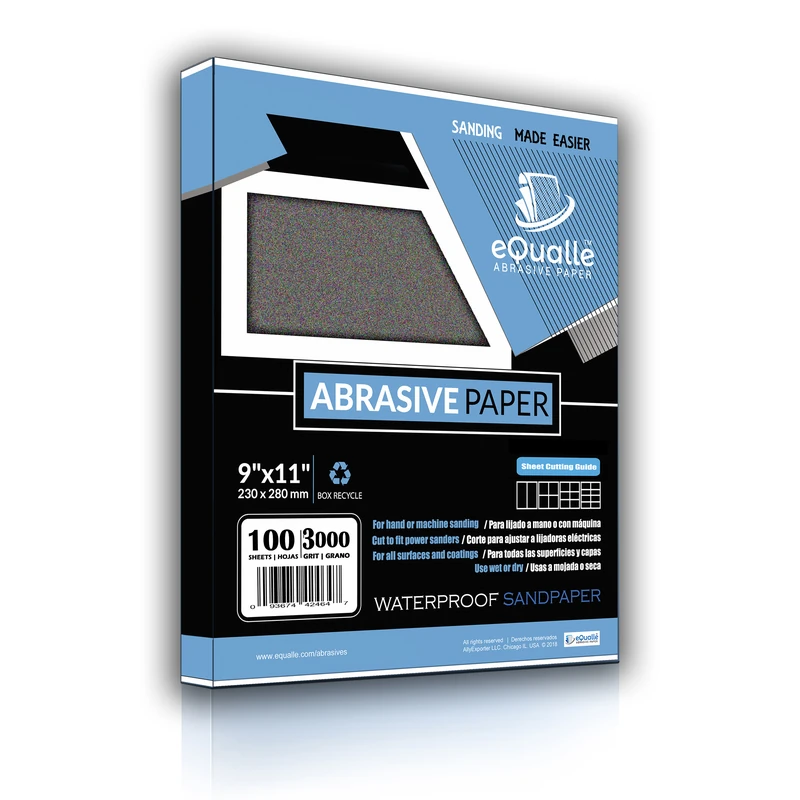
180 Grit Sandpaper Sheets (100-pack) — 9x11 in Silicon Carbide Abrasive for Wet or Dry Use — Medium finishing grit that refines wood, metal, or drywall before painting. Provides even texture and cutting control. Excellent for wet or dry sanding where a uniform surface is needed. (Professional Grade).
Frequently Asked Questions (FAQ)
Q: Do I need negative air machines for EPA RRP sanding work?
A: Negative air is not required by the EPA RRP rule, but it’s a best practice for interior sanding. Maintaining -0.02 to -0.03 in. w.c. with a HEPA scrubber reduces fugitive dust and improves cleanup outcomes, especially on multi-day projects.
Q: What grit sequence is safest and most efficient on lead paint?
A: For leveling defects, start at P80–P100 only where necessary, then move to P120 and finish at P150–P180 before primer. For scuff-sanding intact films for adhesion, P180–P220 is typically sufficient. Use open-coat, stearate, or mesh abrasives with HEPA extraction to minimize dust.
Q: Are shop vacs acceptable if they have a “HEPA” filter?
A: Most general shop vacs lack sealed housings, certified HEPA cartridges, and antistatic flow paths. Use a true HEPA extractor rated 99.97% at 0.3 microns with sealed bags and hoses; leakage at seams and lids in non-HEPA systems defeats capture.
Q: How far should ground protection extend for exterior sanding?
A: Lay poly sheeting at least 10 feet out from the façade, farther in windy conditions or for elevated work. Add vertical containment to capture chips and weigh sheet edges to prevent uplift.
Q: What practices are prohibited under RRP when sanding?
A: Prohibitions include machine sanding without HEPA extraction, open-flame burning or torching, heat guns above 1100°F, and dry scraping beyond small localized areas. These practices significantly increase airborne lead dust and are not allowed.