
Finish Micro Marring and Haze with Polishing Sandpaper
It’s 9 p.m., the shop lights are humming, and the panel you’ve been nursing all day looks perfect—until you hit it with a tight, cool LED beam. There it is: a faint cloudy halo that follows the light like a shadow. Micro marring. Haze. It doesn’t ruin a job, but it steals the depth that makes a finish sing. I’ve seen it a thousand times—after wet sanding runs, after cutting with a heavy compound, even after a rushed “final” pass. The good news is you can bring the gloss back. You just need the right sequence, the right pressure, and (yes) the right polishing sandpaper so every step sets up the next.
Maybe you’re de-nibbing clear coat on a black hood, or rescuing a lacquered guitar top, or cleaning up a stainless kick plate that catches every fingerprint. The technique is the same: create a map, refine the surface in controlled stages, and stop as soon as the defects are gone—not one grit later. The trick is managing what you don’t see. Haze and micro marring hide under fillers, polishing oils, and poor lighting. They also hide at the edges where pads stall, on soft clears, and in curves where your pressure doubles without you noticing.
I’ve been there—hands cracked from the solvent, expecting the last polish to “magically” level out what a compound started. The truth is more methodical. If you want a finish that holds up under shop lights, noon sun, and the unforgiving phone flashlight test, approach it like you would a precision woodworking joint: same pressure, same cadence, measured checks, and clean media every step. We’ll walk through exactly how to finish out micro marring and haze with a simple, repeatable system, whether you’re using a dual-action polisher, rotary, or hand block. You’ll learn to see the problem, choose the right materials, and dial in the movement so the final pass is truly final.
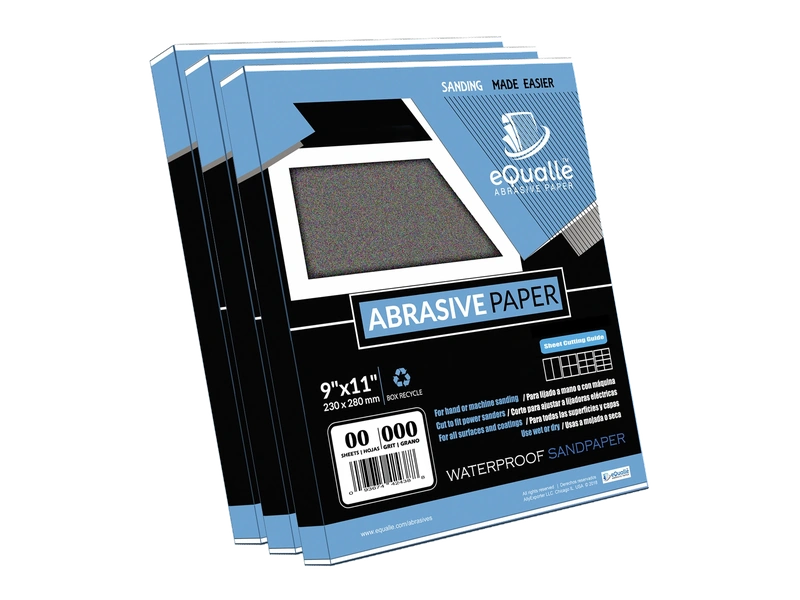
Quick Summary: To eliminate micro marring and haze, inspect under proper lighting, refine with a controlled grit ladder, pair the right pads and polish, and finish with light pressure, clean media, and thorough wipe-downs for a true, distortion-free gloss.
Spotting haze and micro-marring
Before you can fix haze, you have to see it honestly. That starts with lighting, temperature, and wipe-down discipline. If your light is too soft or too warm, you’ll miss faint wool trails, DA haze, or the spiderweb of micro marring left by an aggressive compound.
Use a blended lighting setup. I keep a cold 6500K spot to reveal sharp defects and a warmer 4000–5000K flood to show general clarity. Move the light and your eyes; the angle matters as much as brightness. Keep panels cool to the touch since warm clear hides haze—what looks “finished” hot will show trails when cool.
Always strip the panel between steps. Polishing oils fill ultra-fine marks and lie to you. Use a dedicated panel wipe (isopropyl alcohol cut 1:1 with distilled water works in a pinch) and a fresh, low-pile microfiber. Fold it twice, wipe in one direction, and retire it if you pick up compound dust. If a panel still looks perfect after a wipe and a cool-down, you’re on the right track.
Tape edges and high points. Micro marring loves edges because pads grab there and increase pressure. If you’re sanding, use a soft interface pad and stay off hard edges until the final blend. For machine work, draw a wax pencil line on the pad face—if that line stops rotating, you’re pressing too hard, and stalled pads can burnish in a haze you’ll fight for hours.
Practical tips:
- Mix light sources: one 6500K pen light and one 5000K flood.
- Use a panel wipe after every stage to remove fillers before inspecting.
- Mark your pad with a line to monitor rotation and avoid pad stall.
- Keep panels cool; take breaks and use a fan if needed.
- Replace towels frequently—dirty wipes reintroduce micro marring.
Choosing polishing sandpaper and pads
Your finish is only as good as your grit progression and the bending of the interface between tool and surface. That’s why I treat polishing sandpaper and pad selection like a recipe: predictable, repeatable, and suited to the material in front of me.
For clear coat or hard finishes, start where the defect dictates—not where you’re comfortable. If you’re de-nibbing dust in clear, use a dedicated nib file or 1500–2000 grit on a small block, then jump to 3000 and 5000 finishing discs. On soft clears or plastics, skip 1500 and go 2000 → 3000 → 5000 to prevent deep sand scratches that require heavy compounding.
For wood finishes (lacquer, polyurethane), I go gentler: 2000 → 3000, then straight to a fine polish. Metals vary—stainless likes 800 → 1200 → 2000 → 3000; aluminum can start finer because it marks easily. Soak wet/dry papers for 10 minutes to soften the backing, and always use light, even passes with a damp interface to avoid pressure ridges.
Pads matter as much as paper. For cutting haze, microfiber finishing pads can refine quickly but sometimes leave their own micro marring on soft paints. A closed-cell finishing foam (black or blue) with a micro finishing polish is my default for the final pass. Wool cuts fast but must be followed with foam to truly finish.
Recommended grit ladder
- Clear coat spot repair: 2000 → 3000 → 5000, then finish polish
- Hard clears or defects: 1500 (only as needed) → 2000 → 3000 → 5000
- Plastics/acrylic: 2000 → 3000 → 5000, very light pressure
- Stainless: 800 → 1200 → 2000 → 3000, then metal polish
Pads that finish soft
- Microfiber finishing pad for fast refinement, followed by foam
- Soft, closed-cell foam pad for final gloss
- Keep at least two clean finishing pads to swap as they load
Actionable steps:
- Choose the lowest grit that just removes the defect—no lower.
- Progress no more than 2× grit jumps to keep scratch depth consistent.
- Pair finishing sandpaper with a soft interface pad to avoid print-through.
- Test pad/polish combo on a small area before committing to the whole panel.
Refining technique: speed, lube, passes
Technique is where haze either dies or gets locked in. When sanding, use a crosshatch pattern with minimal pressure, letting the paper glide. A drop of car shampoo in your water bottle creates a slicker film that reduces random deep scratches. Keep the surface clean: wipe the slurry every two or three passes and refresh the paper if it feels grabby. If you’re using a DA sander with finishing discs, a 3/16" orbit and a soft interface pad provide control without introducing pigtails—keep the machine flat and avoid tilting on edges.
On the polisher, slow and steady wins. For a DA, think 3–4 on speed for finishing, with moderate arm speed—about 1–2 inches per second. Overlap each pass by 50%, make 2–3 section passes, and then lighten pressure on the final half-pass to “float” the pad and burnish the surface. For a rotary, work at low RPM with a finishing foam, keep the pad flat, and let the polish do the work. If the panel warms, stop and cool—it’s easy to morph a trace haze into a stubborn one with heat.
Use just enough polish to wet the pad face thinly. Too much polish clogs the pad and rides on oils, hiding micro marring rather than removing it. After a couple of sections, clean your pad on the fly by spurring foam with a brush or blowing with compressed air—fresh faces finish finer.
According to a article
Five execution tips:
- Add one drop of shampoo per 500 ml of sanding water for glide.
- Wipe slurry often; trapped grit is the root of random scratch haze.
- Finish with lighter pressure and slower arm speed to refine the cut.
- Clean pads every 2–3 sections to prevent loaded-pad haze.
- Let panels cool between steps; finish work prefers a cool surface.
Material-specific playbook
Haze and micro marring show up differently across surfaces, so tweak your approach.
Automotive clear coat: Treat sanding like surgery. For nibs or texture, start with 2000 only on the defect, then feather with 3000/5000 disks on a soft interface. Polish with a finishing foam and micro finishing polish, DA speed 3–4, moderate overlap, and a light final pass. Soft clears can haze easily—skip microfiber in the last stage and use an ultra-soft foam. Avoid edge heat and keep the pad flat.
Guitars and furniture (lacquer/poly): Lacquer is thin and soft. Hand-sand with 2000 and a rubber block, working small, even passes with minimal pressure. Step to 3000, then polish by machine with a finishing foam or by hand with a microfiber applicator. Don’t chase every ghost in the light; lacquer can telegraph deeper witness lines—stop when the overall field is uniform and clear.
Metals (stainless/aluminum): Metals move under heat and pressure. Keep passes light and cool. On stainless, it’s better to step through 800 → 1200 → 2000 → 3000 to normalize the scratch pattern and then finish with a dedicated metal polish on a soft pad. On aluminum, jump in at 1200 or 2000 to avoid deep cuts that bloom into haze. Always clean thoroughly between grits—metal swarf is unforgiving.
Plastics/acrylics: Use 2000 → 3000 → 5000 with very light pressure and lots of lubrication. Finish with a plastic-safe polish. Acrylic loves to haze with heat; keep machines slow, and consider hand-polishing the final pass for control. Always test a corner—some plastics soften quickly.
Do/do-not quick hits:
- Do use an interface pad for curves and soft finishes.
- Do keep your media spotless; a single grit can ruin a finish pass.
- Don’t overheat; thermal haze is tougher to remove.
- Don’t over-jump grits; small steps save time later.
Inspect, protect, and keep it flawless
Your last pass should be about confirmation, not hope. After polishing, let the panel cool and perform a thorough wipe with a dedicated panel prep. Rotate to a fresh towel halfway. Now inspect under multiple lights: a focused spot for clarity, a raking flood for overall uniformity, and a natural light check if possible. If you see directional haze, note your last pass direction; a crosshatch correction with feather-light pressure often clears it.
Once you’re satisfied, lock it in. Apply your protection of choice—wax for warmth, a polymer sealant for quick gloss and durability, or a ceramic coating for hard, long-term resistance. Follow cure windows precisely; manipulating the surface during cure can mar a perfect finish. If you’re coating, polish oils must be completely removed before application.
Maintenance keeps micro marring from coming back. Use a proper wash method: pre-rinse, foam soak, and a high-quality mitt with generous lubrication. Dry with a plush towel and a drying aid to reduce friction. For shops, keep a stack of clean finishing towels in sealed bags; don’t let compound dust settle into your wipe-down textiles. Store pads clean and dry, face up, and mark finishing-only pads so they never see compound.
Practical maintenance tips:
- Use a panel wipe before protection to reveal true finish.
- Respect cure times—don’t buff a fresh sealant or coating.
- Wash with high lubrication and soft media to prevent new marring.
- Keep a labeled set of “finish-only” towels and pads.
Polishing Fossils Using — Video Guide
There’s a great short demonstration from a maker who refines fossils using wet and dry sandpaper, showing how small grit steps and steady pressure transform a dull, rough surface into a crisp, glassy finish. It’s not car paint, but the fundamentals translate perfectly to our world.
Video source: Polishing Fossils Using Wet or Dry Sandpaper - Fossil Friday
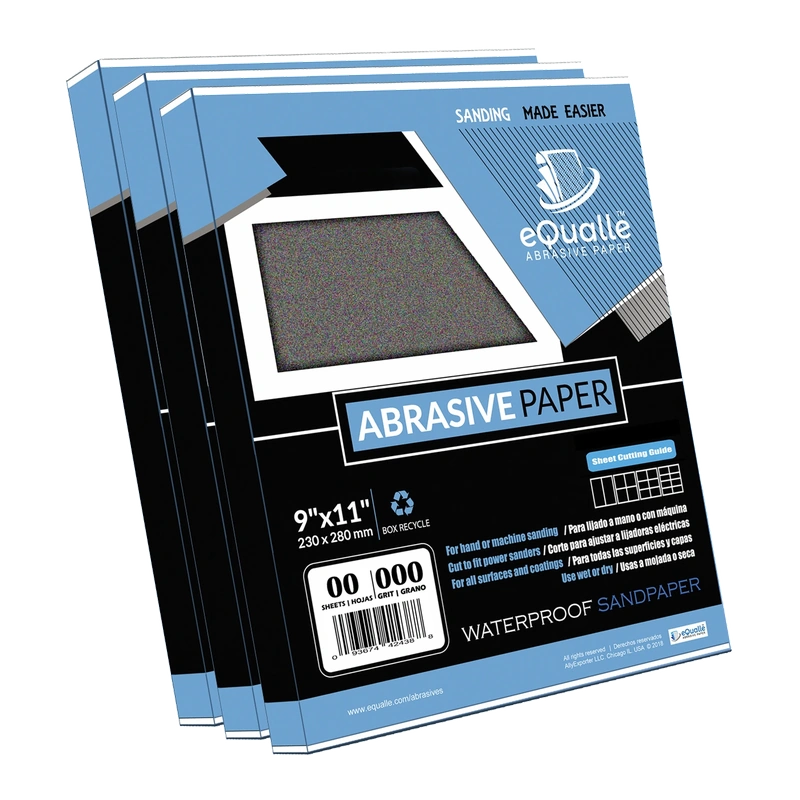
1000 Grit Sandpaper Sheets (50-pack) — 9x11 in Silicon Carbide Abrasive for Wet or Dry Use — Light polishing grit for removing swirl marks and fine scratches. Commonly used in automotive finishing, plastic restoration, and resin art. Delivers a consistent semi-gloss surface ready for final polish. (Professional Grade).
Frequently Asked Questions (FAQ)
Q: What grit progression removes micro marring without overcutting?
A: For clear coat, 2000 → 3000 → 5000 followed by a fine finishing polish on soft foam is a safe, effective ladder. On softer materials, start at 2000 and keep pressure light.
Q: Can I finish out haze with polish only, skipping sanding?
A: Yes, if the haze is from compounding or mild pad trails. Use a finishing foam and a micro finishing polish with light pressure, slow arm speed, and thorough wipe-downs to verify.
Q: Why does haze return after looking perfect under shop lights?
A: Polishing oils can temporarily fill micro marring. After the panel cools and you wipe with a panel prep, the true surface shows. Always inspect after a proper wipe and temperature drop.
Q: Foam or microfiber pad for the final pass?
A: Foam. Microfiber refines quickly but can leave faint trails on soft finishes. Use a soft, closed-cell finishing foam for the last step and clean it often during use.
Q: How do I avoid reintroducing micro marring during wipe-down?
A: Use ultra-clean, low-pile towels, fold frequently to expose clean faces, wipe in one direction with light pressure, and retire any towel that picks up visible dust or spent polish.