
Choosing the Right Width for Sanding Belts
On a quiet Saturday morning, you dust off the benchtop sander you’ve had for years. The shop light warms your worktable as you reach for a fresh belt, determined to smooth a wobbly chair you promised to restore. Coffee steams nearby, the radio hums, and for a few minutes it feels like everything slows down. Then, a familiar frustration: chatter marks across the rail. You steady your hands, check alignment, slow your feed—and still the surface doesn’t level cleanly. It’s not your skill. It’s not the grit. It’s the width. This is where many makers and mechanics unknowingly lose time and precision: selecting the wrong width of sanding belts for the job.
Belt width is a deceptively simple variable. Too narrow, and you dig grooves or overheat tight spots. Too wide, and you can’t control pressure where it counts. Whether you’re shaping knife bevels, flattening panels, tuning cabinet doors, or cleaning up metal welds, the width dictates contact area, heat buildup, and finish quality. The right choice doesn’t just save minutes—it rescues projects from the “almost right” pile. It can even extend the life of your belts and your machine.
In shops that value reliability, the belt width becomes part of a repeatable process. Pair it with the proper grit, abrasive type, and platen setup and your work starts to feel almost effortless. Cuts become cleaner, edges stay crisper, and transitions from coarse to fine become smoother. You can hear the difference: a steady, confident tone instead of stutter-step vibrations. That’s the quiet satisfaction of matching the tool to the task.
If you’ve ever wondered why a 4-inch belt levels a cabinet door beautifully but feels clumsy trimming a delicate curve—or why a 1-inch belt is magic on tight radii but unforgiving on wide flats—this guide is your shortcut. We’ll translate real-world use cases into simple rules, give you measurements you can trust, and outline tips you can put to work today.

Quick Summary: Choose belt width to match contact area and control—narrow for detail and curves, wider for flattening and heavy stock removal—and size it to your sander’s platen and wheels for safe, predictable results.
Why belt width matters
Belt width controls contact area, and contact area controls pressure, heat, and stability. Imagine pressing the same force through a 1-inch strip versus a 4-inch strip. On the narrow belt, pressure per square inch spikes, cutting faster but risking gouges and heat discoloration. On the wider belt, pressure spreads out, improving flatness and finish while reducing heat—but it can feel less nimble on tight contours.
Width also influences tracking stability. Wider belts tend to be more forgiving on flat work when the platen is tuned; they resist rolling over edges and reduce scallop marks on panels. Narrow belts shine on detail work—chamfers, small parts, finger joints, and curves—where you want precision and the ability to steer pressure into a confined area.
Common shop widths reflect these trade-offs:
- 1" belts (1x30, 1x42): detail shaping, knife bevels, tight radii, small parts.
- 2" belts (2x42, 2x48, 2x72): versatile shaping, metal and wood profiling, controlled stock removal with better stability than 1".
- 3" belts (3x18 handheld): portable flattening and quick surface cleanup, moderate control on edges.
- 4" belts (4x36 benchtop): panel work, level sanding, general woodworking, reliable on edges if feed is steady.
- 6" belts (6x48 stationary): wide face flattening, doors, tabletops, and heavy stock removal with excellent stability.
Heat management is another silent factor. Narrow belts concentrate friction and can burn wood or temper metal if you linger. Wider belts diffuse heat but still require proper grit and feed rate. When you choose width with the workpiece geometry in mind (flat vs. curved, small vs. wide), you optimize both cut rate and surface quality.
Sizing sanding belts to your sander
Start with your machine’s specifications. Belt width is not flexible the way length sometimes can be; it must match the sander’s wheels and platen. The tool’s nameplate or manual usually lists one fixed size (e.g., 4x36, 6x48). If you can’t find it, measure the platen width and the drive/idler wheels—the belt width should not exceed either. Using a belt wider than the platen can cause edge rounding, tracking drift, and uneven pressure that shortens belt life.
Handheld belt sanders also demand correct width, but you’ll sometimes see modest variance in length options. Width, however, anchors the belt to the rollers. On benchtop and stationary machines, the tracking crown and guides assume a precise width to center the belt. A mismatch here invites constant adjustment, edge fraying, or jumping the tracking window.
Compatibility aside, “fit” also means the belt aligns with your task. If you have a 4x36 sander but need tighter control on small parts, consider using a platen fence, auxiliary table, or a small workholding jig to simulate a more focused contact zone. Conversely, if your work is mostly wide panels and doors, stepping up to a 6-inch belt (with a truer, flatter platen) can dramatically reduce finishing time.
Here’s a practical way to confirm sizing before you order:
- Check the stamped size on your existing belt. It’s the quickest reference.
- Measure the platen width with calipers or a steel rule; your belt should not be wider than this surface.
- Confirm wheel width; if the belt overhangs, tracking will be inconsistent and edges may fray.
- Note the tracking range (the slotted guide adjustment). If the current belt runs near the extremes, your machine might be out of alignment—or the belt size or seam is off.
Quick setup tips
- Mark the centerline of your platen with a pencil and watch how the belt tracks relative to it during tensioning.
- Dress or replace worn graphite platen pads; thin spots cause hot stripes and uneven cutting.
- For handheld units, fit a fresh belt and run it free for 10 seconds to check seam hop and tracking before touching the work.
- Keep a small square at the station—verify the table is perpendicular to the platen when flatness matters.
Match width, grit, and material
Width alone won’t guarantee a quality finish; it has to be paired with the right abrasive and grit progression. On wood, wider belts paired with open-coat aluminum oxide help eject dust and minimize loading, especially on resinous species. On metal, ceramic or zirconia belts cut cooler and last longer under pressure—useful if your width choice spreads the load and you want consistent bite without overheating.
Grit choices define how the belt behaves across the chosen width. With a narrow belt, coarse grits (36–60) can carve too aggressively unless you lighten pressure or increase movement to avoid troughs. On a wide belt, the same grit may feel tamer and more even. As you climb grits (80–120–150–220), a wider belt preserves flatness better, making it easier to remove previous scratch patterns without waves.
Transition strategy is key: don’t jump too far between grits, especially when your width increases. A 60-to-120 leap on a 6-inch belt can leave faint tracks that show under finish. According to a article, moderate steps between grits help maintain a consistent scratch pattern and reduce rework.
Material behavior matters too:
- Softwoods: wider belts with open-coat abrasives help resist loading; avoid excessive pressure that crushes earlywood.
- Hardwoods: 4–6 inches improve flatness on panels; stop one grit earlier than your finish sanding to avoid burnishing.
- Steel: 2-inch belts deliver controllable profiles; keep fresh ceramic belts for heavy stock removal where narrow widths would overheat.
- Aluminum: favor wider belts at moderate pressure; stearate-treated aluminum oxide can minimize loading.
- Composites: go wider to distribute heat and minimize resin smear; use a firm platen to reduce edge rounding.
Width by task: real-world picks
Sometimes the fastest way to pick belt width is to match scenarios to a sensible default, then adjust for your style and machine.
- Detail shaping and tight curves: 1" or 2". Knife makers often prefer 2x72 for a blend of control and speed. A 1x30 shines on inlays, small chamfers, and tight radii, but demands a light touch.
- Edge tuning and joinery clean-up: 2"–4". For cabinet doors, face frames, and rails, a 4x36 offers stability without feeling sluggish. Use a backer block or fence to keep edges square.
- Panel flattening and large surfaces: 4"–6". A 6x48 makes quick work of tabletops and wide panels, distributing pressure evenly and keeping surfaces flat when the platen is true.
- Metal deburring and weld cleanup: 2"–4". A 2-inch belt allows targeted pressure along a bead or bracket; a 4-inch belt smooths broad welds on plate with fewer passes.
- Portable jobsite cleanup: 3" handheld. Useful for flush trimming and leveling proud edges without hauling a benchtop unit.
Honing these picks comes down to repeatability. Keep a small journal or label the bins where you store belts—“panel flattening: 6-inch, 80–120–150 grit,” “knife profiling: 2-inch ceramic, 36–60 grit,” “furniture edges: 4-inch AO, 80–120 grit.” This helps you build a personal playbook that you can trust the next time you’re in the zone and don’t want to break focus to rethink specs.
Field-tested setup tips
- Use a platen graphite pad on wider belts (4–6") to reduce heat and maintain a consistent slide. Replace when worn or glazed.
- For small parts on wide belts, clamp a sacrificial fence at 90° to the platen to prevent edge roll-over and finger risk.
- On narrow belts, limit dwell time; make two light passes instead of one heavy pass to prevent grooves and burning.
- For metal, keep a water quench cup nearby when using narrow belts on thin stock—if the part’s too hot to hold, you’re risking temper loss.
- Label belt sleeves with task notes after a successful session—it’s faster than memory when you restock.
Troubleshooting width-related issues
Even with the right width, setup quirks can sabotage your finish. If you see scallop marks on wide panels, check platen flatness and table alignment first. A slightly crowned or uneven platen exaggerates with wider belts. Dress or replace the platen surface and ensure your table is square to the belt. If scallops persist, slow your feed and overlap passes by one-third of the belt width.
Edge rounding often comes from a mismatch between width and technique. With a wide belt, any tilt at the wrist creates a long, shallow bevel. Use a fence or register block for straight, square edges. On narrow belts, edge digging occurs when pressure is concentrated on a small contact area. Reduce pressure, move constantly, and consider stepping up one width if you can.
Tracking drift and frayed edges usually point to a width mismatch, damaged crown, or worn guides. Confirm the belt exactly matches the machine’s specified width and that the belt seam is smooth. If a belt consistently walks to one side despite adjustment, try another belt from the pack—seam tolerances vary, and a single out-of-spec belt can waste an hour of setup time.
Heat streaks and glazing tell a different story: width is spreading pressure, but grit or abrasive type is wrong for the material. Swap to a more open coat for wood or a cooler-cutting ceramic for metal. On narrow belts, heat concentrates; increase movement, reduce pressure, or take more frequent breaks.
Finally, washboarding or rhythmic marks often come from seam hop. On narrow belts, you’ll feel it more. Run the belt free for a few seconds to gauge vibration; if it’s pronounced, reserve that belt for roughing where finish isn’t critical, and select another for your final passes.
The Top 5 — Video Guide
If you use a 4x36 benchtop sander, a recent roundup video surveys several leading 4-inch belts for 2025 and compares how they hold up in real use. It highlights multi-pack options, abrasive types, and standout value picks—useful when you’re balancing performance with a shop budget.
Video source: The Top 5 Best 4x36 Sanding Belt in 2025 - Must Watch Before Buying!
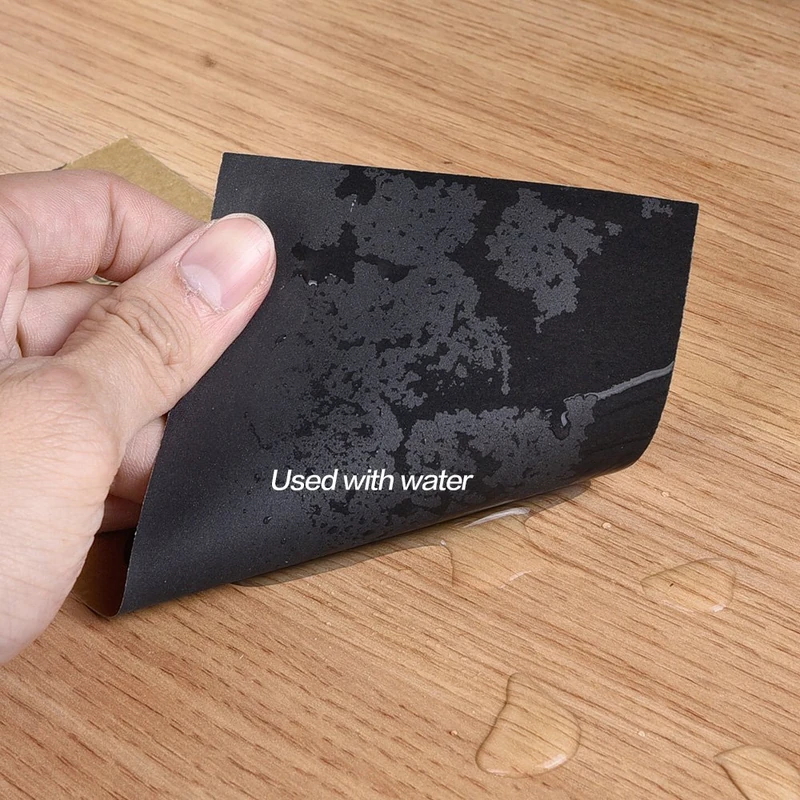
280 Grit Sandpaper Sheets (10-pack) — 9x11 in Silicon Carbide Abrasive for Wet or Dry Use — Fine finishing grit for delicate work—ideal for flattening varnish layers and creating a pre-polish smoothness on wood or resin. (Professional Grade).
Frequently Asked Questions (FAQ)
Q: Can I run a narrower belt than my sander’s rated width?
A: Generally, no. Most machines are designed for a specific width, and narrower belts can track poorly, overhang guides, and fray at the edges. A few industrial machines can accept multiple widths with dedicated tracking guides, but if your sander is labeled 4x36 or 6x48, stick to that width for safety and performance.
Q: When should I choose a 4-inch belt over a 6-inch belt?
A: Choose 4 inches for versatility and control on medium-sized work—cabinet parts, rails, frames, and small panels. Choose 6 inches when flatness on large surfaces (doors, tabletops) is the priority and you want fewer passes with better heat distribution.
Q: Which width is best for knife making?
A: A 2-inch belt (commonly 2x72) is the standard because it balances control with removal rate. A 1-inch belt can handle detail and tight radii but runs hotter and removes material more slowly; use it for small parts or refining.
Q: How does width affect heat buildup?
A: Wider belts spread pressure and reduce localized heat, which helps on broad surfaces. Narrow belts focus pressure, cut faster in a small zone, and heat up quickly. Pair width with the right abrasive (ceramic for metal, open-coat AO for wood) and keep passes moving.
Q: Do I need to adjust my technique when switching widths?
A: Yes. On wider belts, rely on fences and steady feeds to prevent edge rounding. On narrower belts, lighten pressure and increase movement to avoid grooving. In both cases, confirm platen flatness and tracking before critical passes.