
Sandpaper Grit Chart for Finish Selection
It’s 8:40 p.m. in a quiet shop, and the last pass of the sander will decide everything. The walnut dresser is leveled, drawer faces are flush, and you’ve already tuned the edges by hand. What remains is the final grit choice—the one that determines whether an oil finish glows with depth, a waterborne polyurethane keys properly, or a lacquer topcoat lays down glass-flat. This is where a sandpaper grit chart becomes more than a table of numbers; it’s a translation key between surface profile, abrasive behavior, and finish chemistry. Choose carelessly and you’ll fight adhesion problems, washed-out figure, or telegraphed swirl marks. Choose well and the finish rewards you with clarity, durability, and speed.
Final grit is not a universal number. It’s a function of finish type, substrate density, abrasive mineral, and even your toolpath. Dense maple that will be stained is a different puzzle than open-grained oak headed for hardwax oil, and both behave differently than MDF destined for paint. The abrasive you pick—its mineral, coat, backing, and grading—defines scratch morphology, not just “smoothness.” And your workflow must control that scratch pattern so the finish wets and bridges as intended.
In practice, final grit selection is about engineered compromise: deep enough scratches for mechanical keying when you need it, shallow enough to prevent telegraphing under thin films, and just coarse enough for penetration when using oils and stains. In this guide, we will match finish families to final grit targets, explain how to interpret a sandpaper grit chart within the context of FEPA/CAMI grading, and outline inspection steps that catch problems before you open a can.
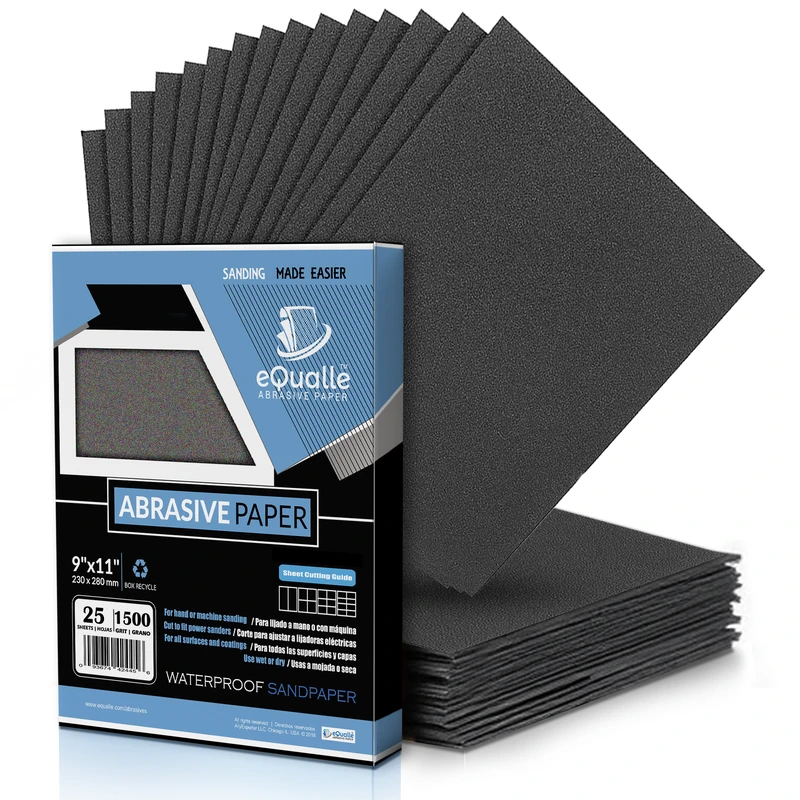
Quick Summary: Your final grit should be chosen by finish chemistry, substrate behavior, and abrasive type—not habit—so the finish adheres, levels, and showcases the wood as intended.
Finish goals define final grit
Every finish system has a mechanical requirement and an optical requirement. Mechanically, the surface must provide adequate “tooth” for adhesion without cutting grooves that telegraph through the film. Optically, the surface must present a uniform scratch pattern at a depth that preserves grain contrast and avoids haze.
Penetrating oils and stains rely on capillary action; sanding too fine reduces pore access and yields a blotchy or muted result. Film-forming topcoats (polyurethane, lacquer, shellac, catalyzed varnish) need a consistent microprofile for mechanical interlock and even film build. Waterborne coatings, in particular, are sensitive to raised grain and can bridge shallow scratches poorly, making them prone to witness lines if the profile is inconsistent.
Set your final grit by answering three questions:
- What is the finish family and film thickness? Thinner films and high-build lacquers expose the scratch pattern differently than thick, oil-modified polys.
- How does the substrate behave? Diffuse-porous hardwoods (maple, birch) burnish quickly and resist stain penetration; ring-porous woods (oak, ash) carry more open pores.
- How will the surface be used? Floors, furniture tops, and sprayed cabinet doors invite different inspection angles and lighting, which makes certain defects more visible.
As a rule, penetrating finishes resolve best around P150–P180 (sometimes P220 on dense exotics), while film finishes typically want P180–P220 as the final bare-wood grit. Going past P220 on bare wood before waterborne topcoats can reduce adhesion; conversely, lacquer and shellac can tolerate P220–P320 pre-finish because they reflow and bond differently. Between coats and for rub-out, higher grits (P320–P1000+) come into play, but that is distinct from the final bare-wood grit.
Reading a sandpaper grit chart in context
A sandpaper grit chart is a helpful reference, but only when you interpret it through the lens of grading systems and abrasive construction. Two key standards dominate: FEPA “P” grades (e.g., P180, P220) and CAMI/ANSI grades (e.g., 180, 220 without the P). They do not map one-to-one, especially at finer ranges. FEPA “P” grades are specified by tighter size distributions; CAMI can be broader, leading to slightly different scratch profiles. When a manufacturer lists only “220,” verify whether it’s FEPA P220 or CAMI 220; P220 tends to cut a hair coarser than CAMI 220.
Abrasive mineral and construction also matter:
- Mineral: Aluminum oxide fractures slowly and is a durable generalist for wood. Silicon carbide cuts sharper and breaks down faster, ideal for sealer sanding and between coats. Ceramic and ceramic-alumina grains cut cooler and resist loading—excellent for heavy stock removal.
- Coat: Open-coat papers (70–80% grain coverage) resist loading in resinous woods; closed-coat papers cut more uniformly on hardwoods.
- Stearate: A stearated, non-loading layer is excellent for between-coat scuffing of finishes and paint, but can interfere with waterborne adhesion if residues aren’t removed.
- Backing: Heavier paper or film backings maintain flatness and produce a more uniform scratch. Film-backed discs often create a finer, more consistent scratch at a given “grit number” than paper.
Chart numbers are proxies for average abrasive particle size; they do not directly describe scratch depth, which depends on pressure, tool speed, pad hardness, and dust extraction. A P220 film disc on a 5 mm random-orbit sander with a firm pad and high vacuum can leave a noticeably finer, more consistent pattern than a CAMI 220 paper disc on a soft pad with poor extraction. Use grit charts to choose the ballpark, then dial in by test-sanding and finishing a sample.
Wood and substrate variables
Your substrate dictates how the scratch pattern evolves and how the finish interacts with it.
- Diffuse-porous hardwoods (maple, cherry, birch): These burnish quickly, closing off pores. If you’re applying dye or stain, stopping at P150–P180 preserves penetration. If you go to P220, compensate with a pre-stain conditioner or water-pop to reopen fibers.
- Ring-porous hardwoods (oak, ash): Open pores accept stain readily even at P180–P220, but deep scratches across the grain can telegraph through clear films. Discipline your scratch orientation and avoid skipping grits.
- Softwoods (pine, fir): Latewood/earlywood density swings cause uneven cutting. Favor open-coat abrasives and lighter pressure at higher grits (P150–P180) to avoid washboarding. Stain performance improves if you stop at P120–P150.
- Veneers and MDF: Veneers demand conservative grit progression and careful edge protection—P180–P220 is typical for clear film finishes, with minimal pressure. MDF destined for paint appreciates P180–P220 on faces and a crisp sealing of edges (sanded, primed, sanded to P320).
- End grain: It acts like bundled straws. Start coarser but plan to finish two steps finer than the face to keep color parity (e.g., face P180, end grain P220).
Moisture also plays a role. Waterborne systems raise grain; pre-raise with a light water wipe, dry, then sand back to your final grit. On resinous softwoods, solvent wipe-downs can help assess scratch visibility but may redistribute pitch; keep wipes clean and follow with compressed air.
Tooling matters: a random-orbit sander with a firm pad reduces dish-out on flat panels; a soft pad follows contours but can round edges and leave shadows. Keep your dust extraction strong; loaded abrasives smear and polish rather than cut, changing the effective grit in use.
According to a article.
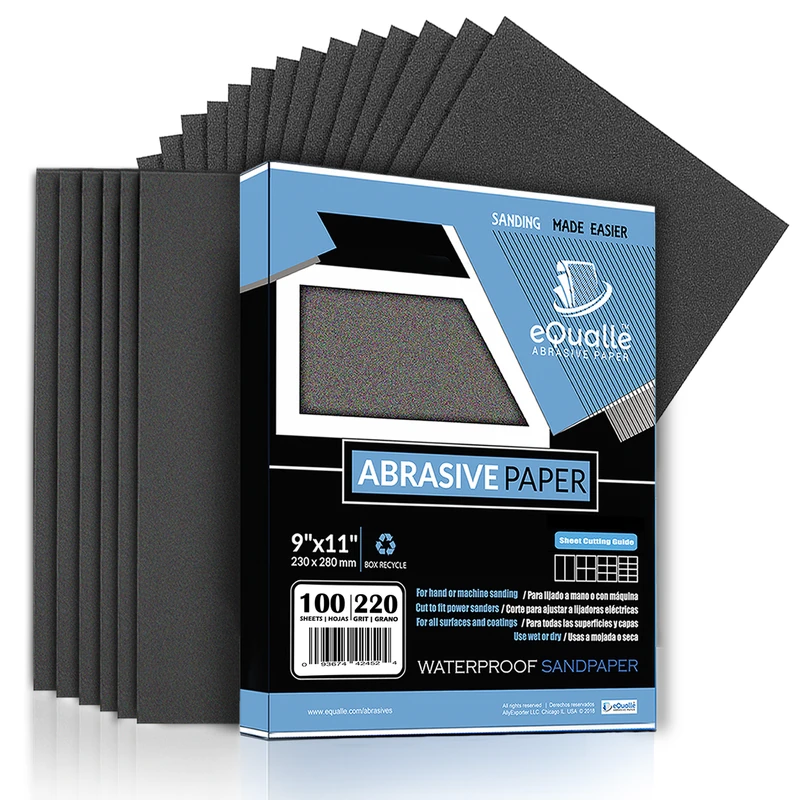
Workflow by finish type
Align your final grit to finish chemistry and target appearance. Below are reliable baselines; verify against product data sheets when available.
Penetrating oils and hardwax oils
- Bare wood final grit: P150–P180 for most furniture; on dense exotics, P220 if blotching is a risk. For floors with hardwax oil, many manufacturers recommend P120–P150 to ensure sufficient bite and slip resistance.
- Notes: Going finer than P220 can starve the surface and mute chatoyance. Consider a light water-pop before oiling for enhanced figure on dense woods.
Oil-based varnish and oil-modified polyurethane
- Bare wood final grit: P180–P220.
- Between coats: Scuff sand P320–P400 with a stearated paper or nonwoven pad after proper cure.
- Notes: These finishes build thickness and can bridge P180 scratches without telegraphing, but uneven patterns will still show under raking light.
Waterborne polyurethane
- Bare wood final grit: P150–P180, then pre-raise grain, dry, and kiss-sand back to P180–P220.
- Between coats: P320–P400 scuff; vacuum and tack thoroughly.
- Notes: Waterbornes need mechanical keying and are less forgiving of burnished surfaces. Avoid stearate residues; choose waterborne-safe abrasives or clean aggressively.
Lacquer and shellac
- Bare wood final grit: P220–P320, especially for spray workflows aiming for high clarity.
- Between coats: P320–P400; rub-out after full cure with P800–P1500 if required.
- Notes: These reflowing finishes melt into prior coats, masking very fine scratches but amplifying cross-grain scars.
Stain plus clear topcoat
- Stain prep final grit: P120–P150 on softwoods; P150–P180 on most hardwoods; P180–P220 on blotch-prone dense species (with conditioner).
- After staining: Do not sand the color. Seal, then level the sealer at P320 before topcoats.
- Notes: For uniform color, keep scratches parallel to the grain and avoid ROS swirl near edges.
Paint and enamels (wood)
- Bare wood: Prime after P150–P180. Sand primer to P220–P320 for topcoat.
- Existing finishes: De-gloss and scuff to P220–P320, then prime as required.
- Notes: Film-backed P320 produces flatter primer leveling on doors compared to paper 320.
Automotive note (for completeness)
- Filler shaping: P80–P180. Primer-surfacer leveling: P320–P400. Basecoat prep: P600–P800 wet. Clearcoat leveling/polish: P1000–P3000.
For all workflows, avoid skipping more than one grit step during heavy removal (e.g., 80 → 120 → 150 → 180 → 220). Skipping creates deep rogue scratches that survive to the end.
Inspecting and validating the surface
Even the right final grit fails if the scratch pattern is inconsistent. Inspection is a process, not a glance.
Use raking light at 20–30 degrees to the surface. A simple LED bar or flashlight held low exposes cross-grain scratches, swirl, and dish-out. Rotate the piece and repeat; defects hide at certain orientations. Then perform a solvent or water preview: on bare wood before waterbornes, a light water wipe raises grain and darkens scratches for visibility; before solvent-borne finishes, a denatured alcohol wipe simulates wet-out without deep penetration. Let the surface dry fully before finishing.
Magnification helps. A 10x loupe or a macro-phone photo reveals whether your scratch field is uniform and parallel to the grain. Pencil-grid the surface before a leveling pass; sand until the grid disappears evenly to confirm full contact—especially on veneered panels where a soft pad can leave valleys.
Finally, build test coupons alongside your project. Sand small offcuts through your intended sequence, finish them, and evaluate under the same lighting. Adjust your final grit up or down based on color uptake and adhesion behavior, not habit.
Actionable tips for final grit reliability:
- Standardize by finish: Label your ROS pad with “WB topcoat,” “Oil,” or “Lacquer” and keep dedicated abrasive stacks for each chemistry to avoid cross-contamination.
- Control pad hardness: Use firm pads for flat panels at final grit to reduce dish-out; switch to soft pads only for profiles and edges.
- Lock dust extraction: A perforated interface pad and matched hole pattern improve cut uniformity at P180+; poor extraction polishes instead of cuts.
- Time your passes: At final grit, reduce pressure and increase dwell slightly—two slow passes cut more evenly than one hard pass.
- Edge discipline: Hand-sand edges with a fresh sheet in the same final grit and orientation as the face to keep reflectivity matched.
How Do I — Video Guide
If you’re mapping these grit choices to furniture builds, a practical “grit 101” walkthrough helps. A recent tutorial on sanding furniture breaks down which grit to use at each phase of a flip, starting with removal and leveling, then moving through scratch refinement and final prep for the chosen finish. It shows how a disciplined progression avoids swirl marks and how stopping at the correct grit preserves color and adhesion.
Video source: How Do I Sand Furniture? | Sandpaper Grit 101 - Know Which Grit to Use for Each Step of Your Flip!
1000 Grit Sandpaper Sheets (100-pack) — 9x11 in Silicon Carbide Abrasive for Wet or Dry Use — Light polishing grit for removing swirl marks and fine scratches. Commonly used in automotive finishing, plastic restoration, and resin art. Delivers a consistent semi-gloss surface ready for final polish. (Professional Grade).
Frequently Asked Questions (FAQ)
Q: Can I sand to P320 before a waterborne polyurethane?
A: It’s safer to stop at P150–P180, pre-raise the grain, then refine to P180–P220. Going to P320 on bare wood can reduce mechanical keying and increase adhesion risk, especially on dense hardwoods.
Q: What final grit should I use before applying an oil finish on walnut?
A: P150–P180 preserves pore access and figure. If the walnut is unusually dense or you’re seeing blotch, P220 can help, but test on scrap—too fine can mute the chatoyance.
Q: Why do my 220-grit results look different between brands?
A: FEPA P220 and CAMI 220 are not identical, and film-backed, stearated, or ceramic papers cut differently. Backing stiffness, pad hardness, and dust extraction also change scratch depth. Treat the grit number as a starting point and validate with test panels.
Q: How should I sand between coats of lacquer or polyurethane?
A: After proper cure, scuff sand with P320–P400 using a clean, low-pressure pass. Vacuum thoroughly and tack before recoating. For lacquer, higher grits are fine because it melts into previous coats; for waterbornes, ensure no stearate residue remains.
Q: What’s the best approach for stained pine to avoid blotching?
A: Stop at P120–P150, sand with the grain, apply a pre-stain conditioner or washcoat, and test color on an offcut. Sanding finer can increase blotch; the conditioner evens uptake without over-polishing the surface.