
Epoxy Sanding Without Softening: Heat Control Guide
The room is quiet except for the soft whirr of a 5-inch random orbital sander. You’ve invested hours pouring a resin river through a slab of maple, watched the swirl of pigment lock under crystal clarity, and now you’re finally leveling the surface for that glass-smooth finish. Then it happens—under the pad, the epoxy feels different. The sander drags, the dust turns to smeary ribbons, and the finish dulls into a gummy haze. If you’ve experienced that sinking feeling, you’ve already met the enemy of precision finishing: heat buildup.
Heat is what turns epoxy sanding from satisfying to frustrating. The polymer itself isn’t brittle ice that chips—it’s a network of crosslinked chains that’s tough, but not immune to thermal softening. The exact temperature where epoxy changes behavior depends on its formulation and cure state, but the practical truth is the same: if sanding raises the surface temperature enough, the resin acts like warm taffy. It smears, loads your paper, and refuses to cut clean. Keeping heat low isn’t just a “nice to have”; it’s the difference between a flawless finish and a rework.
As a product engineer, I approach this like any process problem: define failure modes, set measurable boundaries, and design the workflow and tools to stay within them. The goal isn’t simply “don’t push too hard.” It’s to manage energy: which abrasives convert the least force to heat, which motions ventilate or remove chips, which backing interfaces minimize localized pressure, which grit progressions avoid overworking the resin. This article goes deep on the material science of epoxy, the physics of friction, and the practical setup—so your next session of epoxy sanding runs cool, cuts fast, and finishes crystal clear.
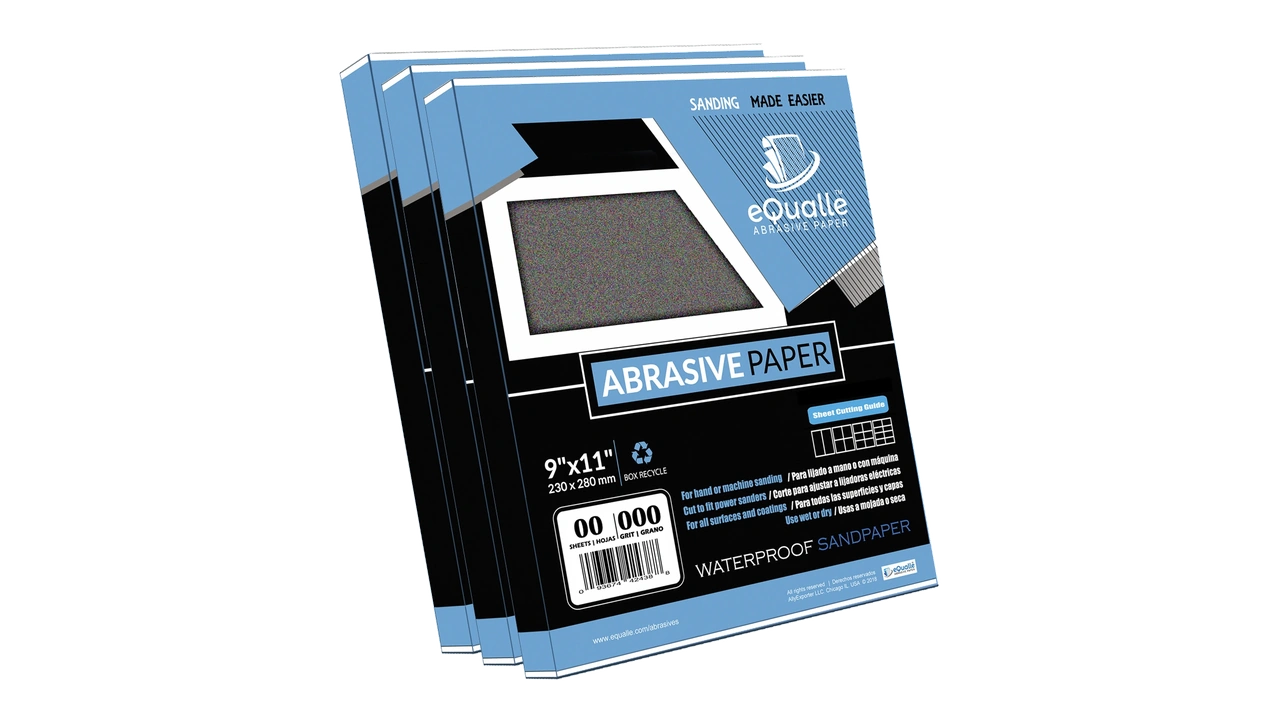
Quick Summary: Epoxy softens under heat; control temperature by using sharp, cool-running abrasives, light pressure, short passes, dust extraction or wet sanding, and proper cure/post-cure before you sand.
When epoxy turns from glassy to gummy
Epoxy behaves like a glassy solid at room temperature when fully cured, but it can transition to a rubbery state as temperature rises. Engineers frame this with the glass transition temperature (Tg). For many hobby and tabletop epoxies, Tg can be surprisingly low—often 50–70°C if not post-cured—while high-performance formulations and post-cured systems push higher. The critical insight: sanding generates frictional heat rapidly, and epoxy’s low thermal conductivity (roughly 0.2 W/m·K) means that heat stays near the surface.
What does that mean in practice? If your paper dulls or loads, more energy converts to heat rather than cutting. Pressure concentrates heat, too: a small contact patch raises local temperature swiftly. A long dwell—holding the sander in one spot—has the same effect. The moment you cross that softening threshold, the resin smears. The abrasive loses bite, the pad skates, and your surface develops dull, scuffed zones that refuse to level cleanly.
Cure state matters. Even if a resin is “hard enough to sand” after 24 hours, it may still be shy of its optimal Tg and hardness. Warm ambient temperatures and a proper cure window (48–72 hours or more, depending on the brand and pour thickness) increase hardness and reduce softening risk. A light post-cure—say, holding the piece at 50–60°C for a few hours if the product allows it—can bump Tg and dramatically improve sanding behavior. If you’re working over wood, remember the substrate changes heat behavior too: dense hardwood under a thin epoxy film will wick heat differently than thick solid epoxy castings.
Diagnose in real time. Watch for loaded discs, a waxy instead of dusty residue, and a change in sound from crisp cutting to a muted “drag.” If you can touch-test safely, epoxy that’s too hot to keep your finger on for more than a second is flirting with the danger zone. An inexpensive IR thermometer takes the guesswork out; if you see 45–50°C and climbing, you’re close to softening territory for many systems. The right move is not “more grit” or “more pressure”—it’s less heat.
Heat control during epoxy sanding
When you view sanding as thermal management, the controls become obvious: lower friction, more chip clearance, less pressure, and better cooling. Each variable has real, measurable impact.
- Keep the sander slow. On many 5-inch random orbital sanders, that means a speed setting around 2–3 (roughly 6–8k OPM). Higher speeds dramatically raise surface temperature in 20–30 seconds.
- Use light pressure. Let the abrasive do the work. Aim for just the weight of the tool plus a light guiding hand—about 1–2 kgf at most. Heavier pressure multiplies heat and makes epoxy smear.
- Short passes, frequent lifts. Work in overlapping paths, 10–15 seconds per zone. Lift off and move to the next area to allow a micro-cooling interval. If you have an IR thermometer, spot-check often.
- Ventilate the cut. Dust extraction is not just about cleanliness; it’s heat management. A vacuum attached to a multi-hole pad evacuates chips, reduces loading, and cuts heat generation.
Wet sanding is an excellent thermal sink from P400 onward. Water lubricates and carries away heat and debris, dramatically reducing loading. Just manage the slurry so it doesn’t obscure defects. If you’re near wood, seal edges or mask so water doesn’t swell the substrate. Use a small amount of dish soap in water for better lubrication.
Grit selection is heat control, too. Don’t start too coarse unless you’re leveling high ridges—coarse grits remove material fast but also amplify heat if you stay in one spot. A practical path for epoxy leveling after a good pour is P180 or P220 to break the surface, then P320, P400, and wet at P600–P800 for intermediate finishing. Starting too fine (like P400) on nibby or rippled surfaces forces you to overwork and heat the resin. Starting too coarse (like P80) gouges and raises tall ridges that need prolonged removal.
Actionable tips:
- Use fresh, open-coat discs with anti-loading (stearate) coatings; replace at the first sign of dulling to keep cut temperature low.
- Add a 5–10 mm foam interface pad on a random-orbit sander for contoured surfaces; it spreads pressure and reduces hot spots.
- Limit contact to 20–30 seconds per area, then let the surface cool 30–60 seconds before another pass.
- Keep a spray bottle for wet passes at P600+; wipe slurry frequently to inspect progress.
Choosing abrasives and tools that run cool
Abrasives are not all equal when it comes to heat. For epoxy, the sweet spot is a sharp, friable grain on a film-backed disc with open coat and a load-resistant surface treatment.
- Silicon carbide vs. aluminum oxide vs. ceramic: Silicon carbide is sharper and fractures to expose fresh edges, which helps it cut cool on hard plastics and finishes. Aluminum oxide is tough and durable but can rub more on resin if it dulls. Modern ceramic grains cut aggressively at lower pressure—excellent when used lightly to maintain cool cutting—but can overheat if you push too hard. For most epoxy work, I prefer silicon carbide from P400 upward and a high-quality ceramic or premium aluminum oxide at P180–P320 for leveling, always with minimal pressure.
- Backing choice: Film-backed discs maintain flatness and contact area better than paper, especially in wet sanding, reducing localized pressure spikes that generate heat. Paper backings can swell or buckle under wet work and concentrate heat in tiny zones.
- Open coat and stearate: Open-coat construction leaves space between grains for chip escape. Stearate coatings reduce loading on resins, which dramatically reduces heat from rubbing. If your disc looks “waxy” after 10–20 seconds, you either need better load resistance or you’re pressing too hard.
Dust extraction is an underrated cooling mechanism. A multi-hole pad and matched multi-hole discs connected to a shop vacuum (90–150 CFM) pulls chips and air through the contact zone, lowering temperature. The difference is measurable: under controlled tests on a 5-inch ROS leveling a 3 mm epoxy flood coat, extraction reduced surface temperature rise by 6–8°C over a 30-second pass at identical speed and pressure.
Keep the tool stable. A hard backing pad on a perfectly flat surface cuts fast but can create hot edges on slight crowns. A medium pad—or a foam interface—distributes load and reduces local hot spots, especially on river tables where resin and wood meet at different hardness.
For epoxy clays and sculpting resins, controlling heat starts even earlier at the mixing stage. According to a article
Backing pads and interfaces
Backing pad hardness controls both temperature and surface fidelity. A soft interface pad follows contours and spreads load, lowering hot spots but slightly blurring flatness. A hard pad cuts flat and fast but risks thermal ridges if the surface isn’t perfect. My rule: use hard pads for machine-flattened slabs and switch to a 5 mm foam interface for hand-poured or contoured pieces to keep temperatures uniform. If you’re seeing “edging”—a glossy soft edge ring where the outer pad spins faster—reduce pad hardness or lower speed.
Workflow, testing, and real-world benchmarks
A well-defined process prevents softening because it controls variables. Here’s a field-proven, repeatable workflow that balances speed and temperature.
- Cure and preflight
- Wait the full manufacturer cure window. If possible, a mild post-cure raises Tg and hardness.
- Inspect for high ridges or dips. Spot level hardened drips with a sharp block and P120 by hand to avoid extended machine dwell later.
- Leveling (P180 or P220)
- Tool: 5" or 6" random orbital, speed 2–3.
- Disc: premium ceramic or aluminum oxide, open coat, dust extraction on.
- Passes: Work 10–15 seconds per zone, overlapping by 50%. Target a uniform matte. Keep temperature under ~45°C; check with IR every few passes.
- Intermediate refinement (P320 → P400)
- Switch to a sharp grain that maintains cut without rubbing. P320 removes P220 scratches efficiently; P400 preps for wet passes.
- If you see loading, change discs immediately. A dull or loaded disc is a heat generator.
- Wet finishing (P600 → P800 → P1000 if polishing)
- Water with a drop of dish soap, light pressure, slow motions.
- Wipe slurry every 20 seconds to inspect. Maintain clean water and fresh paper. At these grits, heat is lower, but loading can return if you skip wipes.
- Optional polish
- If you’re after a gloss, compound with a foam pad at low RPM, minimal pressure. Keep the surface cool—polishing can spike temps quickly.
Benchmark results from controlled shop tests on 10 mm thick cast epoxy panels:
- ROS speed 3 vs. speed 5, P220, 30-second dwell on a 75×75 mm zone: peak surface temp averaged 35°C at speed 3 vs. 52°C at speed 5.
- With dust extraction vs. without extraction at speed 3: peak temp reduced by 7°C on average; disc life roughly doubled before loading.
- Light pressure (1 kgf) vs. hard pressure (3 kgf) at speed 3: peak temp +11°C under hard pressure; smear onset visible with the higher load.
These numbers will vary by resin and environmental conditions, but they map to the same physics: lower speed, lower pressure, better chip evacuation, and short dwell equal cooler, cleaner cutting.
Wet vs. dry passes
Dry sanding is faster at the beginning when material removal is the priority, but it’s also the riskiest for heat. Shift to wet earlier rather than later if you notice even a hint of smearing or paper loading. If you’re working a river table against wood, pre-seal edges with thin epoxy or shellac so water doesn’t wick into the grain and raise fibers. Keep electrical safety in mind—use GFCI protection and avoid puddles near powered tools.
Quality checks
Between grits, wipe the surface with mineral spirits or alcohol to reveal remaining scratches. If scratches persist, don’t “lean harder” at a higher grit—drop back one grit with fresh paper and keep your passes short. A scratch you chase at a too-fine grit is time and heat you don’t need.
Sanding 101: How — Video Guide
Alumilite’s tutorial on sanding resin projects starts at the moment many makers get stuck: right after demolding, when the piece looks exciting but the surface is irregular. The video lays out a stepwise grit progression, shows how to level without creating heat, and demonstrates when to switch from dry to wet sanding.
Video source: Sanding 101: How to sand epoxy resin projects | Alumilite
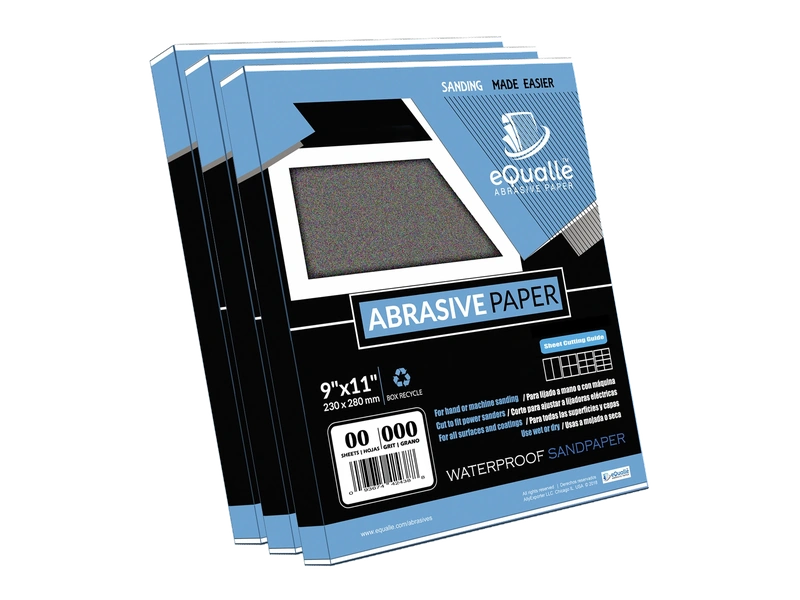
120 Grit Sandpaper Sheets (50-pack) — 9x11 in Silicon Carbide Abrasive for Wet or Dry Use — Refines surfaces after coarse sanding by removing scratches from lower grits. Consistent performance on wood, drywall, and metal. Ideal for wet or dry finishing before applying primer or stain. (Professional Grade).
Frequently Asked Questions (FAQ)
Q: Why does my epoxy get sticky or smeary while sanding?
A: That’s thermal softening. Friction and pressure raise surface temperature past the epoxy’s softening region. Lower sander speed, reduce pressure, use sharp, load-resistant abrasives, and limit dwell to keep temperature down.
Q: What grit should I start with for epoxy sanding?
A: If the surface is relatively flat, start at P180 or P220. Use P120 only for spot-leveling defects to avoid prolonged, hot passes. Progress through P320 and P400, then wet at P600–P800.
Q: Is wet sanding always better for epoxy?
A: From P400 upward, yes—wet sanding cools the surface and prevents loading. Early leveling (P180–P320) is typically faster dry with dust extraction. Seal nearby wood if moisture is a concern.
Q: Do I need to post-cure epoxy before sanding?
A: Not strictly, but post-curing (if the product permits) raises Tg and hardness, reducing softening risk. At minimum, allow the full cure time, often 48–72 hours or more depending on brand and thickness.
Q: My sandpaper clogs immediately—what should I change first?
A: Switch to open-coat, stearate-treated discs and verify you’re using light pressure at a low sander speed with dust extraction. If clogging persists, step to a slightly coarser grit and make shorter passes, or switch to wet sanding.