
Reduce Polishing Time with Microfinishing Film
A Sunday evening shop quiets in that special way it does when the last coat finally flashes off. The blade you’ve ground all afternoon catches a line of light on the bench—almost there, but not quite. The scratch from the coarse stage is still telegraphing through, a shallow arc that you can feel more than see. You have two choices: keep chasing it with the same field-worn abrasive, or change the game. This is where microfinishing film earns its keep. With a stable, flat backing and precisely graded minerals, you can push the finish forward predictably instead of gambling time on inconsistent paper or tired belts. That predictability is what shaves hours, not minutes, from a polishing day.
Whether you sharpen plane irons by the “scary sharp” method, lap carbide inserts to a controlled Ra, or deburr 3D-printed tool steel, the clock always runs faster in the finishing bay. Every rework cycle starts with the same culprit: a missed scratch band or clogged abrasive. The fastest workflow isn’t “more grit changes.” It’s fewer surprises. The uniformity in microfinishing film—cut rate, grain spacing, backing stiffness—reduces variability so you can predict when a scratch population is truly extinct before stepping down. The result is less backtracking, less heat, and a finish that goes from functional to mirror with fewer passes.
When you commit to tight tolerances, your abrasive is not a consumable—it’s a process control. A rigid glass platen, a PSA-backed film sheet, light coolant, and a disciplined progression puts you in charge of surface topography rather than at the mercy of it. And yes, there’s a practical payoff: microfinishing film routinely shortens polishing time by 25–40% in shops that move from generic paper to precision films, largely by eliminating redundant passes and scratch-hunting.
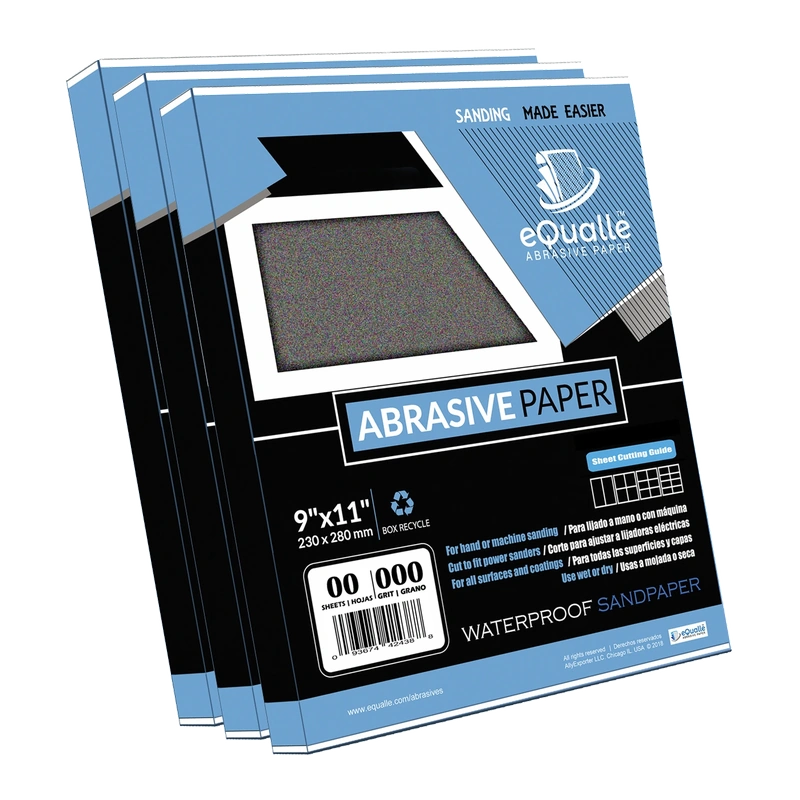
Quick Summary: Switch to precision-graded microfinishing film on a flat platen, refine your grit sequence, and control pressure, speed, and coolant to cut polishing time dramatically while improving finish consistency.
From rough blank to mirror edge
Reducing polishing time begins upstream—at surface prep. The finish you end with is encoded by the deepest scratches you fail to remove, not by how much you buff at the end. That makes the first two abrasive stages the most important. Establish a flat, uniform scratch field with a rigid, reliable platform: a glass or granite surface plate under PSA-backed film. The film’s PET backing holds the abrasive in a single plane, keeping the scratch depth consistent and easier to erase at the next step.
Replace random circular rubbing with crosshatching. At each grit, orient strokes 30–45 degrees off the previous direction. This makes residual scratches immediately visible under raking light. Set a target removal ratio: each subsequent grit should cut deep enough to remove 100% of the prior scratch depth with a 20–30% margin. Practically, that means you should see every old scratch disappear in 8–20 strokes, not 80. If it takes longer, your next grit is too fine, your pressure is too light, or you’ve glazed the film.
Define your endpoint with a metric, not a hunch. For edges and small flats, a low-power loupe (10–20×) is sufficient. For critical planar parts, a handheld roughness gauge or even a calibrated feel for how a properly dressed surface reflects a narrow light band can be your “go/no-go.” The transition from stock removal to refinement should be deliberate: the last coarse grit establishes flatness and geometry; every finer grit is just a scratch replacement program. Don’t advance until edges are fully “landed” (no shadowed valleys) and the entire surface displays a uniform sheen.
Finally, keep heat out. Even modest friction elevates temperature, raising the risk of temper draw on hardened steels and orange peel on softer alloys. Small sips of water with a drop of dish surfactant or a light mist of water-soluble coolant keep debris suspended and abrasive cool. Microfinishing film performs best when cutting is crisp and swarf evacuation is controlled—two levers that directly reduce total cycle time.
Why microfinishing film beats paper
Standard abrasive paper is a compromise designed for flexibility and low cost. It works until it doesn’t—backing compressibility varies, grain size distribution is broad, and loading accelerates as fibers swell. Microfinishing film flips those variables. It uses a dimensionally stable PET backing (often 3–5 mil) coated with precision-graded mineral via controlled resin systems. The result is an even scratch field with a narrower depth distribution and a higher effective cut rate for a given nominal grit.
Mineral choices let you match substrate and stage. Aluminum oxide (AO) is the generalist: resilient, fracture-tough, and excellent for steels, aluminum, and wood. Silicon carbide (SiC) fractures sharper and cuts faster on hard, brittle materials or when you need aggressive action at fine grades, such as on tool steels and glass-filled polymers. Diamond film is for the truly hard: carbide, ceramics, sapphire, and hardened steels needing submicron finishes. Because the grain is more uniformly distributed and anchored, you can “skip” more confidently—dropping from, say, 30 µm directly to 9 µm on flat work—without risking stranded deep scratches.
The backing’s stiffness is a hidden time-saver. Paper flexes and domes over highs, rounding edges and leaving valleys untouched. Film stays flat, transferring your pressure into actual cutting rather than backing deformation. That transfers to fewer passes needed per step, especially for the critical flattening stages. Comparable cut rates at lower applied pressure reduce heat, making the finish cleaner and the abrasive life longer.
Cooling and cleanliness tie the package together. Film sheds swarf predictably; with water or light oil, the open surface clears instead of loading. You can restore cut mid-stage by squeegeeing the film with a plastic scraper or wiping with a lint-free cloth. This consistent behavior is why microfinishing film enables time compression: each grit behaves like a calibrated tool rather than an expendable guess.
Grit sequencing for faster polish
Fast polishing is about logical grit jumps, not microscopic increments. A sensible ladder minimizes steps while guaranteeing full scratch replacement. Think in microns. The mean particle size gives a more reliable scratch depth predictor than mixed FEPA labels.
Practical ladders for steel on rigid platens:
- Heavy correction: 60 µm (P240 equivalent) → 30 µm (P600) → 15 µm (P1200) → 9 µm (P2000) → 3 µm → 1 µm.
- Light correction or previously flat parts: 30 µm → 15 µm → 9 µm → 3 µm → 1 µm.
- Diamond-only workflow for carbides/ceramics: 45 µm → 15 µm → 6 µm → 3 µm → 1 µm → 0.5 µm.
For aluminum and softer alloys, substitute AO film and consider slightly smaller jumps to control burr and smear: 40 µm → 20 µm → 12 µm → 5 µm → 1 µm. On wood or finishes, SiC or AO films in the fine range (15 µm to 1 µm) excel at leveling without tearing fibers.
Use decision gates between steps. If you still see more than 2–3 stray scratches from the prior orientation after a standard stroke count, do not step down. Either extend the current step or return one grit coarser. This gatekeeping eliminates the worst time sink in polishing—discovering at the end that a deep scratch survived three steps and 15 minutes.
Micron/FEPA equivalence varies by vendor; trust the micron rating printed on the liner of quality film. Many shops reduce total steps by one when switching from paper to film because the depth distribution narrows and each step removes the prior scratch more efficiently. You may be tempted to skip aggressively (e.g., 30 µm to 5 µm). On soft, flat substrates, that’s feasible. On hardened irregular geometries, keep the ratio of successive mean sizes under 3:1 for risk-free transitions.
According to a article
That reference data aligns with shop reality: precision-coated films produce predictable finishes and scratch geometries across AO, SiC, and diamond variants, enabling leaner grit ladders. Translate that into your workflow with pilot runs. Time each stage for two parts with your current media, then repeat with film-based steps. Track Ra/Rz and total minutes per part. Most teams see an immediate step reduction and a measurable cut in rework.
Bench workflow example
- Mount a 30 µm AO film on a glass platen (PSA). Mist with water + 0.1% surfactant.
- Crosshatch 15–20 strokes with 18–22 kPa of pressure. Check under raking light and 10× loupe.
- Swap to 15 µm, repeat with orientation change. Confirm zero legacy scratches after 10–12 strokes.
- Proceed 9 µm → 3 µm → 1 µm, decreasing pressure to 8–12 kPa at 3 µm and below.
- Final check: narrow light band reflection should be crisp edge-to-edge; if mottled, back up one step for 6–8 corrective strokes.
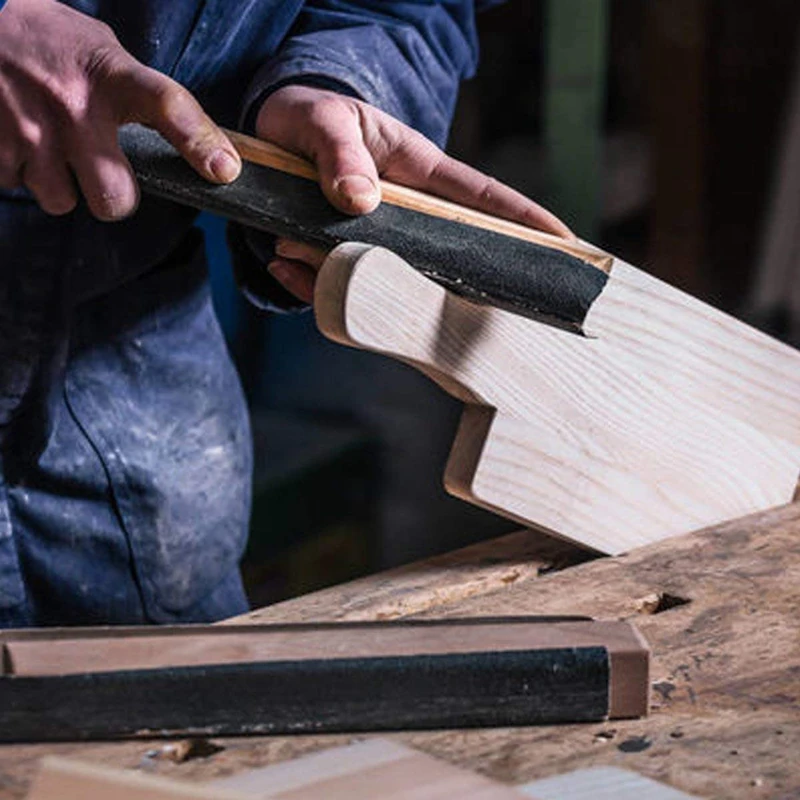
Process control: pressure, speed, coolant
Cut rate and scratch quality respond to three variables: contact pressure, relative speed, and lubrication. Microfinishing film’s uniformity lets you push these variables predictably without risking chatter or gouge.
Pressure. For flat lapping by hand or fixture, target mean pressures of 15–25 kPa for coarse stages (30–60 µm) and 8–15 kPa for fine stages (≤9 µm). Excess pressure drives deeper scratches and accelerates loading. Insufficient pressure burnishes rather than cuts, wasting time. If you don’t have a spring scale fixture, approximate by load per unit area: for a 20 cm² contact patch, 3–5 N at fine grits and 4–6 N at coarse is a reliable starting range.
Speed. Relative speed governs cutting energy and heat. On powered platens or rolls, aim for surface speeds of 0.5–1.5 m/s. Hand lapping approximates to 0.2–0.6 m/s by maintaining brisk, controlled strokes. Avoid stationary dwell under load—keep the part moving to prevent localized heating and pattern imprinting. With microfinishing film, even at lower speeds the uniform grain geometry keeps cut rates high, so prioritize thermal control over brute speed.
Coolant. Use water with a drop of surfactant for most steels and alumina films; the surfactant helps break surface tension and evacuate swarf. For stainless and gummy alloys, a water-soluble synthetic with boundary lubrication prevents smearing. For diamond on carbide and ceramics, a light water–glycerin mix (up to 20% glycerin) improves feel and reduces chipping. Oil-based fluids are acceptable but require more cleaning; ensure compatibility with adhesives and substrates.
Cleanliness. Wipe the film every 10–20 strokes at coarse grits and every 20–30 strokes at finer grits. A quick squeegee restores cut and extends life. Keep a dedicated cloth per grit to avoid cross-contamination. Part surfaces should be rinsed between steps; a single stray grain from a coarser film can seed a rework loop.
Actionable tips:
- Calibrate pressure: place a digital scale under the platen and practice strokes to hit target loads (8–25 kPa equivalent).
- Mark-and-chase: Sharpie a light grid at each step; when the last grid mark disappears uniformly, you’ve hit full coverage—move on.
- Counted strokes: start with a fixed stroke budget (e.g., 15 per face); if legacy scratches persist, increase pressure slightly before adding strokes.
- Coolant discipline: refresh your mist/spray every 3–5 minutes; stale slurry retards cut and embeds fines.
- Edge relief: break sharp edges with two light passes at the end of each coarse stage to protect the film and stabilize contact.
Maintenance and cost optimization
Consumables become durable tools when you maintain them. Microfinishing film responds well to light care, and basic discipline returns measurable cost and time savings.
Storage and handling. Keep films in sealed sleeves, flat, and dust-free. Temperature swings degrade adhesives; store around 20–24°C and 40–60% RH. Label each sheet with in/out service dates and substrate notes. If you use PSA sheets, designate platens by grit to reduce peel cycles that shorten adhesive life.
Use tracking. A small log near the bench can halve spend and rework. For each sheet, record part count and end-of-life trigger (e.g., “increase in strokes by 50% at 9 µm,” “visible glazing,” or “scratch hazing.”). Replace before performance falls off a cliff. Film life is long compared to paper; many shops run 3–10× more parts per sheet. Track cost per finished part, not per sheet.
Surface plate care. Keep platens immaculate. Any embedded debris telegraphs as a persistent scratch. After each session, clean with glass cleaner or isopropyl alcohol and a lint-free wipe. Once a week, verify flatness with a straightedge and feeler gauges; replace platens that show damage.
Fixturing and ergonomics. Consistent contact across the whole face cuts cycle time. Simple fixtures—magnetic parallels for ferrous parts, vacuum fixtures for non-ferrous flats, or 3D-printed nest blocks—help maintain uniform pressure. For small parts, a weighted carrier with a low-friction underside maintains target pressure without hand fatigue.
Process economics. The main time savings accrue from fewer steps and fewer backtracks. If you capture three metrics—minutes per part, number of steps, and rework percentage—you can tune the sequence. Typical improvements after migrating to microfinishing film:
- Steps reduced by 1–2 in the fine range.
- Total time per part reduced by 25–40%.
- Rework cut by half when crosshatch gates are enforced.
Finally, don’t chase the very last 1% of mirror unless the part requires it. Many functional surfaces are optimal at 3 µm or 1 µm Ra ranges. Define finish classes (e.g., Functional, Cosmetic, Optical) with grit endpoints and acceptance criteria. Stopping earlier on non-critical work is the largest time savings of all.
Quick reference: replace-or-refresh cues
- Film loads quickly even after squeegee: replace; grain tips are glazed.
- Stroke count exceeds baseline by 50% at a given grit: replace.
- Surface shows random deep scratches that repeat: check platen for contamination; replace film if fault repeats on fresh plate.
- Adhesive creep or bubbles under PSA: remove, clean platen, remount with fresh film.
Frequently Asked Questions (FAQ)
Q: What’s the difference between lapping film and microfinishing film?
A: The terms overlap. Both use precision-graded abrasive on a PET backing. “Lapping film” often refers to finer micron grades (≤15 µm), while “microfinishing film” spans coarse to ultra-fine with engineered resin systems for consistent cut and is common on rolls, belts, and PSA sheets.
Q: Should I run films wet or dry?
A: Wet is faster and safer. A light water mist with a small amount of surfactant clears swarf, controls heat, and prevents glazing. Dry use is possible on some substrates but increases loading and scratch variability, which typically costs time.
Q: When do I choose diamond over aluminum oxide or silicon carbide?
A: Choose diamond for very hard materials—carbides, ceramics, sapphire, hardened tool steels—especially below 9 µm. Use AO as the general-purpose choice for steels and aluminum; use SiC when you need a sharper cut on hard, brittle, or coated surfaces.
Q: Can microfinishing film polish plastics or painted surfaces?
A: Yes, with care. Use AO or SiC films in fine grades (15 µm to 1 µm) with minimal pressure and ample lubrication to avoid heat and clogging. For clear plastics, finish with 3 µm → 1 µm and clean frequently to prevent embedded debris.
Q: How long should a film sheet last?
A: It varies by substrate and pressure, but films typically process 3–10× more parts than comparable paper. Replace when stroke counts rise by ~50%, the surface begins to haze instead of cut, or periodic squeegeeing no longer restores performance.