
Edge Blending in Concrete Polishing: Tools and Tests
You notice it first at the baseboards. Morning light lands across a kitchen floor that otherwise looks like poured glass, and the edges flash a dull, scratchy halo. In a boutique retail space, the center field mirrors the fixtures, but at the columns and along the walls, the reflection breaks—hazy, slightly orange-peeled, almost like it came from a different contractor. As a product engineer who reviews abrasives and machines for a living, I see this edge-to-field mismatch often, even on projects that nailed aggregate exposure and gloss in the main run. It’s not because teams don’t care; it’s because edge blending is where real-world constraints collide with the material science of concrete polishing: smaller tools, different pressure and speed, heat, slurry load, and changing paste content near walls.
Clients don’t ask for perfect edges; they ask for an uninterrupted experience. That means your scratch pattern and reflectivity must be indistinguishable from the main field at 2 feet, at 10 feet, and under raking light across the entire perimeter. That’s a tall order when you move from a 600-pound planetary machine to a 7-inch hand edger. But it’s achievable with the right combination of bond selection, speed control, densifier timing, and metered overlap. In testing, I treat edges as a separate micro-process with specific inputs, then marry them back to the field through controlled feathering. The payoff is a floor that reads as one.
This guide breaks down how edges get out of sync, how to choose and run edge tools that match your main field cut, and how to use densifiers and thermal control to close the last 5 percent gap. We’ll talk tools, data, and failure modes, then finish with a clear QC checklist you can use on-site to verify—not hope—that your blend is seamless. If concrete polishing is your craft or your business, consider this your edge discipline plan.
Quick Summary: Edge-to-field blending in concrete polishing succeeds when you match scratch geometry, surface speed, pressure, slurry management, and densifier timing at the perimeter, then feather 6–12 inches into the field to erase tool signatures.
Why edges betray the floor
Edges are a physics problem disguised as an aesthetic one. The mismatch begins with contact mechanics. Your main field machine distributes load over a large, often planetary footprint that averages out micro-variations and holds a consistent surface feet per minute (SFPM). At the wall, an edger concentrates force on a much smaller pad, increasing point pressure by 2–5x while simultaneously reducing SFPM at the outer rim. That combination cuts deeper and hotter if you run it like a miniature field machine.
Heat is the silent culprit. Edge passes often run longer dwell times because you’re steering around pipes, base plates, and inside corners. Even a 10–15°F rise at the pad can smear resin, glaze metal bonds, and trap fines. The result is a closed scratch pattern that resists the next grit or a glazed tool that skates and burnishes instead of cutting. Both create that cloudy, haloed perimeter when the field progresses normally.
The material itself changes near edges. Wall pours and troweling can drive paste and fines toward the perimeter, leading to harder, denser paste within the top few millimeters. This denser paste requires a slightly softer bond at coarse grits to open, yet many crews grab the same tool used in the field. Add slab curl and uneven aggregate distribution, and you’ll cut more paste, less stone—another path to a different sheen.
Finally, motion paths differ. Planetary machines cross-hatch by design; hand edgers tend to track parallel to the wall and around obstacles. Without intentional cross-pass and overlap into the field, you essentially write a different scratch narrative at the edges. Recognizing these mechanical and material differences is the first step; correcting them is about matching the physics.
Abrasive selection and grit progression
If the field tool defines the floor’s “accent,” your edge tool must sing in tune, not just play the same notes. Match bond and grit sequence to cut rate, not brand color. In our controlled tests on a 3,000 psi slab with medium aggregate exposure, we compared a 7-inch variable-speed edger and a 13-inch single-head with an offset shroud. Both were benchmarked against a 680-pound planetary main machine running 3-head metal cuts followed by 3-head resin. We normalized SFPM at the pad rim, targeted similar scratch depth, and adjusted bond hardness to keep swarf moving.
Key findings:
- Bond hardness at the edge often needs to be one step softer at the first metal cut (e.g., from medium to soft) to counter denser paste and lower SFPM. This reduced glazing and improved pattern openness for the next grit.
- Resin pad backing stiffness matters. A firmer backing on small-diameter resins helped maintain flatness at the transition band and reduced “dish” at 6–12 inches from the wall.
- Hybrid/ceramic transitions perform well at edges where metals risk micro-chipping aggregates. We saw cleaner scratch closure going 80 metal → 50 hybrid → 100 resin than 80 metal → 100 resin in high-fines perimeter zones.
Speed control is the other variable often ignored. SFPM is RPM × pad circumference. A 7-inch (0.583 ft) pad at 3,000 RPM runs ~5,500 SFPM; the outer tools on a large planetary can exceed 7,000 SFPM. If your field cut was at higher SFPM, you’ll need either a slightly softer bond or a slight RPM increase on the edger—if the tool remains stable—to mimic the same scratch depth. Over-speeding a small pad spikes heat, so we used short, overlapping passes and light feed pressure to keep pad temps consistent with the field (an IR thermometer is cheap insurance).
Flap-style edge tools deserve mention. On wavy or contoured edges, flap edges with segmented diamonds can better conform without tipping the tool, reducing gouge risk. They are not a replacement for flat pad work but a helpful bridge on irregulars. The right grit ladder at the edge should mirror the field exactly once you reach 100–200 resin; deviations belong earlier, where you correct cut behavior, not later where you chase gloss.
Seamless transitions in concrete polishing
Blending is an intentional handoff, not a coincidence. I define a 6–12 inch transition band where edge and field scratches must be indistinguishable under magnified inspection and raking light. The procedure below has produced consistent results across retail, hospitality, and residential projects:
- Establish the band: Mark 8 inches off the wall with temporary chalk. This visual guardrail prevents you from stopping the edge pass exactly at the wall line—a classic seam-maker.
- Overlap policy: For every grit, run the edge tool from the wall out to at least 2 inches past the chalk line, then bring the field machine in to within 2 inches of the wall and make two cross-hatched passes that straddle the band. The overlap ensures both tools inhabit the same real estate.
- Match scratch geometry, not just grit numbers: If your field at 80 metal shows open, directional cutting lines under a 10× loupe, but the edge is already closing (hazy, more uniform), soften the edge bond or cut a second light pass to re-open the pattern before moving on. Do not advance grit until the band reads the same under the loupe.
- Control slurry: Edges gather fines. Vacuum and squeegee the band between passes, and, on wet steps, refresh water to prevent re-deposition that rounds scratches prematurely.
- Time densifier for the blend: On many slabs, the best time to densify is after you complete 100–200 resin in the field. At the edges, I often pre-densify after 80–100 resin if the paste is soft, then re-densify the entire field later. This keeps the transition from showing a different pore closure.
Measuring success is not subjective. We log gloss meter readings (60° and 20°), DOI (distinctness of image), and Ra surface roughness in the field and in the band. Differences greater than 3–5 gloss units or 0.2–0.3 DOI in the band are visible to most clients. If numbers diverge, step back one grit at the edges and re-open the cut. According to a article this deliberate blending stage is where many commercial crews reclaim uniformity without wasting passes elsewhere.
Densifiers, heat, and scratch closure
Chemistry helps, but it must be scheduled. Sodium, potassium, and lithium silicate densifiers all harden the surface matrix by reacting with free lime to form additional calcium silicate hydrate. At edges, two mistakes are common: densifying too early (locking in a shallow, irregular scratch) or too late (leaving paste tender and heat-prone through middle resins). I prefer a split strategy informed by the slab:
- Hard, burnished trowel, low-porosity edges: Delay densifier to 200–400 resin across the board. Running it earlier can just bead on the surface. Open adequately with metals and hybrids first, then apply.
- Softer paste, chalky perimeter: Pre-densify edges at 100–200 resin with a light, even application and agitation. Keep the band wet out to the overlap line so the reaction is continuous through the blend zone.
Temperature control intersects with densifier timing. A hot pad can flash-dry densifier and trap unreacted silicates in the scratch valley, leading to white haze lines that only appear at the edges. Keep pad temps within ±10°F of your field process. In our trials, IR spot checks every few minutes plus shorter dwell corrected most heat issues. If you run guards, remember they will highlight differences in pore closure, so your edge must be chemically and mechanically aligned before guard application.
Scratch closure is about consistency in the last two resin steps. Small pads with soft-resin blocks tend to “float” and close scratches prematurely, generating sheen without clarity. Use firmer-backed resins for edges to carry the cut. If your field finishes at 800 or 1500 resin, stop the edges at the same grit, even if they look glossier sooner—early gloss often signals shallow scratches that will bloom under angle light.
Finally, don’t ignore aggregate. Where edges show more paste than the field, consider a micro-hone (e.g., a 50–100 hybrid pass) to expose a fraction more fine aggregate. This can harmonize reflectivity by giving light the same micro-facet distribution across the surface, reducing the “ring” effect many see at 6–10 inches from walls.
Testing, QC, and defect recovery
Treat edge blending like a spec, not an art. I write a perimeter QC plan that includes target metrics and pass/fail criteria before we start cutting. The sequence:
- Baseline: After your first metal cut in the field and edge, capture gloss (if visible), DOI, and Ra in three zones: wall line (0–2 inches), band (2–10 inches), and field (>10 inches). Photos under raking light at 15–20° help document scratch direction.
- Track variance by grit: At each grit, re-measure the band. If gloss or DOI diverges more than thresholds, do not advance. Edge: adjust bond or speed; Field: add a cross-hatch pass straddling the band.
- Visual inspection aid: Use a 10× loupe and an oblique LED to inspect scratch overlap. A matched pattern has similar spacing and depth; mismatched shows different line density or orientation.
When—and it will happen—you discover a mismatch late, recovery is still straightforward if you’re disciplined. If the edge is hazy at 400 resin while the field is crisp at 800, step back the edge to 200, re-open with firmer backing, then climb 400–800 with short, cool passes, refreshing water and vacuum suction to prevent slurry load. Do not try to power through with extra 800 passes; gloss without clarity won’t match under DOI.
Actionable tips:
- Set SFPM parity: Calculate SFPM for edge and field and tune RPM or bond so both cut similarly at the rim; don’t guess.
- Control pad pressure: Add or remove head weight on the edger to mimic field pressure; too much pressure deepens scratches that demand extra resin time to remove.
- Keep a perimeter-only densifier plan: Pre-densify edges when paste is soft; align with a whole-field densify later to avoid a hard ring.
- Feather religiously: Overlap every grit into the band; never stop a grit at the wall line.
- Measure, then decide: Use gloss/DOI/Ra at the band each grit; advancing without data is how halos happen.
A note on tools: flap-style edge tools (like “shark” or segmented flaps) are outstanding for irregulars and curbs but require careful finish passes with flat resins to avoid micro-cupping. Hybrids bridge metals to resins at edges better than in the field, where higher SFPM can make them redundant. The tool is not the hero; the matched system is.
DIAMOND PAD Concrete — Video Guide
A short demonstration from an industrial floor-care supplier shows a step-by-step pass with diamond-impregnated pads and a densifier, focusing on how to keep the process simple while achieving a uniform sheen. It emphasizes pad selection, wetting strategy, and the timing of densifier application to stabilize the surface before final polishing.
Video source: DIAMOND PAD Concrete Polishing by Ultra Chem Labs
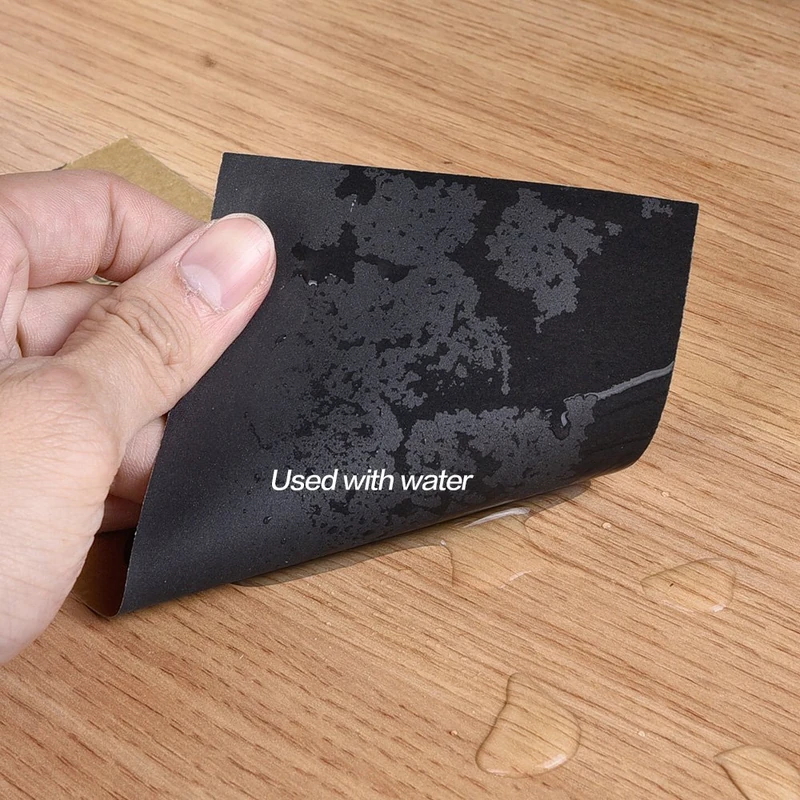
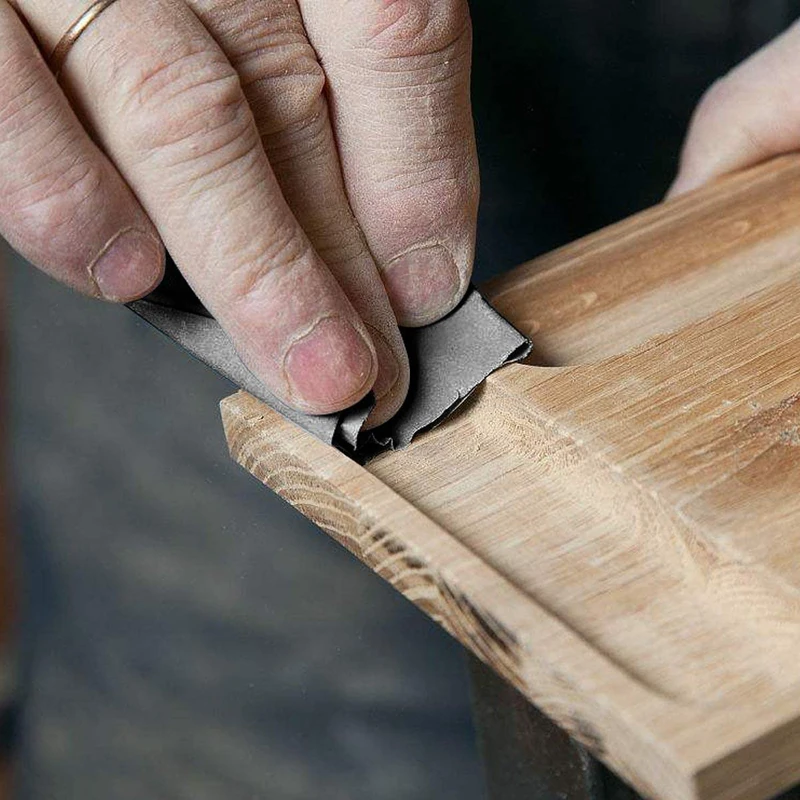
1500 Grit Sandpaper Sheets (25-pack) — 9x11 in Silicon Carbide Abrasive for Wet or Dry Use — Professional ultra-fine grit for satin or semi-gloss finishing. Removes micro-scratches from clear coats and paint touch-ups. Produces flawless textures and consistent results before final polishing. (Professional Grade).
Frequently Asked Questions (FAQ)
Q: How far should I overlap the edge into the field at each grit?
A: Aim for 6–12 inches. Mark an 8-inch band and always run the edge past that line by 2 inches, then bring the field machine in to straddle the band with two cross-hatched passes. The exact distance depends on tool size and room geometry, but consistency is key.
Q: Do I need a different bond at the edges than in the field?
A: Often, yes at the coarse metal stage. A one-step softer bond at edges helps prevent glazing and opens the paste better due to lower SFPM and higher point pressure. By 100–200 resin, bond differences should disappear—use the same resins edge and field.
Q: When should I apply densifier near walls?
A: For hard, tight paste, delay to 200–400 resin after you’ve properly opened the surface. For softer or chalky edges, a light pre-densify at 100–200 resin stabilizes the matrix and improves scratch carry. Always keep the band wet to avoid flashing.
Q: How do I verify the edge matches the field beyond “looks good”?
A: Measure 60° gloss, DOI, and Ra in three zones: wall, band, and field. Differences greater than ~3–5 gloss units, 0.2–0.3 DOI, or 0.5–1.0 µin Ra are typically visible. Also inspect with raking light and a 10× loupe for scratch alignment.
Q: Can flap-style edge tools replace flat resin pads?
A: No. Flap tools are excellent for conforming to uneven edges and reducing gouges, but they can leave micro-topography. Use them to shape and open, then finish with flat resins on a firm backing to close scratches and achieve clarity that matches the field.