
Film vs Paper Backing with Silicon Carbide Sandpaper
Saturday mornings in the shop start the same for me: kettle on, soft sun across the bench, and a project at that satisfying almost-there stage. I’d been chasing a glass-flat finish on a walnut desk with an epoxy river, and the last pass was fighting me—tiny swirls that only showed in raking light. I’d been sanding wet to keep dust down, but the paper kept going mushy at the edges. That’s when I swapped in film-backed silicon carbide sandpaper I’d stashed for auto body work. The difference was immediate: the sheet kept its shape, water beaded and carried the swarf away, and the scratch pattern evened out in a few clean passes. The surface went quiet—no chatter, just controlled cutting.
If you’ve ever wondered why some sanding sessions feel like a wrestling match while others glide, it usually comes down to two simple variables: the backing under the grit and the grain on top. Film versus paper backing sounds like an obscure spec, but it changes how an abrasive tracks a flat, flexes over a contour, handles water, resists tearing, and ultimately, how it finishes. And grains—silicon carbide, aluminum oxide, ceramic—don’t behave the same, especially under pressure or when you add water.
Whether you’re leveling varnish nibs on a guitar, smoothing resin castings, refreshing a cloudy headlight, or fairing out a table edge by hand, choosing the right backing with the right grain is the fastest route to a flawless surface. It’s not just about grit numbers. It’s about control, cut rate, and the feedback you feel in your fingertips. Let’s break it down the way we do at the bench—hands on, one step at a time—so you can pick confidently and sand smarter on your next job.
Quick Summary: Film backing gives waterproof flatness and durability; paper backing gives tactile control and flex—pair each with the right grain and coat for faster, cleaner finishes.
Feel the difference in your hands
Before specs and acronyms, do the simple test: hold a sheet of each. Paper-backed abrasives feel organic. They crease easily, wrap a block well, and telegraph feedback—perfect when you’re chasing an edge profile or feel on solid wood. Film-backed sheets feel slicker, tougher, and less stretchy. They cut flatter and last longer under water or on a sander.
What you’re sensing is mechanical behavior. Paper is a fiber web. It flexes and conforms but tears across the grain when overloaded or soaked. Film—typically polyester—resists tearing and stays dimensionally stable. On flat work, that stability translates into a more uniform scratch pattern and less “edge rounding.” On curves, paper’s pliability can be an asset when you want to maintain crisp transitions by hand.
Then there’s how each backs the grit. On paper, variations in fibers create micro-unevenness under the abrasive. It’s minor, but on delicate finishing—say, at P1000 and up—you’ll feel the difference as tiny, inconsistent scratches. Film’s uniform thickness gives even support to each grain particle, so you get a predictable cut and cleaner scratch pattern, especially important for clear coats, resin, and metal polishing.
Coating density matters too. Open-coat sheets leave space between grains; they shed dust better on gummy woods. Closed-coat piles on nearly full coverage, cutting faster on hard materials but loading sooner if you don’t clear it. Combine the right coat with the right backing and you’re halfway to predictable results.
Quick bench check: fold each sheet and tug. Paper will crease white and weaken at the fold; film will survive the crease with better strength. That tells you how they’ll behave at the edge of a sanding block or when you’re feathering a scratch on a curve.
When silicon carbide sandpaper wins
Silicon carbide sandpaper has a reputation: fast, sharp, and at its best in fine grits and wet sanding. The grains are hard and brittle, meaning they micro-fracture under pressure to expose fresh edges—great for consistent cutting on hard, non-ferrous materials and finishes. If you’re working auto clear coats, gelcoat, stone, glass, ceramics, or resin, silicon carbide is often the fastest way to a haze-free surface.
Wet sanding is its natural habitat. Water clears swarf, cools the surface, and keeps the sheet from clogging. Pair silicon carbide with film backing and you get a waterproof, dimensionally stable platform that glides. On a headlight lens or polyurethane finish, that combo minimizes deep scratches and reduces the risk of “telegraphing” lines through your final polish.
There’s still a place for silicon carbide on paper. Hand-sanding a delicate curve on lacquer, you might want the feel and give of paper while still benefiting from silicon carbide’s sharp bite. Choose a lighter paper weight (A or C) that wraps without cracking, and keep your pressure low to let the grain cut without digging.
A simple wet-sanding sequence I trust for finishes:
- Soak film-backed silicon carbide sheets (P800, P1200, P1500) for 10–15 minutes.
- Mist the work surface; use a soft block to keep pressure even.
- Sand in short, overlapping strokes, changing direction 90 degrees each grit to track scratch removal.
- Rinse the surface and sheet often; if slurry goes gray, you’re cutting—keep going until it stays uniform.
- Finish with P2000–P3000 if you’ll buff; stop at P1500 for a satin sheen.
If you feel drag or see loading, don’t push harder—clear the sheet, refresh water, and let silicon carbide’s self-sharpening do the work.
Film backing: flat, waterproof, durable
Think of film backing as an engineered platform. It’s typically polyester, thin yet strong, waterproof, and dimensionally consistent across the sheet and from batch to batch. That uniform support under the grains is why film abrasives leave such even scratch patterns, especially at fine grits where any irregularity stands out under finish or polish.
On random-orbit sanders, film-backed discs excel because they resist edge fray and skirt blowout. The disc stays true, which reduces “pigtails” and random deep scratches. Film also tolerates the on/off pressure variations common with DA sanding, making it a safe choice for leveling clear coats or removing dust nibs without burning through.
Water is where film separates itself. Paper swells and loses strength when soaked; film shrugs it off. That’s why you see film-backed silicon carbide sheets and discs recommended for wet sanding automotive finishes, headlight restoration, and resin leveling. They cut clean, clear easily, and survive repeated rinses.
Hook-and-loop or PSA? Film does both well. PSA (pressure-sensitive adhesive) film discs stick flat with minimal edge lift, which keeps the sanding pad balanced. Hook-and-loop gives faster changes but watch for heat; a hot pad plus a loaded disc can cause heat checking on sensitive finishes.
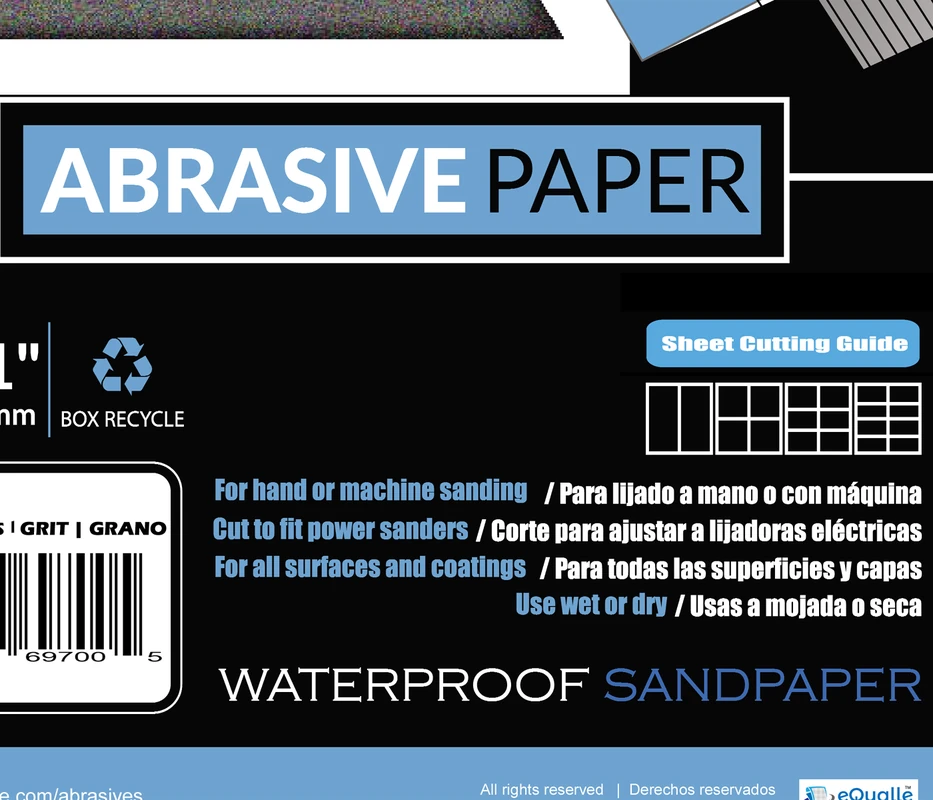
According to a article. That kind of spec—waterproof film with silicon carbide—signals a tool built for uniform, high-finish work where control matters.
Bench tip: keep a spray bottle with a drop of dish soap in water. On film-backed silicon carbide, it improves glide and reduces micro-loading when wet sanding plastics and clear coats.
Paper backing: tuned feel and control
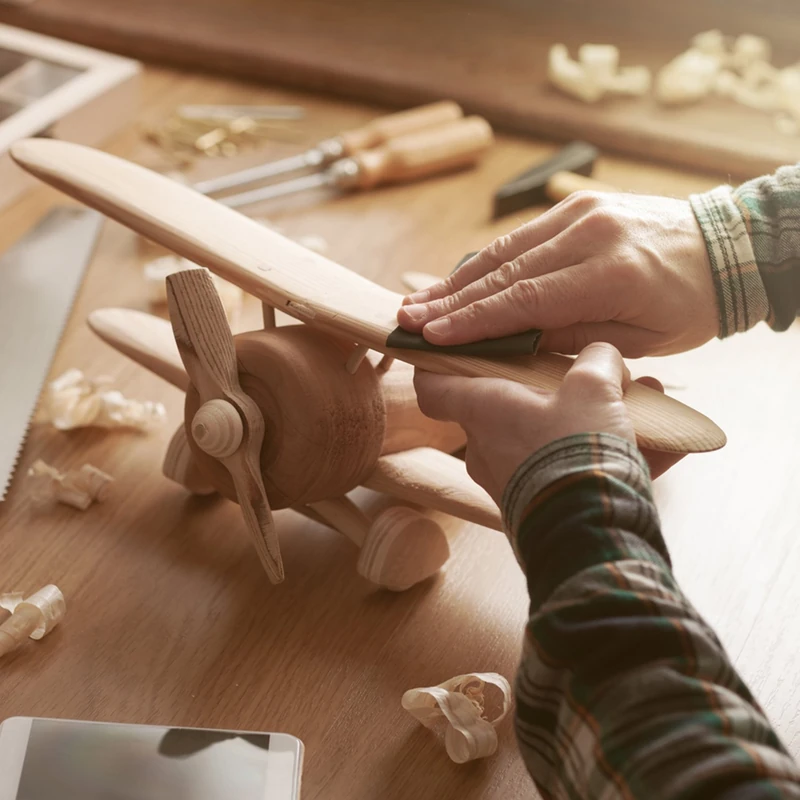
Paper remains the go-to for many woodworkers because it communicates. You can feel when the grit stops cutting and when you’re about to round an edge. It’s lightweight, wraps a block or cork backer beautifully, and it’s cost-effective for bulk work in the shop.
Backings come in weights, and that weight is your tuning knob:
- A-weight: very flexible, great for profiles and handwork in finer grits.
- C/D-weight: general-purpose; balances durability with wrap-ability.
- E/F-weight: heavy-duty for belts and aggressive stock removal.
Heavier papers hold up better on machines and resist tearing when you push. Lighter papers follow curves and contours without fighting you. For cabinet doors, a C- or D-weight aluminum oxide paper in open coat helps avoid loading on resinous species. For veneer edges, A-weight gives the finesse to kiss the edge without digging in.
One real limitation: water. Paper’s fibers swell and weaken when wet. You can mist for dust control on coarse grits, but true wet sanding will shorten the paper’s life quickly and can telegraph fuzz into the scratch pattern. If you must wet sand with paper, use waterproof-labeled sheets and keep sessions brief, drying between passes.
To avoid breakthrough and tears at the block edge:
- Slightly chamfer the block’s edges.
- Tear sheets with fibers, not across them, or cut cleanly with a knife.
- Don’t crease sharply—form gentle curves instead.
- Keep pressure even; let the grit cut, not the backing flex.
When hand-finishing wood, paper’s feedback is a real advantage. You’ll “hear” and feel when the surface levels and when it’s time to change grits. That tactile control is hard to beat for final passes on solid wood and veneered work.
Backings by weight at a glance
- Light (A/B): maximum flexibility for hand sanding and profiles.
- Medium (C/D): general shop use, blocks and ROS sheets.
- Heavy (E/F): belts and flat sanding where tear resistance matters.
Match grain, coat, and grit to the job
Backing is one half; grain and coat are the other. Choose your abrasive like you choose a chisel—by what it’s cutting and how you’re cutting it.
- Silicon carbide: ultra-sharp, micro-fracturing, excels on hard, brittle, and non-ferrous materials. Best for wet sanding clear coats, plastics, stone, glass, and resin. Shines at P600 and finer; still strong at P80–P400 for deburring metals and leveling finishes.
- Aluminum oxide: tough, friable, and versatile. Ideal for wood, ferrous metals, and general shop use. Great in open coat for pine and closed coat for hardwoods.
- Ceramic/precisely shaped grains: aggressive and cool-cutting for heavy stock removal on metal and hardwoods; typically on heavier backings.
Coat density matters:
- Open-coat: less grit coverage, more space for dust. Use on softwoods and clog-prone finishes.
- Closed-coat: nearly full coverage. Faster cut on hard materials; mind the loading.
Grit progression isn’t just numbers; it’s a strategy:
- Start coarse enough to remove defects quickly (P80–P120 on wood, P600–P800 on finishes).
- Jump about 1.5x between grits (e.g., 80→120→180→240→320) to erase scratches efficiently.
- Switch backing and grain when the material changes. Level varnish with film-backed silicon carbide, then break edges on wood with paper-backed aluminum oxide.
Four actionable tips to dial results:
- Use film-backed silicon carbide from P800 upward on any wet job—headlights, resin rivers, clear coats—for dead-flat, repeatable scratch patterns.
- For resinous woods, pick open-coat aluminum oxide on C/D paper and clean the surface every minute with a rubber stick or quick blast of air.
- On profiles, wrap A-weight paper around a soft foam interface to avoid flats; keep pressure feather-light to let the grit, not the backing, shape the curve.
- When chasing a mirror finish, stop sanding as soon as the scratch field is uniform at each grit—extra passes only dull the grains and risk introducing stray scratches.
If you’re stuck between film and paper, ask: do I need waterproof stability and flatness, or tactile feedback and flex? Then choose the grain that honors the substrate you’re working.
Choosing by task: a practical matrix
Let’s slot common jobs into smart pairings you can trust, with why they work.
Leveling epoxy or poured finishes:
- Backing: film
- Grain: silicon carbide
- Grits: P600→P1000→P1500
- Why: waterproof, uniform support minimizes haze, water clears swarf.
Refinishing a headlight lens:
- Backing: film
- Grain: silicon carbide
- Grits: P800→P1200→P2000→P3000
- Why: consistent scratch ladders that polish out cleanly, no paper swell.
Final sanding solid maple before finish:
- Backing: paper (C/D weight)
- Grain: aluminum oxide
- Grits: P120→P180→P220→P320
- Why: tactile feedback, open coat resists loading, crisp edges preserved.
Deburring aluminum sheet:
- Backing: film or heavy paper (E)
- Grain: silicon carbide
- Grits: P240→P400
- Why: non-ferrous friendly, fast cut, film resists tearing on sharp edges.
Shaping a curved chair rail:
- Backing: paper (A weight)
- Grain: aluminum oxide
- Grits: P80→P120→P180
- Why: flexibility hugs the profile; grain stays tough under hand pressure.
Three setup habits that pay off:
- Mark surfaces with a light pencil grid; sand until marks just vanish evenly—then stop and step up.
- Vacuum and wipe between grits; one stray P120 particle under your P320 sheet will ruin the day.
- Store sheets flat in zip bags by grit and backing; humidity swings warp paper and curl edges.
How to Make — Video Guide
If you’ve got cloudy headlights, there’s a straightforward wet-sanding workflow that brings them back without fancy tools. The video “How to Make Headlights Look New Again (ONLY SANDPAPER)” walks through a grit-by-grit approach using water and abrasives to strip oxidation and refine the surface until it’s clear. It’s the same logic we use on clear coats and plastics: start coarse enough to remove the damaged layer, then climb with even, overlapped passes.
Video source: How to Make Headlights Look New Again (ONLY SANDPAPER)
100 Grit Sandpaper Sheets (25-pack) — 9x11 in Silicon Carbide Abrasive for Wet or Dry Use — Balanced coarse grit combining power and control—perfect for blending rough sanding marks before progressing to finer grades like 150 or 180. (Professional Grade).
Frequently Asked Questions (FAQ)
Q: Is film backing always better than paper?
A: No. Film is superior for flatness, durability, and wet work, especially in fine grits. Paper offers better tactile feedback and flexibility on curves and hand-sanding solid wood.
Q: Can I wet sand with paper-backed sheets?
A: You can, but lifespan drops and the backing may swell, affecting scratch quality. Use waterproof-labeled paper for short sessions; for consistent results, choose film-backed sheets for wet sanding.
Q: When should I choose silicon carbide over aluminum oxide?
A: Use silicon carbide on clear coats, plastics, resin, glass, stone, and non-ferrous metals—especially when wet. Use aluminum oxide for most woods and ferrous metals where toughness and open-coat options help.
Q: What grit progression should I use on an automotive clear coat?
A: Typical wet sequence: P800 to level defects, then P1200, P1500, and P2000–P3000 if you’ll polish. Stick to film-backed silicon carbide for a uniform scratch ladder.
Q: How do I avoid deep scratches when finishing?
A: Keep pads clean, change sheets as soon as cutting slows, step through grits methodically, sand crosshatch to track progress, and choose backing/grain combinations that suit the material and whether you’re sanding wet or dry.