
Open Coat Sandpaper for Painted Surfaces
The weekend starts with a small promise to yourself: fresh paint, clean lines, a room that feels lighter when you walk in. But before the color goes up, something else has to come down—old paint, a rough patch, a drippy corner where the brush ran heavy last time. You pull out a sheet of sandpaper and, for a few strokes, it feels right. Then the dust rolls into pills, the sheet clogs, the finish scratches, and you’re wondering why this simple prep step feels like a fight. If you’ve ever paused mid-sand to pick off gummy paint from your paper, you’ve already met the enemy. The fix doesn’t start with elbow grease; it starts with choosing the right abrasive. On painted surfaces, open coat sandpaper—often paired with an anti-clog “no-fill” layer—doesn’t just last longer; it changes the way the surface behaves while you work.
That small difference matters. Paint heats and softens under pressure. Dust re-melts, sticks, and rides the grit until the paper can’t cut. Instead of a steady, clean scratch, you get skid marks and shiny smears. Your sander hums along, but progress stalls. The right abrasive architecture—how the grains are spaced, how the surface sheds dust, how heat moves away—can turn that frustrating loop into a predictable, smooth prep routine. You end up with less dust in the air, fewer torn discs, and a cleaner surface that takes new paint beautifully. The goal here is simple: remove defects efficiently without scarring the finish beneath. And the path to that goal is surprisingly specific. When you know what you’re sanding and with what, you control the result instead of wrestling it.
Let’s walk through how anti-clog design actually works on painted surfaces, why it’s different from standard papers, and how to pick and use it so your next paint job starts—and ends—on your terms.
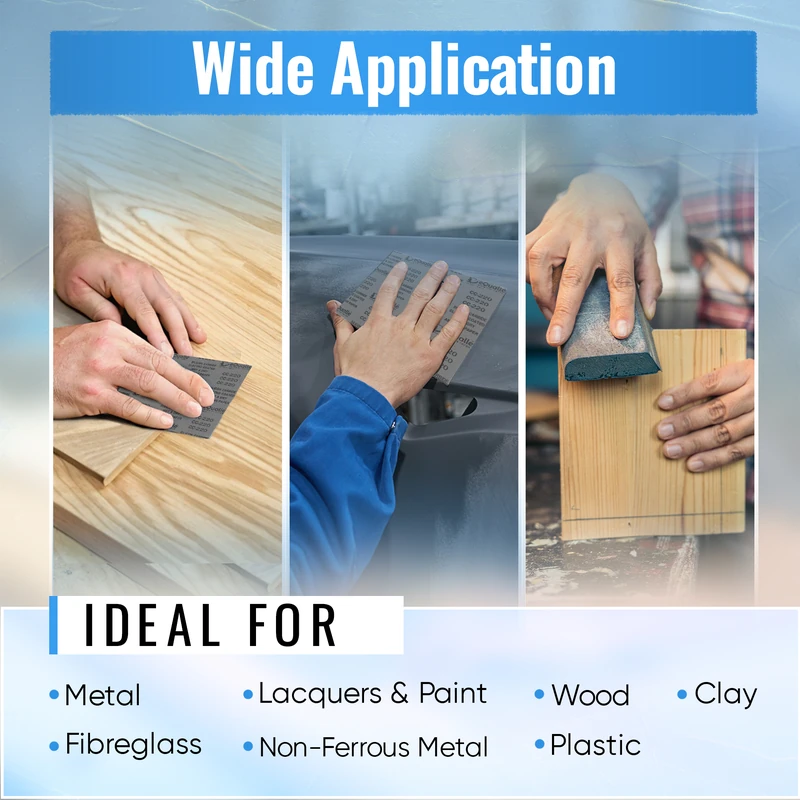
Quick Summary: On painted surfaces, choose open coat sandpaper with an anti-clog topcoat, match grit to the task, use light pressure with good dust extraction, and your sanding will be cleaner, faster, and more consistent.
Why paint dust clogs—and how to avoid it
Painted surfaces don’t sand like bare wood. Paint is a film—resin, pigment, additives—laid over a substrate. When abrasives cut it, the particles don’t fracture like wood fibers; they soften and smear, especially under heat. That smear builds on the abrasive, filling the spaces between grains, and the paper “loads.” Once loaded, grit can’t engage the surface cleanly, and you’ll see snowball-like clumps, random deep scratches, and shiny patches where the paint re-melted under the disc.
Three forces drive loading on paint:
- Heat: Friction warms both the paint and the abrasive. Acrylic and alkyds soften quickly; heat accelerates smearing.
- Static: Fine dust clings to the sheet and pad, bridging gaps between grits.
- Pressure: Pushing harder doesn’t “cut faster” on paint; it embeds dust and cooks the surface.
Anti-clog design fights all three. First, grain spacing matters. When abrasive isn’t wall-to-wall—when there’s deliberate open space—there’s a place for dust to go. Second, a “no-fill” topcoat (often a stearate) makes the abrasive surface waxy-slick so dust releases rather than sticking. Third, paired with good dust extraction, air and vacuum draw debris through holes and out of the cut zone, reducing heat. Technique completes the system: lighter pressure, steady motion, and appropriate grit sequencing prevent the deep scratches and burnishing that make cleanup harder.
The headline: loading is a system problem. You fix it by combining the right abrasive architecture with smart technique, not by pushing harder or swapping sheets every five minutes.
How open coat sandpaper stops clogging
Open coat sandpaper spaces individual abrasive grains to cover roughly 40–60% of the surface, leaving visible gaps between particles. Those gaps act like relief channels, giving paint dust somewhere to go instead of packing tight against neighboring grains. Compared with closed coat (90–100% coverage), open coat trades a small amount of initial cutting speed for dramatically better dust management—exactly what painted surfaces need.
Most high-quality open coat papers for paint also add a “no-fill” topcoat, often zinc stearate or a similar compound. Think of it as a low-friction jacket over the grit. As paint dust contacts the abrasive, the topcoat reduces adhesion, so particles shear off and clear instead of bonding. The combination—spaced grains plus a release layer—keeps more of each grit’s edge exposed and cool. That means:
- Fewer clogging pills on latex and alkyd paints
- More consistent scratch pattern for feathering edges
- Longer disc or sheet life with fewer swaps
Open coat isn’t just for paint. It excels on resinous woods, body fillers, and plastics—materials that tend to “load.” On painted trim, start around 120–150 grit to flatten brush marks without digging through to bare wood, then refine with 180–220 for a primer-ready surface. For heavy drips or orange peel, step down to 80–100, but respect the risk: coarse grits can gouge into substrate quickly, forcing you to prime more aggressively.
Note that “open coat” describes spacing, not grit type. Aluminum oxide is common and durable for paint; ceramic and ceramic-infusion options cut cooler but cost more. If you’re using a power sander, electrostatically oriented grits (aligned points-up) cut more cleanly at lower pressure—ideal for keeping paint cool and dust moving.
Grits, backings, and coatings that matter
Once you understand why open coat sandpaper resists loading, build a kit that matches the job. Three variables shape your results: grit, backing, and topcoat.
Grit range: For flattening paint defects (drips, sags, runs), use 80–120 grit to level, then 150–180 to blend, finishing at 220–320 before repainting. Avoid jumping more than 80–100 grit steps; gradual transitions reduce visible scratch telegraphing through topcoats. For delicate work on cured spray finishes, 240–320 grits with light pressure and good extraction keep surfaces uniform.
Backing weight: Paper backings range from A (light) to F (heavy). For hand sanding painted trim, a flexible C–D weight sheet wraps profiles without creasing. For random-orbit sanding, film-backed discs excel at consistent cut and don’t tear under edge pressure; they pair well with open coat and stearate for paint.
Topcoats: “No-fill” and anti-static coatings matter. The anti-static treatment reduces dust cling to the disc and pad, improving evacuation. Some manufacturers also avoid color dyes in the coating to eliminate the risk of pigment transfer onto light paints during sanding. On sensitive colors or primers, that’s peace of mind.
Hole patterns and extraction: On ROS (random-orbit sanders), match hole patterns between the pad and disc. Multi-hole “universal” patterns work across sanders and maximize airflow. Net abrasives (mesh-style) allow vacuum draw across the entire surface but rely even more on sheet-to-pad alignment and good backing interface.
Wet vs dry: Wet sanding with open coat is uncommon on architectural paints but can help on automotive or hard-cured coatings. Stay dry for typical interior trim and doors to avoid water swelling wood substrates.
According to a article
That industry note echoes what pros see on site: an open-coat design plus anti-clog layer prevents loading and extends life. If you’re debating between two options, pick the one that explicitly mentions both features and a compatible hole pattern for your sander. The result isn’t just fewer disc changes—it’s a cooler cut, less swirl risk, and a cleaner surface ready for primer.
Five pro tips for painted surfaces
These are practical moves that make anti-clog design deliver its best on real paint jobs:
- Pre-score defects before sanding
- Slice the ridge of a run or drip with a sharp chisel or razor, then sand. Removing the bulk reduces heat and clogging, so your open coat sandpaper doesn’t waste cycles melting a high spot.
- Use light pressure and let the abrasive cut
- On paint, pressure equals heat. Hold the sander like a camera, not a clamp. If the disc stops clearing dust, don’t push—step to a fresh area, lift, and tap the pad to shed debris.
- Work in smart grit steps
- Level with 100–120, blend at 150–180, finish 220–320. If scratch ghosts appear after priming, you skipped too far or pressed too hard. Repeat the last grit with lighter pressure and full dust extraction.
- Pair with good dust extraction
- A shop vacuum (or dust extractor) attached to your ROS, plus a multi-hole open coat disc, removes heat and dust at the source. Empty bags or filters before they’re half full; airflow drops fast, and with it, your anti-clog advantage.
- Refresh the surface, not just the disc
- Paint dust can build on the pad and interface, not just the abrasive. Pause to brush the pad face, peel the disc to flick away caked dust, and re-seat. Consider a thin foam interface pad for contoured trim; it evens pressure and prevents gouging edges.
Bonus: If you’re hand sanding trim between coats, a soft sanding block wrapped with 220 open coat paper will flatten brush marks without cutting through edges. If corners are fragile, chamfer edges lightly to reduce catch points and scratch concentration.
Troubleshooting loading and scratch issues
Even with the right abrasive, painted surfaces can surprise you. Here’s what goes wrong and how to correct course quickly.
Problem: Abrasive loads in seconds; pills form and smear Cause: Paint not fully cured, excessive pressure, poor dust extraction Fix: Wait longer (latex can feel dry but remain soft for days), step to a coarser grit temporarily to reduce friction, and improve airflow. Keep the pad flat. If you must sand semi-cured paint, make very light passes and clean the disc frequently.
Problem: Random deep scratches after leveling a drip Cause: Coarse grit debris trapped under the disc or torn paint chip riding the pad Fix: Stop immediately, peel the disc, clean the pad face and interface. Vacuum the surface. Resume with the same grit and light pressure, then re-sequence to remove the scratch.
Problem: Swirl marks telegraph after priming Cause: Skipping grits, pressed too hard at the final grit, or using a worn-out disc Fix: Drop back one grit, re-sand with light pressure and active dust extraction. Finish with a fresh, open coat disc one step finer. On high-gloss topcoats, consider film-backed discs for a more uniform scratch.
Problem: Clogging worsens near edges and profiles Cause: Edge pressure concentrates heat; paint on corners is thin and brittle Fix: Use a small interface pad or hand-sand edges with a wrapped block. Keep the sander centered and moving. Feather edges in multiple light passes rather than trying to “erase” in one go.
Problem: Color transfer from the abrasive to white paint Cause: Dyed paper/backing rubbing off under heat Fix: Choose abrasives without dye in the coating or backing, and keep pressure low. If staining occurs, clean with mineral spirits on cured oil-based paint or a gentle cleaner on latex after sanding dust is removed.
If you consistently battle loading, reassess the entire setup: grit selection, open vs closed coat, stearate topcoat, hole pattern alignment, and vacuum performance. The fix is usually a small adjustment, not a complete overhaul.
Brief Description of — Video Guide
If you’re new to abrasive lingo, a short explainer like “Brief Description of Sandpaper Told By Woody” helps connect the dots. The video walks through what grit numbers mean, how different backings feel, and why certain papers are better fits for specific jobs.
Video source: Brief Description of Sandpaper Told By Woody
100 Grit Sandpaper Sheets (50-pack) — 9x11 in Silicon Carbide Abrasive for Wet or Dry Use — General-purpose coarse sandpaper for smoothing rough surfaces and removing old coatings. Works well on wood, metal, and resin projects. Designed for wet or dry sanding between aggressive 80 grit and finer 150 grit stages. (Professional Grade).
Frequently Asked Questions (FAQ)
Q: What makes open coat sandpaper better for painted surfaces?
A: The spaced grain pattern leaves room for dust to escape, reducing heat and loading. Paired with a “no-fill” anti-clog topcoat, it sheds paint debris, maintains a consistent scratch, and extends abrasive life—especially on latex and alkyd films.
Q: Which grit should I use to prep a previously painted door?
A: Start at 120–150 to flatten brush marks and slight texture without cutting through. Follow with 180–220 for a primer-ready surface. Only drop to 80–100 for heavy runs or orange peel, and step back up through intermediate grits to erase coarse scratches.
Q: Do I need dust extraction, or will hand sanding be fine?
A: Extraction greatly improves results on paint by reducing heat and clearing dust. If you’re hand sanding, vacuum or brush frequently, use open coat sheets, and keep pressure light. For power sanding, attach a vacuum and align multi-hole discs to match the pad.
Q: Can I sand paint the same day I apply it?
A: Usually not. “Dry to touch” isn’t “cured.” Soft paint loads paper rapidly. Follow the paint’s recoat and cure times; many latex paints need 24–48 hours to sand cleanly. If you must touch up early, make very light passes with fine, open coat paper and clean the abrasive often.
Q: Why do I see color smudges from the paper on white paint?
A: Some abrasives use dyed backings or coatings that can transfer under heat. Choose products that specify no dye or “non-pigmented” coatings, keep pressure light, and ensure good dust evacuation to avoid friction that causes transfer.