
Abrasive testing for controlled swarf collection
On a quiet Monday morning, a machinist starts the first job of the week: a batch of precision shafts destined for a medical device assembly. Surface finish is critical. The machine hums in a familiar rhythm while coolant sweeps away fine metallic specks. By noon, the parts look identical to last week’s, but a go/no-go fixture catches two shafts that slide just a hair too tightly. The QC technician squints under the microscope. Nothing obvious—no gouges, no burrs. Still, something changed. Was it the wheel dressing? A fresh lot of coolant concentrate? Microscopic wheel loading? Or a few degrees difference in coolant temperature? It’s in these moments—when visual checks aren’t enough—that controlled swarf collection for analysis becomes a lifeline.
Swarf is the conversation your process is having behind the scenes—metal particles, abrasive fragments, and residue telling a story about cutting mechanics, thermal load, and cleanliness. When we collect that swarf deliberately and analyze it methodically, we connect on-floor reality with actionable insights. And this is where abrasive testing enters the picture. Whether you’re grinding, lapping, or polishing, abrasive testing guides how media behaves and wears, while swarf analysis captures the downstream evidence. Together, they reveal whether you’re removing material efficiently or drifting toward burn, chatter, or contamination—long before scrap or customer returns say it out loud.
If you’ve ever wished you could “see” subtle process shifts early, a consistent approach to swarf collection turns your coolant return, guards, and filters into data sources. With a few habit changes—sample points, clean containers, and a repeatable schedule—you can transform debris into decisions. That’s a calm way to work: fewer surprises, clearer cause-and-effect, and confidence that each batch is better than the last.
Quick Summary: Build a repeatable, contamination-free swarf collection workflow connected to process signals and abrasive testing, and use the resulting data to drive stable quality.
Why swarf tells the truth
Swarf is your process’s fingerprint. Its shape, size, color, and composition reflect how the tool meets the workpiece and how heat and fluid move through the cut.
- Shape and size: Long, curled chips typically indicate ductile cutting with adequate shear, while fine dust or platelets suggest abrasive removal or brittle fracture. In grinding, a tight particle-size distribution can signal consistent wheel condition; a sudden tail of very fine particles may mean wheel glazing or excessive dressing.
- Color and oxidation: Straw or blue hues on steel swarf often point to higher temperatures. Darkened, heavily oxidized fines can correspond to thermal damage or incipient grind burn; bright, metallic particles suggest cooler cutting.
- Composition clues: Mixed swarf—workpiece metal, fractured abrasive grains, bond fragments—shows how the wheel or belt is wearing. More bond fragments can mean aggressive dressing or bond breakdown; more abrasive fragments can signal media friability mismatched to the job.
- Coolant carryover: Residual coolant in swarf affects weight measurements and may mask real changes in particle size or chemistry. Tracking coolant content alongside particle metrics helps normalize results.
Why this matters: inspection gauges tell you the result, but swarf tells you why. If your process starts generating more ultrafine powder, you can pivot—adjust dressing intervals, revisit feeds and speeds, or check coolant nozzles—before size or finish drifts. Add a microscope (stereo optical is fine), a simple particle-size workflow (sieves for coarse, image analysis for fine), and occasional EDS/XRF checks to discover contaminants. Over time, those “minor” observations become early warnings.
The truth in swarf is context-dependent. Milling 6061 will look different from cylindrical grinding of hardened steel, and lapping ceramics will produce ultra-fines by design. The key is consistency: collect, characterize, and correlate with known-good runs so deviations speak clearly instead of cryptically.
Designing a collection system that works
To make swarf analysis reliable, start by standardizing how and where you collect. Uncontrolled scoops from the sump create inconsistent, contaminated samples. Instead, design repeatable capture points and volumes.
- Choose representational locations: For grinding, the coolant return line close to the machine gives a timely snapshot; for dry processes, a guarded shroud port with a small vacuum pickup collects directly at the source. Avoid dead zones in tanks where heavy particles settle and distort the mix.
- Stage your capture: Use low-cost, easy-to-clean, staged filtration—say, a magnetic trap for ferrous fines, followed by 100 µm and then 25 µm mesh screens. This preserves particle size information and prevents overloading a single filter.
- Control the time base: Time-weighted composite samples (e.g., 10-minute collections at the start, mid, and end of a shift) are more informative than one-off grabs. If flow varies, weigh filters before and after to normalize by coolant volume or collect for a fixed volume using a calibrated bypass line.
- Container hygiene: Clean, labeled glass jars with PTFE-lined caps minimize contamination and solvent absorption. Pre-weigh containers (tare) to streamline later calculations.
Actionable setup tips:
- Install an inline magnetic rod in the return loop and wipe it at set intervals into a pre-weighed vial; record run time and lot.
- Mount a small, quick-release filter cup with stacked sieves near the return hose; let coolant flow through for a fixed 60 seconds per sample.
- For dry capture, add a narrow vacuum probe to the guard with a fine inline filter; sample at the same positions after identical cycle counts.
- Build a simple SOP card at each cell: sample timing, filter order, cleaning method, labeling, and handoff to the lab.
Think of your collection system as a miniature metrology setup. Its job is not to catch all debris; it’s to catch a known portion in a known way. That’s what turns swarf from “shop dirt” into useful data.
Linking abrasive testing to swarf quality
Abrasive testing is the upstream counterpart to swarf analysis. It tells you how your abrasive media—wheels, belts, stones, or pads—should perform under defined conditions, while swarf reveals how they actually performed in your process. Aligning the two closes feedback loops.
In-house or vendor-supplied abrasive testing typically explores media hardness, friability, bond strength, porosity, and cut rate. You might use standardized tests (e.g., pin-on-disk for wear behavior, controlled-load cutting tests for removal rate) or simple shop protocols (number of passes to reach a target finish, force measurements on a dynamometer). When a wheel’s intended self-sharpening behavior is verified in testing, you can expect a stable balance of cutting vs. rubbing during production.
Swarf mirrors those outcomes. For a healthy, self-sharpening grinding wheel, you’ll often see:
- A steady ratio of workpiece metal particles to small, angular abrasive fragments.
- Limited bond residue in the mix.
- Particle colors indicating controlled heat (no persistent blue/black fines in steel).
If abrasive testing suggests a media change—say, a tougher grit to prevent premature fracture—you should see swarf shift toward fewer abrasive fragments and a slight increase in metallic particle size as cutting improves. Conversely, if testing shows excessive friability, expect swarf rich in abrasive dust and bond chips, often accompanied by glazing symptoms on parts.
Practical integration steps:
- Maintain a media log: wheel lot numbers, dressing parameters, and any abrasive testing results (hardness, porosity, cut rate).
- Define two or three swarf indicators that should change if media behavior shifts (e.g., fraction <25 µm, abrasive-to-metal mass ratio, oxide color score).
- After any media change or dressing strategy update, collect paired swarf samples and compare against your baseline.
By connecting abrasive testing intentions with swarf evidence, you create a closed-loop system that validates choices in media and process—no guesswork, just visible cause and effect.
Clean handling, storage, and traceability
Even great collection can be undone by poor handling. Swarf is small, sticky, and susceptible to contamination from shop dust, oily rags, or degraded filters. Treat it like a lab sample.
- Cleaning and drying: Rinse filters or captured swarf gently with a compatible solvent (e.g., isopropyl alcohol for water-based coolants) to reduce residual fluid; avoid solvents that dissolve bond materials or react with metals. Dry at low temperature or under gentle airflow; record dry weights. Keep process consistent—variations in drying time can skew mass-based metrics. Guidance from metallography practice underscores that removing abrasive residues and particulate contamination is essential before analysis, especially for microscopy or spectroscopy.
- Tools and environment: Use dedicated, labeled tweezers and glassware. Wipe benches with lint-free wipes. If possible, handle in a small clean zone away from coolant mist.
- Labeling and chain-of-custody: Tie samples to machine, operation, material heat, media lot, coolant concentration, and date/time. A simple barcode sticker and a shared spreadsheet are enough to start; traceability makes trends meaningful.
- Storage conditions: For longer-term studies, store dried swarf in sealed glass vials with desiccant. For coolant-bearing samples destined for chemical analysis, refrigerate and analyze promptly to minimize microbial growth and evaporation.
For complex events like suspected grind burn, combine swarf analysis with part inspection (etching, microhardness) to triangulate root causes. That’s how you avoid chasing ghosts.
According to a article strategies that integrate wheel condition checks with on-the-fly swarf monitoring can detect thermal damage early. The practical takeaway: don’t wait for a perfect lab to start; a disciplined sample routine—and a few simple measurements—offers early warnings you can act on.
Actionable handling tips:
- Standardize drying: same temperature, same duration, same container orientation—log it.
- Before sampling, flush your filter path with process fluid, discard the first 10 seconds, then start the clock for the actual sample.
- Keep a “blank” control: process a clean filter and solvent through your workflow weekly to detect background contamination.
Data to decisions: making swarf analysis useful
Data earns its keep when it changes decisions. Start small, with a handful of metrics that map to clear actions.
Core metrics that matter:
- Particle size distribution (PSD): Even a simple two-bin approach—fraction captured on 100 µm vs. 25 µm screens—can track wheel condition. Image analysis adds detail for fine grinding.
- Composition ratio: Magnetic separation or EDS spot checks estimate the ratio of workpiece metal to abrasive/bond fragments; shifts hint at media health or dressing effectiveness.
- Oxide/color index: A basic colorimetry scale, or subjective but consistent scoring of dark oxide content, signals thermal load.
- Residual coolant content: Compare wet vs. dry mass to normalize PSD and composition across days with different fluid carryover.
Turn these into control:
- Set baselines: Collect “golden run” swarf samples for each recurring job/material; calculate averages and reasonable control limits.
- Build lightweight SPC: A simple control chart on PSD ratio and oxide index can reveal drift before parts fail inspection.
- Tie to adjustments: Define actions for each indicator—e.g., if ultrafine fraction >X% for two runs, advance dressing by Y parts, or reduce feed by Z%.
Practical, topic-specific tips:
- Start with one machine and one material. Prove value locally before scaling across cells.
- Use paired sampling: collect swarf right before and right after dressing to quantify its effect; tune your dressing interval to the smallest stable ultrafine fraction.
- When changing coolant concentration, collect swarf over the next two shifts; look for changes in metallic vs. abrasive fractions that might require nozzle aim or flow tweaks.
- Conduct a monthly “media health” check: correlate recent abrasive testing results with swarf indicators and any surface finish rework—adjust stocking strategies accordingly.
A short case example: A shop grinding 52100 bearings saw sporadic finish issues. By adding a magnetic rod capture and a 25 µm sieve sample every 4 hours, they discovered a slow increase in ultrafines between dressings, correlating with high oxide index. The fix was modest: a slightly coarser dressing roll and a 10% increase in coolant flow rate. Scrap dropped, cycle times stayed flat, and confidence rose—because the swarf told them what changed.
Oscillatory Cylinder Abrasive — Video Guide
For a clear look at controlled abrasion under standardized conditions, consider a short demo of an oscillatory cylinder abrasion tester used for textiles (ASTM D4157, often called Wyzenbeek). The setup cycles a fabric specimen against an abrasive surface at a defined load and stroke, counting rubs until wear appears. While this example targets fabrics, the principle is the same: controlled contact, consistent force, and repeatable debris generation.
Video source: Oscillatory Cylinder Abrasive Machine to measure abrasion resistance for fabric as per ASTM D4157.
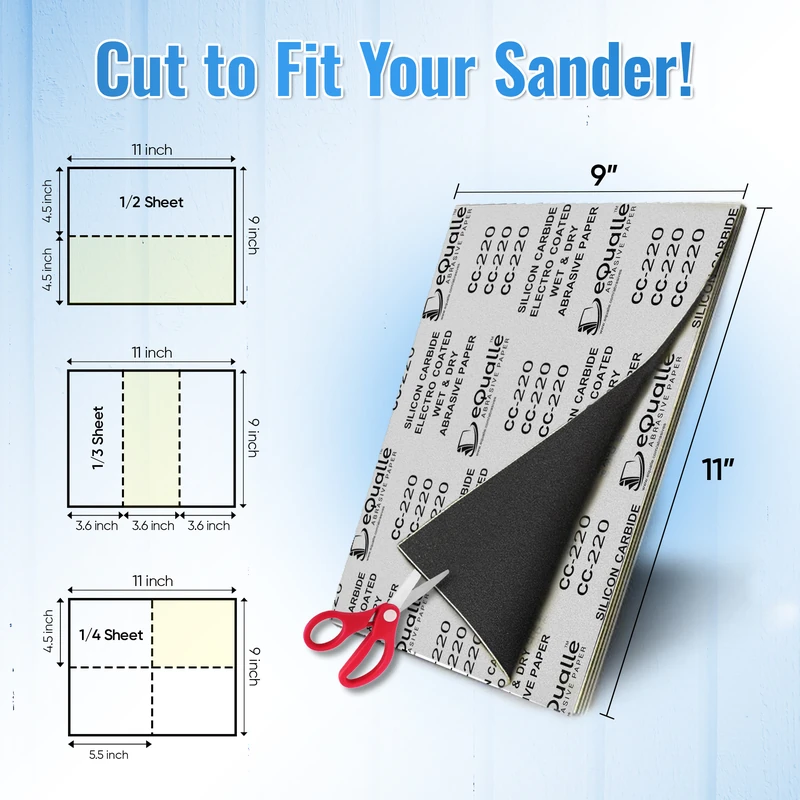
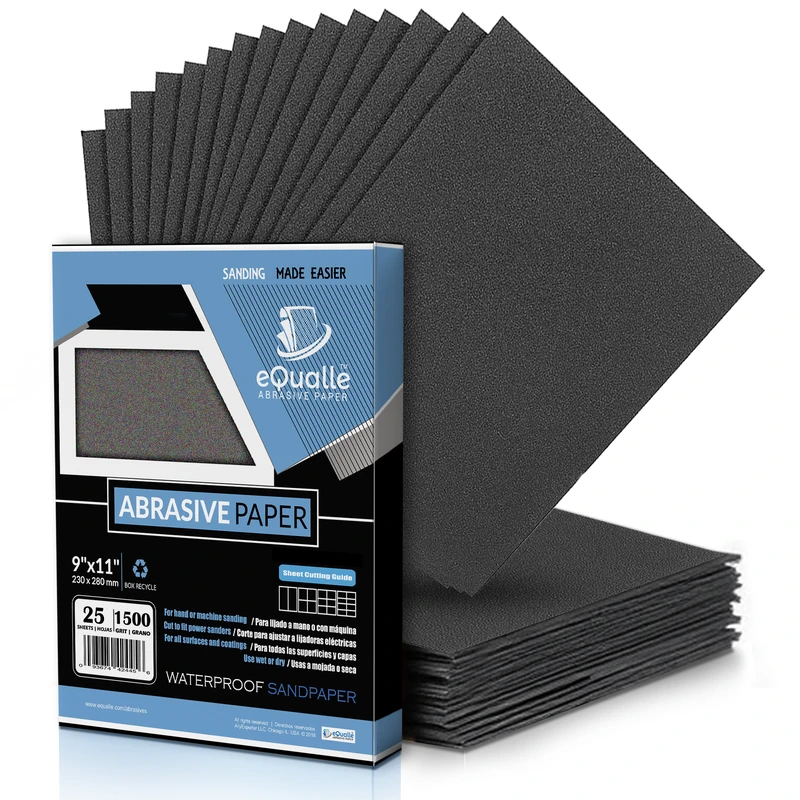
80 Grit Sandpaper Sheets (100-pack) — 9x11 in Silicon Carbide Abrasive for Wet or Dry Use — Durable coarse sandpaper made with Silicon Carbide for fast stock removal and surface leveling. Excellent for woodworking, metalwork, and fiberglass preparation. Works effectively for both wet and dry sanding before moving to 120 grit. (Professional Grade).
Frequently Asked Questions (FAQ)
Q: Where should I collect swarf for the most representative sample?
A: Use the coolant return near the machine for wet processes and a small vacuum port at the guard for dry processes; avoid sump corners and stagnant zones.
Q: How much swarf do I need for useful analysis?
A: Typically 0.5–2 grams is enough for basic PSD, microscopy, and composition checks; for advanced chemistry, collect 5–10 grams to allow repeats.
Q: How do I prevent coolant from biasing my results?
A: Record wet mass, then rinse with a compatible solvent, dry consistently, and record dry mass; analyze both to normalize for carryover.
Q: Can swarf analysis detect grind burn before parts fail?
A: It can flag risk via increased ultrafines and darker oxide-rich particles; pair it with part etching or microhardness for confirmation and act early on dressing and cooling.
Q: How often should I sample?
A: Start with per-shift composites on critical jobs, plus before/after dressing comparisons; adjust frequency based on stability and the cost of failure.