
Metal surface sanding: grit sequence for bare steel
You notice it the moment the sander spins down: the hush after the rasp of grit on steel, the faint warmth still in the panel, the tiny constellation of scratch lines all pointing the same way. On Friday night, this fender looked tired—speckled with scale, a wisp of old primer clinging at the edges. Saturday morning it’s a blank canvas in progress, the steel alive again under clean, uniform scratch. Anyone who’s spent a weekend restoring a motorcycle tank or prepping a truck’s rocker knows the difference between “sanded” and “ready.” Metal surface sanding isn’t about making things shiny; it’s about engineering a surface profile that bonds mechanically with the next layer—primer, filler, sealer—without undercutting the geometry or telegraphing flaws. It’s a craft and a sequence, not just a tool choice.
The reason sequence matters is simple: steel fights you. Mill scale is hard and glassy, welds are brittle at the toe, and edges burn if you’re not careful. But once you commit to a proper grit progression and a consistent workflow, the material becomes cooperative. You start rough when you need to cut oxide and flatten welds, then refine to a microtexture that invites epoxy or urethane to flow and anchor. Skip a step and you spend double the time chasing deep scratches. Over-refine and you risk adhesion loss. Done right, the panel feels “grabby” under a nitrile-gloved palm and looks matte, not polished. It’s not glamorous, but it’s the quiet foundation for every durable finish.
Sanding steel rewards patience and method. It starts with degreasing, picking the right abrasives, keeping the tool flat, and letting grit do the work. It ends with dust-free air, solvent-cleaned surfaces, and primer within the same shift. This guide distills a recommended grit sequence for bare steel, the tooling that supports it, and a disciplined process to ship parts out of the booth with zero surprises.
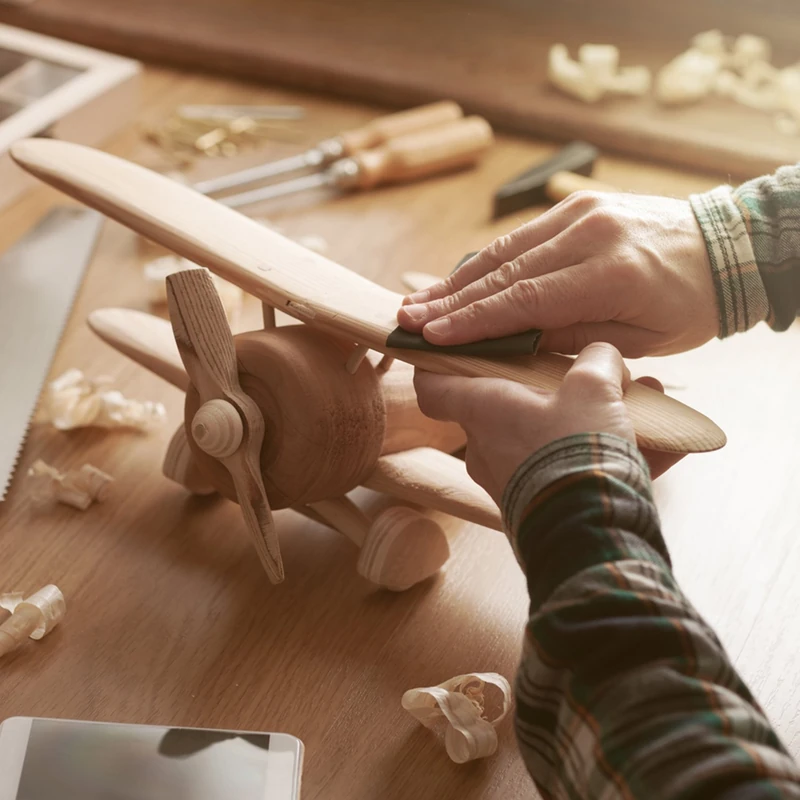
Quick Summary: Use a disciplined grit progression—typically 80 → 120 → 180/220 on bare steel—paired with the right abrasives, light pressure, and clean transitions to achieve reliable primer adhesion and finish quality.
Why grit order determines adhesion
Adhesion on steel is fundamentally mechanical. Primers and fillers lock into a field of micro-peaks and valleys, a profile often expressed as Ra (average roughness) or Rz (peak-to-valley). With sanding, you create that profile using controlled scratch geometry rather than blasting. The goal is a consistent “tooth” that is coarse enough for high-solids coatings to key into, yet fine enough not to telegraph through later coats.
Too coarse, and scratches print through—especially under thin epoxy wash coats or direct-to-metal (DTM) topcoats. Too fine, and epoxy or urethane may not develop the mechanical interlock they need for long-term adhesion, especially on panels subject to thermal cycling and vibration. This is why grit order matters: each step removes the previous step’s deep troughs while maintaining a sufficient microtexture.
Standards and scales matter here. Most coated abrasive grits for auto and fabrication work follow the FEPA P-scale (P80, P120, P180, etc.). P80 has a typical average particle size around 201 microns; P120 around 125 microns; P180 around 82 microns; P220 around 68 microns. Each jump closes the scratch depth enough to prevent telegraphing while preserving enough surface area for bonding. Jumping two grit “decades” at once (e.g., from P60 straight to P220) often leaves stubborn deep scratches buried under a smoother topography that you won’t spot until after primer—when it’s expensive to correct.
There’s also the matter of scratch orientation. A dual-action (random orbital) sander’s elliptical scratch is less directional and less prone to telegraph than straight-line sanding, but consistency is still essential. Maintaining pad flatness and modest contact pressure preserves scratch uniformity. In practice, the right grit sequence is a risk management strategy: it balances removal rate, heat input, and final profile to maximize adhesion and minimize rework.
Tools and abrasives for metal surface sanding
The tooling you choose determines heat, scratch shape, and consistency. For bare steel, a typical kit is:
- Dual-action (DA) sander, 125–150 mm (5–6 in), with a 5–7 mm orbit for general work.
- Angle grinder (variable speed) for flap discs and fiber discs on heavy scale and welds.
- Backer pads: medium-density for general cutting, softer interface pads for contours.
- Dust extraction with a HEPA vac and perforated multi-hole discs to cool and clear cuts.
Abrasive chemistry matters. Start heavy stock removal with zirconia alumina or ceramic alumina discs (P36–P80). These self-sharpening grains fracture under load, maintaining cut rate on hard scale and weld beads. For refinement steps (P120 and finer), high-quality aluminum oxide or ceramic on a resin-over-resin bond produces predictable, cool-running scratches. On steel, prefer closed-coat abrasives (full grain coverage) for aggressive, uniform cutting; open-coat is better for softer, clog-prone materials like wood.
Backing choices affect scratch and control. Cloth-backed discs (X-weight) at coarse grits resist edge breakup when trimming welds. Film-backed discs at P180–P400 maintain a flat scratch pattern and resist tearing on edges and holes. If you’re working complex curves—tanks, wheel arches—use a 5 mm foam interface pad to avoid facetting. On flats, keep the pad firm to maintain planarity.
Avoid loading and heat. Even steel can pack with fines and oil residue, glazing the abrasive. Vacuum extraction, frequent disc rotation, and light cleaning swipes with a rubber abrasive cleaner help. Overheating the panel changes temper locally and risks warping thin steel. Keep RPMs moderate (DA around 10,000–12,000 OPM; grinders at the lower end of their range with ceramic discs), apply 1–2 kg of downforce, and keep the pad flat. For contamination control, use lint-free wipes and a solvent panel wipe between grit changes; silicone or stearates left on the panel can sabotage primer flow.
Finally, think ergonomics and repeatability. Good lighting at a raking angle reveals scratch irregularities. A contrasting powder guide coat dusted between steps exposes low spots and surviving coarse scratches. These small practices make the difference between “close enough” and a surface that passes primer without surprises.
Recommended grit sequence for bare steel
While there’s no one-size progression for every condition, a robust baseline for most bare steel prep workflows looks like this:
- Starting from heavy rust, mill scale, or welds: P60 → P80 → P120 → P180/P220
- Starting from lightly corroded or blasted steel: P80 → P120 → P180/P220
- Starting from fresh, smooth sheet with light tooling marks: P120 → P180 → P220
Each step has a job. P60 or P80 establishes planarity and removes oxide, weld color, and slag. P120 erases the deep troughs from the coarser step while maintaining a strong bite. P180 or P220 sets the final bonding profile for most primers without polishing the surface. If you’re heading to an epoxy primer, many manufacturers are comfortable with a P80–P120 final on bare steel because epoxy’s chemistry and solids content develop robust adhesion on a coarser profile. If your next layer is a self-etching or thin DTM system, refine to P180–P220 to avoid telegraphing.
For filler work, you can stop at P80 or P120 where a polyester filler will be applied—the coarser tooth helps mechanical lock. After shaping filler, feather back to P180 or P220 on surrounding steel before primer. For panels going straight to high-build urethane primer (no filler), P180 is a sweet spot: predictable adhesion, minimal scratch print-through, and efficient refinement to P320–P400 before basecoat if required.
Special cases:
- Weld seams: Knock down with a P36–P60 flap disc, then unify with P80. Refine surrounding heat-affected zone with P120 and finish at P180 or P220.
- Laser-cut edges and scale: Start at P60/P80 with ceramic fiber discs; move to P120, then P180 to remove heat tint and micro-oxides that can undercut coatings.
- Edges and holes: Use a softer interface pad and reduce pressure to prevent thinning and sharp-edge burnishing, which causes poor coating wrap.
Pressure and cleanliness determine success as much as grit. Keep your DA flat, let the abrasive cut, and vacuum between steps. Use a fresh, clean wipe with isopropyl-based panel cleaner after your final grit, then get to primer before flash rust forms—ideally within the same shift.
According to a article
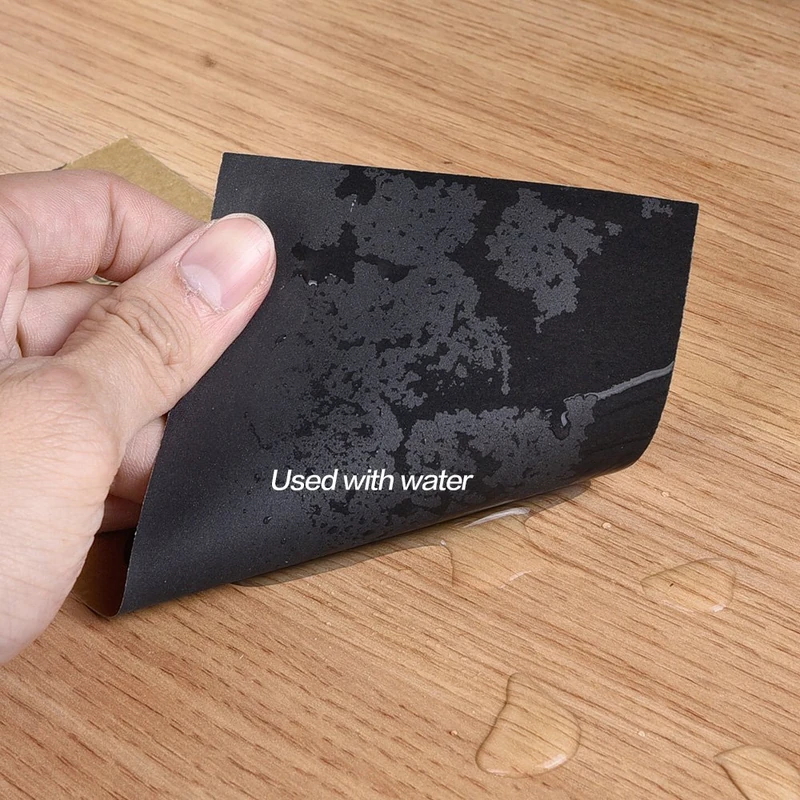
If you must wet-sand steel for dust control, add a corrosion inhibitor to the water or use a water-based sanding fluid designed for metals. Dry quickly with warm air and wipe with solvent to avoid flash rust. In general, dry sanding with extraction is simpler and safer for bare steel.
Workflow: from panel prep to primer
A disciplined workflow preserves quality and saves hours of rework. Here’s a proven, repeatable sequence:
Degrease first. Before touching sandpaper, wipe the panel with a dedicated panel wipe (isopropyl or naphtha-based) and a clean lint-free cloth. Oils from hands, cutting fluids, and silicone from polishes embed under scratches if you sand them in.
Rough cut. Remove scale, paint remnants, and welds using the appropriate coarse grit (P60 or P80) on a DA or an angle grinder with a flap or fiber disc. Keep the tool flat and moving to avoid heat spots.
Refine in controlled steps. Move to P120 to remove coarse scratches. Use a light powder guide coat to expose any remaining deep marks or low areas. Cross the previous scratch orientation by 10–20 degrees to ensure full coverage.
Final profile. Sand to P180 or P220 depending on your primer system. Vacuum and wipe down between every grit change. Inspect with raking light; a uniform matte finish without visible deep grooves is your green light.
Clean and prime. Blow off with dry, oil-free compressed air, panel wipe again, tack cloth lightly, and prime. Target a cleanroom mindset in the last five minutes—no grinders, no open solvent containers, minimal foot traffic.
Actionable tips:
- Use the marker test: Draw a crosshatch with a permanent marker before each grit. When the marks are completely gone, you’ve reached full coverage with that step.
- Time your transitions: If you spend more than 2–3 minutes per square foot at P120 removing P80 scratches, you likely undercut with P80 or need a fresh disc. Change discs sooner.
- Control dew point: Keep steel at least 5°C (9°F) above dew point during final sanding and priming to avoid invisible moisture films that ruin adhesion.
- Track discs: Mark used discs by grit and minutes of use. A half-spent P120 leaves erratic scratches and heat; consistency beats thrift on abrasives.
- Protect edges: Chamfer sharp panel edges to ~0.3 mm with a light P180 pass to improve primer wrap and reduce chipping.
Consistency is the difference between a clean primer pass and a week of nib repairs. If you can’t control the environment, control the sequence and cleanliness relentlessly.
Quality checks and defect removal
Even seasoned fabricators occasionally uncover defects after primer—most often buried deep scratches, swirl marks from worn discs, or contamination that causes cratering. Building explicit quality checks into your sanding process prevents these outcomes.
Scratch visibility: After each grit, use a raking light at 30–45 degrees and a powder guide coat. Any dark lines remaining after a P120 pass likely trace back to P80 and require more time at P120 before you move on. Once you hit P180 or P220, the scratch pattern should be uniform and matte without random deeper tracks. If you see “comets” (crescents with tails), a stray hard particle or contaminated disc cut a trench—step back one grit and erase it.
Swirl patterns: Aggressive orbits and overpressure can leave orbital swirls that telegraph under thin primers. Reduce OPM slightly, lighten pressure, and verify pad flatness. A soft interface pad can exacerbate swirls on flats; reserve it for contours. Straight-line hand passes with P220 can “calm” a stubborn orbital pattern before primer.
Contamination control: Silicones, stearates from old papers, and cutting wax residues create fisheyes. Dedicate specific abrasives for metal only, avoid multi-material cross-use, and always panel-wipe before the last grit. Check your compressed air with a blotter test—if you see oil, change filters or drain tanks before you blow off a panel.
Burnishing and glazing: Shiny patches after P180 indicate burnishing—too much pressure or a clogged disc. These areas resist primer. Go back to P120 lightly, then revisit P180 with a fresh disc and minimal downforce. Keep the panel cool; frequent hand checks are good practice.
Edge behavior: Thin edges and holes are risk points. Over-sanding thins steel and warms edges, which later chip. Lighten pressure and increase paper flexibility near edges. For tight holes and flanges, switch to hand sanding with P180/P220 on a folded film-backed sheet to maintain control.
As a final gate, clean the panel, wait five minutes, and re-inspect. Dust sometimes masks scratch depth; as it settles or is wiped off, hidden defects reappear. A disciplined second look before primer is faster than blocking primer later.
Basics of Sanding — Video Guide
A concise training video on the fundamentals of sanding metal demonstrates core techniques that align with this workflow. It walks through tool setup, correct pad pressure, and how to let the abrasive cut rather than forcing it. You’ll see why orbit size and backer stiffness matter when shifting from rough removal to finish profiling.
Video source: Basics of Sanding Metal
800 Grit Sandpaper Sheets (50-pack) — 9x11 in Silicon Carbide Abrasive for Wet or Dry Use — Smooth-polish abrasive for refining gloss layers on clear coat, resin, or composite surfaces before final buffing. (Professional Grade).
Frequently Asked Questions (FAQ)
Q: What is the best final grit on bare steel before epoxy primer?
A: P120 is a reliable finish for epoxy primers, with some systems accepting P80. If the epoxy is thin or you plan minimal build, refine to P180 to prevent scratch telegraphing.
Q: Should I stop at P220 before a self-etch or DTM coating?
A: Yes, P180–P220 provides adequate tooth without visible scratches under thinner films. Always confirm your coating’s technical data sheet (TDS) for exact recommendations.
Q: Can I wet-sand bare steel?
A: You can, but manage flash rust. Use an inhibited sanding fluid, dry immediately with warm air, and solvent-wipe before coating. Dry sanding with dust extraction is generally safer and simpler.
Q: How do I remove deep P60/P80 scratches that won’t disappear at P120?
A: Don’t jump grits; spend more time with a fresh P80 to standardize the scratch, then move to P120. If necessary, add an intermediate P100 step. Using worn discs often causes stubborn, uneven depths.
Q: What abrasive type cuts steel fastest without overheating?
A: Ceramic alumina or zirconia alumina in coarse grits (P36–P80) offer high cut rates with lower heat due to self-sharpening fractures. Transition to aluminum oxide or ceramic in P120+ for consistent refinement.