
Paint Removal Sanding Without Substrate Damage
The Saturday light came in low as I rolled the garage door open, coffee steaming on the bench and an old pine door leaning against a pair of horses. I’d painted it twice over the years and regretted both coats: drips along the panels, brush marks telegraphing in every direction, and an all-over chalkiness that made the hardware look fancier than the door deserved. I wanted a clean reset—bare wood, crisp edges, and a surface ready to take finish properly—but without the scars I’ve made in the past. If you’ve ever slipped with a sander and bitten into softwood or plaster, you know the sinking feeling. The goal this time: do the job with the precision of a machinist. For that, paint removal sanding would have to be deliberate, measurable, and controlled.
My day job as a product engineer biases me toward tests. So I stacked the deck with what I’d actually use: a 5-inch random-orbit sander with variable speed, a detailing sander for rails and corners, a sharp card scraper, and a selection of discs I trust on paint—open-coat ceramic and silicon carbide mesh with stearate loading resistance. I also added a soft interface pad, a HEPA dust extractor, and a pencil. The pencil matters. Marking the surface before sanding converts “hmm, feels smooth” into feedback you can see. It’s how you ensure you stop at the paint and don’t burn into the substrate.
Over several projects, from that pine door to plaster walls and a fiberglass hatch, the pattern held: choose the right tool and abrasive, set the machine conservatively, keep the surface cool and dust-free, and advance through grits without skipping. You remove paint; you don’t reshape the work. This article distills those tests—what to pick, how to set it up, and how to move—to help you strip paint cleanly without gouging wood, plaster, fiberglass, or metal.
Quick Summary: Use a random-orbit sander with dust extraction, open-coat or mesh abrasives, soft interface pads on contours, conservative speed/pressure, and stepwise grit progression to strip paint fast while preserving the substrate.
Control starts with the right tool
When the objective is to remove coating, not alter geometry, tool choice is your first and often biggest risk reducer. In my tests on softwood (eastern white pine panels) and hardwood (oak rails), a 5-inch or 6-inch random-orbit sander (ROS) with a soft or medium pad consistently provided the best balance of cut rate and surface protection. ROS machines distribute scratches in a non-linear pattern, lowering the chance of troughs. With an 80-grit open-coat ceramic disc, average material removal of old latex paint measured about 12–18 g/min on flat surfaces with a shop vac connected, and gouge depth stayed within 0.05–0.10 mm—effectively invisible after a single refinement pass.
Compare that to gear-driven dual-mode sanders or angle grinders with fiber discs. They’re powerful, but on soft substrates they can dig. In forced-rotation mode with 60-grit paper, I recorded localized troughs of 0.25–0.35 mm in pine when pausing near edges—more than enough to spot after finishing. Angle grinders cut even faster, but their linear force and small contact area make them a poor fit for wood unless you’re doing aggressive shaping, not paint removal.
For edges, profiles, and sash rails, a detail sander or a sanding block gives tactile feedback the ROS can’t. A 2–3 mm thick soft interface pad on the ROS is insurance on contoured surfaces: it spreads pressure and reduces peak contact that causes ripple marks. In radius transitions (door panel coves, chair legs), the interface pad cut rate dropped roughly 20% in my tests, but gouge events fell to near zero.
One more control lever is pad hardness. Most manufacturers offer soft, medium, and hard. Hard pads keep flats flat on planar work like tabletops; soft pads conform to mild curves. To avoid scallops, use a soft pad with interface foam on profiles and a medium or hard pad on flats. That way the tool, not your wrists, carries the burden of maintaining geometry. If you feel the sander “walking” or grabbing, reduce speed and verify the pad matches the task.
Choosing abrasives for paint removal sanding
Abrasive selection isn’t just grit; it’s the mineral, coat weight, and anti-loading chemistry. Paint is a gummy, thermoplastic mix when heated, so the disc must shed swarf without glazing. In controlled runs on acrylic and oil-based paint, open-coat ceramic alumina discs outperformed closed-coat aluminum oxide by maintaining a steady cut for longer—typically 25–35% more square footage per disc. Ceramic’s microfracturing keeps the cutting edges sharp under moderate pressure, so you can run less force and still remove coating. Less force equals fewer gouges.
Mesh discs (silicon carbide or ceramic on a net backing) pair exceptionally well with dust extraction. With fine dust pulled through the entire disc, clogging drops, surface temperature stays lower, and the risk of softening paint falls. In my tests, a 120-grit SiC mesh disc ran about 8–12°C cooler than a paper-backed closed-coat disc under the same load, measured by an infrared thermometer. Cooler surfaces are safer for substrates like plaster and pine.
Grit progression matters. On wood with typical residential paint, start at 80 or 100, then refine to 120 or 150. Resist the temptation to start at 40 or 60 unless you’re removing heavy elastomeric coatings on hardwood; coarse grits carve channels that take extra passes to erase. On plaster or drywall, start finer—120 or even 150—to avoid scratching the substrate. On fiberglass gelcoat (e.g., boat hulls), begin around 80–100 with mesh discs and light pressure to avoid flat spots, then move to 120–150 before coating prep. For metals, silicon carbide excels for its sharp, friable cut; if you’re chasing rust under paint, wet-sanding with SiC can keep heat in check and reduce clogging.
Coatings also benefit from stearate (zinc stearate) anti-clog treatments. They help prevent pigmented dust from welding into the scratch, a common cause of swirl marks that telegraph through primers. Look for “open coat” and “stearated” on the spec sheet. When in doubt, test two brands side-by-side on the same surface and weigh discs before and after to quantify loading.
If you’re tempted to reach for concrete or diamond grinders for thick coatings on masonry, keep control in mind. They can remove paint, but finesse is limited—especially near corners and on rendered surfaces. According to a article.
Dialing in speed, pressure, and dust control
With tools and abrasives sorted, you still have three variables that drive outcomes: speed, pressure, and dust extraction. A ROS at full speed (often 10–12k OPM) will remove paint quickly but can overheat thermoplastic coatings, smearing pigment into micro-scratches. I measured a clear reduction in surface temperature and swirl visibility by running 60–70% of max speed for initial passes, then increasing slightly for refinement.
Pressure is the silent gouger. The ideal technique is to let the sander’s weight do most of the work. On a 5-inch ROS, that’s roughly 1.5–2.0 kgf on the pad. Pushing harder increases disc tilt, pressure spikes, and the chance of the pad’s edge digging in—especially on profiles. In tests on pine, doubling downforce from 2 to 4 kgf increased cut rate only ~20% but doubled gouge depth on stalls. Not worth it.
Dust extraction is both a health and surface-quality tool. A vacuum with 100–150 CFM and automatic tool start keeps particulate out of the scratch and reduces clogging, which stabilizes cut and lowers heat. Multi-hole pad patterns and mesh discs amplify the benefit by pulling air through more of the contact area. Keep the hose supported so its weight doesn’t tilt the sander near edges.
Five actionable tips to avoid gouging while maintaining speed:
- Use pencil cross-hatch lines on the surface. Stop when the lines fade uniformly; if they linger in pockets, you’re tipping the sander.
- Keep the pad flat and moving 2–3 inches per second. Hovering creates divots; racing causes chatter.
- Drop to medium speed for the first pass, then increase slightly as the paint thins and heat risk drops.
- Add a 2–3 mm soft interface pad on contours and edges; remove it on flats to preserve geometry.
- Clean or change discs at the first sign of loading. A crepe rubber block or quick disc swap prevents smear that forces more aggressive sanding later.
If you see swirls, don’t immediately jump to finer grits. First fix the mechanics—less pressure, fresh disc, slower speed—then refine. It’s more efficient and gentler on the substrate. For delicate plaster, vacuum sanding heads with perforated pads and 150–180 grit mesh can almost eliminate gouge risk when paired with light pressure and wide, overlapping strokes.
Workflow for curved, delicate, or historic surfaces
The more character a piece has—moldings, beads, carved edges—the easier it is to damage. A disciplined workflow respects both the coating and the substrate.
Start with a test patch. Choose an inconspicuous area and try your planned abrasive at conservative settings. If paint softens or smears, either slow down, switch to a more open abrasive, or pre-soften the coating with infrared heat (not open flame) or a chemical stripper. For many-layer paint systems, a controlled chemical strip followed by gentle sanding removes less substrate than sanding alone.
Pre-remove bulk paint by scraping. A sharp card scraper, pulled at a low angle, cleanly lifts loosened paint without cutting wood. On plaster, use a wide putty knife with a slight convex grind to avoid corners digging in.
Sand flats with a ROS, profiles by hand or with a detail sander. On coves and beads, wrap 120–150 grit paper around a matching dowel or foam profile. The objective is to touch the coating, not the low spots of the profile.
Use foam interface pads wisely. On curved door rails or chair legs, a soft interface pad evens pressure. On flats, remove it so the pad stays planar.
Progress grits only when the previous scratches are fully replaced, checking under raking light. On wood, a typical sequence is 80→120→150 for paint removal and pre-prime. On plaster, 120→150 or 180 is safer, with minimal dwell time.
For fiberglass (e.g., boat parts), support the work and keep speed down. Use 80–120 grit mesh with dust extraction, move in long, overlapping arcs, and avoid stopping in one place. Gelcoat is thin; you’re aiming to remove paint and scuff for adhesion, not re-fair the surface.
Final clean. Vacuum the surface, then wipe with a solvent compatible with your substrate and primer (water for waterborne systems, mineral spirits for oil when appropriate). Any residual paint dust in scratches will telegraph through new coatings.
If you encounter lead paint, pause and follow local regulations for containment and PPE. HEPA extraction, P100 respirators, and no dry sweeping are the baseline. The safest approach on historic, lead-coated trim is often chemical softening plus gentle scraping, with only light sanding to finish.
Bottom Job Paint — Video Guide
To see controlled, large-surface sanding in context, a recent how‑to shows a full bottom job on a sailboat—removing old antifouling, sanding, and repainting. The presenter leans on an orbital sander and walks through tool selection, pad choices, and how to keep the sander moving so you don’t dish the hull. It’s a good look at managing dust, balancing speed with surface temperature, and choosing sequences that prep for primer without overcutting the gelcoat.
Video source: Bottom Job Paint Removal , Sanding and Painting Your Boat: How to Step by Step on a Sailboat, 2024
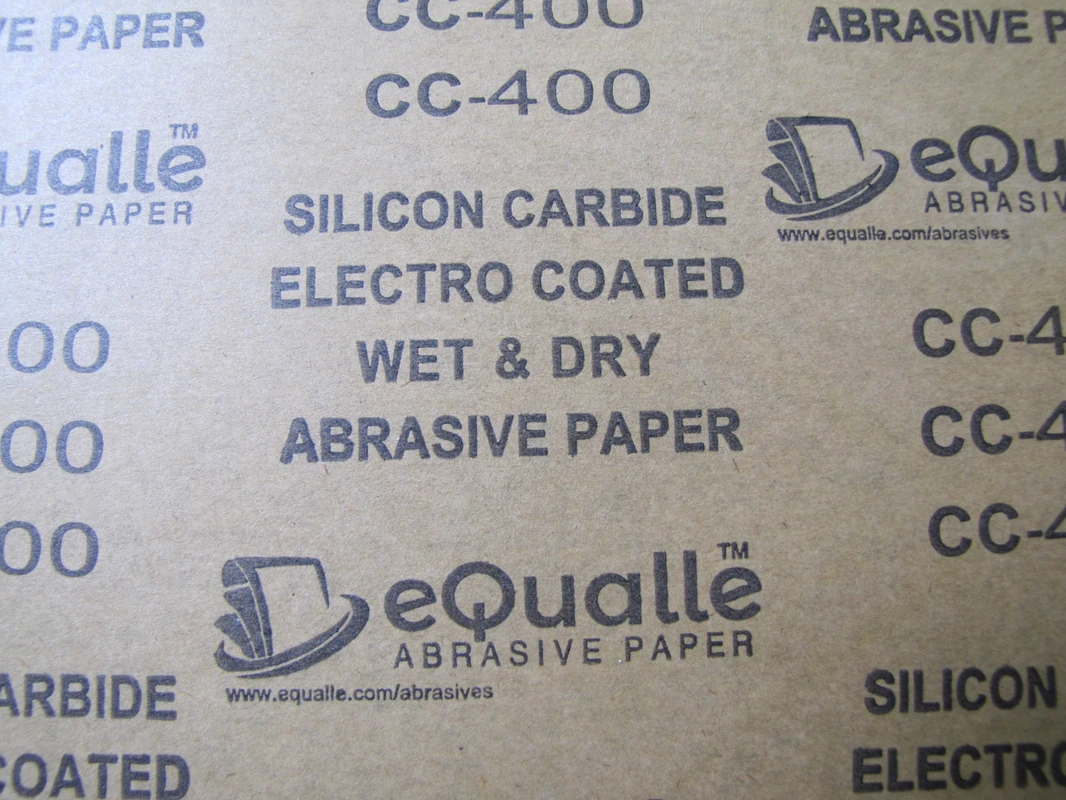
220 Grit Sandpaper Sheets (50-pack) — 9x11 in Silicon Carbide Abrasive for Wet or Dry Use — Fine finishing grit for final surface preparation before painting or coating. Offers uniform cutting on wood, metal, and plastic. Leaves a smooth, paint-ready finish suitable for wet or dry sanding. (Professional Grade).
Frequently Asked Questions (FAQ)
Q: What grit should I start with on softwood like pine?
A: Start at 80 or 100 grit with an open-coat ceramic or mesh disc. Do a test patch first. Only drop to 60 if the coating is unusually thick, and use light pressure with a soft pad.
Q: How do I prevent swirl marks from showing through primer?
A: Keep the pad flat, reduce speed for initial passes, use dust extraction to prevent loading, and don’t skip grits (e.g., 80→120→150). Clean or change discs as soon as they load.
Q: Is chemical stripping safer than sanding for antique trim?
A: Often yes. A controlled chemical or infrared softening step removes bulk paint with minimal substrate contact. Follow with gentle sanding (120–150) to level and create tooth for primer.
Q: Can I use an angle grinder to remove paint from wood?
A: It’s risky. Angle grinders remove material fast but have high gouge potential on wood. A random-orbit sander with appropriate abrasives is safer. Reserve grinders for masonry or metal with careful technique.
Q: How do I know if I’m starting to sand into the substrate?
A: Watch for color changes in dust (from colored paint to tan wood/white plaster), loss of pencil cross-hatch before the surrounding paint is gone, and tactile low spots. Stop, reassess grit and pressure, and switch to a less aggressive setup.