
Dust Extraction Setup for Sanding Belts
The first time you switch on a belt sander in a quiet shop, the machine’s hum is almost soothing—until the air turns hazy and you feel grit settling on your forearms, your workbench, and the freshly glued panels waiting for finish. Dust isn’t just a nuisance; it’s process noise that blocks your ability to see scratch patterns, compromises adhesive bonds, and creates finish defects that telegraph through the final sheen. If you rely on sanding belts to prep edges, flatten stock, or break sharp corners, a sloppy extraction setup costs you time and quality. The target is not “less dust.” It’s controlled capture at the source, predictable airflow, and filtration that returns clean air to your breathing zone without starving your sander’s performance.
Most workshops run with whatever bag or box came with the tool. But belt sanding throws a particular mix of fine and coarse particles, and those fines accumulate in the belt backing, raise temperatures at the interface, and blunt the abrasive. Worse, they migrate into bearings and electrical enclosures. That translates into glazed belts, inconsistent scratch profiles, and shortened machine life. The fix is less about buying a bigger vacuum and more about matching each part of the dust path—shroud, port, hose diameter, separator, and filter—to the velocity and static pressure the application demands. Done right, you’ll see longer belt life, cooler cutting, and a cleaner line of sight along the platen.
This guide unpacks a proven, technical approach. We’ll size airflow using practical targets, select vacuums and cyclones with enough static pressure to overcome real-world hose losses, and tune your hoods so they capture where particles actually leave the belt, not where it’s easiest to place a port. Along the way, we’ll connect extraction variables to abrasive performance—because the point of dust control is better surface preparation, not just a tidy floor.
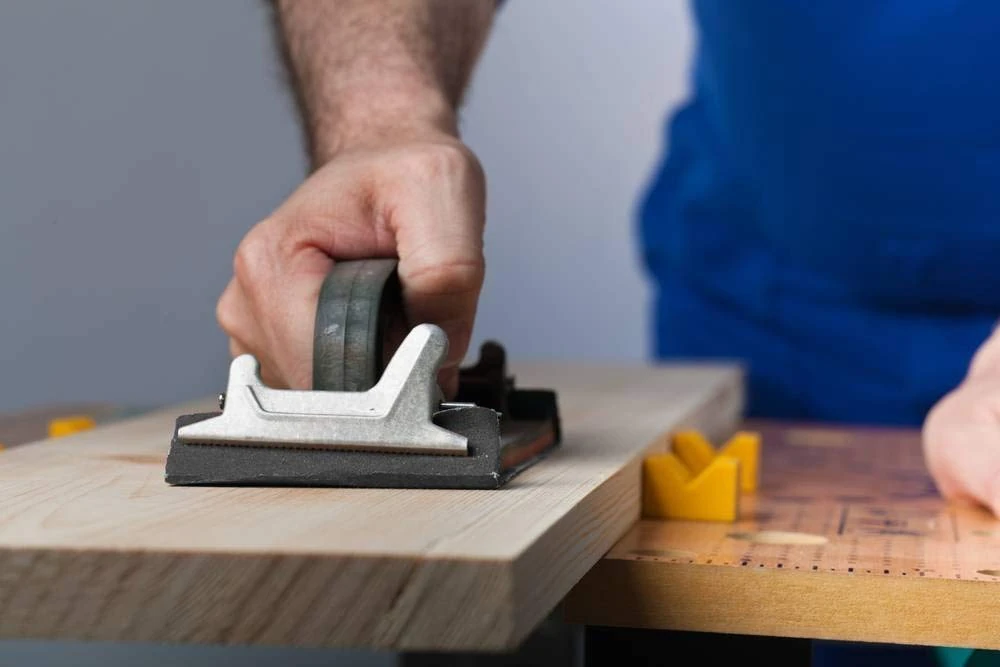
Quick Summary: Build dust extraction for belt sanding around source capture, correct hose sizing, efficient separation, and high-efficiency filtration to improve surface quality and belt life.
Airflow basics for belt sanding dust control
Effective dust control at a belt sander hinges on capturing particulate the moment it leaves the belt–workpiece interface. Capture velocity at the hood needs to be high enough to overcome the particle’s initial momentum and the crossflow air in your shop, but not so aggressive that it lifts the workpiece or cools the belt unevenly.
Practical targets:
- Capture velocity at the slot or hood face: 200–300 fpm (1.0–1.5 m/s) for woodworking. Heavier particle loads or aggressive stock removal may need 350 fpm.
- Volumetric flow (CFM) depends on hood area. A compact 2 × 48 in bench sander with a 2–3 in slot often performs well at 250–350 CFM. Larger 4 in ports typically benefit from 400–600 CFM to maintain face velocity.
- Static pressure is the silent constraint. Long, small-diameter hoses and restrictive elbows can push system losses beyond what many small dust collectors or shop vacs can overcome.
Focus on the whole path:
- Hood design: A well-placed slot along the trailing edge of the platen draws the dust entrainment plume before it disperses. Open “catch-all” boxes reduce velocity and are less effective.
- Make-up air: A small, intentional opening opposite the slot balances draw and reduces belt flutter. Think of it as tuning the hood to create uniform flow across the belt width.
- Cross-drafts: Overhead fans or open doors can disrupt the particle plume. Keep crossflow below 50 fpm around the sander, or baffle it.
For metal sanding and grinding, source capture requires attention to spark management and fire risk. Use spark arrestor stages and non-combustible ducting where applicable. Avoid connecting steel grinding to a shared wood-dust collector without proper segregation and spark mitigation.
Validate your setup. A simple smoke pencil shows whether the plume bends into the slot across the full belt width. A vane anemometer can verify face velocity. If you see dust escaping the belt edge or curling over the idler wheels, the hood needs reshaping, the slot needs lengthening, or the system needs more CFM—or less leakage elsewhere.
Selecting vacuums, separators, and filters
Not all dust producers are equal, and neither are dust collectors. Belt sanding produces a significant fraction of fine particulate—especially from hardwoods and finishing grits—that demands both high capture velocity and fine filtration.
Collector types:
- High-pressure shop vacuums (typical 70–150 CFM, 60–90 inH2O static pressure) excel at small ports (1.25–2.5 in) and long, narrow hoses. They pair well with portable belt sanders and benchtop machines that have tight, efficient hooding.
- Low-pressure dust collectors (typical 500–1000+ CFM, 6–12 inH2O static pressure) are ideal for 4–6 in ports and open hoods. They maintain velocity in larger ducts but struggle against restrictive small hoses.
- Hybrids and central vacs can bridge gaps but read the curve: you need the intersection of your system curve (losses) and fan curve (pressure vs. flow) to land at your target CFM.
Stage the stream:
- Cyclone or Thien baffle separators remove chips and coarse dust before the filter. This keeps airflow stable and reduces filter loading. For a shop vac, a compact cyclone can double the time between filter maintenance.
- Filter media: For wood dust, use MERV 13–15 or true HEPA (99.97% at 0.3 μm) if the machine exhausts back into the workspace. Cartridge filters with pleats increase area and reduce pressure drop. Bags are acceptable if they’re rated and sealed well, but they often leak fines back into the shop.
Key filter metrics:
- Air-to-cloth ratio (ACR): Keep ACR low (under 6:1 for fine dust) to maintain low pressure drop and high capture efficiency.
- Pulse or manual cleaning: Plan for filter cleaning without tearing the media. Compressed-air pulsing or gentle backflushing extends life. Never beat HEPA filters; it damages fibers.
Safety and workflow:
- Ground flexible duct where possible to reduce static. While the ignition risk from static in small shops is debated, static shocks are a real productivity hit.
- If you sand metal, isolate that stream with a dedicated collector that includes spark mitigation and a metal-safe separator. Never feed sparks into a sawdust-filled collector.
Match tool and collector intentionally: a portable belt sander with a 1.25–1.5 in port usually performs best with a high-pressure shop vacuum plus a small cyclone and HEPA exhaust, while a stationary 4 in port thrives on a 600–800 CFM dust collector with a tight hood and a high-MERV cartridge.
Hose, ports, and shrouds for sanding belts
Even a strong collector fails if the path between your machine and the filter throttles flow. Hose diameter, length, bend radius, and the hood geometry at the sander are where performance is won.
Port and hose sizing:
- Use the largest practical port the tool can support. Jumping from 2.5 in to 4 in reduces friction losses dramatically and lets you maintain face velocity with lower static.
- Keep hose runs as short and straight as possible. Every 90-degree elbow can add several feet of equivalent length; two tight elbows can cost more than 100 CFM on a small system.
- Smooth-walled duct beats ribbed flex hose for principal runs. Use flex only for final tool connections and vibration isolation.
Hood and shroud design:
- Align the slot intake along the belt’s trailing edge near the platen, extending at least the usable belt width. For narrow belts, a 3/8–1/2 in slot balances capture and velocity.
- Add a small window or panel opposite the slot. This allows controlled inflow to sweep across the belt, entraining dust without collapsing velocity at the slot.
- Enclose the idler wheel as much as tool function allows; dust curls around it and becomes hard to capture if left open.
For reference equipment with integrated extraction, some benchtop belt sanders ship with vacuum bases that simplify this integration. According to a article, pairing a compact 2 × 48 in machine with an integrated vacuum base delivers consistent capture without kludged adapters—an approach worth emulating if you’re building a custom hood.
Connections and seals:
- Use proper port adapters rather than tape. Step-downs should be conical and gradual. Sudden contractions create turbulence and pressure loss.
- Seal joints with mastic or gasketed clamps. Small leaks at the machine matter more than leaks downstream, because they dilute capture velocity at the hood.
Commission your shroud with marker dust or a smoke pencil and watch where the streamlines go. If you notice dust escaping at the belt’s edges, extend the slot length; if you see dust bouncing off the platen face, add a slight shroud lip to prevent re-entrainment.
Abrasive loading, belt life, and airflow tuning
Dust extraction has a direct impact on abrasive performance. When fines aren’t captured, they pack between grains, increasing heat and reducing effective grit sharpness—this is belt glazing. A glazed belt cuts erratically, requiring more passes and introducing inconsistent scratch geometry that makes subsequent grits work harder.
Abrasive choices:
- Open-coat aluminum oxide belts shed dust more readily on resinous woods and are less prone to loading, but they still need airflow at the interface.
- Stearate-coated belts reduce loading in fine grits, especially on finishes and softwoods, but stearates can smear if overheating—another reason to maintain airflow.
- Zirconia and ceramic belts excel in aggressive stock removal and metalwork. They tolerate pressure but still benefit from steady dust removal to keep the cutting zone cool.
Airflow tuning for performance:
- Too little airflow: belt runs hotter, resin softens, grains glaze. You’ll see burnishing, pitch build-up, and “comet tails” in scratch patterns.
- Too much localized suction: belt slap or harsh draw may telegraph into the surface on thin stock, and you may starve the belt of fresh air, paradoxically raising temperature locally.
- Target uniform, laminar draw across the belt width. If the far edge loads first, improve hood symmetry or balance make-up air.
Cleaning and workflow:
- Use a crepe belt-cleaning block during operation to remove soft buildup; extraction keeps the loosened debris moving toward the slot rather than re-depositing.
- Avoid blasting the belt with compressed air at close range—it can drive fines into the backing and damage the splice. If you must, use low pressure and blow from the belt’s back side.
- Maintain grit progression (e.g., 80 → 120 → 180) and let the extractor keep each step honest. Skipping grits forces the belt to cut and polish at once, which increases dust fines and heat.
Actionable performance tips:
- Set a baseline: measure surface temperature at the belt after 2 minutes of sanding with an IR thermometer; if temperatures exceed 60–70°C on wood, increase capture or reduce pressure.
- Log belt hours and pressure drop across your filter. A sudden rise in drop at the same flow indicates filter loading; clean or replace before belts start glazing.
- Evaluate scratch quality under raking light after each grit. If you see random deep scratches, check for recycled chips in the hood—add a baffle or increase slot velocity.
- Standardize port adapters and hose diameters across your sanding stations to keep velocities consistent and make troubleshooting straightforward.
- Keep spare sanding belts sealed and clean. Dust-laden storage contaminates new belts and undermines the benefits of good extraction the moment you mount them.
Commissioning, monitoring, and maintenance
You don’t need a lab to commission an effective dust setup, but you do need a repeatable process. Treat dust extraction like any other precision system: verify, record, and maintain.
Commissioning steps:
- Measure airflow: Use a vane anemometer at the hood face. Multiply average face velocity by the hood area to estimate CFM. Adjust blast gates or ports until you hit target values.
- Map pressure: Install a Magnehelic or digital differential pressure gauge across filters and key runs. Record baseline values when clean. This becomes your early warning system for performance loss.
- Visualize flow: A smoke pencil reveals dead zones near the belt edges. Trim shrouds or widen slots to eliminate recirculation pockets.
Monitoring protocol:
- Weekly: Check filter differential pressure and empty separators before they’re half full; cyclone efficiency drops as bins fill and fines re-enter the airstream.
- Monthly: Inspect hoses and clamps for leaks, especially near the machine where vibrations loosen joints. Replace crushed flex segments; flattened hose kills CFM.
- Quarterly: Verify capture velocity and recalibrate gates. If multiple tools share a collector, changes at one station can starve another.
Maintenance considerations:
- Filter care: For HEPA and high-MERV cartridges, follow manufacturer cleaning procedures. Gentle reverse flow or pulsing is better than tapping. Replace when pressure drop remains high after cleaning.
- Bearing and motor health: Effective dust capture reduces abrasive ingress. Still, blow out motor housings periodically (with power off) and check cooling passages to prevent overheating.
- Housekeeping: Even with good extraction, some fugitive dust accumulates. Vacuum, don’t sweep, to avoid re-suspending fines. Keep the sander’s platen and tracking hardware free of dust to maintain belt geometry.
Safety notes:
- Wood dust is a respiratory hazard; HEPA filtration reduces exposure significantly when venting indoors. For maximum protection, pair extraction with a P100 respirator during heavy sanding.
- Metal sparks require dedicated capture paths and spark arrestors. Never connect ferrous grinding to a collector full of wood fines.
Document your system. A one-page sheet listing hood dimensions, target CFM, filter model, and baseline pressure drops makes future troubleshooting fast. As you make changes—upgrading a port, changing a filter—update the sheet and re-verify. The payoff is consistent surfaces, fewer finish surprises, and longer belt life.
Portable Belt sanders — Video Guide
If you’re new to portable belt sanders, a concise introductory video breaks down what these tools are good at and how they differ from other sanders. It covers form factors, motor power, and when a belt sander outperforms an orbital—especially for rapid stock removal and edge straightening.
Video source: Portable Belt sanders | Beginner Tools
240 Grit Sandpaper Sheets (100-pack) — 9x11 in Silicon Carbide Abrasive for Wet or Dry Use — Smooth-cut abrasive for soft blending, de-nibbing, and light surface preparation before polishing or coating. (Professional Grade).
Frequently Asked Questions (FAQ)
Q: How much CFM do I need for a 2 × 48 in belt sander?
A: Aim for 250–350 CFM with a well-designed slot hood along the platen’s trailing edge. If you use a 4 in port and a more open shroud, 400–600 CFM helps maintain capture velocity across the belt width.
Q: Should I use a shop vac or a dust collector for belt sanding?
A: Use a high-pressure shop vac with HEPA filtration for small ports (1.25–2.5 in) on portable or benchtop sanders. Choose a dust collector (500–1000+ CFM) for 4–6 in ports and larger, more open hoods.
Q: What filter rating is appropriate for wood sanding dust?
A: At minimum, MERV 13–15 for indoor recirculation. True HEPA (99.97% at 0.3 μm) provides better protection against fine respirable particles common in sanding operations.
Q: Can dust extraction extend sanding belt life?
A: Yes. Effective capture removes fines before they pack into the belt, reducing heat and glazing. Expect cooler running, more consistent cutting, and longer intervals between belt changes.
Q: How do I know if my hood is working correctly?
A: Use a smoke pencil to visualize flow, verify face velocity with an anemometer, and inspect surfaces under raking light. Dust escaping at belt edges or visible haze indicates insufficient capture or hood asymmetry.