
Sandpaper Grit Chart: Hardwood vs Softwood Guide
On a rainy Saturday in my small basement shop, I set a maple board on the bench next to a knotty piece of pine. The goal seemed simple: sand both to a flawless, finish-ready surface without wasting time or rounding edges. But if you’ve ever swapped back and forth between hardwood and softwood, you know the result can be anything but simple—soft pine can gum up a disc in minutes, while dense maple highlights every stray swirl you hoped wouldn’t show through the finish. I pulled out my sanding cart, a set of discs from P80 to P240, and the printed sandpaper grit chart I keep taped to a cabinet door. The right sequence is less about dogma and more about physics: grain hardness, resin content, abrasive mineral, and scratch geometry interacting in real time.
As an engineer, I like predictable processes. That means building a schedule that respects the material. Hardwoods cut differently than softwoods because their cellular structure and density are different; earlywood/latewood contrast is more pronounced in softwoods, and some species, like pine and fir, contain resin that loads abrasive quickly. With hardwoods—especially closed-pore species like maple and cherry—the risk is glazing and burnishing if you move too fine too soon, or skip too far between grits. My approach is to measure results in passes, dust load, scratch visibility under raking light, and temperature at the pad. If the disc runs hot or clogs fast, the sequence is wrong for the wood or the abrasive is mismatched.
Over the past year, I tested multiple abrasive families—aluminum oxide, ceramic alumina, and silicon carbide—on common hardwoods and softwoods using a 5-inch random-orbit sander with dust extraction. The data is clear: choosing the right starting grit and stepping through the optimal ladder can cut sanding time by a third while producing a finer, more uniform scratch pattern that finishes beautifully. Below is the distilled guidance I wish I’d had earlier—how to choose grit and abrasive type, how to read a sandpaper grit chart with confidence, and exactly which sequences work best for hardwood versus softwood.
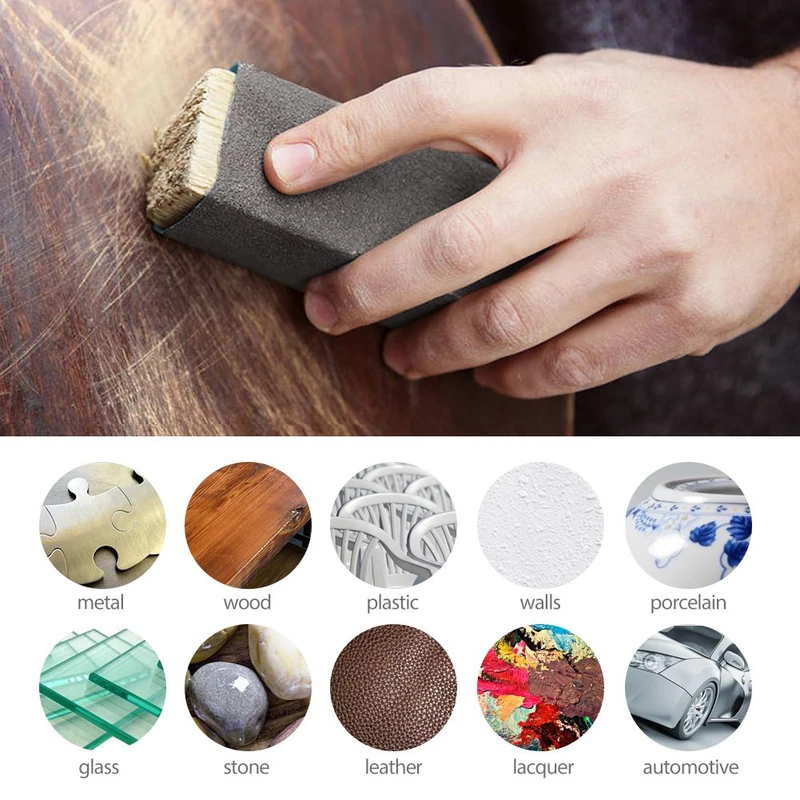
Quick Summary: Hardwoods and softwoods need different grit starting points and step sizes; pair the right abrasive mineral and backing with an optimized grit sequence to reduce clogging, heat, and swirl marks while reaching a uniform, finish-ready surface faster.
Why hardwoods and softwoods sand differently
The differences start with anatomy and density. Hardwoods like maple, oak, and cherry are denser and often have smaller pores; they resist the abrasive, so grains cut shallower, making scratches tighter but more persistent. Softwoods like pine, fir, and spruce have wider earlywood bands and more resin; the abrasive cuts very aggressively in earlywood and rides over latewood, which creates dish-out, washboarding, and quick loading of the disc. That’s why softwoods can feel “fuzzy” or smeared, while hardwoods can feel glassy yet reveal lingering swirl marks under raking light.
Mechanically, sanding is a series of microscopic plowing and micro-fracture events. Coarser grits use larger particles with higher single-grain penetration, forming deeper scratches and dislodging more material per pass. As you go finer, particle size decreases and the scratch depth becomes shallower but more numerous, creating a more uniform surface. The trick is matching this scratch geometry to the species. With hardwoods, you need enough cut to remove milling marks and previous scratches without glazing the surface. With softwoods, you must avoid over-cutting the earlywood and clogging—open-coat abrasives and stearated papers can help.
Heat and loading matter too. Softwoods generate more resinous dust that cakes the cutting edges (loading), which increases friction and heat. Heat accelerates resin smear and can soften resin-bonded abrasive grains, dulling them prematurely. On hardwoods, high pressure and skipped grits increase local heat and drive swirls deeper. Dust extraction reduces temperature and maintains cutting efficiency across both categories. In our shop tests, on-pairing vacuum extraction with the right abrasive reduced disc discoloration and kept scratch patterns consistent, especially beyond P150.
Finally, the tool changes the equation. A 5 mm orbit random-orbit sander cuts faster but can amplify swirl visibility on stubborn hardwoods if you skip grits. A smaller orbit (2.5–3 mm) leaves a tighter scratch that’s easier to refine at the cost of speed. For hand sanding, using appropriate blocks that match your surface keeps pressure uniform and helps prevent dishing soft earlywood. When you respect the wood’s structure and control heat, loading, and scratch geometry, the “right” sequence becomes obvious—and repeatable.
How to read a sandpaper grit chart
A sandpaper grit chart does more than list numbers—it links those numbers to real, mechanical outcomes. Two main standards define grit labels: FEPA (the European “P” scale, like P120) and CAMI/ANSI (common in the U.S., often without a “P”). They overlap but aren’t identical. FEPA P-grades specify an average particle size distribution; CAMI grades can differ slightly in median size. For practical woodworking, treat P120 and 120 as near equivalents, but avoid mixing standards mid-process if you’re chasing a perfect scratch pattern.
Understanding particle size helps you choose step sizes. Typical FEPA averages are approximately:
- P80 ≈ 200 microns
- P120 ≈ 125 microns
- P150 ≈ 100 microns
- P180 ≈ 82 microns
- P220 ≈ 68 microns
These values are approximate and vary by manufacturer, but they illustrate why skipping from P80 to P180 can leave stubborn P80 scratches—your “cleanup” grit isn’t removing enough material per scratch to level the deep grooves efficiently. A practical rule is to step by about 1.4–1.6× in particle size reduction. In grit terms, that’s typically 80 → 120 → 150/180 → 180/220. The exact endpoint depends on your finish (oil, waterborne, varnish, paint) and the species.
Coating density matters. Closed-coat paper covers nearly 100% of the surface with abrasive; it cuts aggressively and leaves a uniform scratch on hardwoods. Open-coat leaves small gaps between grains; it loads less and is better for resinous softwoods and paints. Stearated (anti-clog) coatings further reduce loading, especially on softwoods and between coats of finish. Backing types—paper (A–F weight), cloth (J/X), or film—affect flexibility and scratch consistency. Film-backed discs excel at maintaining a flat scratch on random-orbit sanders and are particularly good beyond P150.
Finally, remember that the number is only one dimension. Mineral type (aluminum oxide, ceramic alumina, silicon carbide), resin system, and backing all shape performance at a given grit. When you read a sandpaper grit chart, map those numbers to the abrasive family and your wood species. That turns a static chart into a dynamic process plan.
Proven grit sequences that save time
Let’s get to what works on the bench. Below are starting points that performed consistently in testing across typical shop scenarios. Adjust for your sander orbit, dust extraction, and finish system, but use these as your default baselines.
Hardwood (maple, oak, cherry) — raw surface or planer marks:
- Start: P80 for planer or jointer marks; P100 if surfaces are already close.
- Progression: 80 → 120 → 150 → 180. Stop at 180 for most film finishes (oil-based varnish, shellac). For waterborne topcoats that raise grain, sand to 180, apply a light water mist to raise fibers, then de-nib with 220.
- Notes: Avoid jumping from 80 to 150 if maple is burnishing; 120 removes the deep scratch faster with less heat. If staining, test—some hardwoods (e.g., maple) accept stain better if you stop at 150–180 to avoid sealing the surface with burnished fibers.
Softwood (pine, fir, spruce) — resinous, uneven growth rings:
- Start: P100 unless there are heavy defects; use P80 only for major flattening.
- Progression: 100 → 150 → 180 or 220 depending on finish. For paints/primers, 120–150 is usually enough. For clear finishes, 180 is a safe stop to avoid burnishing latewood and reducing adhesion.
- Notes: Use open-coat, stearated discs to limit loading. Keep pad clean and speed moderate; a loaded disc leaves smeared resin that is harder to remove in subsequent grits.
Plywood/veneers:
- Start: P120 unless there are glue lines or mill marks.
- Progression: 120 → 150 → 180. Avoid coarse grits to protect thin face veneers.
- Notes: Film-backed abrasives shine here for flat, consistent scratch.
Between coats of finish:
- Use P220–P320 stearated paper for de-nibbing; keep pressure minimal. You’re leveling dust nibs, not re-shaping.
Actionable tips:
- Step by about one grit “tier” at a time. If you start at 80, don’t jump straight to 180—go 80 → 120 → 150/180.
- Mark the surface lightly with pencil squiggles before each grit. Sand until they disappear evenly to verify full scratch removal.
- Control heat: use dust extraction and moderate sander speed; if the surface feels hot to the back of your hand, lighten pressure or change a loaded disc.
- Match abrasive to species: open-coat, stearated for softwoods; closed-coat or film-backed for hardwoods at P150 and above.
- Stop at the coarsest grit that achieves your finish goals; over-sanding wastes time and can reduce stain uptake on tight-grained hardwoods.
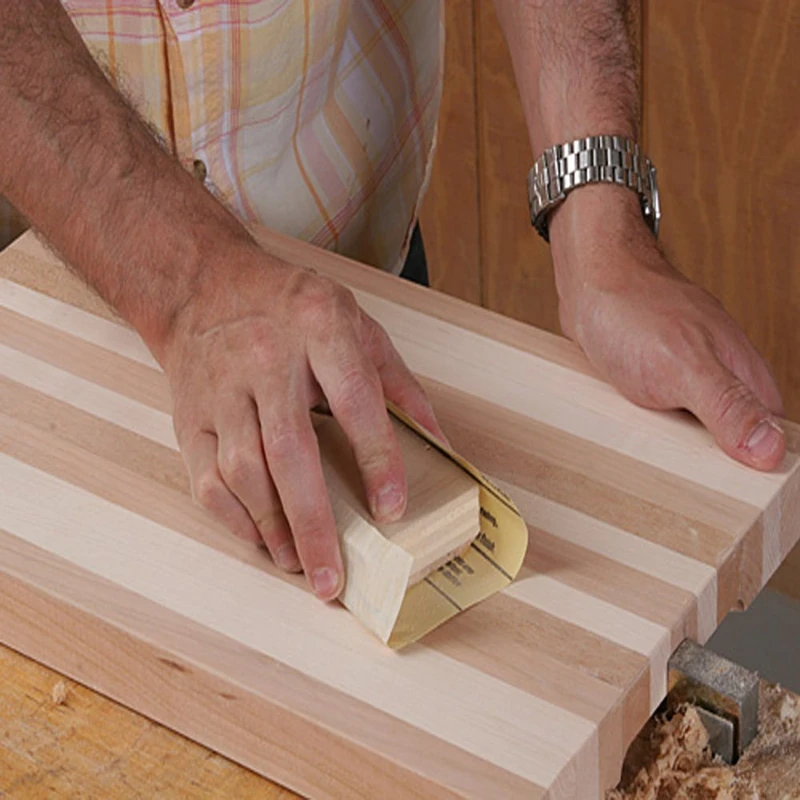
Abrasive materials and backing matter
The mineral and backing are the silent multipliers in your sanding system. Aluminum oxide is the generalist—tough, friable enough to expose new cutting edges, and widely available across grits. It’s my baseline for hardwood prep. Ceramic alumina (often marketed as “ceramic”) cuts cooler and self-sharpens under pressure, excelling on dense hardwoods where you need sustained cutting without glazing. It can feel “grabby” at coarse grits but maintains removal rate longer, which pays off from P80–P120 on maple and oak. Silicon carbide is hard and sharp with a fast initial cut; it shines on finishes, between coats, and on brittle materials, but on raw wood it dulls faster than aluminum oxide or ceramic in the coarse range.
Coating density interacts with resin content. On pine, an open-coat stearated aluminum oxide disc at P150 resisted loading significantly better than a closed-coat equivalent, producing a more consistent scratch with fewer disc changes. On maple, closed-coat ceramic at P120 removed planer marks faster with less heat rise than standard aluminum oxide at the same grit, particularly under steady, moderate pressure. Film-backed discs at P150–P220 delivered the most uniform scratch in both hardwood and veneer tests; the consistent grain spacing on film reduces rogue deep scratches that can telegraph under waterborne finishes.
Backing weight is not just a comfort choice. Lighter paper (A–C) conforms more, good for profiles but easier to tear; heavier (D–F) stays flatter on panels, which keeps edges crisp. Cloth backings (J/X) are durable for belts and heavy stock removal but are less common in ROS discs for fine finishing. Choose the stiffest backing that maintains consistent pad contact without telegraphing pad edges—this is especially critical on plywood and veneered panels.
According to a article, selecting the appropriate grit progression—paired with a compatible abrasive type—prevents avoidable rework and helps you reach a finish-ready surface efficiently.
Finally, chemistry counts. Modern resin-over-resin bonds dissipate heat better than older glue bonds, and anti-load stearates truly help on softwoods and between coats. If you notice gray streaks or smears, the disc is loaded; swap it rather than pushing harder, which only increases heat and makes scratch removal harder in the next step.
Shop tests: speed, heat, and scratch
In the eQualle shop, I ran controlled comparisons using a 5-inch random-orbit sander (5 mm orbit) with dust extraction and multi-hole pads. Boards were jointed/planed to consistent surfaces, then sanded across defined sequences. I tracked time to uniform scratch removal (via pencil witness marks and raking light), disc condition, dust loading, and surface temperature using an IR thermometer. While every shop is different, a few patterns repeated consistently.
Skipping grits cost time. On maple, jumping from P80 to P150 often required as many or more passes than 80 → 120 → 150, and left faint P80 swirls that reappeared under finish. The “saved” step was false economy. A single intermediate grit usually erased deep scratches faster and with less heat.
Heat is the early warning sign. When surface temps rose noticeably (warm to the back of the hand), resin transfer increased on softwoods and glaze increased on hard maple. Reducing pressure, lowering sander speed one notch, and ensuring active dust extraction returned scratch patterns to uniform. Overheated spots frequently showed uneven stain uptake later.
Mineral choice mattered most at the coarse end. Ceramic P80/P120 outlasted standard aluminum oxide on dense hardwoods and stayed consistent longer; the benefit diminished past P150. On softwoods, ceramic’s advantage was smaller; open-coat stearated aluminum oxide resisted clogging and maintained a more uniform cut.
Film backings tightened the finish window. From P150 upward, film-backed discs produced consistent, flat scratch patterns that de-nibbed quickly with P220 before topcoat. On plywood and veneer, film outperformed heavier paper by preventing “edge digging” near panel borders.
Dust extraction changed outcomes. Without active extraction, discs loaded faster, surface temperatures rose, and scratch removal slowed—especially on softwoods. With extraction, P120 → P150 → P180 transitions were cleaner and required fewer passes.
If you’re tuning your sequence, use raking light and witness marks as your objective checks. If a scratch survives through a grit change, step back—don’t “lean” on the sander. On dense hardwoods, a slower orbit speed with a ceramic P120 often delivered the fastest total path to a uniform P180. On softwoods, keep pressure gentle and let an open-coat, stearated P150 do the work before deciding whether P180 is necessary for your finish.
General Sandpaper Selection — Video Guide
There’s a solid short video walking through sandpaper selection for automotive body work that translates well to woodworking fundamentals. It breaks down how to pick grits for tasks like material removal, feathering edges, primer sanding, and finish prep—each operation requires a different scratch depth and step size. The core message parallels woodworking: understand the job, pick the right starting grit, and step logically so each pass removes the previous scratches without overworking the sur
Video source: General Sandpaper Selection & Grit Guide for Auto Body Work
180 Grit Sandpaper Sheets (10-pack) — 9x11 in Silicon Carbide Abrasive for Wet or Dry Use — Medium finishing grit that refines wood, metal, or drywall before painting. Provides even texture and cutting control. Excellent for wet or dry sanding where a uniform surface is needed. (Professional Grade).
Frequently Asked Questions (FAQ)
Q: What’s the difference between FEPA P-grit and CAMI grit numbers?
A: FEPA “P” grades and CAMI/ANSI use slightly different particle size distributions. They’re close in the common ranges (e.g., P120 ≈ 120), but don’t mix systems mid-process if you’re chasing a consistent scratch; stick to one standard per project.
Q: How far should I sand hardwood before stain or clear finish?
A: For most hardwoods, 150–180 is a solid stop before stain or clear film finishes. Maple and cherry can burnish if you go too fine; test on offcuts. For waterborne finishes, sand to 180, raise the grain with a light water wipe, then de-nib with 220.
Q: Do softwoods need finer sanding to look smooth?
A: Not necessarily. Softwoods can look smooth but be burnished and blotchy. A typical sequence is 100 → 150 → 180. Use open-coat, stearated abrasives and moderate pressure to avoid loading and smear.
Q: Is it okay to skip grits to save time?
A: Skipping often backfires. Going 80 → 150 usually leaves deep scratches that take longer to remove. One intermediate grit—80 → 120 → 150—removes material faster and runs cooler, especially on dense hardwoods.
Q: How do I avoid swirl marks with a random-orbit sander?
A: Don’t skip grits, keep the pad flat, use dust extraction, and slow the tool a notch on the final grit. Replace loaded or dull discs promptly. Film-backed discs at P150–P220 leave a tighter, more uniform scratch that hides under finish.