
Film-backed ceramic sanding discs for uniform scratch
You notice it first in the light. That telltale halo that appears when you shift the panel under a shop lamp, the swirl that refuses to quit even after another pass with the sander. Maybe it’s a cabinet door you’ve been nursing back to life, a car fender in primer that has to be perfect for color, or a guitar body on its third clear coat. You’re not chasing shine yet—you’re chasing uniformity. A clean, even scratch pattern is the quiet foundation of every flawless finish, and when it isn’t there, everything downstream becomes harder: filler prints through, paint mottles, topcoats telegraph the tiniest inconsistencies. The solution often starts earlier than we think—at the abrasive itself.
Switching to film-backed ceramic sanding discs sounds like a small change. Yet the first time you watch the scratch pattern settle into a consistent, matte tone with fewer random streaks, it feels like your workflow snaps into focus. Ceramic grains cut fast but, more importantly, they fracture in a way that keeps edges sharp and scratch size predictable. A thin, stable film backing keeps the disc flat under pressure, so the whole face cuts evenly instead of “hot spots” speckling the work. Combine those traits with the right grit sequence and dust control, and you move from sanding until it looks okay to sanding until it’s measurably right—every single time.
If you’ve ever wondered why two discs with the same grit leave very different results, or why a panel looks great in the shop and flawed in sunlight, this guide is for you. We’ll break down the mechanics behind uniform scratch, explain how film-backed ceramics help, and share practical steps to make your next sanding pass predictably better. Because the goal isn’t just smooth; it’s consistent from edge to edge—and that’s what ceramic sanding discs, used well, deliver.
Quick Summary: Film-backed ceramic sanding discs produce a fast, controlled cut and stable scratch pattern; pair them with smart grit sequencing and dust control for repeatable, paint-ready surfaces.
What creates a uniform scratch
Uniform scratch isn’t a feeling—it’s a measurable outcome driven by abrasive geometry, backing stability, pressure distribution, and dust evacuation. When these variables align, the scratch pattern becomes even in depth and spacing, which sets you up for predictable refinement at each grit.
- Mineral behavior: Aluminum oxide tends to dull as it cuts, which can smear on harder materials and widen scratches over time. Ceramic grains micro-fracture, exposing fresh edges that maintain a more consistent scratch profile across the disc’s life. That consistency shows up as fewer “rogue” scratches and less change in cut rate mid-disc.
- Backing stability: Paper backings flex and wrinkle with heat and humidity. A polyester film backing holds flatness, distributes pressure evenly, and resists edge tearing. That means fewer high spots and a tighter scratch pattern, especially on DA/orbital sanders where tiny deviations get multiplied by motion.
- Resin and coat: A durable resin bond holds the mineral firmly so it doesn’t dislodge under load, and a stearate or anti-loading topcoat limits clogging that can cause random scratch. Open or semi-open coats reduce loading on soft woods and paints; closed coats offer a denser, more consistent contact for metals and hard clears.
- Machine dynamics: Pad hardness, interface pads, orbit size, and speed all shape scratch. A firmer pad and smaller orbit promote flatter, more uniform scratches on panels; a softer interface pad helps contour but can introduce variation if you lean. Uniform scratch prefers neutral pressure and constant motion.
Put together, these elements produce a scratch pattern you can map, refine, and erase in a controlled sequence—no guesswork, no “let’s try another pass” hoping for the best.
Why film backers change the game
The backing is the unsung hero of your disc. Film backers—typically PET—don’t just survive heat and humidity; they impose order on how the mineral meets the surface. That stability shows up in three practical ways.
First, flatness under pressure. As you move across a panel, micro-variations in backing thickness or stiffness can concentrate pressure into small zones. Paper amplifies those variations as it absorbs heat and moisture; film resists them. The result is a more even scratch depth across the disc’s entire face. On clear coats and high-build primers, that can be the difference between a haze that levels predictably and an uneven pattern that telegraphs after paint.
Second, longevity with consistency. Film backers resist edge fray and tearing, so the scratch signature doesn’t degrade as quickly. Combined with ceramic grains that renew their sharpness as they fracture, film-backed discs keep cutting in a controlled way deeper into their life. You don’t hit the “it stopped cutting, now it’s rubbing” wall as fast.
Third, cleaner dust evacuation. Many film-backed discs adopt multi-hole or net-style layouts optimized for DA pads. The stable backing supports precise hole placement, improving airflow and lowering heat, which keeps resins from softening and smearing into the abrasive. Less loading equals fewer random, oversized scratches from embedded debris.
If you work across materials—MDF edges one day, clear-coated hardwood the next, aluminum the day after—film gives you a consistent baseline. That baseline makes your process more predictable: scratch patterns are uniform, cut rates remain steady, and your grit jumps become reliable steps rather than leaps of faith. According to a article.
Choosing ceramic sanding discs for consistency
When you’re selecting ceramic sanding discs, think beyond grit. You’re buying a scratch pattern as much as a cutting tool. A few criteria help you lock in uniform results.
- Grain type and blend: Pure ceramic grains excel on hard substrates and stubborn coatings, maintaining a tight scratch over time. Ceramic/aluminum-oxide blends can smooth the cut on softer materials while preserving much of the ceramic’s consistency. If you sand both metals and woods, a blended disc can be a smart standard.
- Backing thickness: Thinner film (often 0.1–0.125 mm) transmits pad feedback very faithfully, great for flat panels; slightly thicker film can add forgiveness on edges and contours. Match backing to your pad hardness—firmer pads pair well with thin film for crisp, uniform scratch.
- Coating and topcoat: A semi-open coat minimizes loading on paints and softwoods without compromising scratch density; a closed coat favors hard, non-gummy materials. Stearate topcoats help prevent clogging that causes scratch spikes.
- Hole pattern compatibility: Multi-hole discs that align with your sander’s pad boost dust extraction and reduce heat. Improved airflow keeps the scratch pattern clean and repeatable across the disc’s life.
- Grit availability in sequence: Make sure your brand offers a continuous ladder (e.g., 80/120/150/180/220/320/400/600). Consistent scratch depends on predictable jumps; gaps force you to overwork a grit to erase the previous one.
Try this simple shop test: On a scrap panel, run three fresh discs from different brands at the same OPM and pressure for 30 seconds each. Wipe, then inspect under a raking light and with a 10x loupe. You’re looking for even scratch spacing and minimal outliers. The disc that leaves a tight, matte, uniform field—and still does so after another minute—wins.
Practical buying tip: Start with a small pack across 3–4 grits you use most. Once the pattern proves uniform, scale to the full grit ladder to lock your process.
Grit sequencing and scratch mapping
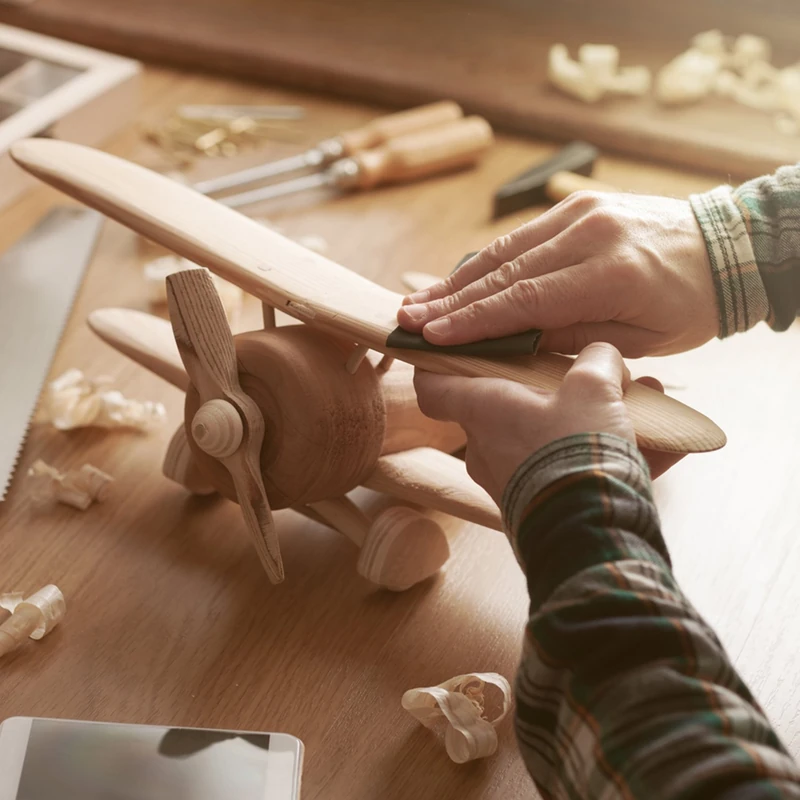
Even the best disc can’t fix a haphazard sequence. Uniform scratch is a choreography: each grit erases the last one’s peaks and leaves a shallower, tighter pattern that your next step can remove efficiently. Here’s how to build a sequence you can trust.
- Define your entry grit by defect, not habit. If you’re removing 120-grit belt scratches, don’t start at 180 and hope—it will take forever and leave layered patterns. Begin one step coarser than the deepest visible scratch (often 100–120 for wood, 80–120 for primer, 120–180 for clear).
- Plan controlled jumps. A common ladder is 120 > 150 > 180 > 220 > 320 > 400. Skipping more than one grade risks leaving ghosts of the coarser scratch. With ceramics’ faster cut, you can sometimes stretch 120 > 180 > 220 > 320, but verify with inspection.
- Map the scratch. At each grit, change your sanding angle by 10–15 degrees or flip your DA’s direction mark. That subtle shift makes remaining coarser scratches stand out so you know when they’re gone.
- Time, don’t guess. On test panels, track how long it takes to fully replace a scratch pattern (marked with a pencil hash) for each grit. Post the times near your bench. Predictable cycles produce predictable results.
- Finish by substrate. For clear coat blend preps, many stop at P800–P1000; for stain-grade hardwoods prior to film finish, P180–P220; for primer prior to base coat, P320–P400. Align your endpoint with the next layer’s needs, not a universal number.
Actionable tips:
- Use a pencil guide coat at every grit; don’t move on until it’s uniformly erased.
- Keep the pad flat and pressure light—about the weight of your hand. Pressing hard widens scratches and kills uniformity.
- Replace discs earlier than you think. If cut rate drops, uniformity usually follows.
- For edges and profiles, add a 3–5 mm foam interface pad to avoid pressure ridges; compensate by staying one grit finer to maintain scratch control.
Dust control, heat, and disc patterns
Dust isn’t just a nuisance; it’s the leading cause of random, oversized scratches. As particles lodge between the disc and surface, they gouge an unpredictable pattern that your next grit struggles to erase. Film-backed ceramics help, but only if you give them airflow and a clean path.
- Multi-hole patterns: Modern discs often use 15–49 hole layouts that match DA pads or work universally. The more evenly the holes are distributed, the better the suction equalizes across the face, lowering heat and preserving scratch uniformity. If your pad is older, verify compatibility—misaligned holes cut airflow dramatically.
- Vacuum and airflow: A high-CFM, variable-suction extractor set just below pad stall keeps debris moving without pulling you off the work. Too much suction can “stick” the disc, altering scratch density; too little allows dust to load and smear. Tune it: start high, reduce until the sander floats smoothly, then check the scratch under light.
- Heat management: Ceramics are heat-tolerant, but binders aren’t. Excess heat softens resins and coatings, which then clog the disc and create scratch spikes. Keep OPM in the manufacturer’s recommended range, keep the pad moving, and take brief cooling pauses on heat-sensitive finishes.
- Net vs film: Mesh/net discs excel at dust capture on soft materials but can leave a slightly more open scratch on hard clears or metals. Film-backed ceramics typically deliver a tighter, more defined scratch. For uniform scratch critical work (clear prep, automotive primer leveling), film-backed ceramics are the safer baseline.
- Clean as you go: Wipe or blow off the panel between grits, and pulse your extractor to clear the pad. A single trapped chip can seed a constellation of deep, outlier scratches that survive three steps.
Small change, big payoff: Swap to a fresh interface pad every few months. A glazed or uneven pad sabotages airflow and pressure distribution, quietly ruining the very uniformity you’re chasing.
Care, storage, and the cost math
Uniform scratch is also about consistency over time—day to day, disc to disc. How you handle and store your abrasives affects how predictably they perform.
- Flat, dry storage: Keep discs flat in a sealed bin or drawer, away from direct sun and temperature swings. Film resists moisture better than paper, but adhesives and stearates still suffer in humid shops. If discs arrive curved from packaging, lay them under a flat weight overnight.
- Pad and platen health: Replace worn hook-and-loop pads; rounded hooks or clogged loops reduce hold and can make discs wobble, widening scratches. Check platen bearings on your DA—excess play changes orbit and scratch geometry.
- Lot-to-lot verification: When switching brands or even batches, do a quick scratch check on a test panel. You’re not hunting for perfection—just confirming the pattern and cut align with your established sequence.
- Disc retirement policy: Don’t run discs until they “die.” Establish a time or surface area guideline (e.g., two full cabinet doors per P220 disc) based on your tracking. The last 20% of a disc’s life often produces 80% of random scratch headaches.
Cost perspective: Ceramic film discs usually cost more per piece, but they often remove material faster and last longer while keeping scratch consistent farther into their life. Factor in fewer re-sands, less primer rework, and less buffing time. In many shops, the effective cost per finished surface drops when uniform scratch becomes standard practice.
🦎Norton Sanding Discs — Video Guide
If you’ve searched for the best sanding discs for a random orbital sander, you’ll appreciate a practitioner’s take. In this video, a floor sanding professional tests Norton discs side by side—aluminum oxide, ceramic, and mesh—to see which actually cuts, clears dust, and leaves a consistent scratch. He explains where each grain shines, how backing and hole patterns affect performance, and why “fast” doesn’t always mean “uniform.”
Video source: 🦎Norton Sanding Discs – Aluminum Oxide vs Ceramic vs Mesh (Which One Actually Works?) 😵
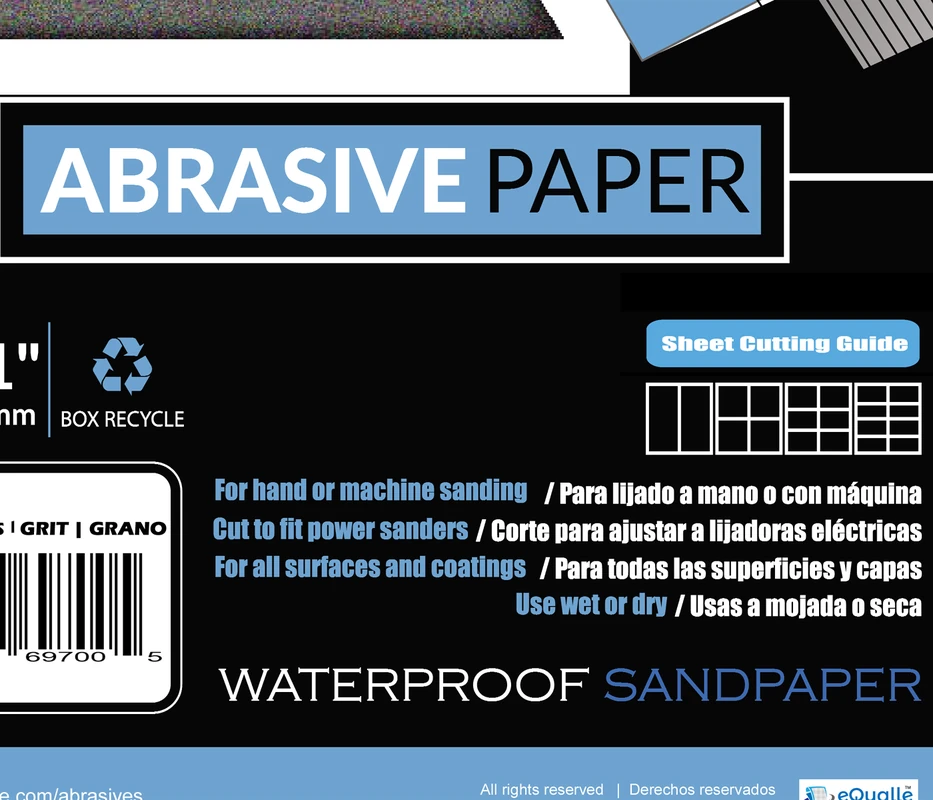
280 Grit Sandpaper Sheets (50-pack) — 9x11 in Silicon Carbide Abrasive for Wet or Dry Use — Fine abrasive for leveling varnish or clear coats with precision. Creates a refined surface before high-gloss finishing. Performs reliably on wood, resin, or painted materials in wet or dry conditions. (Professional Grade).
Frequently Asked Questions (FAQ)
Q: Why do film-backed ceramics leave a more uniform scratch than paper-backed discs?
A: Film stays flatter under pressure and heat, distributing force evenly across the disc. Pairing that stability with ceramic grains that micro-fracture keeps the scratch size and depth more consistent throughout the disc’s life.
Q: What grit sequence should I use before automotive base coat?
A: A reliable ladder is P180 (level), P220 (refine), P320 (primer level), and P400 (pre-base). Some shops add P600 on sensitive colors. Verify under raking light that each step fully replaces the previous scratch before moving on.
Q: Are mesh/net discs worse for uniform scratch?
A: Not necessarily—they excel at dust capture, especially on soft materials. But for hard clears, metals, and primer leveling, film-backed ceramic discs typically produce a tighter, more controlled scratch. Use mesh when dust control is paramount, film when scratch precision is critical.