
Resin Polishing: How to Check Clarity Under Light
The moment you flip on a bright desk lamp is when the truth comes out. A pendant you poured, sanded, and buffed over a quiet weekend looks flawless under normal room light. But under that focused beam, faint fog appears along the edges. Micro-swirls show up in arcs you didn’t notice before. A tiny speck you thought you removed winks back at you. If you’ve tried resin polishing even a few times, you’ve seen this: strong light is uncompromising. It magnifies every scratch, ripple, and residue, turning a “good” finish into one you’re not quite ready to sign your name to.
This isn’t a flaw in your process—it’s a feature of how light behaves on clear and glossy surfaces. Strong lighting reflects off the tiniest peaks formed by sanding, scatters on raised dust or oils, and makes refractive index mismatches obvious, especially along edges and transitions. This is also your advantage. Instead of shying away from hard lighting, learn to use it to deliberately reveal what needs work—and when to stop. The goal isn’t perfection at any cost; it’s a repeatable process that gets you to clean, glass-like clarity with less guesswork and fewer re-dos.
Imagine finishing a batch of resin rings at your kitchen table. Midday sun sweeps across the surface, and for the first time you see a faint cloudiness in two pieces. Old habits might tell you to keep polishing blindly. A better approach: pause, spotlight those two rings under a consistent, strong light, and let what you see tell you precisely where to go next—whether that’s dropping back a grit, extending your wet sanding time, or switching compounds. The satisfaction of seeing resin pop crystal-clear under strong light isn’t just an “after” moment. It’s a sign that your process is working, start to finish.
Quick Summary: Use strong, controlled lighting to expose surface issues early, then methodically refine and verify your resin polishing steps until clarity holds under the brightest conditions.
Why bright light reveals everything
Strong lighting—think high-intensity LED lamps, midday sun, or a phone flashlight—amplifies how surfaces bend and scatter light. On a matte surface, light diffuses broadly; on a glossy surface, it reflects in a tight, mirror-like band. Any micro-scratch, haze, or residue disrupts that reflection, creating visible “noise” in the highlight. That’s why a piece may look flawless under a warm ceiling bulb, yet show radiating swirls when a cooler, brighter light hits at a low angle.
The angle of light matters as much as brightness. Raking light (roughly 20–45 degrees from the surface) maximizes contrast between peaks and valleys left by sanding. Cross-lighting—one bright source from the side and a softer, diffuse fill from another angle—helps you separate surface texture from optical haze trapped below the surface or along edges. Color temperature plays a role too. Neutral daylight lamps (5000–6500K) are excellent for seeing true color and fine defects; very warm bulbs can mask cool-toned haze, and very cool bulbs can exaggerate warm resin tints.
Specular highlights are your inspection canvas. Rotate the piece slowly and watch the highlight glide. A smooth, uninterrupted highlight indicates uniform micro-texture, while pinprick sparkles or arcs suggest deeper scratches you’ve not removed. Look especially at curved edges and corners—sanding pressure tends to taper there, leaving stubborn 600–1000 grit tracks that survive until final polish. Off-axis haze along edges is also common if resin cured against a matte mold or if sanding water carried particulate into micro-cracks.
Two practical habits boost your visibility: first, ensure the surface is truly clean (rinse thoroughly between grits and wipe with a lint-free cloth dampened with water or alcohol compatible with your resin), and second, inspect dry and wet. Water can fill scratches temporarily, masking problems; a quick dry-down between passes gives you the real picture. With controlled light, you’re not guessing whether you’re done—you’re reading what the surface is telling you.
Resin polishing that passes the light test
A smooth, repeatable resin polishing sequence does three things: removes old scratches fully before moving on, prevents fresh defects while you work, and confirms the finish under strong lighting before you call it done. The simplest way to ensure all three is to use a tight grit progression, consistent pressure, and deliberate inspections at every step.
Start by identifying your “true” starting grit. If you can see 400–600 grit scratches under raking light, there’s no point jumping to 1500; you’ll just burnish those scars. For most hand-finishing, a sequence like 800 → 1200 → 1500 → 2000 → 3000 works reliably, followed by a fine compound and then a finish polish. Wet sanding minimizes clogging and keeps temperatures low—both matter for clarity. Use a firm, flexible pad to maintain even contact on flat areas and switch to a soft pad around curves to avoid flat spots.
Compounds matter more than many expect. A medium-cut plastic polish is excellent for removing the last of the 2000–3000 grit pattern; a high-gloss finishing compound removes micro-haze without “softening” edges. Work at low to moderate RPM if you’re using a rotary tool, keeping the pad moving to avoid heat bloom. If you feel warmth in the piece, stop and let it cool. Heat can introduce a milky effect, especially with certain epoxies.
Actionable steps:
- Wet sand in straight, overlapping strokes; rotate the workpiece 90 degrees between grits so you can see when old scratches are gone.
- Rinse thoroughly and inspect under a bright raking light after each grit; do not advance until the previous scratch pattern is completely replaced.
- Switch to fresh water and a clean pad when you move up a grit to reduce cross-contamination.
- Use small, pea-sized amounts of compound; excess loads the pad and drags abrasive residues.
- Finish by cleaning with a mild, non-ammonia cleaner and a lint-free cloth before the final light inspection.
When you think you’re done, that’s your cue for the ultimate check: intense, low-angle light from multiple directions. If the highlight stays smooth—no arcs, no pinpricks, no edge haze—you’ve passed the light test.
Set up a reliable inspection zone
Turning clarity checks into a habit is easier if your workspace makes it automatic. Create a simple “inspection zone” so you evaluate every piece under consistent, strong lighting before you commit to the next step. You don’t need a laboratory—just a predictable, bright setup that eliminates guesswork.
Lighting: Use a 1000–2000 lux LED task lamp positioned so you can swing it to a 20–45 degree angle relative to the surface. Pick a neutral color temperature in the 5000–6500K range, with a high CRI (90+ if possible) so subtle tints and haze are visible. Add a second, softer light from a different angle for cross-lighting; even a diffused lamp behind frosted acrylic works.
Background: Keep a matte, mid-gray backdrop on hand (printer paper tends to be too bright). Highly reflective backdrops can hide haze by flooding your eyes with glare. Gray gives you a balanced field that makes white haze and dark scratches stand out equally.
Cleanliness: Keep a squeeze bottle of clean water for rinsing between grits, a mild dish-soap solution for greasy residues, and lint-free cloths or microfiber towels that you reserve only for finishing. Disposable nitrile gloves help avoid skin oils that create streaks under light. A soft brush can lift slurry from edges and corners before you inspect.
Magnification and angles: A 3–5x loupe or headband magnifier reveals swirl direction and depth so you can tell whether you need to drop back a grit. Rotate the piece through several orientations under the lamp; edges and curves should get extra attention. Use your phone’s flashlight to simulate point-source lighting, then inspect again under your task lamp for diffuse highlight behavior.
Documentation: Take quick, consistent photos under your inspection light at each stage. Visual notes help you learn how long each grit takes on different shapes and resins, reducing overwork in the future.
According to a article
By making this zone your default checkpoint, you’ll stop problems early—when one more pass removes them—instead of discovering them after you’ve sealed or shipped a piece.
Troubleshooting haze, swirls, and cloudiness
Clarity problems fall into a few predictable categories, and each has a different fix. The most common culprit is scratch carryover: micro-grooves left by a lower grit that weren’t fully erased before you moved up. Under strong light, these appear as consistent arcs or crosshatch patterns. The remedy is simple but disciplined—drop back to the last grit where you could still see the scratch pattern, then work methodically forward, verifying after each step.
Milky haze can come from heat or from embedded residue. If you feel warmth while polishing, you may have softened the surface slightly, creating a micro-texture that scatters light. Let the piece cool completely and re-polish at lower pressure and speed with a cleaner pad. Residue haze—common after a rushed wipe-down—often disappears with a gentle wash in warm water and a drop of dish soap, followed by a fresh microfiber dry and reinspection.
Edge cloudiness and “ghost lines” along transitions are often refractive index issues: the resin cured against a matte mold or was sanded more aggressively at the edges, leaving a slightly different surface texture. Re-establishing a uniform micro-texture with 1500–2000 grit, then polishing with a small, soft foam tip, usually levels the optical behavior so the highlight travels smoothly across edges.
If you suspect undercure—especially with UV resins—clarity often looks fine until you warm the surface during polishing, then haze blooms. Fully post-cure according to the manufacturer’s guidance, then reassess; polishing an undercured surface amplifies problems.
Targeted tips:
- If swirls persist in one direction, rotate your sanding strokes 90 degrees at the next grit; this makes carryover immediately visible.
- Use separate pads for medium-cut and finish compounds; cross-loading creates a permanent haze that “chases” you.
- For dust nibs, spot-sand the defect with a small circular tab of high-grit paper on a pencil eraser, then blend the area; don’t overwork the entire surface.
- Mist the surface lightly with clean water during inspection; if haze vanishes wet and returns dry, it’s a texture issue, not contamination—keep refining.
- After polishing, do a final alcohol-safe wipe only if your resin tolerates it; if not, use a damp microfiber followed by a dry buff to avoid streaks.
Work slowly, let your inspection light be the judge, and remember that patience at the 2000–3000 grit stage saves time downstream.
Protect the finish for the long run
A brilliant polish is only half the story; protecting that finish determines how your piece looks weeks and months later. Even micro-abrasion from pockets, purses, or countertops slowly mutes a glassy surface. Think of protection as a lightweight, sacrificial layer or a sensible set of habits that keep wear off the resin itself.
Sealants and topcoats can be helpful but should be selected carefully. Ultra-thin, high-clarity sealants designed for plastics preserve the look of your polish without adding visible thickness or orange-peel. Spray in light, even passes at the recommended distance, and always test on a scrap to ensure compatibility; some products can fog or craze certain resins. Alternatively, microcrystalline waxes provide a subtle protective layer and slick feel, making the surface more resistant to fingerprints and minor scuffs. Apply sparingly, buff lightly, and reapply as needed.
For wearable pieces like rings and pendants, design choices help. Slightly rounding high-wear edges during sanding reduces chipping and makes scratches less apparent under strong light. For display items, consider UV-filtering enclosures or glass domes if sun exposure is intense; UV can gradually yellow some resins, and a neutral, high-CRI light in your display prevents obvious shifts.
Daily care matters too. Provide a simple card with care instructions if you sell your work: store separately in a soft pouch, clean with a damp microfiber only, avoid harsh solvents, and keep away from extended heat. Encourage a “rinse and wipe” routine if haze from skin oils builds up; clarity under strong light often returns immediately after a gentle clean.
Protection doesn’t need to be complicated—what counts is choosing a compatible method and applying it consistently. You’ll keep the surface you worked hard to perfect looking salon-fresh much longer.
Different Polishing Options — Video Guide
If you’re a visual learner, there’s a helpful video demonstration that walks through several ways to bring resin pieces to a shine. It shows how different abrasives and compounds behave on small jewelry forms, highlighting where each method excels and where shortcuts lead to haze or leftover scratches.
Video source: Different Polishing Options for Resin Jewelry
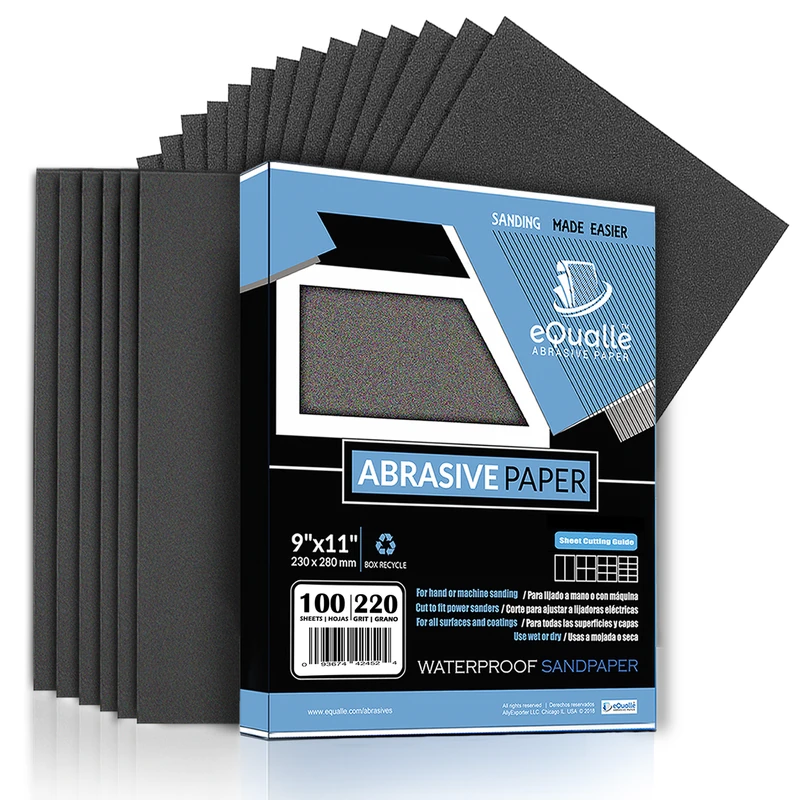
1000 Grit Sandpaper Sheets (25-pack) — 9x11 in Silicon Carbide Abrasive for Wet or Dry Use — Light polishing grit for removing swirl marks and fine scratches. Commonly used in automotive finishing, plastic restoration, and resin art. Delivers a consistent semi-gloss surface ready for final polish. (Professional Grade).
Frequently Asked Questions (FAQ)
Q: How bright should my inspection light be to reveal real defects?
A: Aim for a task lamp delivering roughly 1000–2000 lux at the work surface, with a 5000–6500K color temperature and high CRI (90+). Use it at a raking angle (20–45 degrees) and supplement with your phone flashlight for pinpoint checks.
Q: What grit should I start with if my piece already looks “pretty good”?
A: Decide by inspection, not habit. If you can still see identifiable 800–1000 grit scratches under raking light, start at 1000–1200. If the highlight looks mostly smooth but slightly dull, begin at 1500–2000, ensuring each scratch pattern is fully replaced before moving up.
Q: Why does my piece look clear wet but hazy when dry?
A: Water fills micro-scratches, temporarily matching refractive indices and hiding texture. When it dries, the mismatch returns and haze reappears. Keep refining your sanding and polish until the dry inspection under strong light shows a smooth, uninterrupted highlight.
Q: Can I fix heat-induced milkiness from aggressive buffing?
A: Often, yes. Let the piece cool fully, then re-level with a fine grit (2000–3000) using light pressure and plenty of water. Finish with a clean, soft pad and a fine polish at lower speed. Avoid dwelling in one spot and keep the pad moving.
Q: Do I need a sealant after polishing?
A: Not always. A high-quality polish alone can be durable for low-wear items. For jewelry and pocket pieces, a compatible microcrystalline wax or thin plastic-safe topcoat can extend clarity. Always test first to ensure it doesn’t introduce haze or tint.