
Concrete Polishing: Check Flatness Before Higher Grits
The first time I chased a mirror finish on a tired garage slab, I thought more passes and higher grits would solve everything. The grinder hummed, the vacuum roared, and the floor looked decent—until late afternoon sun spilled across it and exposed a field of faint troughs and ghost scratches. You know that sinking feeling: you’ve already climbed to 400 grit and realize the slab isn’t flat enough to carry a true reflection. That’s the money-losing moment in concrete polishing—when you’re forced to drop back down, rework the metal steps, and eat the day.
Whether you’re a weekend warrior tuning up a shop space or a pro trying to hit a schedule, the rule never changes: don’t go higher until the floor is flat. Flatness is the foundation of clarity. A slab can be technically “smooth” but still wavey, and wavey floors don’t pop. They distort reflections, amplify swirl marks at higher grits, and make resin pads chase air instead of cutting concrete. If you master flatness checks early, everything that follows—scratch removal, densifier penetration, resin glide, the final burnish—becomes faster and cleaner.
In concrete polishing, “flat” isn’t an abstract spec; it’s something you can see and measure with simple tools: a straightedge, a pencil, a flashlight, and the nerve to stay at low grits a little longer than feels comfortable. I’ve learned (and relearned) that the time you “save” by jumping a step always gets billed back with interest.
This guide is my shop-floor playbook for verifying flatness before you climb the grits. I’ll walk you through what to check, how to check it, and when to move up. Consider it a practical brake pedal—one that saves your finish, your pads, and your patience.
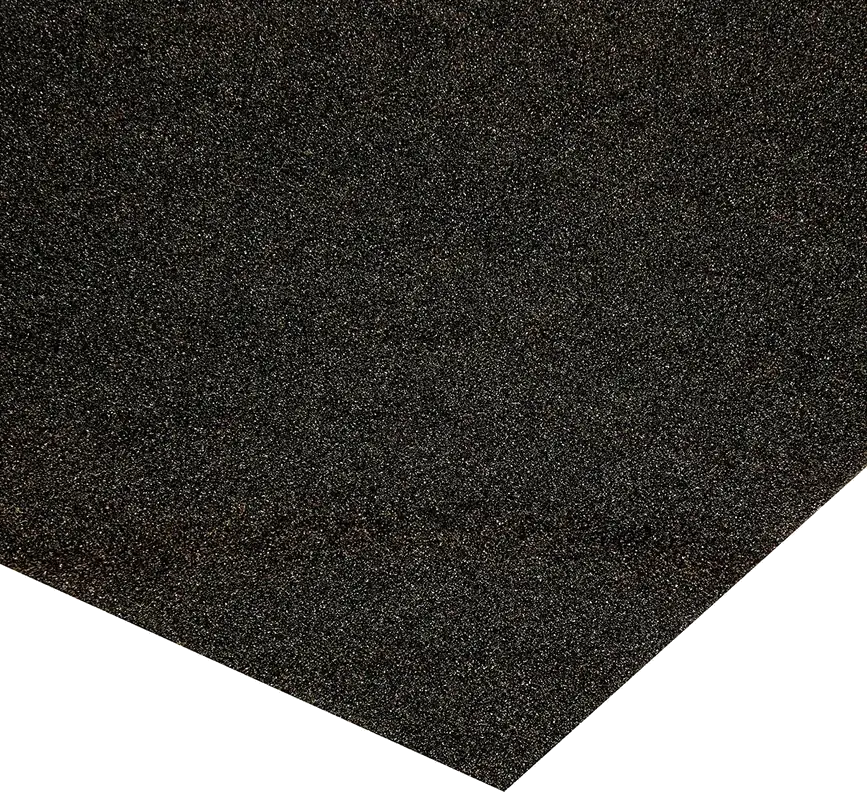
Quick Summary: Don’t step up grits until the slab is truly flat; verify with straightedges, light, and scratch-pattern checks so the higher grits refine, not repair.
The Flatness Test That Saves Your Finish
Flatness determines whether your higher grits refine or just babysit problems you should have solved at the metals. Start simple and be systematic.
- Six-foot straightedge: Lay it in multiple directions (0°, 45°, 90°). You’re hunting for daylight under the bar and rocking points. Mark highs with a circle, lows with a cross. Highs telegraph as shadow lines at higher grits; lows collect slurry and mute the shine.
- Light at a low angle: Kill the overheads, use a flashlight or LED work light at floor level. Rake light sideways. If you see ripples or halos around aggregate, you’re not flat yet. This trick is brutally honest and beats chasing imperfections later at 400+.
- Pencil grid: Before grinding a section, draw a 2–3 ft grid in pencil. Grind your normal pass and check how evenly the lead erases. Islands of pencil that survive mean you’re riding high and not truly cutting the field.
- Fingernail and coin edge: Catch small ridges at joints, repairs, and feathered patches. If a fingernail or coin edge catches, you’ll see it at 200 and you’ll hate it at 800.
- Vacuum-and-feel: Vac the dust and slide your palm across the surface. You’re feeling for chatter and ridges. Your hand is better than your eyes sometimes.
Targets before moving up:
- No daylight under a 6-ft straightedge beyond minor sandpaper-thin lows.
- Uniform scratch pattern, no swirls or moons (especially from multi-directional metals).
- No lippage across control joints; transitions should feel seamless.
H3. Field Tips
- Work a test lane: Fully finish one 4-ft lane through your progression. If it reflects crisp and reads flat under low-angle light, you’ve nailed your recipe.
- Add weight, not speed: On metals, increase head pressure before increasing RPM. Pressure flattens; speed skates.
- Slow outer ring: Turn slower over edges and doorways where crowns and dips love to hide.
Grit Progression in Concrete Polishing Done Right
A smart sequence is what lets you stay disciplined about flatness. The key is to remove 100% of the previous scratches—on a flat plane—before moving up. That’s the difference between crisp clarity and that pitted, milky look.
A reliable progression for most slabs:
- Metal-bond cutting: 30/40, 60/80, 120 metals. On hard, tight concrete, you may need softer-bond segments to actually cut; on soft, sandy matrix, use harder bonds to avoid glazing. Dress metals if they smear or streak.
- Transitional hybrids: 50/100/200 hybrids can be your cleanup crew, bridging metals to resins while refining micro-highs. If your flatness is excellent after 120 metals, you can sometimes start at 100 or 200 hybrid.
- Resin polishing: 50/100/200/400/800/1500/3000 resins, as the spec demands. Most commercial “Level 3” finishes land around 800–1500; a true “wet mirror” often needs 3000 and a light guard/burnish.
Directional strategy:
- Cross-hatch every step. If your 60 metals run north–south, your 120 metals run east–west. This prevents directional waves and shows you instantly if you missed scratch removal.
- Overlap 1/3 to 1/2 pad width. Light, even pressure—don’t lean into the machine; set weight with the machine, not your back.
Checkpoints for moving up:
- The floor reflects a straightedge without distortion under raking light.
- No islands of old scratches visible when you mist the surface; water highlights leftover scars.
- Edge profile matches the field. If the edge is low, resins will burn there and telegraph.
Remember: if you can still find metal scratches at 200 resin, you’re not polishing—you’re babysitting. Drop back and fix it at the source. Discipline at 60 and 120 metals is where professional concrete polishing earns its keep.
Reading the Slab: Joints, Crowns, and Shadows
Every slab tells a story. Your job is to read it before the higher grits read you. Control joints, door thresholds, drains, and overlays all mess with flatness. Fix them while you’re still in “shaping mode.”
- Joints and fillers: Map every joint and crack before you start. If you’ll be filling, do it after your initial cut (often after 60 or 120 metals). Use a fast-set polyurea joint filler, slightly overfill, then shave flush. Lippage here ruins reflections across long corridors.
- Crowns and birdbaths: Doorways, columns, and trenches are common crown zones. Birdbaths (low bowls) pop under raking light and collect densifier/guard. Work crowns with extra passes and weight; avoid trying to “float” birdbaths with resin pads—they won’t cut. For shallow bowls, extend your metal pass area and feather edges. For deeper ones, patch with a compatible micro-topping or repair mortar and re-cut.
- Shadow lines and aggregate halos: If you see dark rings around aggregate after 120 metals, you’re likely cutting unevenly—high resin pass speed or insufficient pressure can skate over hard stone and erode the softer matrix. Slow down, add weight, and re-cut evenly.
- Repairs and feather edges: Rapid-set patches can cure hard as nails. Match bond and aggressiveness to the hardest area present; otherwise, the grinder “dishes” the surrounding slab and leaves a halo around the patch.
- Moisture clues: Damp, dark zones polish differently. Consider moisture testing on suspect areas and adjust timing of densifier to prevent uneven penetration.
According to a article
H3. Quick Flatness Checklist Before 200 Grit
- Six-foot straightedge shows no rock or daylight beyond hairline.
- Cross-hatch scratches from 120 metals are fully erased.
- Joints flush, no catch with a coin or fingernail.
- No birdbaths holding slurry or water after vacuum.
Dialing In Your Gear and Diamonds
Your machine setup and diamond selection are half the battle. If the tool doesn’t truly cut the slab, you’ll “polish the hills and miss the valleys.”
- Bond selection: On hard, dense concrete (burnished trowel, hard aggregate), choose a soft-bond metal so diamonds constantly expose new edges. On soft, sandy mix, use a hard-bond metal to resist rapid wear. Keep a mixed kit on hand—floors change across a building.
- Segment count and pattern: Fewer segments concentrate pressure for faster cutting; more segments refine with less aggression. If flatness is behind, drop segment count or add weight; if you’re close and want refinement, add segments.
- Pressure and RPM: For flattening, add head weight before cranking RPM. Run slow-to-moderate speed so diamonds bite, not skate. Watch for “cat’s-eye” patterns—often a pressure imbalance or glazed segments.
- Dust and slurry management: Dust obscures scratch clarity. Use a high-CFM vac with a clean HEPA filter and keep hoses tight. Wet grinding can help with metals on some slabs, but control slurry—standing paste hides low spots and smears scratches. Squeegee and vac clean between passes.
- Edging strategy: Don’t let edges sabotage the field. Use a 7-inch edge grinder with a dust shroud, match grits step-for-step, and use a small straightedge to verify edge flatness. Blend the last 6 inches of the edge with a walk-behind to avoid a telltale “picture frame.”
- Dressing and maintenance: If metals glaze (shiny, not cutting), dress them with a dressing stone or abrasive block. If resins load up, clean with warm water and a soft brush; clogged pads skate and streak.
H3. Shop Tips That Pay Off
- Pencil every pass: Fast, cheap coverage indicator and scratch tracker.
- Test bonds on three small squares: 10 minutes now saves hours later.
- Keep a pad log: Grit, pass direction, machine settings, and notes. When the reflection snaps, you’ll know exactly how you got there.
Densify, Seal, and Prove the Shine
Densifier doesn’t fix flatness—but it reveals whether you nailed it. Apply it at the right time and prove your surface before chasing gloss numbers.
- When to densify: Commonly after 80–200 grit, depending on slab porosity. On open, sandy surfaces, earlier densification stabilizes the matrix and evens cutting. On tight, hard floors, densify later to avoid squeegeeing product off a surface that can’t absorb it.
- How to densify: Saturate to refusal with a lithium or potassium silicate; keep it wet for 10–15 minutes, scrub in with a soft pad, then remove excess. Let it cure per spec (usually 1–2 hours for continued work, longer for full cure) before moving on. Avoid puddles—they leave salt outlines that show under gloss.
- Post-densifier check: Rake light again. Densifier highlights residual scratches. If you see a constellation of lines, drop back one resin step and rework. It’s cheaper to lose one step now than your entire high-grit time.
- Sealer/guard and burnish: A thin guard can add stain resistance and pop, but keep it light. Two ultra-thin coats burnished at 1500–2000 RPM often outperform one heavy coat. Heavy coats telegraph unevenness and scuff prematurely.
- Proving the finish: Don’t trust overheads. Use a straightedge reflection and a low-angle light test. Walk the floor heel-to-toe; listen for squeak and feel for chatter. Do a droplet test—water should bead after guard, but soak in evenly before guard.
- Maintenance briefing: High grit is only half the story. Daily dust mopping with diamond-impregnated pads, neutral cleaner weekly, and periodic burnish keep clarity longer—and they won’t hide flatness mistakes the way heavy topical coatings try to.
H3. Actionable Tips to Lock in Quality
- Stop the climb if a 6-ft straightedge reflection “bends” under raking light.
- If resin pads skate, you’re not flat or you’re dirty—vac and reassess.
- Re-edge after densifier at the same grit as the field to prevent picture frames.
- On soft slabs, swap to a harder resin backer to reduce edge roll and preserve flatness.
DIAMOND PAD Concrete — Video Guide
If you’re a visual learner, watch a diamond-pad workflow that pairs Twister-style pads with a densifier to build clarity step by step. The demonstration walks through how each pad grit refines the previous cut, when to introduce densifier for better surface hardness, and how to keep your passes clean and controlled.
Video source: DIAMOND PAD Concrete Polishing by Ultra Chem Labs
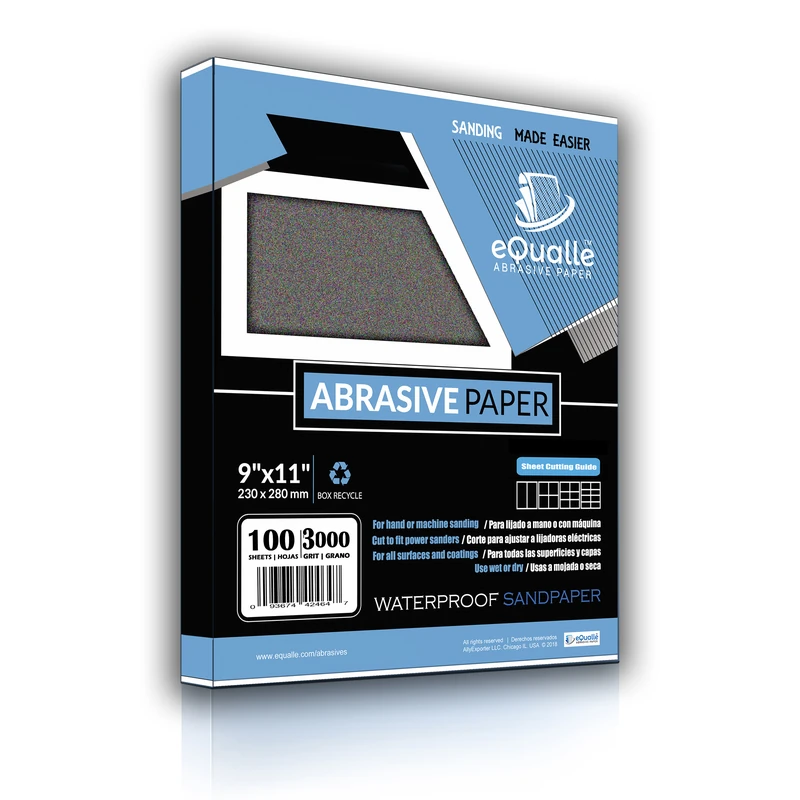
1000 Grit Sandpaper Sheets (50-pack) — 9x11 in Silicon Carbide Abrasive for Wet or Dry Use — Gentle polishing grit that removes swirl marks and fine scratches on automotive or resin finishes. (Professional Grade).
Frequently Asked Questions (FAQ)
Q: How do I know it’s truly flat enough to move up a grit?
A: Lay a 6-ft straightedge in multiple directions and rake a light across. No rocking, minimal daylight, and a uniform scratch pattern with no islands—then move up.
Q: Can I fix low spots later with high grits?
A: No. Higher grits refine; they don’t flatten. Correct birdbaths and dips during metals, or patch and recut. Resins will only follow the existing plane.
Q: When should I apply densifier in the sequence?
A: Usually after 80–200 grit, based on porosity. Open, soft slabs benefit from earlier densification; tight, hard slabs prefer later. Always remove excess and let it cure.
Q: What’s the best straightedge length for checking flatness?
A: A 6-ft aluminum straightedge is the on-site standard. Use it at multiple angles and locations; it’s sensitive enough to reveal the waves you’ll see at 400+.
Q: My resins are streaking—should I jump back to metals?
A: First clean the floor and pads, verify vacuum performance, and recheck flatness with light. If you still see metal scratches or waves, drop back one or two steps and correct before proceeding.